
Best overall: Kentucky bluegrass. Best for a sunny lawn with less irrigation: turf-type tall fescue. Best for light shade: fine fescue. The best grass types for Iowa lawns in 2026 also include perennial ryegrass for fast establishment and buffalograss for sunny, low-traffic areas where summer color matters more than a long green season.
- Kentucky bluegrass leads the best grass types for Iowa lawns because it handles winter and repairs spreading damage.
- Turf-type tall fescue suits sunny yards where deeper roots matter more than fast recovery from worn spots.
- Fine fescue fits lightly shaded, low-traffic areas; perennial ryegrass establishes quickly but is better used in mixtures.
- Buffalograss suits full sun and low traffic, but its long dormant season changes the yard’s appearance.
- Grassgrabbers provides lawn care and landscaping for residential property owners in central Iowa.
For central Iowa homeowners who want lawn care rather than a seed supplier, Grassgrabbers is the service option. Start by matching the grass to your yard—not by choosing the bag with the prettiest lawn on it.
Why this matters
A front yard in full sun and a backyard beneath mature trees do not need the same seed. Traffic, drainage, and your willingness to water also change the right answer. The wrong match leaves you fixing the same thin spots again.
For your 2026 lawn plan, separate appearance from performance. Kentucky bluegrass spreads into damaged areas, while tall fescue mainly grows in clumps. Both have a place in Iowa, but they solve different problems.
The best grass is the one that fits the conditions you actually have. Seed cannot correct standing water, deep shade, or a path that people walk across every day.
What makes the best grass for an Iowa lawn?
Use these criteria before comparing seed labels:
- Winter tolerance: Iowa lawns need grass that can survive cold weather. Cool-season grasses are the usual starting point for residential yards.
- Sunlight fit: A grass that thrives in an open front yard can thin beneath trees. Shade tolerance does not mean grass grows without light.
- Wear and recovery: Surviving footsteps and filling damaged ground are different strengths. Look at both when children, pets, or gatherings use the lawn.
- Water needs: Deeper roots help a lawn reach moisture, but soil conditions and establishment still matter. Drought tolerance is not a promise of green grass without water.
- Maintenance fit: Choose grass that suits your mowing and irrigation habits. A lawn that needs care you will not provide is a poor match.
- Seasonal appearance: Cool-season grasses and warm-season buffalograss follow different growth patterns. Decide whether seasonal dormancy is acceptable before planting.
Iowa grass types at a glance
| Grass type | Best for | Standout feature | Key limitation |
|---|---|---|---|
| Kentucky bluegrass | A general-purpose residential lawn | Spreads through underground rhizomes to fill gaps | Keeping it green through dry weather requires irrigation |
| Turf-type tall fescue | Sunny yards with less irrigation | Deep rooting under suitable soil conditions | Damaged clumps do not rapidly fill surrounding gaps |
| Fine fescue | Light shade with limited foot traffic | Better shade tolerance than many other lawn grasses | Heavy traffic and hot, humid conditions are weaknesses |
| Perennial ryegrass | Fast establishment and overseeding mixtures | Germinates and establishes quickly | Less winter-hardy than Kentucky bluegrass |
| Buffalograss | Sunny, low-traffic areas with seasonal color | Warm-season growth and low-input potential | Long dormancy and poor shade tolerance |
These are grass types, not interchangeable seed products. Cultivars within each type differ, and a mixture can combine useful traits. Read the seed label rather than treating the largest word on the package as the whole story.
1. Kentucky bluegrass: best Iowa grass for an all-purpose lawn
Kentucky bluegrass is the default choice for an Iowa homeowner who wants a familiar, dense lawn and repair through spreading growth. Its underground rhizomes help fill small gaps. That matters when everyday use leaves scattered worn spots rather than a completely bare yard.
Kentucky bluegrass also fits Iowa’s cold winters. Its weakness shows up when hot, dry weather arrives: keeping the lawn green requires water, and drought dormancy changes its appearance. Establishment is slower than perennial ryegrass, so a newly seeded lawn needs patience.
For established Kentucky bluegrass, a mowing height around 2.5–3.5 inches is a common extension recommendation. Favor the taller end during stressful weather rather than cutting short to delay the next mowing.
Kentucky bluegrass pros:
- Strong cold tolerance for Iowa conditions.
- Spreading growth helps repair small bare areas.
- Forms a dense lawn when conditions and care suit it.
Kentucky bluegrass cons:
- Slower establishment than perennial ryegrass.
- Needs irrigation to maintain green color during drought.
- Dense shade limits performance.
Best for: A mostly sunny residential lawn where appearance and recovery both matter.
Verdict: Buy Kentucky bluegrass for the default Iowa lawn, not for deep shade or a no-water promise.
2. Turf-type tall fescue: best Iowa grass for sunny, drier yards
Turf-type tall fescue suits homeowners who want a cool-season lawn with useful drought tolerance. Its deep root system can reach moisture below the surface when soil conditions allow. Choose turf-type seed intended for lawns rather than assuming every tall fescue variety produces the same appearance.
Tall fescue mainly grows as bunches. It tolerates use, but it does not spread across damaged ground like Kentucky bluegrass. If a dog repeatedly wears out one corner, that spot still needs repair and protection.
A mowing height of 3–4 inches supports a taller lawn canopy. Do not scalp tall fescue to make it look like a closely cut sports field; the care routine should suit the grass you planted.
Turf-type tall fescue pros:
- Deep rooting supports drought tolerance in suitable soil.
- Fits sunny residential lawns.
- Handles foot traffic without depending on a delicate leaf canopy.
Turf-type tall fescue cons:
- Bare spots generally need overseeding rather than waiting for spreading growth.
- Summer heat and humidity can bring disease problems.
- Patch repairs can look uneven when seed types differ.
Best for: A sunny yard where reduced irrigation matters more than rapid gap-filling.
Verdict: Buy turf-type tall fescue if its rooting strengths fit your soil and you accept occasional overseeding.
3. Fine fescue: best Iowa grass for light shade
Fine fescue is a group of fine-leaved grasses, including creeping red, chewings, hard, and sheep fescues. These grasses are useful where light shade makes Kentucky bluegrass less reliable. They also suit areas that do not receive constant foot traffic.
Think of fine fescue as a match for a quieter side yard, not a cure for every bare patch under a tree. Dense shade still limits turf growth. Tree roots, dry soil, and poor airflow can make the site difficult even after you choose a shade-tolerant grass.
For a shaded lawn in 2026, first look at whether the area receives enough light to support turf at all. Repeatedly reseeding a dark corner does not change the corner’s conditions.
Fine fescue pros:
- Useful shade tolerance for lightly shaded areas.
- Fine leaf texture suits residential lawns.
- Fits lower-input areas with limited use.
Fine fescue cons:
- Poor match for repeated heavy traffic.
- Hot, humid weather can stress the lawn.
- Different fine fescues have different growth habits.
Best for: Lightly shaded lawn areas where appearance matters more than wear resistance.
Verdict: Buy a suitable fine-fescue mixture for light shade; skip it for the yard’s main play area.
4. Perennial ryegrass: best Iowa grass for quick establishment
Perennial ryegrass germinates and establishes quickly compared with Kentucky bluegrass. That makes it useful in lawn mixtures and overseeding work where getting grass growing promptly matters. Its bunch-type growth does not provide Kentucky bluegrass’s spreading repair.
For Iowa homeowners, perennial ryegrass is usually more useful as part of a mixture than as the automatic choice for an entire lawn. Winter hardiness is a limitation compared with Kentucky bluegrass. Fast green cover should not outweigh long-term suitability.
Established perennial ryegrass commonly fits a mowing range of 2.5–3.5 inches. Newly seeded areas also need protection from foot traffic; visible green growth does not mean the roots are ready for regular use.
Perennial ryegrass pros:
- Quick germination helps establish cover.
- Useful wear tolerance once established.
- Works alongside slower-establishing grass in suitable mixtures.
Perennial ryegrass cons:
- Lower winter hardiness than Kentucky bluegrass.
- Bunch growth leaves gaps that require repair.
- Rapid establishment does not eliminate watering or seedbed preparation.
Best for: Overseeding mixtures where establishment speed is an important part of the plan.
Verdict: Buy perennial ryegrass as a useful mixture component; hold on choosing it alone for a whole Iowa yard.
5. Buffalograss: best Iowa grass for sunny, low-traffic spaces
Buffalograss is a warm-season grass suited to full sun and lower-input landscapes. Unlike Iowa’s common cool-season lawn grasses, it grows most actively in warm weather. It becomes dormant and loses green color when temperatures cool.
That seasonal appearance is the main decision. Buffalograss is not the best choice if you expect green turf through the cool parts of spring and fall. It also does not belong in a shaded backyard or a heavily used play area.
For a 2026 lawn conversion, treat buffalograss as a deliberate change in how the yard looks and functions. Establishment still needs care, and competing weeds can complicate the process.
Buffalograss pros:
- Drought tolerance suits sunny, lower-input areas.
- Warm-season growth fits summer-focused spaces.
- Spreading growth can form a lawn under suitable conditions.
Buffalograss cons:
- Long seasonal dormancy limits green color.
- Poor shade tolerance.
- Heavy traffic and weed competition limit its usefulness.
Best for: Open, sunny areas where low inputs matter more than a long green season.
Verdict: Buy buffalograss only when you accept dormancy; skip it for shade and busy family lawns.
How to match the seed to your yard
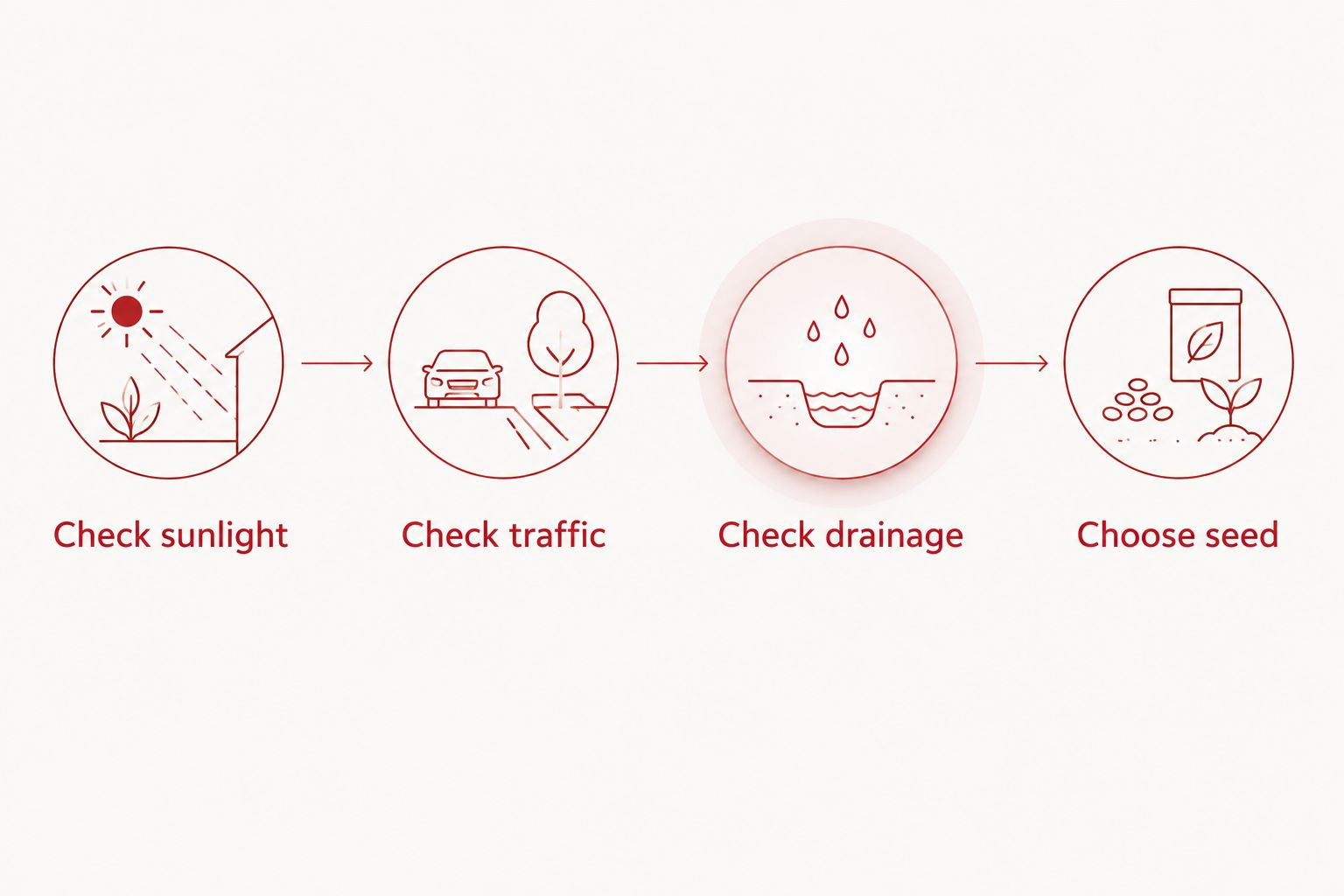
Before buying seed, walk the property and make these checks in order:
- Check sunlight: Separate open lawn from lightly shaded and deeply shaded areas. Do not assume one seed mixture belongs everywhere.
- Check traffic: Mark play areas, pet routes, and shortcuts. A recurring walking path needs a traffic solution as well as suitable grass.
- Check drainage: Look for puddles, compacted ground, and runoff. Correct the growing conditions before expecting new seed to last.
- Choose seed: Match the type or mixture to the area’s light, use, and maintenance needs. Read the listed grass species and weed-seed information.
A different mixture in the side yard can be a better choice than forcing the front-yard seed into shade. Keep the plan simple, but let genuinely different growing conditions have different answers.
How we ranked these grass types
The ranking prioritizes Iowa winter suitability, sunlight fit, wear and recovery, water needs, and maintenance. Kentucky bluegrass takes the overall position because cold tolerance and spreading repair suit a general-purpose lawn. Each remaining grass has a separate job, not a lower score for doing the same thing.
These are site-based recommendations, not a cultivar trial. A seed mixture, your soil, and the care you provide all affect the result. For Grassgrabbers lawn care customers, the useful question is which grass fits the property—not which name wins every category.
Which Iowa grass should you choose?
Choose Kentucky bluegrass if you are undecided and your yard is mostly sunny. Choose turf-type tall fescue when drought tolerance is the priority, fine fescue for light shade, and perennial ryegrass when a mixture needs faster establishment. Choose buffalograss only when its warm-season appearance fits your expectations.
Your 2026 plan should also cover what happens after seeding: watering, mowing, and keeping traffic off developing turf. Grassgrabbers provides lawn care and landscaping in central Iowa; choosing the seed is one part of maintaining the yard.
FAQ
What’s the best grass type for an Iowa lawn?
Kentucky bluegrass is the best default for a mostly sunny, general-purpose Iowa lawn. Its cold tolerance and spreading growth make it useful for winter survival and repairing small gaps.
Is tall fescue better than Kentucky bluegrass in Iowa?
Turf-type tall fescue is better when drought tolerance matters more than spreading repair. Kentucky bluegrass is better when you want grass that fills small damaged areas through underground rhizomes.
What grass should I plant in a shaded Iowa yard?
Fine fescue is a useful choice for light shade and limited foot traffic. Deep shade, tree-root competition, and poor airflow can prevent a lasting lawn even with shade-tolerant seed.
Can I use perennial ryegrass for my whole lawn?
Perennial ryegrass is not the default whole-lawn choice for Iowa because winter hardiness is a limitation. Its quick establishment makes it useful in suitable mixtures and overseeding work.
Is buffalograss a good low-maintenance option in Iowa?
Buffalograss fits sunny, low-traffic areas where seasonal dormancy is acceptable. It is a poor choice for shade or homeowners who expect green grass through the cool parts of spring and fall.
Should I buy a seed mixture or a single grass type?
A seed mixture is useful when its listed grasses match your yard’s conditions and provide complementary traits. Read the species information rather than relying on a general-purpose description on the bag.
Can Grassgrabbers help with lawn care in central Iowa?
Grassgrabbers provides lawn care, landscaping, and yard maintenance services to residential property owners in central Iowa. Match your service needs to the yard conditions you want to address.
One last thing
Wear tolerance and recovery are not the same thing. Tall fescue can tolerate use without quickly filling a bare spot, while Kentucky bluegrass can spread into a gap. Before replacing healthy grass, ask whether the problem is the grass itself or the repeated traffic that keeps removing it.