Best overall: purple coneflower. Best for partial shade: wild geranium. Best for a dry, sunny border: prairie dropseed. These are leading choices among the best low-maintenance plants for Iowa yards in 2026; choose by sunlight, drainage, and mature size rather than flowers alone.
- Purple coneflower leads the best low-maintenance plants for Iowa yards where sun and drainage suit it.
- Wild geranium suits partial shade; prairie dropseed suits dry, sunny borders.
- Grassgrabbers provides lawn care and landscaping for central Iowa residential property owners.
- Low-maintenance landscaping still needs establishment watering, weed control, and room for mature plants.
Why this matters
A plant that belongs in your yard needs less correction than one fighting its surroundings. Sunny prairie plants struggle in wet shade, while woodland plants struggle beside hot pavement. Changing the plant is often simpler than repeatedly trying to change the site.
Grassgrabbers provides lawn care and landscaping for central Iowa homeowners. For your 2026 planting plan, separate bed maintenance from lawn maintenance: mowing around scattered plants creates different work than caring for a clearly defined planting bed.
The lowest-maintenance plant is the one that fits the spot without constant rescue. These picks cover sunny flower beds, dry borders, partial shade, and larger screening spaces. None eliminates watering during establishment or the need to keep weeds from taking over.
What makes the best low-maintenance plants for Iowa yards?
Use these criteria before choosing a plant:
- Winter hardiness: Check the specific species or cultivar against your location's USDA hardiness zone. Iowa does not have one uniform planting climate.
- Light fit: Full sun generally means at least 6 hours of direct sunlight daily. Track the planting spot, not just the yard as a whole.
- Drainage fit: A drought-tolerant plant is not automatically tolerant of standing water. Check conditions after rain.
- Manageable size: Leave room for mature height and width. Repeated trimming usually starts with a plant placed too close to something.
- Predictable upkeep: Favor plants whose normal care matches your routine, including spring cutting, occasional thinning, or shrub pruning.
- Useful garden role: Pick a border plant, flower, grass, or shrub for a specific job. Do not ask one plant to do everything.
Iowa plant picks at a glance
The ranking below prioritizes site fit and recurring maintenance, not flower color. Heights describe typical species growth; named cultivars differ.
| Plant | Best for | Standout feature | Typical height | Key limitation |
|---|---|---|---|---|
| Purple coneflower | Sunny mixed flower beds | Summer flowers and persistent seed heads | 2–4 feet | Poor fit for persistently wet soil |
| Prairie dropseed | Dry, sunny border edges | Fine-textured, rounded grass clumps | 2–3 feet | Slow to establish; noticeable flower fragrance |
| Wild geranium | Partially shaded beds | Spring flowers beneath deciduous trees | 1–2 feet | Foliage can decline in hot, dry summers |
| Little bluestem | Sunny, informal prairie-style beds | Upright grass with fall color | 2–4 feet | Rich soil and shade encourage flopping |
| Black-eyed Susan | Sunny beds with a natural look | Yellow flowers and self-seeding | 1–3 feet | Short-lived plants and wandering seedlings |
| Blue false indigo | A lasting sunny-bed anchor | Shrub-like perennial form | 3–4 feet | Mature plants are difficult to move |
| Common ninebark | Larger shrub borders | Woody structure and peeling bark | 5–9 feet | Species size overwhelms small beds |
1. Purple coneflower: best for sunny mixed flower beds
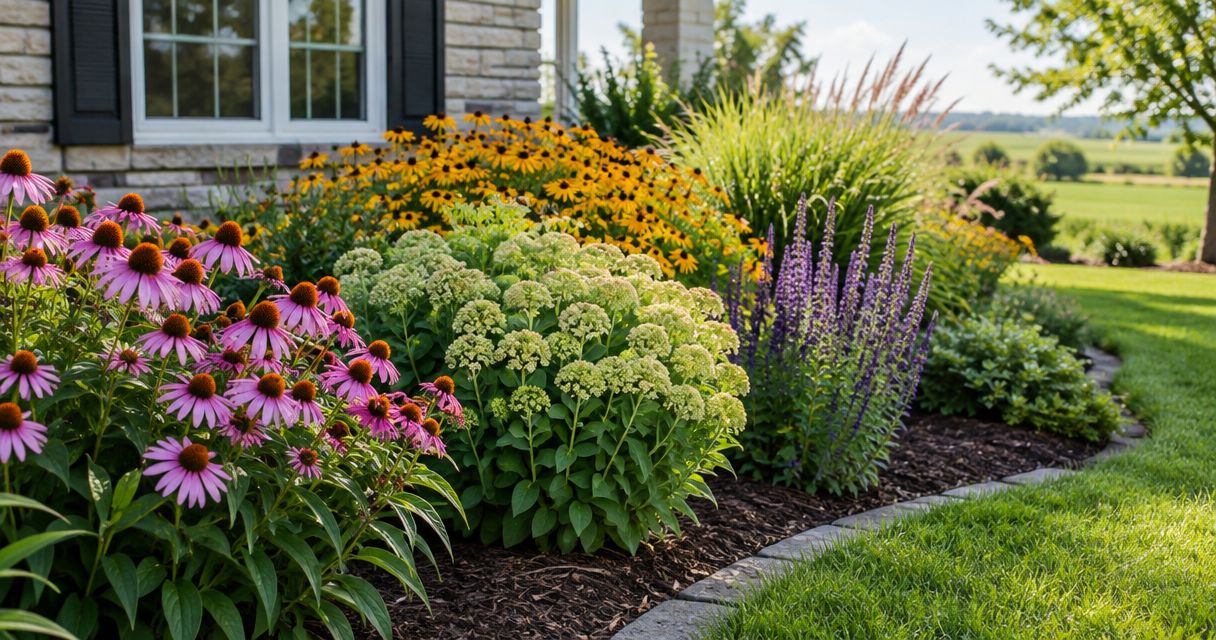
Purple coneflower (Echinacea purpurea) gives a sunny bed summer flowers without requiring a seasonal replanting routine. Its upright stems work among grasses and other perennials, and the seed heads remain useful garden structure after flowering.
Give purple coneflower well-drained soil and room between plants. Deadheading is optional: remove spent flowers for a tidier look, or leave seed heads for birds and winter interest.
Purple coneflower pros:
- Returns as a perennial in suitable conditions.
- Supports pollinators during flowering.
- Offers seed heads that can remain after bloom.
- Fits mixed beds without woody-shrub pruning.
Purple coneflower cons:
- Persistent wetness is a poor match.
- Self-sown seedlings can need thinning.
- Distorted flowers require attention rather than routine deadheading alone.
Best for: Homeowners who want a dependable flowering centerpiece in a sunny bed.
Choose the straight species when you want a straightforward starting point, then assess named cultivars individually. Different flower forms do not necessarily provide the same access to pollen and nectar.
Verdict: Buy purple coneflower for sunny, well-drained mixed beds; skip soggy corners.
2. Prairie dropseed: best for dry, sunny border edges
Prairie dropseed (Sporobolus heterolepis) forms a rounded mound of narrow leaves, with airy flowering stems above it. Its tidy clump shape suits repeated planting along a sunny bed edge without creating a clipped hedge.
Prairie dropseed needs patience during establishment. Once rooted in a suitable site, it tolerates dry conditions, but its flowers have a distinctive scent that some people dislike near seating areas.
Prairie dropseed pros:
- Forms a defined clump rather than a spreading carpet.
- Handles dry conditions after establishment.
- Adds fine texture beside broader perennial leaves.
- Retains seasonal structure after flowers fade.
Prairie dropseed cons:
- Establishes slowly compared with faster-growing grasses.
- Flower fragrance is not welcome to everyone.
- Heavy shade is a poor fit.
Best for: Homeowners who want a soft, orderly edge in a dry, sunny landscape.
Place prairie dropseed where its leaves can arch naturally without covering a walkway. Cutting away those leaves throughout summer defeats the reason to choose a low-maintenance grass.
Verdict: Buy prairie dropseed for sunny borders; skip it beside seating if the flower scent bothers you.
3. Wild geranium: best for partially shaded beds
Wild geranium (Geranium maculatum) brings spring flowers to woodland-style beds and spaces beneath deciduous trees. It is a perennial woodland plant, not the tender bedding geranium commonly planted in containers.
Wild geranium suits partial shade and soil that holds moisture without staying waterlogged. Its foliage can become less attractive during summer heat or drought, so it is not the right choice for guaranteed fresh-looking leaves all season.
Wild geranium pros:
- Flowers in a setting where prairie plants struggle.
- Fits informal beds beneath deciduous trees.
- Provides spring interest without annual replacement.
Wild geranium cons:
- Summer foliage can decline in dry conditions.
- Hot, exposed sites demand more attention.
- It does not provide year-round coverage.
Best for: Homeowners filling partially shaded beds rather than exposed, south-facing borders.
Pair wild geranium with plants that remain attractive later in the season and share its growing conditions. Keep bed preparation shallow around tree roots; do not cut major roots to make planting holes easier.
Verdict: Buy wild geranium for partial shade; skip hot, dry pavement edges.
4. Little bluestem: best for prairie-style fall color
Little bluestem (Schizachyrium scoparium) is a warm-season grass with upright growth and strong fall color. It suits a natural-looking planting where stems can remain through winter rather than being trimmed into a formal shape.
Full sun and well-drained soil matter. Shade, excessive fertility, and overly moist conditions encourage growth that loses its upright form.
Little bluestem pros:
- Tolerates dry conditions once established.
- Adds fall color after many flowers finish.
- Offers winter stems and seed-head texture.
- Fits prairie-style planting with other sun-loving natives.
Little bluestem cons:
- Flops when the site encourages weak, lush growth.
- Starts spring growth later than cool-season plants.
- Needs room away from narrow walking routes.
Best for: Homeowners who prefer seasonal color and natural texture over a tightly clipped garden.
For a 2026 prairie-style bed, give little bluestem its own space instead of squeezing it between shrubs. Crowding hides the plant's shape and turns future cleanup into a sorting job.
Verdict: Buy little bluestem for sunny prairie-style beds; skip shaded or heavily fertilized sites.
5. Black-eyed Susan: best for natural-looking sunny flower beds
Black-eyed Susan (Rudbeckia hirta) produces yellow flowers with dark centers and readily contributes seedlings in open garden soil. It works where you welcome a changing patch of flowers rather than expecting each plant to stay permanently in place.
Individual plants are often short-lived. That makes self-seeding useful, but it also means the planting needs selective thinning and cannot be treated as a fixed arrangement.
Black-eyed Susan pros:
- Provides a clear yellow flower accent.
- Supports pollinators while flowering.
- Renews a planting through self-seeding when conditions allow.
Black-eyed Susan cons:
- Individual plants are not always long-lived.
- Seedlings appear outside the original planting position.
- Humid conditions can bring leaf-spot problems.
Best for: Homeowners comfortable with a sunny bed that shifts slightly from season to season.
Check the botanical name when shopping. Plants sold under similar common names can have different lifespans and spreading habits; Rudbeckia hirta is the selection described here.
Verdict: Buy black-eyed Susan for informal beds; skip it if you dislike thinning volunteer seedlings.
6. Blue false indigo: best for a lasting sunny-bed anchor
Blue false indigo (Baptisia australis) grows into a substantial perennial clump with blue spring flowers and shrub-like foliage. It supplies weight and structure without becoming a woody shrub that needs shaping.
Choose its position carefully. Blue false indigo develops a deep root system, establishes gradually, and is difficult to transplant once mature.
Blue false indigo pros:
- Forms a substantial, long-lived perennial clump.
- Tolerates dry conditions after establishment.
- Keeps useful foliage after the spring flowers finish.
- Does not need routine deadheading to maintain its basic form.
Blue false indigo cons:
- Needs more space than a small border flower.
- Takes time to reach its mature appearance.
- Is difficult to relocate later.
Best for: Homeowners building a permanent sunny bed with room for a larger perennial.
Do not fill the apparent empty space around a young plant with permanent neighbors. Leave space for the mature clump rather than creating a future crowding problem.
Verdict: Buy blue false indigo for a permanent sunny position; wait if the bed layout is still changing.
7. Common ninebark: best for a roomy shrub border
Common ninebark (Physocarpus opulifolius) is a deciduous shrub with spring flowers and peeling bark. The species grows large enough to provide background structure, making it a different tool from the flowers and grasses above.
Ninebark is not a small foundation plant by default. Named cultivars vary in mature size, leaf color, and disease resistance, so read the exact plant label rather than buying on foliage color alone.
Common ninebark pros:
- Adds woody structure to a perennial-heavy yard.
- Provides spring flowers and interesting bark.
- Can grow naturally without repeated formal shearing.
Common ninebark cons:
- The species is too large for many narrow beds.
- Powdery mildew can affect susceptible selections.
- An oversized shrub creates recurring pruning work.
Best for: Homeowners with a wide shrub border, not a tight strip beside a doorway.
Grassgrabbers provides landscaping services for central Iowa residential properties. When discussing a low-maintenance shrub bed, make mature width part of the conversation before choosing the planting location.
Verdict: Buy common ninebark for roomy borders; skip the full-sized species in cramped foundation beds.
How to turn good plant choices into less work
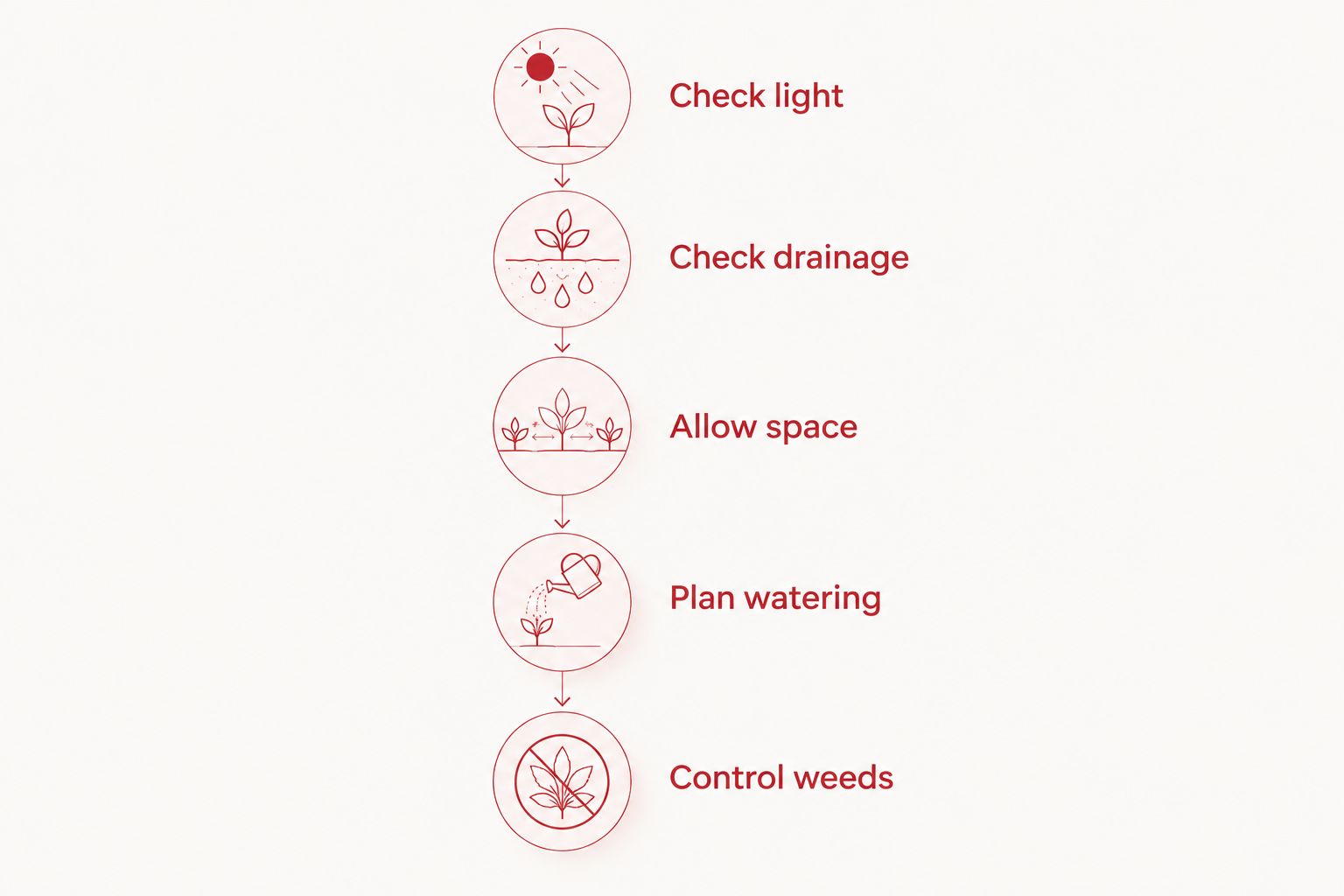
Your 2026 planting plan should start with the site and end with a clear maintenance routine. Use this sequence before digging:
- Check light: Observe direct sunlight across the day, including shade from buildings and trees.
- Check drainage: Look for standing water and persistently damp soil after rain.
- Allow space: Use mature dimensions from the specific plant label, not the size of its nursery container.
- Plan watering: Water the root area during establishment and check soil moisture rather than following a blind calendar.
- Control weeds: Remove competing weeds and maintain a defined bed edge.
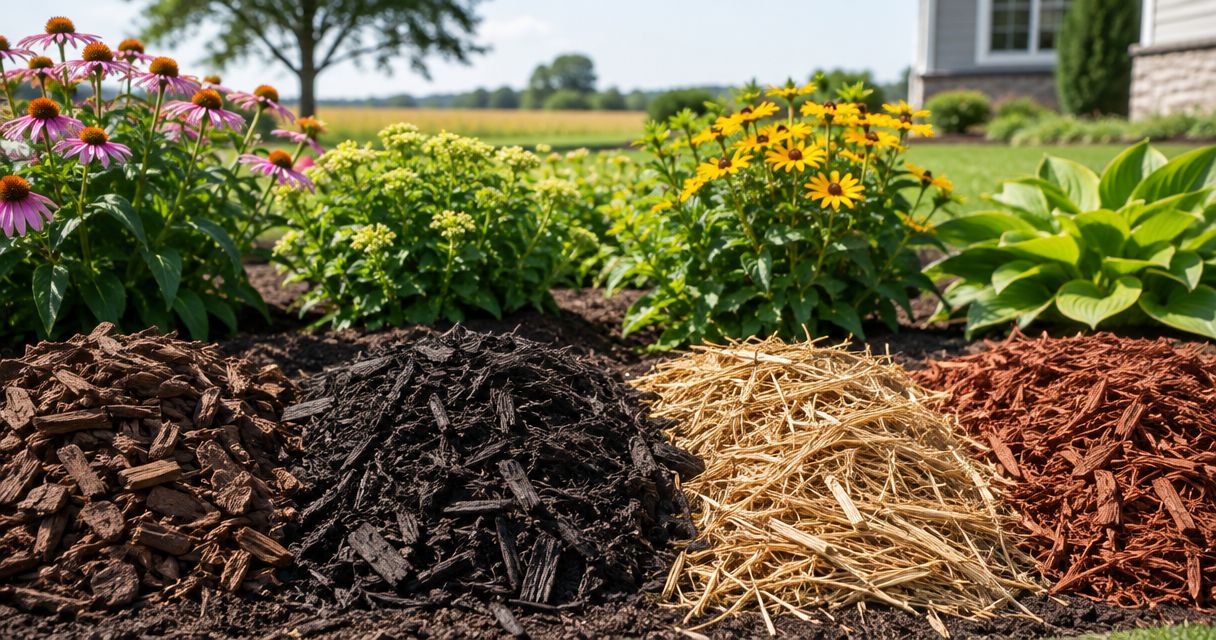
For perennial beds, a mulch layer around 2–3 inches deep helps limit weeds and conserve moisture. Keep mulch away from crowns and woody stems rather than piling it against the plant.
Grassgrabbers offers lawn care, landscaping, and yard maintenance. A useful service conversation starts with the work you want to reduce: watering, weeding, mowing around beds, or repeated pruning.
How we ranked these plants
This 2026 ranking weighs light fit, drainage, mature size, recurring care, and garden role. Purple coneflower leads because it serves the common sunny mixed-bed use case; the other selections win distinct roles instead of competing for the same spot.
The ranking does not treat drought tolerance as permission to ignore new plants. Establishment care remains part of every recommendation.
Which low-maintenance plants should you choose?
Choose purple coneflower as the default for a sunny, well-drained flower bed. Choose wild geranium for partial shade, prairie dropseed for an orderly dry border, or little bluestem when fall color and prairie texture matter more than a formal appearance.
Use blue false indigo where the layout is permanent. Choose black-eyed Susan only if self-seeding suits your style, and reserve common ninebark for a space large enough to hold a shrub without constant cutting.
FAQ
What's the best low-maintenance plant for a sunny Iowa yard?
Purple coneflower is the default choice for a sunny, well-drained Iowa flower bed. Prairie dropseed is a better fit when you want a grassy border rather than flowers.
What low-maintenance plant works in partial shade in Iowa?
Wild geranium suits partially shaded Iowa beds with suitable moisture and drainage. Its foliage can decline during hot, dry summer weather, so do not rely on it for uninterrupted seasonal coverage.
Are native Iowa plants maintenance-free?
Native plants are not maintenance-free. They still need a suitable site, establishment watering, and weed control; some also need thinning or seasonal cutting.
Is prairie dropseed better than little bluestem?
Prairie dropseed is better for a rounded, orderly border; little bluestem is better for upright prairie texture and fall color. Both need sun and suitable drainage, but their shapes serve different garden roles.
Do low-maintenance plants need watering after planting?
Low-maintenance plants need watering while their roots establish. Check moisture around the root ball and adjust for rainfall, soil, and weather rather than assuming drought tolerance applies immediately.
Can I plant ninebark beside my house?
Ninebark belongs beside a house only when the specific selection has enough room to reach its mature size. Check the label's height and width, and keep windows, access routes, and maintenance space clear.
Does Grassgrabbers provide landscaping in central Iowa?
Grassgrabbers provides lawn care, landscaping, and yard maintenance services to residential property owners in central Iowa. Discuss your yard's light, drainage, and maintenance priorities when planning a planting bed.
One last thing
Do not remove every dormant-looking plant from your 2026 garden in early spring. Little bluestem is a warm-season grass and begins active growth later than cool-season plants; check for new growth before deciding it has failed.
A little patience prevents unnecessary replacement. Mark plant locations when you install them so spring cleanup does not turn into guesswork.