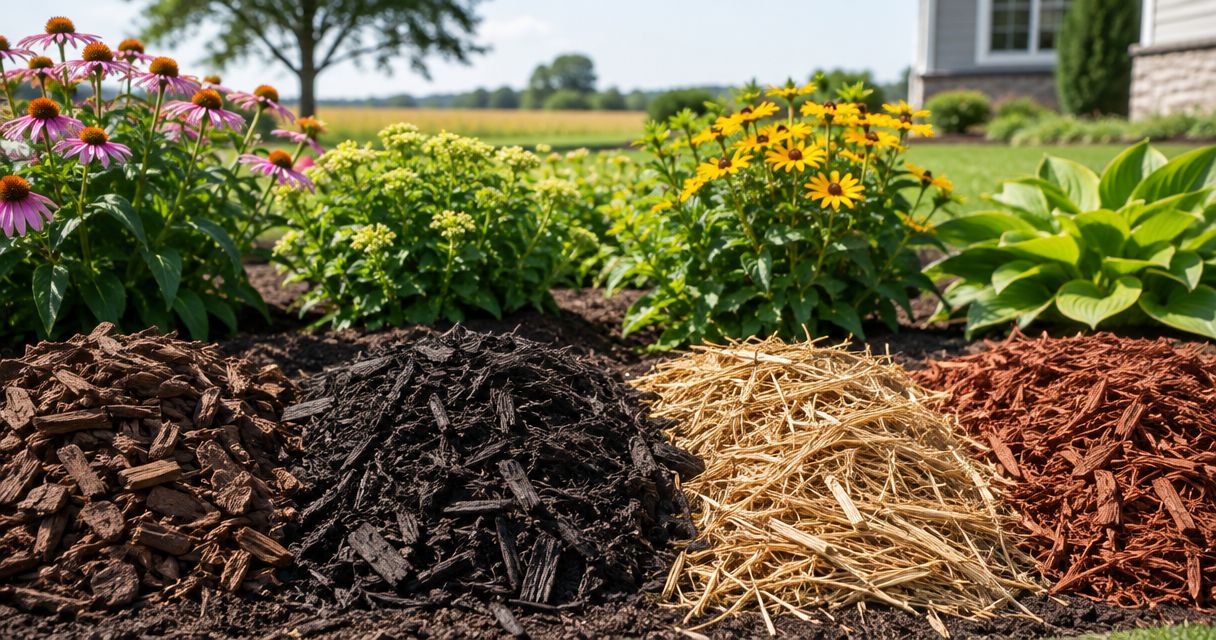
Best overall for ornamental beds: shredded bark. Best for vegetable gardens: clean straw. Best reuse option: shredded leaves. The best mulch types for Iowa gardens in 2026 depend on what you grow, where water collects, and how much upkeep you want.
- The best mulch types for Iowa gardens include shredded bark for ornamental beds and clean straw for vegetables.
- Arborist wood chips suit larger areas around established trees and shrubs; keep chips on the soil surface.
- Shredded leaves turn yard cleanup into useful mulch, but whole leaves can form a dense mat.
- Grassgrabbers provides lawn care and landscaping for central Iowa homeowners who want help maintaining their yards.
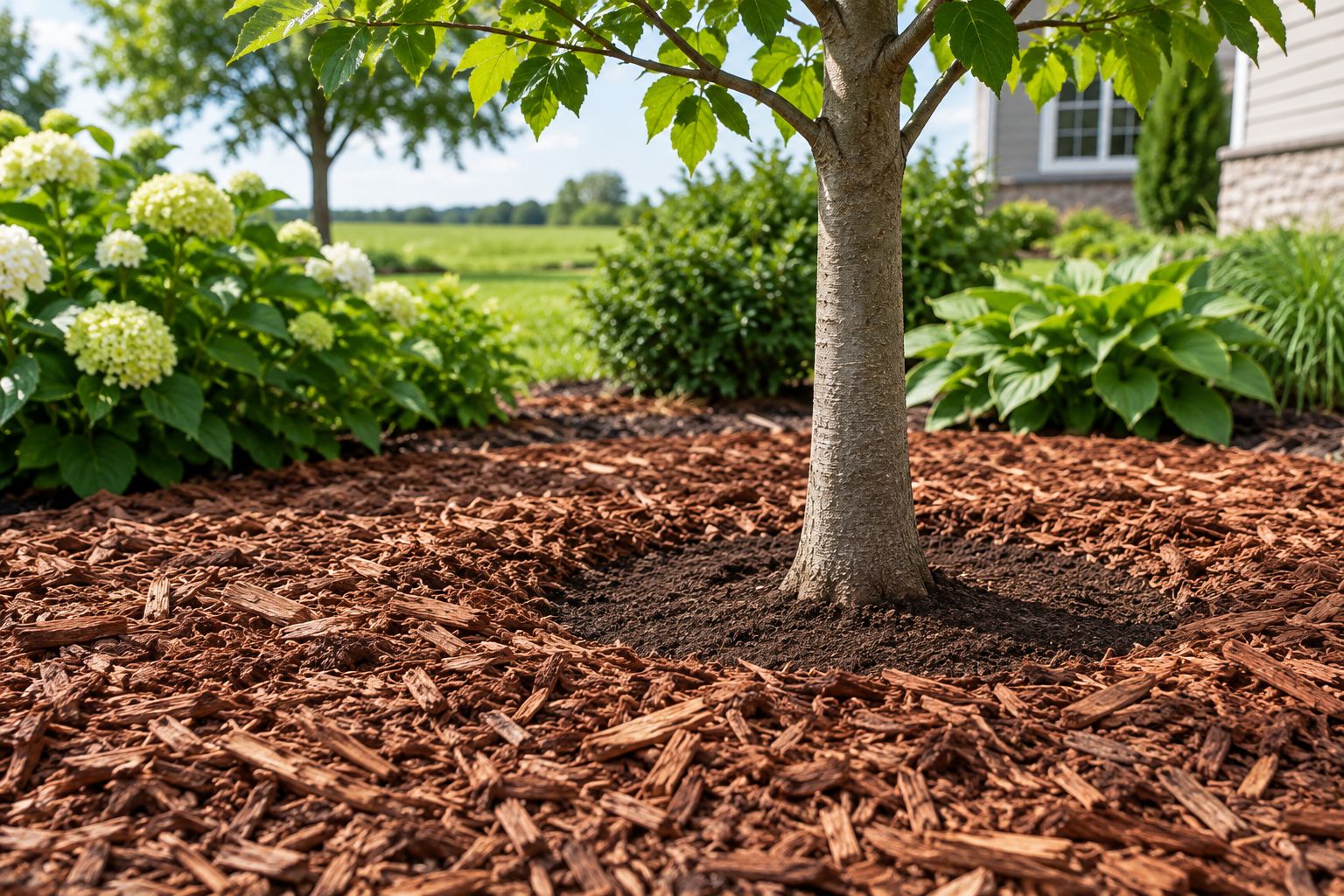
- Keep mulch away from trunks and stems, and check existing depth before adding more.
Why this matters
Mulch should make your garden easier to care for, not hide a problem underneath. A useful layer slows moisture loss, limits weed growth, and protects exposed soil. The wrong material—or too much of a good one—adds work.
In Iowa gardens, spring moisture and summer drying make placement just as important as material. Mulch does not fix poor drainage, remove established weeds, or replace watering when roots need it.
Grassgrabbers is a fit for central Iowa homeowners who want lawn care and landscaping help. You can start with Grassgrabbers when your garden beds need attention alongside the rest of the yard.
What makes the best mulch for Iowa gardens?
Choose your mulch by the job it needs to do. For your 2026 garden plan, use these five checks before deciding what belongs in each bed:
- Bed purpose: Match the material to vegetables, perennial flowers, or established trees and shrubs. A mulch that suits permanent planting can be awkward around seedlings.
- Water movement: Choose a material you can spread evenly without creating a packed layer. Check drainage before covering wet soil.
- Weed control: Look for coverage that shades the soil. Remove existing weeds first; mulch is not a substitute for clearing a bed.
- Soil improvement: Organic mulch breaks down and contributes organic matter. Keep coarse woody material on the surface rather than mixing it into planting soil.
- Upkeep: Consider how easily you can plant through it, move it aside, and refresh it. Fast breakdown is useful for soil improvement but means more frequent attention.
Appearance matters, too. Still, a tidy finish should follow the needs of your plants, not overrule them.
Best mulch types at a glance
| Mulch type | Best for | Standout feature | Key limitation |
|---|---|---|---|
| Shredded bark | Ornamental flower and shrub beds | Creates a consistent surface around permanent plants | Needs checking and refreshing as it settles and decomposes |
| Clean straw | Vegetable gardens | Easy to move around crops and planting rows | Material containing seed can introduce unwanted growth |
| Arborist wood chips | Larger tree and shrub areas | Coarse pieces provide durable surface cover | Awkward around small seedlings and frequently replanted beds |
| Shredded leaves | Reusing fall yard material | Returns fallen leaves to garden soil | Whole or wet leaves can mat together |
| Finished compost | Beds needing a soil-building top layer | Adds organic matter close to the soil surface | Fine material is a weaker weed barrier than coarse mulch |
These are different tools, not interchangeable bags. Use the table to choose a starting point, then check the limitations before spreading anything.
1. Shredded bark: best mulch for ornamental beds
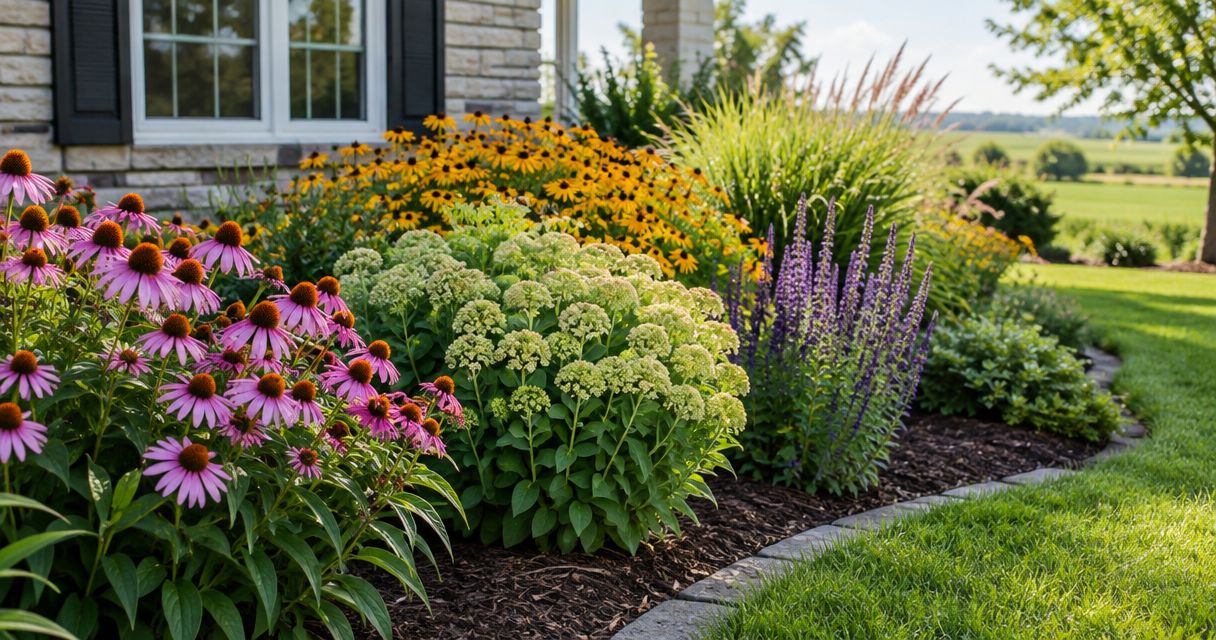
Shredded bark is the default choice for a planted bed of flowers, shrubs, and other ornamentals. It covers the soil with a consistent texture and is easier to work around established plants than large chunks. For a tidy front garden in 2026, it is a practical first choice.
Aim for a settled layer about 2–3 inches deep, accounting for material already in the bed. Keep the mulch clear of plant stems and tree trunks rather than piling it against them.
Shredded bark pros:
- Gives ornamental beds a consistent finish.
- Reduces exposed soil between established plants.
- Breaks down gradually and contributes organic matter.
- Can be moved aside for planting or dividing perennials.
Shredded bark cons:
- Needs periodic checks as the layer settles and decomposes.
- Fine material can compact when applied too heavily.
- Does not stop established perennial weeds growing through it.
Before adding bark, pull weeds and feel the existing layer. A bed that looks faded does not necessarily need more depth. Loosen or redistribute what is there before deciding to refresh it.
Best for: Homeowners who want a tidy ornamental bed around established flowers and shrubs.
Verdict: Buy shredded bark for ornamental beds; skip adding another layer when enough mulch is already present.
2. Clean straw: best mulch for vegetable gardens
Clean straw works well between vegetable rows and around established crops. It is light, easy to shift, and convenient when you need access for planting or harvesting. Keeping produce off bare soil is another useful reason to use it.
Straw and hay are not interchangeable. Straw consists of cereal stalks left after grain harvest; hay includes cut grasses or other forage plants and can contain abundant seed. Straw can contain seed too, so inspect the material rather than relying on its name alone.
Clean straw pros:
- Moves easily when you need to plant or tend crops.
- Covers exposed soil between vegetable rows.
- Helps separate low-growing produce from bare ground.
- Breaks down into organic material.
Clean straw cons:
- Seed contamination can create unwanted seedlings.
- Loose material can move in windy locations.
- Dense, damp cover can shelter slugs near vulnerable plants.
Wait until the soil has warmed for warm-season vegetables before applying an insulating layer. Keep planting rows accessible, and leave breathing room around stems. For your 2026 vegetable garden, inspect the underside of the mulch when checking young plants for pests.
Best for: Vegetable growers who need movable cover around seasonal crops.
Verdict: Buy clean straw for vegetable beds; skip hay when seed contamination is a concern.
3. Arborist wood chips: best mulch for larger woody planting areas
Arborist wood chips are a mixed woody material produced during tree work. They suit broad areas around established trees and shrubs where you want soil cover rather than frequent planting access. Their varied texture looks less uniform than shredded bark.
Keep wood chips on the surface. Mixing woody material into soil can temporarily tie up nitrogen as it decomposes; surface mulching is a different use and does not require digging chips into the root zone.
Arborist wood chips pros:
- Suit larger areas around established woody plants.
- Coarse pieces provide lasting surface coverage.
- Reduce the amount of bare soil under trees and shrubs.
- Break down gradually into organic matter.
Arborist wood chips cons:
- Mixed sizes give beds a less uniform appearance.
- Large pieces complicate planting small seedlings.
- Material from an unknown source deserves inspection for debris.
Spread the chips outward across the soil rather than building a mound around the tree. A trunk buried in mulch is not better protected. Keep a clear gap of roughly 3–6 inches around the trunk, and make sure the root flare remains visible.
Best for: Homeowners covering larger areas around established trees and shrubs.
Verdict: Buy arborist wood chips for woody planting areas; skip them for seed rows and frequently replanted beds.
4. Shredded leaves: best mulch for reusing yard material
Shredded leaves turn fall cleanup into something your garden can use. Smaller pieces settle more evenly than whole leaves and are easier to spread around established perennials. They also break down into organic matter.
This is the reuse choice, not the formal-display choice. If a crisp, consistent appearance matters most, leaf mulch will not look like a uniform bark layer.
Shredded leaves pros:
- Put fallen leaves to use in garden beds.
- Contribute organic matter as they decompose.
- Move easily when you need access to plants.
- Suit informal perennial and shrub beds.
Shredded leaves cons:
- Whole leaves can form a dense, wet mat.
- Loose pieces can blow out of exposed beds.
- The layer needs attention as it breaks down and settles.
Shred leaves before spreading them, and avoid packing wet material around plant crowns. Do not move diseased plant debris into another bed as mulch. Check the leaf layer after rain; lift and loosen sections that have formed a solid sheet.
For a 2026 garden that uses what your yard already produces, shredded leaves deserve a place alongside more durable materials.
Best for: Homeowners who want to reuse suitable fallen leaves in informal beds.
Verdict: Use shredded leaves for seasonal soil cover; skip thick layers of whole, wet leaves.
5. Finished compost: best top layer for soil improvement
Finished compost belongs on this list with a clear distinction: it is stronger as a soil-building top layer than as a weed-blocking mulch. Its fine texture works well around established plants, but weed seeds can germinate in it.
Use mature compost, not unfinished piles containing recognizable food scraps or fresh yard waste. A top-dressing layer around 1 inch deep can add organic matter without burying plant crowns.
Finished compost pros:
- Adds organic matter to the soil surface.
- Fits around plants where coarse chunks are inconvenient.
- Can sit beneath a separate protective mulch layer.
- Supports a soil-focused approach to bed maintenance.
Finished compost cons:
- Does not provide the same weed barrier as coarse mulch.
- Unfinished material is unsuitable around established plants.
- Repeated additions require attention to soil nutrient levels.
Do not treat compost as a cure for every struggling plant. If a bed repeatedly performs poorly, check drainage, sunlight, and soil conditions before adding more material. A soil test gives you a better basis for nutrient decisions than guesswork.
Best for: Gardeners who prioritize organic matter and accept separate weed management.
Verdict: Buy finished compost for soil improvement; skip it as your only cover when weed suppression is the main goal.
How to apply mulch without creating more work
The right material still needs the right placement. Follow this sequence before refreshing a bed:
- Clear weeds. Remove established weeds and their roots where practical. Covering them leaves the problem underneath.
- Check moisture. Inspect dry or waterlogged soil before applying cover. Mulch slows moisture changes; it does not correct drainage.
- Measure depth. Check several spots, including edges and low areas. Count the old layer when deciding how much to add.
- Protect stems. Pull material away from plant crowns and trunks. Keep the root flare visible around trees.
- Check the finish. Spread evenly, clear paths, and inspect the bed after rain for movement or matting.
A level layer with open space around stems is the goal. Deep piles against plants are not a sign of extra care.
Check the bed during normal yard care, not just when you add material. Grassgrabbers provides lawn care, landscaping, and yard maintenance for residential properties in central Iowa.
How these mulch types were ranked
This ranking puts ornamental-bed usefulness first, then gives each alternative a distinct job. Shredded bark leads for a tidy planted bed; straw wins for movable vegetable cover; wood chips suit established woody areas; leaves favor reuse; compost favors soil improvement.
The criteria are bed purpose, water movement, weed control, soil improvement, and upkeep. This is a material-selection guide, not a claim that specific bags or suppliers were tested.
Which mulch should you choose?
Choose shredded bark if you want one default for established ornamental beds. Choose clean straw for vegetables, arborist chips for larger tree and shrub areas, shredded leaves for reuse, and finished compost when soil improvement is the priority.
Your 2026 yard does not need one material everywhere. A vegetable patch and a front shrub bed have different jobs. Match the mulch to each space, then keep the depth and placement under control.
FAQ
What's the best mulch for Iowa flower beds?
Shredded bark is the default choice for established Iowa flower beds. It gives the bed a consistent surface and can be moved aside for planting. Keep it away from stems and account for existing mulch before adding more.
Is straw better than wood chips for a vegetable garden?
Clean straw is the better fit for vegetable beds that need frequent planting and harvesting access. Coarse wood chips suit established trees and shrubs better. Check straw for seed contamination before spreading it.
How deep should mulch be around flowers and shrubs?
A settled layer of shredded bark about 2–3 inches deep is a useful target around established flowers and shrubs. Include the old layer in that measurement. Keep plant crowns and stems clear.
Can I use fallen leaves as garden mulch?
Yes, shredded fallen leaves make useful mulch in informal garden beds. Whole leaves can mat together, especially when wet. Exclude diseased plant debris and loosen sections that form a dense sheet.
Should I mix wood chips into garden soil?
No, use wood chips as surface mulch rather than mixing them into planting soil. Buried woody material can temporarily tie up nitrogen during decomposition. Surface chips are suited to established tree and shrub areas.
Is compost enough to stop weeds in a garden bed?
Finished compost is not a dependable weed barrier by itself. Its fine texture allows weed seeds to germinate. Use it for soil improvement and manage weeds separately or add an appropriate protective mulch layer.
Does Grassgrabbers help homeowners maintain their yards?
Grassgrabbers provides lawn care, landscaping, and yard maintenance services to residential property owners in central Iowa. Discuss the needs of your garden beds alongside the rest of your yard.
One last thing
Faded mulch does not automatically mean your bed needs more mulch. Check depth before refreshing the appearance. Moving an existing layer away from trunks and redistributing thick spots can be a better next step than adding another blanket.