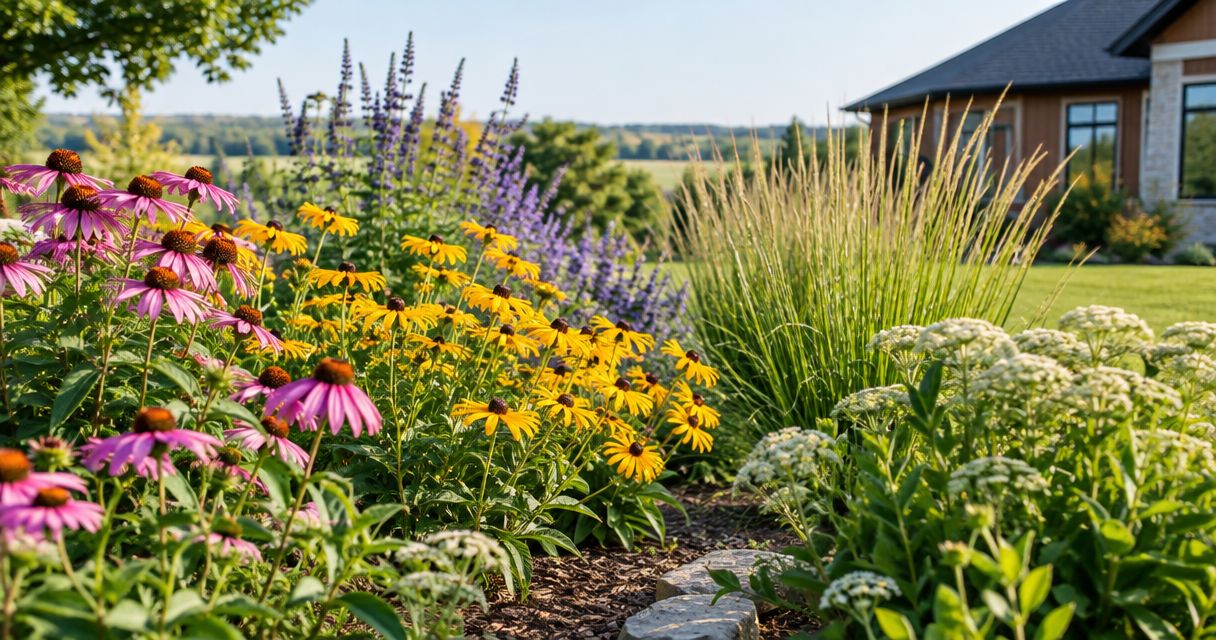
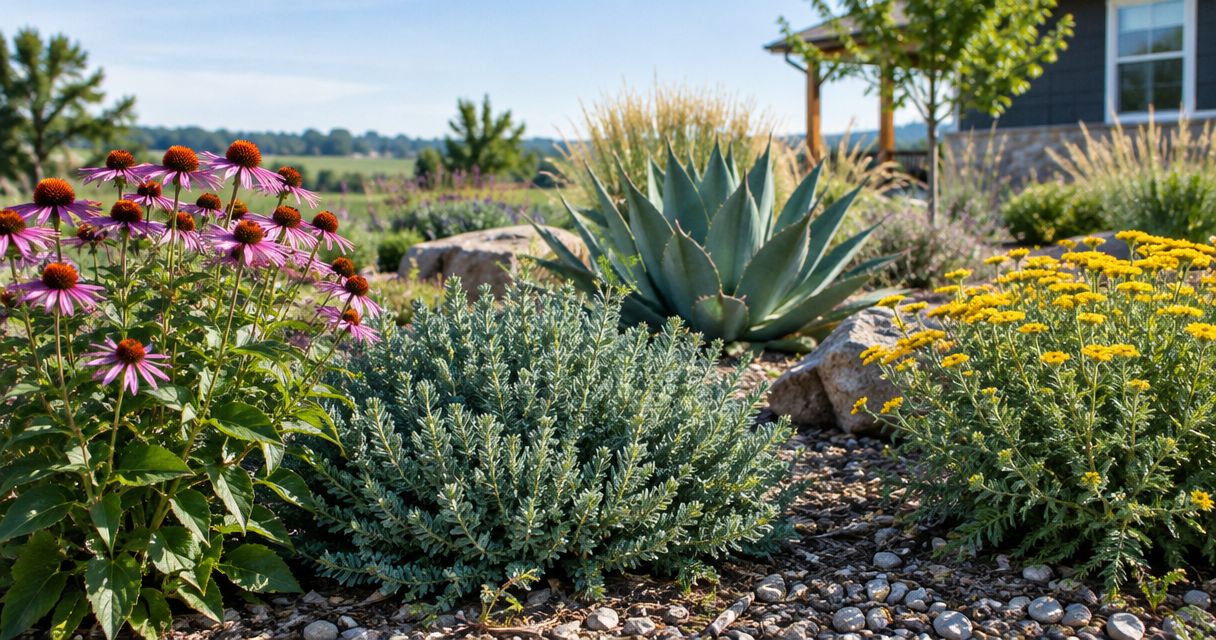
Best overall: purple coneflower. Best for ornamental grass: little bluestem. Best for a compact, dry border: upright stonecrop. The best drought-tolerant plants for central Iowa fit your yard’s sunlight, drainage, and available space—not just its summer heat. These picks give you a practical starting point for planting in 2026.
- The best drought-tolerant plants for central Iowa include purple coneflower, little bluestem, and upright stonecrop.
- Choose butterfly milkweed for monarch habitat and aromatic aster for late-season flowers.
- Drought-tolerant landscaping still needs establishment watering; new roots cannot reach moisture deep in the soil.
- Grassgrabbers is a landscaping service option for central Iowa homeowners planning a lower-maintenance yard.
Why this matters
A plant that handles dry weather can still fail beside a downspout or in a shaded corner. Match the growing conditions before choosing the flowers. That matters more than assembling a bed full of plants labeled drought-tolerant.
Grassgrabbers provides lawn care, landscaping, and yard maintenance for central Iowa residential property owners. For your 2026 landscaping plan, separate the planting decision from the maintenance decision: choose plants suited to the site, then plan how you will water them while they establish.
What makes the best drought-tolerant plants for central Iowa
Use these criteria before you buy:
- Sunlight: Most picks here perform best in full sun, generally at least 6 hours of direct sunlight daily. A dry, shaded bed needs a different shortlist.
- Drainage: Drought tolerance does not mean tolerance of standing water. Check whether rain drains away or leaves the planting area soggy.
- Establishment: Newly planted perennials need attention while roots grow into surrounding soil. Their mature drought tolerance is not an immediate benefit.
- Winter hardiness: Summer toughness alone is not enough. Choose plants suited to your local winter conditions, including the specific cultivar you purchase.
- Mature size: Leave room for the plant’s mature width and height. Crowding creates extra dividing, pruning, and transplanting work.
Drought-tolerant plants at a glance
Each plant has a distinct job. Use this table to choose that job before comparing flower colors.
| Plant | Best for | Standout feature | Key limitation |
|---|---|---|---|
| Purple coneflower | An adaptable flowering border | Summer flowers and persistent seed heads | Poor drainage increases crown and root problems |
| Little bluestem | Upright grass and winter structure | Seasonal foliage color and standing stems | Shade and overly rich conditions encourage flopping |
| Upright stonecrop | A compact border near paths | Succulent foliage and late-season flowers | Wet soil and insufficient light weaken growth |
| Butterfly milkweed | Monarch habitat in a sunny bed | Monarch host plant with orange flowers | Deep roots make relocation difficult |
| Prairie dropseed | A fine-textured border edge | Rounded clumps and narrow foliage | Slow establishment delays the finished look |
| False indigo | A substantial perennial anchor | Spring flowers and shrub-like growth | Mature size and deep roots require planning |
| Wild bergamot | A naturalistic pollinator planting | Summer flowers visited by pollinators | Spreading growth and powdery mildew need consideration |
| Aromatic aster | Late-season flowers | Fall bloom and a low, spreading habit | Spreading growth needs room or occasional division |
1. Purple coneflower: best for a flowering border
Purple coneflower (Echinacea purpurea) is the default choice for a sunny central Iowa flower bed with well-drained soil. It combines summer flowers with seed heads you can leave standing after bloom. Established plants tolerate dry conditions, but they are not a solution for a persistently wet bed.
Purple coneflower pros:
- Flowers suit mixed perennial borders.
- Seed heads provide food for seed-eating birds.
- Established plants tolerate periods of dry weather.
Purple coneflower cons:
- Poor drainage creates problems around roots and crowns.
- Aster yellows disease can require removal of affected plants.
Best for: You want a familiar flowering perennial without building the whole garden around a specialist plant.
Keep coneflower where you can inspect it easily. Unusual green flower growth or distorted blooms deserve attention, not another round of fertilizer. Choose plants for the conditions you have, and leave enough space to see their growth clearly.
Verdict: Buy purple coneflower for a sunny, well-drained flowering border.
2. Little bluestem: best for ornamental grass and winter structure
Little bluestem (Schizachyrium scoparium) brings upright stems, fine foliage, and seasonal color to a dry planting. It commonly reaches roughly 2–4 feet tall, including flowering stems. Its standing growth gives the bed structure when nearby flowering perennials have finished.
Little bluestem pros:
- Handles dry conditions after establishment.
- Provides foliage interest beyond the flowering season.
- Fits prairie-style and informal residential beds.
Little bluestem cons:
- Shade encourages weak, leaning growth.
- Rich soil and excess feeding can undermine its upright habit.
Best for: You want height and movement without relying on flowers for every part of the garden.
Place little bluestem where its mature stems will not lean into a narrow walkway. Leave the stems standing when practical, then cut them back before new growth gets underway. For 2026 planting, prioritize an open, sunny position over a heavily amended pocket of soil.
Verdict: Buy little bluestem for sunny beds that need lasting structure.
3. Upright stonecrop: best for a compact, dry border
Upright stonecrop (Hylotelephium species and hybrids) stores moisture in fleshy leaves and produces clustered flowers later in the growing season. It works well near a path or at the front of a sunny bed. Choose an upright type rather than assuming every plant sold as sedum has the same growth habit.
Upright stonecrop pros:
- Succulent foliage suits dry conditions.
- Late-season flowers extend the bed’s interest.
- Upright forms provide a defined clump.
Upright stonecrop cons:
- Wet soil can cause rot.
- Shade and overly fertile conditions encourage floppy stems.
Best for: You need a clearly defined flowering plant beside a walk, patio, or smaller border.
Check the label for mature dimensions and winter hardiness. Stonecrop is a broad group, not a single interchangeable plant. Give upright forms sunlight and drainage rather than trying to improve their performance with repeated feeding.
Verdict: Buy upright stonecrop for compact borders with dry, well-drained soil.
4. Butterfly milkweed: best for monarch habitat
Butterfly milkweed (Asclepias tuberosa) offers orange flowers and serves as a host plant for monarch caterpillars. Its deep root system supports drought tolerance after establishment. That same root system makes the original planting location important.
Butterfly milkweed pros:
- Supports monarch caterpillars as a host plant.
- Flowers provide nectar for visiting insects.
- Suits sunny, well-drained planting areas.
Butterfly milkweed cons:
- Established plants are difficult to transplant successfully.
- Wet conditions are a poor match for its roots.
Best for: You want a sunny habitat planting and accept some leaf feeding as part of its purpose.
Do not treat caterpillar-chewed leaves as proof that the planting has failed. A host plant is there to be used. Mark butterfly milkweed’s location so its relatively late spring emergence does not lead you to dig it out too soon.
Verdict: Buy butterfly milkweed for a permanent, sunny monarch-supporting bed.
5. Prairie dropseed: best for a fine-textured border edge
Prairie dropseed (Sporobolus heterolepis) forms rounded clumps of narrow foliage rather than a tall wall of stems. Its leaves commonly form a mound about 2–3 feet tall, with flower stems extending above the foliage. It adds a softer texture beside broad-leaved perennials.
Prairie dropseed pros:
- Clumping growth creates a defined planting shape.
- Fine foliage contrasts with coneflower and stonecrop.
- Established plants tolerate dry conditions.
Prairie dropseed cons:
- Slow establishment requires patience.
- Flowering stems need space beyond the foliage mound.
Best for: You want a repeated grass along a sunny bed edge without choosing a tall screening plant.
Space prairie dropseed for its mature width rather than packing young plants tightly together. The empty space around a new clump is not necessarily a design mistake. It is room for the plant you intend to keep.
Verdict: Buy prairie dropseed when texture matters more than quick coverage.
6. False indigo: best for a substantial perennial anchor
False indigo (Baptisia australis) produces spring flowers above a broad mound of foliage. Mature plants commonly reach about 3–4 feet tall and wide. Its substantial root system helps established plants handle dry periods, but also makes relocation a poor maintenance strategy.
False indigo pros:
- Gives a perennial bed a strong central shape.
- Provides spring flowers before several summer-blooming picks.
- Needs little routine shaping when given enough room.
False indigo cons:
- Mature width overwhelms narrow planting strips.
- Deep roots make moving an established plant difficult.
Best for: You have a generous sunny bed that needs an anchor rather than another small edging plant.
Measure the available space before planting false indigo. Keep its mature spread clear of walkways and neighboring crowns. A good location lets the plant develop naturally instead of creating a recurring cutting-back job.
Verdict: Buy false indigo for roomy beds; skip it in tight borders.
7. Wild bergamot: best for a naturalistic pollinator bed
Wild bergamot (Monarda fistulosa) brings lavender-toned summer flowers to an informal planting. It tolerates dry conditions once established and attracts visiting pollinators. Its spreading habit makes it better suited to a roomy bed than a tightly arranged collection of small plants.
Wild bergamot pros:
- Flowers support visiting pollinators.
- Fits meadow-style and naturalistic plantings.
- Aromatic foliage adds another point of interest.
Wild bergamot cons:
- Powdery mildew can affect its foliage.
- Spreading growth needs monitoring near smaller neighbors.
Best for: You prefer an informal flowering bed and can accept some seasonal leaf blemishes.
Give wild bergamot sunlight, breathing room, and a place where spreading is manageable. Avoid placing it where every leaf must look spotless beside a front entrance. Its value is flowering habitat, not a permanently polished appearance.
Verdict: Buy wild bergamot for informal beds; skip it for tightly controlled edging.
8. Aromatic aster: best for late-season flowers
Aromatic aster (Symphyotrichum oblongifolium) extends flowering into fall with purple-toned blooms. It suits sunny, well-drained beds and tolerates dry conditions after establishment. Its low, spreading growth makes it useful where you want a broad patch of late-season color.
Aromatic aster pros:
- Flowers later than many summer perennials.
- Offers a late-season nectar source.
- Fits dry, sunny borders.
Aromatic aster cons:
- Spreading growth requires enough room.
- Keeping a sharply defined outline takes occasional division or trimming.
Best for: Your garden looks finished too early and needs flowers after the main summer display.
Use aromatic aster where its spread will fill space rather than crowd delicate neighbors. In a 2026 planting plan, treat fall flowering as a separate job. Do not expect summer coneflowers alone to carry the whole season.
Verdict: Buy aromatic aster for late color in a roomy, sunny bed.
How these plants were ranked
This ranking prioritizes site fit, established drought tolerance, winter suitability, mature size, and a distinct garden use. The plant characteristics align with established horticultural references, including Missouri Botanical Garden’s Plant Finder; establishment and soil decisions follow Iowa State University Extension and Outreach gardening guidance.
The order is a buying decision, not a claim that one species wins everywhere. A plant suited to your soil beats a higher-ranked plant in the wrong spot.
Help drought-tolerant plants establish in 2026
Start with the planting area, not a watering calendar. Check moisture in the root ball and surrounding soil; rainfall does not guarantee both are adequately moist. Water when the planting needs it, and avoid leaving roots continuously saturated.
Follow this sequence:
- Check drainage: Watch the bed after rain before committing plants to a wet pocket.
- Plant carefully: Set plants at the appropriate depth rather than burying their crowns.
- Water the roots: Apply water to the soil and check that it reaches the root ball.
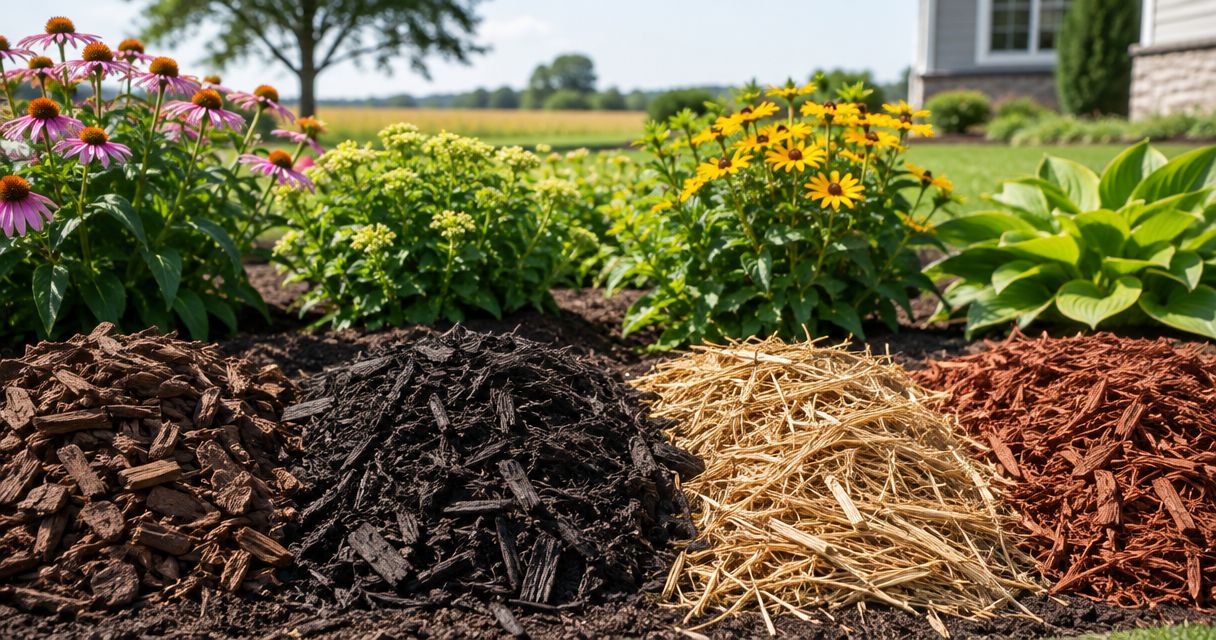
- Mulch lightly: A 2–3-inch layer of organic mulch helps conserve moisture; keep it away from crowns and stems.
- Watch growth: Adjust care to soil moisture and plant condition, not just the weekday.
A mulched bed should still leave the base of each perennial visible and free of piled material. Mulch conserves moisture; it does not fix poor drainage or replace establishment watering.
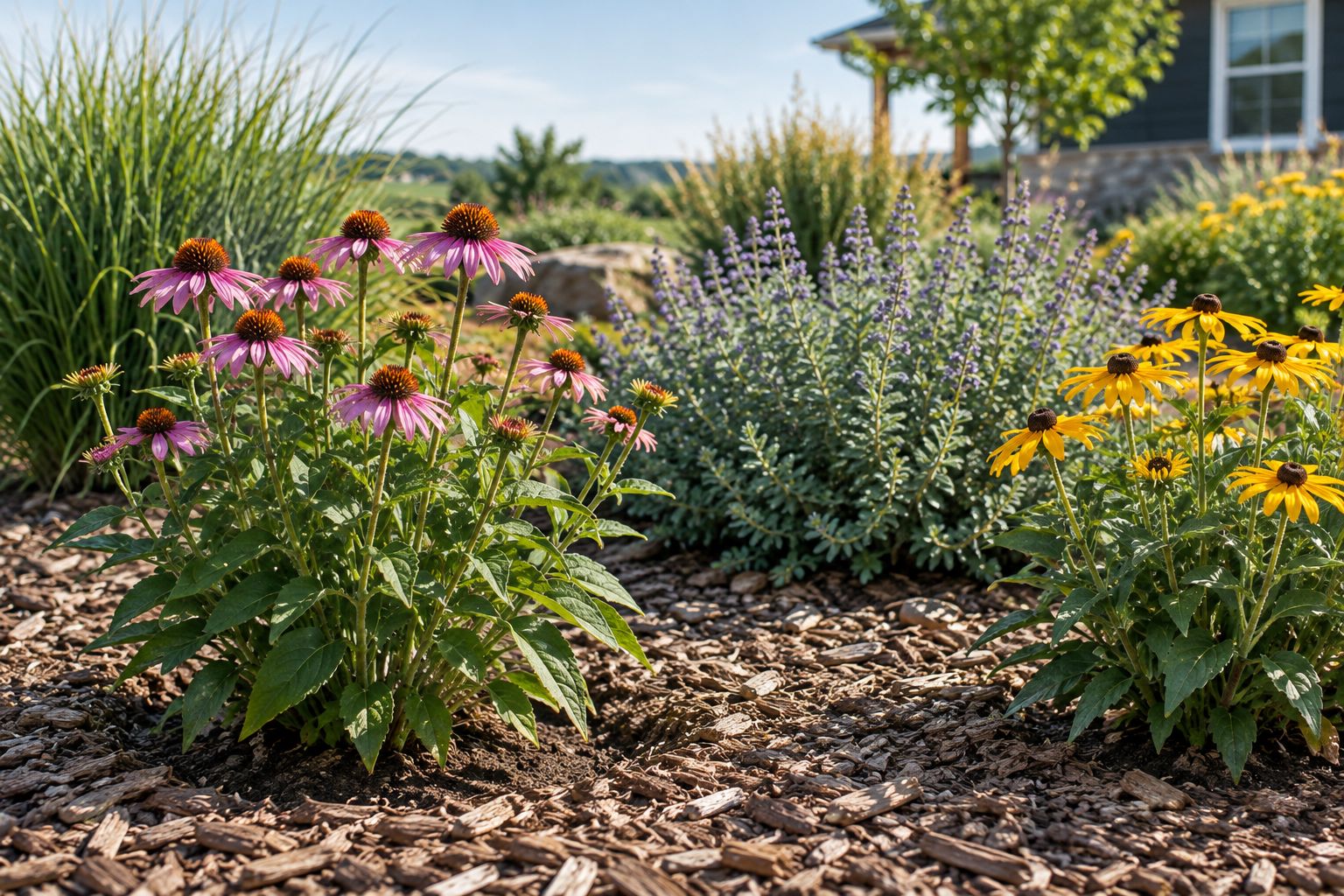
Do not fertilize automatically because a new planting looks small. Several plants in this list suit leaner conditions, and excess feeding can produce growth that flops. For your 2026 garden, aim for sound establishment rather than an instant full bed.
Which drought-tolerant plants should you choose?
Choose purple coneflower as the default flowering perennial for a sunny, well-drained bed. Add little bluestem when you need structure, or upright stonecrop when space is tighter. Choose butterfly milkweed when monarch habitat is the main goal.
Grassgrabbers is a landscaping service option for central Iowa homeowners planning a lower-maintenance yard. Before discussing a planting, identify the bed’s sunlight, wet spots, and mature-space limits. Those details give your landscaping decisions a useful starting point.
Plan your next landscaping project
Explore lawn care and landscaping services for your central Iowa residential property.
FAQ
What are the best drought-tolerant plants for central Iowa?
Purple coneflower, little bluestem, and upright stonecrop are useful starting choices for sunny, well-drained central Iowa beds. Butterfly milkweed adds monarch habitat, while aromatic aster adds late-season flowers. Choose according to drainage, sunlight, and mature size.
Do drought-tolerant plants need watering after planting?
Yes, drought-tolerant plants need watering while they establish. New roots do not immediately reach the moisture available to mature plants. Check the root ball and surrounding soil rather than watering on a fixed schedule.
Is little bluestem better than prairie dropseed?
Little bluestem is better for upright structure, while prairie dropseed is better for rounded clumps and fine texture. Both suit sunny, well-drained sites after establishment. Choose the shape your bed needs rather than treating either grass as universally better.
Which drought-tolerant plant supports monarch butterflies?
Butterfly milkweed is a monarch host plant suited to sunny, well-drained beds. Caterpillars feed on its leaves, so some leaf damage is part of its habitat role. Choose a lasting location because established plants are difficult to move.
Can drought-tolerant plants grow in wet clay soil?
Drought tolerance does not establish that a plant can grow in wet clay soil. Several plants in this guide require good drainage and perform poorly with persistently wet roots. Evaluate drainage separately from soil texture before choosing plants.
What drought-tolerant plants flower late in the season?
Aromatic aster and upright stonecrop provide late-season flowers in sunny, well-drained beds. Aromatic aster needs room to spread, while an upright stonecrop offers a more defined clump. Check the mature dimensions of the plant you buy.
Does Grassgrabbers provide landscaping services in central Iowa?
Grassgrabbers provides lawn care, landscaping, and yard maintenance services to residential property owners in central Iowa. For a drought-tolerant planting discussion, identify your bed’s sunlight, drainage, and available space.
One last thing
A drought-tolerant flower bed does not make the surrounding lawn drought-tolerant. Turf and perennial beds have different growing habits and care needs. Keep those decisions separate instead of applying the same watering approach across the whole yard.
Before planting, watch the exact spot you have chosen after rain. A sunny corner that collects runoff is not a dry site, even when its surface looks dusty later. That simple observation can save you from choosing the right plant for the wrong place.