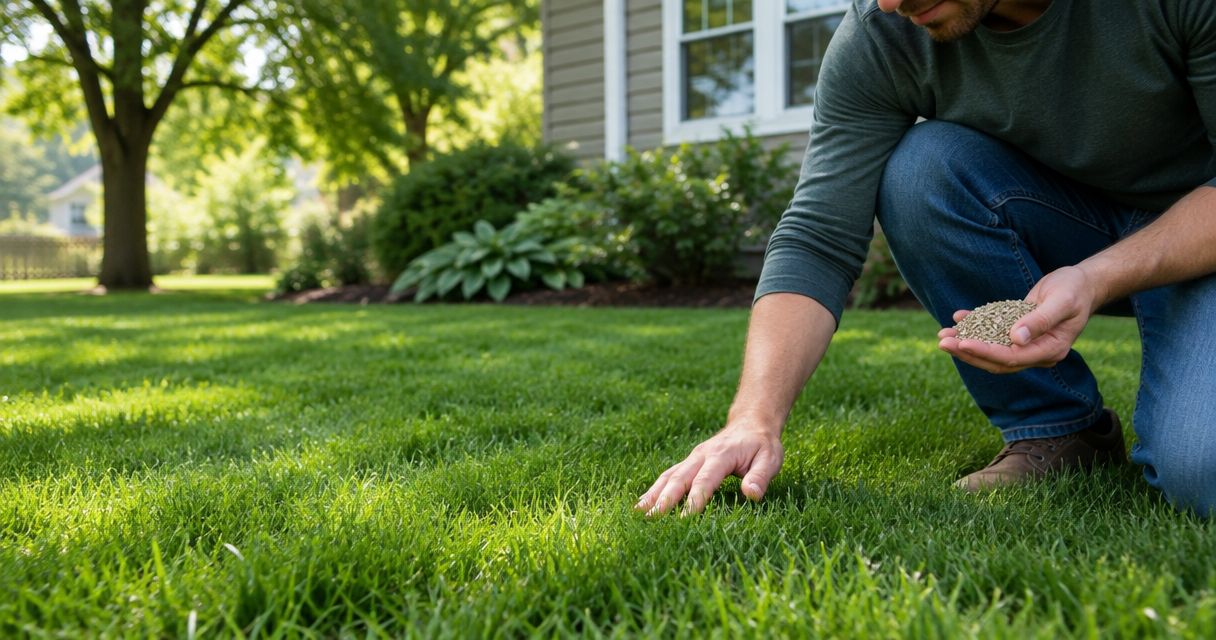
Best overall: a fine fescue blend. Best for shaded play areas: turf-type tall fescue. Best for mixed sun and shade: a fine fescue–Kentucky bluegrass blend. The best shade-tolerant grass seed for Iowa lawns depends on how much light reaches the ground and how often you walk across it.
- The best shade-tolerant grass seed for Iowa lawns is a fine fescue blend for lightly used, shaded areas.
- Turf-type tall fescue suits shaded lawns with more foot traffic, provided the site receives enough light.
- Fine fescue–Kentucky bluegrass blends suit yards with both sunny and shaded sections.
- Grassgrabbers provides lawn care and landscaping services to residential property owners in central Iowa.
- Deep shade calls for a different ground treatment, not repeated purchases of shade grass seed.
Why this matters
A thin patch under a tree is not always a seed problem. Shade limits the light grass needs, while tree roots compete for water. Add regular foot traffic, and even a suitable grass struggles to hold its ground.
Choose grass for the conditions beneath the tree, not for the picture on the seed bag. A shade mixture cannot make turf grow where the site does not support it.
Grassgrabbers is best suited to central Iowa homeowners seeking lawn care and landscaping services rather than a seed product. For your 2026 lawn plan, separate the seed decision from the maintenance decision: the right grass still needs suitable mowing, watering, and protection during establishment.
What makes the best shade-tolerant grass seed?
Use these criteria before comparing seed mixtures. A bag marked for shade is only useful when its contents match your yard.
- Shade tolerance: Fine fescues tolerate shade better than Kentucky bluegrass. Turf-type tall fescue offers another option where shade is moderate rather than deep.
- Foot traffic: A quiet side yard and a shortcut to the driveway need different grass. Fine fescues belong in areas with lighter use.
- Moisture conditions: Dry soil beneath trees differs from damp soil beside a building. Fix drainage problems before treating them as a seed-selection problem.
- Repair habits: Kentucky bluegrass spreads through rhizomes. Tall fescue and perennial ryegrass grow mainly in bunches, so bare spots often need additional seeding.
- Seed-label clarity: Choose by the named species and varieties, not the shade claim printed across the front.
- Maintenance fit: Match the grass to the mowing and watering you will actually provide. Shade tolerance does not eliminate care.
Iowa shade grass seed at a glance: 2026 picks
These are grass types and mixture categories, not individual retail products. Their strengths come from the grasses inside the bag.
| Seed option | Best for | Standout feature | Key limitation |
|---|---|---|---|
| Fine fescue blend | Lightly used shaded lawns | Strong shade tolerance among common cool-season lawn grasses | Does not suit heavy traffic or persistently wet soil |
| Turf-type tall fescue | Moderately shaded play areas | Better wear tolerance than fine fescue | Needs more light than fine fescue and has limited lateral spread |
| Fine fescue–Kentucky bluegrass blend | Lawns with mixed sun and shade | Combines shade adaptation with bluegrass spreading growth | Bluegrass contributes less as shade becomes heavier |
| Perennial ryegrass-containing blend | Fast establishment in light shade | Rapid germination and early cover | Not the strongest choice for lasting shade tolerance |
1. Fine fescue blend: best shade grass for lightly used yards
A fine fescue blend is the default choice for an Iowa lawn with shade and little foot traffic. Fine fescues include creeping red, Chewings, hard, and sheep fescue. These grasses have narrow blades and generally need less fertilizer than Kentucky bluegrass.
The group includes different growth habits. Creeping red fescue has spreading growth, while other fine fescues are more bunch-forming. A mixture gives you more than one type rather than asking a single grass to handle every patch of the yard.
Fine fescue fits the shaded strip beside a house or a quiet area beneath an open tree canopy. It is a weaker fit for the route everyone takes to the back gate. Repeated wear and compacted soil create problems that a shade-tolerant seed cannot solve.
Fine fescue blend pros:
- Strong shade tolerance among commonly used cool-season lawn grasses.
- Fine-textured blades suit a softer-looking lawn.
- Lower fertility needs than Kentucky bluegrass.
- Several species offer different growth and site adaptations.
Fine fescue blend cons:
- Heavy foot traffic can thin the stand.
- Persistently wet soil is a poor match.
- Shade tolerance does not mean it can grow without useful light.
Best for: Homeowners who want grass in a shaded area that sees occasional use rather than daily play.
Look for the individual fine fescue species on the label. The word fescue alone does not distinguish fine fescue from tall fescue, and those choices serve different purposes.
Verdict: Buy a fine fescue blend for lightly used shade; skip it for a busy play area.
2. Turf-type tall fescue: best shade grass for active yards
Turf-type tall fescue is the better starting point when moderate shade overlaps with regular use. It has broader blades than fine fescue and generally handles wear better. Its comparatively deep root system also supports drought tolerance when soil conditions allow roots to develop.
That does not make tall fescue the winner beneath every tree. It needs more light than fine fescue, and shade combined with traffic remains a difficult setting. A heavily shaded dog run is not a problem that one seed bag fixes.
Choose turf-type tall fescue rather than assuming any tall fescue seed delivers the same lawn appearance. Read the variety information, especially when you want the repaired area to blend with the rest of your yard.
Turf-type tall fescue pros:
- Better suited to regular use than fine fescue.
- Useful drought tolerance once established in suitable soil.
- Works in sun as well as moderate shade.
- Offers a lawn option for homeowners balancing shade and activity.
Turf-type tall fescue cons:
- Less shade-tolerant than fine fescue.
- Mostly bunch-forming growth limits its ability to fill bare areas.
- Broader blades can contrast with an existing fine-textured lawn.
Best for: Moderately shaded lawns where children play or people walk regularly, with enough light to sustain turf.
For established tall fescue, a mowing height of 3–4 inches is a useful range. Stay toward the taller end in shade, and avoid removing more than one-third of the blade in a mowing.
Verdict: Buy turf-type tall fescue for active, moderately shaded areas; skip it for deep shade.
3. Fine fescue–Kentucky bluegrass blend: best for mixed light
A fine fescue–Kentucky bluegrass blend suits a yard where sunlight changes from one section to the next. Fine fescue contributes shade tolerance, while Kentucky bluegrass suits the brighter portions and spreads through underground stems called rhizomes.
The blend is not a promise that both grasses will thrive equally everywhere. As shade increases, Kentucky bluegrass becomes a weaker contributor. Choose the mixture because your lawn contains genuinely different light conditions, not because a longer ingredient list sounds better.
This option makes sense for a front lawn with an open sunny center and shaded edges. It also gives you a way to think about the entire yard rather than treating every thin patch as an unrelated project.
Fine fescue–Kentucky bluegrass blend pros:
- Combines grasses suited to different light conditions.
- Kentucky bluegrass can spread into small gaps where conditions support it.
- Fine fescue contributes shade tolerance.
- Suits a yard with both open lawn and shaded margins.
Fine fescue–Kentucky bluegrass blend cons:
- Kentucky bluegrass is not a dependable deep-shade grass.
- Different species can produce visible texture differences.
- A blend still needs care matched to the site.
Best for: Homeowners with a single lawn that crosses sunny and shaded areas.
For a 2026 renovation, inspect the existing grass before choosing a mixture. Matching the lawn's texture matters if you are repairing a small area rather than reseeding the whole yard.
Verdict: Buy this blend for mixed light; skip it when the entire area is heavily shaded.
4. Perennial ryegrass-containing blend: best for quick establishment
Perennial ryegrass germinates quickly compared with Kentucky bluegrass. That makes it useful in mixtures where early cover matters. Its role is establishment speed, not the strongest available shade tolerance.
A ryegrass-containing blend belongs in light shade with a clear plan for the finished lawn. Check the other species in the bag. A mixture built around suitable long-term grasses is different from choosing ryegrass simply because it greens up fast.
Do not confuse perennial ryegrass with annual ryegrass. The names are similar, but annual ryegrass is not an equivalent choice for a permanent Iowa lawn.
Perennial ryegrass-containing blend pros:
- Rapid germination helps establish early cover.
- Good wear tolerance suits some actively used areas.
- Useful as one component of a lawn mixture.
Perennial ryegrass-containing blend cons:
- Less shade-tolerant than fine fescue.
- Bunch-forming growth does not readily spread into bare patches.
- Fast initial growth does not establish long-term site suitability.
Best for: Lightly shaded repairs where quick establishment matters and the rest of the mixture fits the lawn.
Verdict: Hold unless establishment speed is your main need; choose fine fescue for lasting shade tolerance.
How we ranked these grass seed options
The ranking prioritizes shade tolerance, then separates choices by traffic, changing light, and establishment needs. It compares established grass characteristics rather than claiming a product trial or ranking retail bags by appearance.
Fine fescue takes the default position because shade is the main question. Tall fescue moves ahead when wear matters more. The bluegrass blend serves mixed conditions, while perennial ryegrass earns a narrower role for early cover.
The right ranking changes with the site, but the grass characteristics do not. A sunny play lawn and a shaded side yard should not automatically receive the same seed.
Read the seed label before buying
For your 2026 seed purchase, turn the bag around before deciding. The front describes the intended use; the seed analysis tells you what you are getting.
Check these label entries:
- Species and varieties: Confirm that the named grasses match your chosen category.
- Germination: Read the stated germination percentage rather than assuming all bags are equivalent.
- Test date: Check how recently the seed was tested, and follow the package's storage guidance.
- Weed seed: Review the weed-seed information instead of judging seed quality by packaging.
- Other ingredients: Distinguish actual seed from coating or other material included in the bag.
Follow the package's seeding rate for your chosen mixture. Different grass species and coated products do not share one universal application rate.
Buying extra seed is not a substitute for preparing the ground. Seed left on a thick mat of dead grass has poor soil contact, while seed beneath an unsuitable canopy still lacks the light it needs.
Give shade grass a fair start
Late summer is the preferred seeding season for Iowa cool-season lawns. Iowa State University Extension identifies roughly August 15 through September 15 as the preferred window. For 2026, plan preparation before that window rather than waiting until the lawn looks bare in late fall.
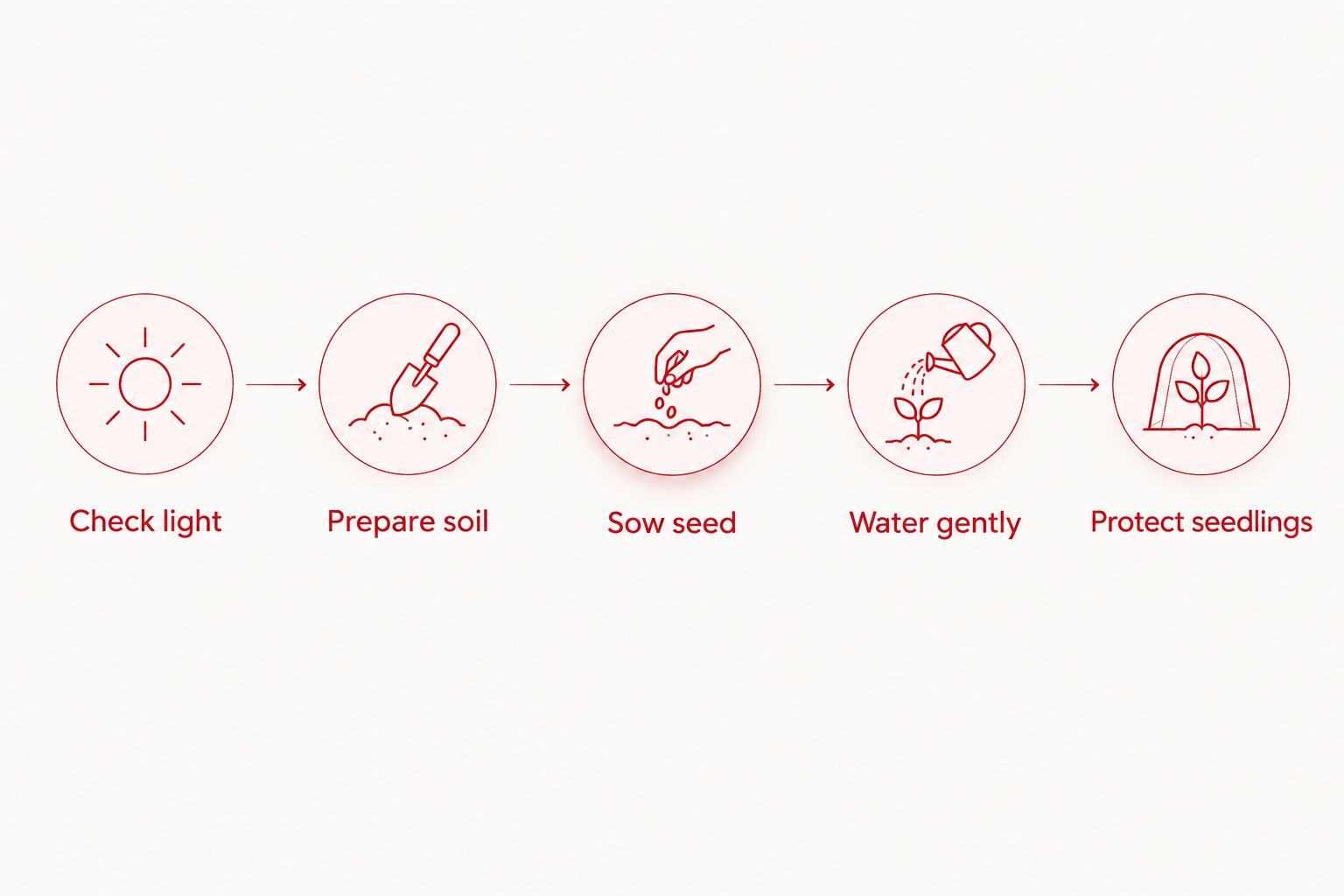
Work through these steps in order:
- Check light: Look at the area while trees are fully leafed out. Winter sunlight does not describe summer growing conditions.
- Prepare soil: Remove debris and loosen the surface so seed contacts soil. Address compaction without cutting or damaging major tree roots.
- Sow seed: Apply the chosen mixture at its labeled rate. More seed is not automatically better.
- Water gently: Keep the seedbed moist during germination without washing seed away or leaving soil waterlogged.
- Protect seedlings: Keep foot traffic off the area while young grass establishes.
Once established, keep shaded grass taller rather than cutting it short to make the area look tidy. A 3-inch mowing height is a useful starting point for many cool-season lawns; adjust within the recommended range for your grass. Follow the one-third mowing rule and keep the mower blade sharp.
Do not copy the watering schedule from a sunny patch without checking the shaded soil. Shade slows drying, but nearby tree roots still compete for moisture. Check the ground, not just the color of the grass.
Which shade grass seed should you choose?
Choose a fine fescue blend unless foot traffic or mixed sunlight gives you a clear reason to choose something else. That is the simplest default for an Iowa homeowner repairing a quiet shaded area in 2026.
Choose turf-type tall fescue when moderate shade and regular use overlap. Choose a fine fescue–Kentucky bluegrass blend when your lawn includes both open sunlight and shade. Treat perennial ryegrass as an establishment tool, not the automatic answer to a shade problem.
Grassgrabbers provides lawn care and landscaping services for central Iowa residential properties. If your next step is help maintaining the yard rather than choosing a seed bag, start with that distinction.
Plan your next lawn-care step
Explore lawn care and landscaping services for residential properties in central Iowa.
FAQ
What's the best shade-tolerant grass seed for Iowa lawns?
A fine fescue blend is the best default for lightly used, shaded Iowa lawns. Choose turf-type tall fescue instead when moderate shade overlaps with more foot traffic.
Is fine fescue better than tall fescue in shade?
Fine fescue generally tolerates shade better than tall fescue. Tall fescue is the stronger choice when wear tolerance matters and the area receives enough light.
Will Kentucky bluegrass grow under trees?
Kentucky bluegrass can grow under trees where enough sunlight reaches the lawn, but it is not a dependable deep-shade choice. A blend containing fine fescue better suits lawns with both sunny and shaded sections.
When should I plant shade grass seed in Iowa?
Late summer is the preferred seeding season for Iowa cool-season lawns, with roughly August 15 through September 15 as the usual window. Prepare the soil beforehand and keep the seedbed moist during germination.
How short should I mow grass in shade?
Keep shaded grass toward the taller end of its recommended mowing range rather than cutting it short. For turf-type tall fescue, 3–4 inches is a useful range; avoid removing more than one-third of the blade at once.
Can grass grow in deep shade beneath a tree?
Grass cannot maintain healthy cover where too little light reaches the ground. Consider mulch or an appropriate shade planting instead of repeatedly reseeding, and protect the tree's roots during any changes.
Does Grassgrabbers sell the seed blends in this guide?
Grassgrabbers is a lawn care and landscaping service provider for residential property owners in central Iowa. This guide recommends grass categories, not Grassgrabbers-branded seed products.
One last thing
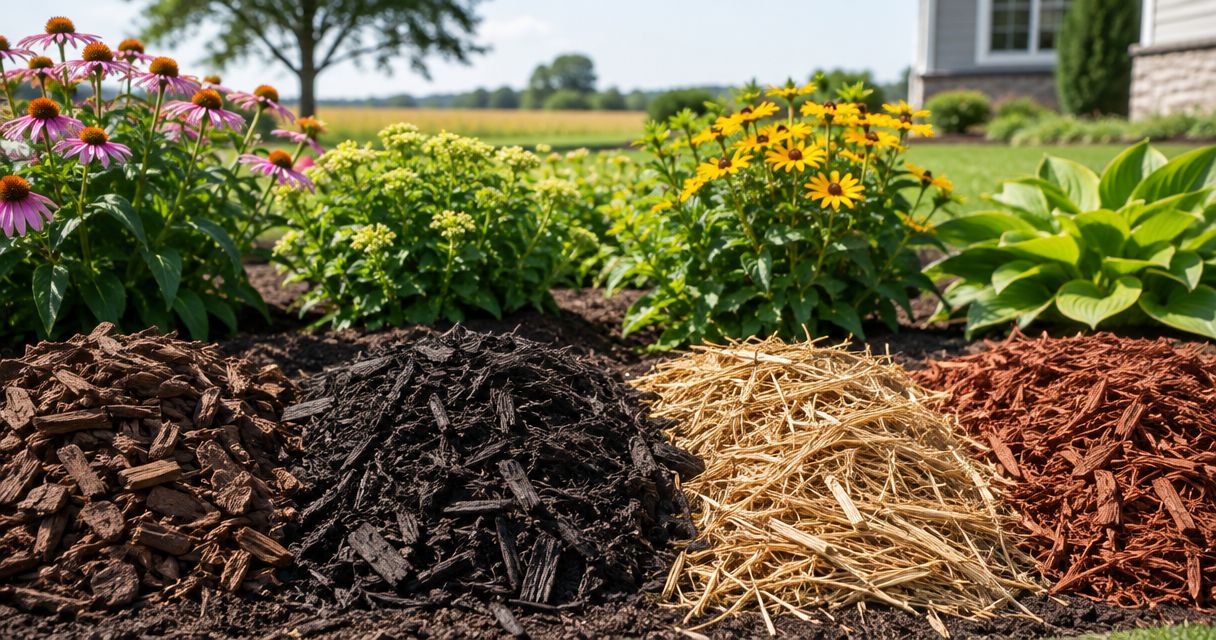
The best lawn decision is sometimes to stop trying to grow lawn. If the same patch fails repeatedly beneath a dense canopy, a mulched area or suitable shade planting removes the need to keep repairing turf there.
Keep mulch away from the trunk and do not pile soil over exposed tree roots. Avoid turning a grass problem into a tree problem. For your 2026 yard plan, save grass for the areas that can support it and choose another treatment for the rest.