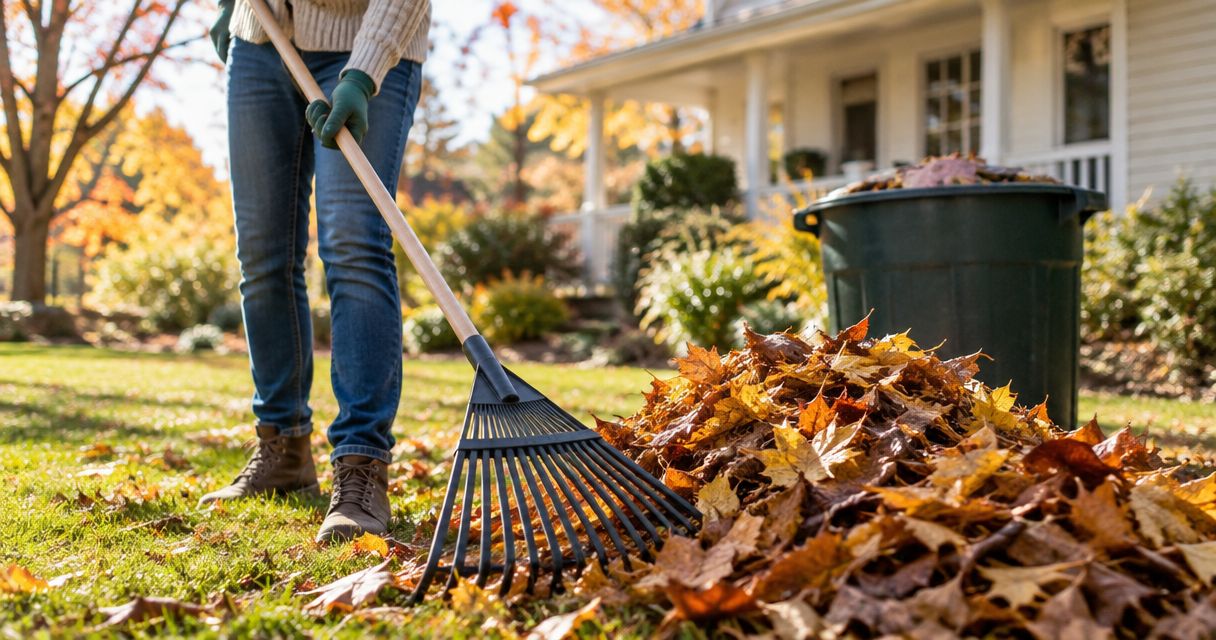
Best overall: a leaf rake. Best for leaves scattered through grass: a mulching mower. Best for moving gathered leaves: a yard tarp. This 2026 guide matches the best fall cleanup tools for Iowa homeowners to the work your yard actually needs.
- The best fall cleanup tools for Iowa homeowners start with a leaf rake, not a powered machine.
- A mulching mower handles scattered lawn leaves; a yard tarp moves gathered piles.
- Use a hand rake around plants and a leaf blower on open hard surfaces.
- Grassgrabbers provides lawn care and landscaping for central Iowa homeowners who want help with yard maintenance.
Why this matters
Fall cleanup works better when you separate the jobs: clear the grass, protect the plants, and move only the material that needs moving. A blower moves leaves but does not collect them. A mower chops leaves but does not remove branches.
Grassgrabbers is a lawn care and landscaping service for central Iowa homeowners who want help maintaining their yards. If you would rather hand off the work, start with Grassgrabbers. If you are handling cleanup yourself, choose tools around your lawn, planting beds, and disposal route—not the biggest machine on the shelf.
What makes the best fall cleanup tools?
Use these criteria for your 2026 cleanup kit. A tool earns its place by solving a distinct problem without creating another one.
- Surface fit: Lawn, gravel, pavement, and planted beds need different handling.
- Leaf condition: Dry, loose leaves behave differently from wet, matted piles.
- Collection method: Decide whether leaves will be mulched, gathered, or moved elsewhere on your property.
- Handling comfort: Check grip, reach, carrying weight, and how the tool feels during repeated movements.
- Plant protection: Choose control around stems, shallow roots, and low-growing plants.
- Upkeep: Powered equipment adds charging or fuel, cleaning, and maintenance to the job.
Fall cleanup tools at a glance
These are tool categories, not endorsements of particular models. Match the job first; compare individual equipment afterward.
| Rank and tool | Best for | Standout feature | Key limitation |
|---|---|---|---|
| 1. Leaf rake | General lawn gathering | Broad, flexible tines gather loose leaves | Repeated pulling takes effort |
| 2. Mulching mower | Scattered leaves in turf | Chops leaves while passing over the lawn | Thick, wet layers need separate handling |
| 3. Cordless leaf blower | Open patios and driveways | Moves loose leaves without dragging tines | Does not collect the leaves |
| 4. Yard tarp | Moving gathered piles | Carries a broad load at ground level | Wet leaves become heavy |
| 5. Leaf scoops | Loading leaves into containers | Holds more loose material than bare hands | Requires repeated bending |
| 6. Hand rake | Detail work around plants | Reaches small spaces with close control | Too slow for open lawns |
1. Leaf rake: best fall cleanup tool for general lawn gathering
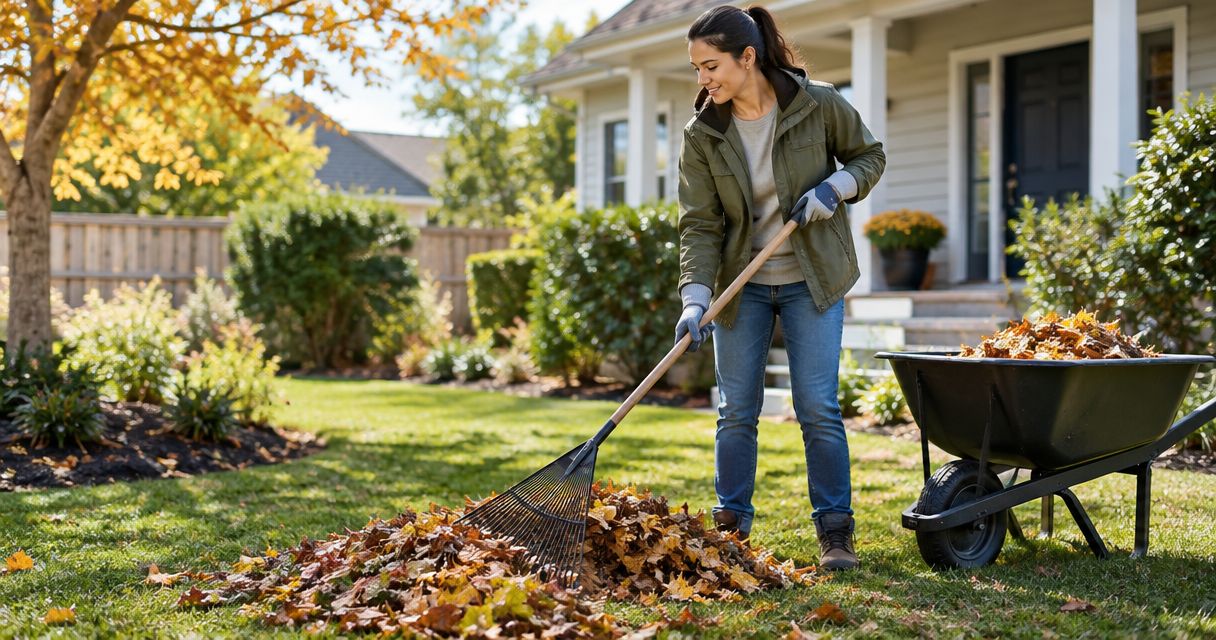
A leaf rake is the default choice when you need to gather leaves from grass. Flexible tines pull loose material together without the rigid scraping action of a soil rake. You control where the pile goes and can stop immediately when you find a branch or hidden obstacle.
Choose the rake by handling it, not just looking at its width. A broad head covers open ground, while a narrower head is easier to guide between obstacles. Keep the pile close enough that you are not dragging every stroke across the whole yard.
Leaf rake pros:
- Gathers leaves without batteries or fuel.
- Gives direct control around lawn edges.
- Works alongside a tarp or leaf scoops.
Leaf rake cons:
- Repeated pulling and lifting take physical effort.
- Wet, packed leaves resist flexible tines.
Best for: Homeowners clearing ordinary leaf cover from accessible lawn areas.
Verdict: Buy if your cleanup kit lacks a comfortable leaf rake; keep the one you own if it still works well.
2. Mulching mower: best fall cleanup tool for scattered lawn leaves
A mulching mower cuts leaves into smaller pieces and returns them to the lawn. It is useful when leaves are scattered through visible grass rather than piled into a continuous mat. Remove sticks, stones, and other debris before mowing.
Let the result guide you. If chopped leaves still cover the grass, gather the excess instead of continuing to drive over a thick layer. Do not lower the cutting height simply to make leaves disappear.
For established cool-season turf, a 3-inch mowing height is a common lawn-care target. Keep the usual mowing rule too: remove no more than one-third of the grass blade in a mowing. Leaf cleanup does not cancel grass-care basics.
Mulching mower pros:
- Handles scattered leaves without collecting every leaf.
- Combines leaf chopping with necessary mowing.
- Reduces the size of leaf pieces left in turf.
Mulching mower cons:
- Thick or wet layers can clog equipment and leave clumps.
- Requires safe operation, maintenance, and suitable ground conditions.
Best for: Lawns with scattered leaves and grass that remains visible.
Verdict: Hold onto a suitable mower you already own; do not buy another mower just for fall leaves.
3. Cordless leaf blower: best fall cleanup tool for open hard surfaces
A cordless leaf blower moves loose leaves from patios, driveways, and walks toward a collection area. It is a moving tool, not a removal system. Decide where the leaves will end up before starting.
Use controlled passes aimed toward your own gathering area. Avoid blowing leaves into streets, storm drains, neighboring yards, or planted beds you have already cleaned. Around gravel and loose mulch, switch to a rake or hand work rather than scattering the surface material.
Wear eye protection and follow the equipment instructions for hearing protection and safe use. Keep other people and pets clear of flying debris.
Cordless leaf blower pros:
- Moves loose leaves across pavement without scraping.
- Reaches open corners that are awkward to sweep.
- Avoids a trailing power cord.
Cordless leaf blower cons:
- Battery runtime limits uninterrupted work.
- Noise and airborne debris require care.
Best for: Homeowners with open hard surfaces and a clear place to gather leaves.
Verdict: Buy only if moving leaves from pavement is a recurring job, not a substitute for collection.
4. Yard tarp: best fall cleanup tool for moving gathered piles
A yard tarp turns a loose leaf pile into a load you can move. Rake leaves onto it, gather the edges, and move the load toward your collection or compost area. Keep the route clear before loading.
The useful limit is what you can move comfortably, not how much the tarp can hold. Wet leaves add substantial weight. Make smaller loads rather than pulling a heavy bundle across steps, slopes, or delicate planting edges.
Choose a tarp you can spread flat and gather without struggling. Check it for tears and remove sharp branches before loading leaves.
Yard tarp pros:
- Gives you a collection surface beside the work.
- Moves loose leaves without carrying individual handfuls.
- Folds away when cleanup is finished.
Yard tarp cons:
- Dragging can wear or tear the material.
- An overloaded tarp is difficult to control.
Best for: Moving gathered leaves across an accessible yard.
Verdict: Buy if carrying leaves is the slow part of your cleanup.
5. Leaf scoops: best fall cleanup tool for loading containers
Leaf scoops act like oversized hands for picking up gathered leaves. They are useful when the next step is loading a yard-waste container or transferring material from a tarp. They do not replace the rake that gathers the pile.
Check the grip and opening before choosing a pair. You should be able to close the scoops around loose leaves without twisting your wrists awkwardly. Keep the container nearby so each load requires less carrying.
If bending is uncomfortable, skip this approach and choose a collection method that better suits your mobility.
Leaf scoops pros:
- Gather more loose leaves than bare hands.
- Help transfer piles into containers.
- Keep your hands out of much of the debris.
Leaf scoops cons:
- Repeated bending can be uncomfortable.
- Bulky sticks interrupt loading.
Best for: Homeowners who already gather leaves efficiently but struggle with the loading step.
Verdict: Buy for container loading; skip if a tarp already takes leaves directly to their destination.
6. Hand rake: best fall cleanup tool for detail work around plants
A hand rake removes selected leaves from small spaces where a full-size rake is clumsy. Use it around edging, between plants, and beside steps. Work lightly so the tines do not pull at roots or scrape plant crowns.
Do not treat every leaf in a bed as litter. Leaves can serve as mulch and provide habitat; remove material where it buries vulnerable plants, blocks drainage, or creates a problem along a walking surface. Leave suitable areas less disturbed.
Hand rake pros:
- Gives close control near stems and edging.
- Reaches tight planting spaces.
- Helps separate leaves from larger debris.
Hand rake cons:
- Requires kneeling, crouching, or close access.
- Covers too little ground for general lawn cleanup.
Best for: Selective cleanup in established planting beds.
Verdict: Buy if your beds need careful detail work; skip for a lawn-only job.
Put the tools to work in the right order
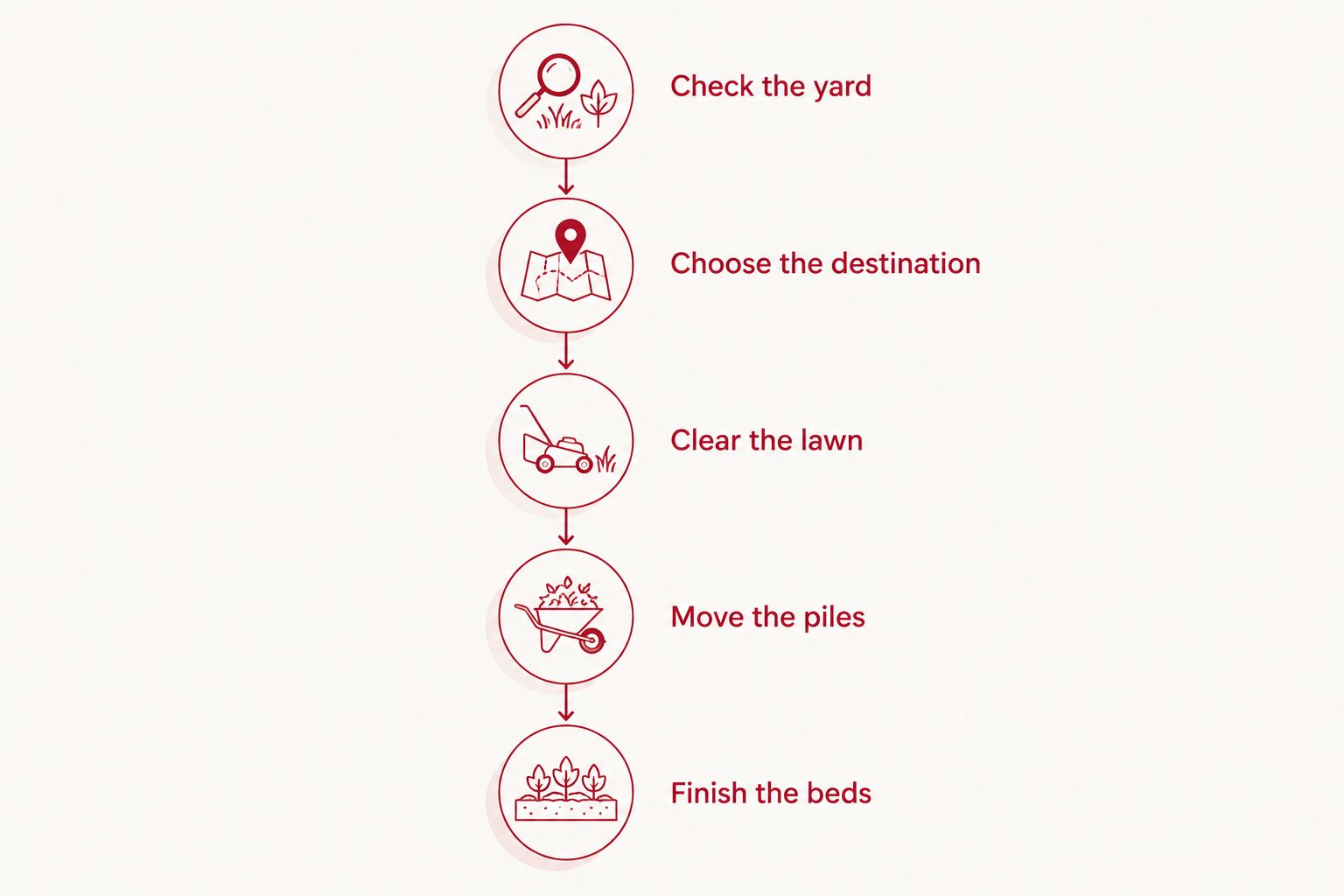
For your 2026 cleanup, finish the collection plan before starting the equipment. Otherwise, you spend the afternoon moving the same leaves between unfinished areas.
- Check the yard. Pick up branches and look for hidden obstacles, soft ground, and blocked drains.
- Choose the destination. Decide what stays as mulch, what goes to compost, and what follows local collection rules.
- Clear the lawn. Mulch scattered leaves or rake heavier coverage into manageable piles.
- Move the piles. Use the tarp for transport and scoops where containers need loading.
- Finish the beds. Remove selected leaves carefully rather than stripping every planting area bare.
Keep shredded leaf mulch loose rather than packed against plants. A layer around 2 inches deep is a practical starting point in suitable beds; leave stems and crowns clear. Check underneath existing mulch before adding more.
How the tools rank for 2026
The ranking follows surface fit, collection method, handling comfort, plant protection, and upkeep. The leaf rake takes the default spot because it gathers leaves directly without requiring powered equipment. The other tools win narrower jobs.
This is a task-based guide, not a model-by-model equipment test. A blower ranks above a tarp for clearing pavement; the tarp ranks above the blower for transporting a finished pile. Neither replaces the other.
Which fall cleanup tools should you choose?
Start with a leaf rake and a clear destination for the leaves. Add a tarp if moving piles is difficult, and use an existing mulching mower when scattered leaves can be chopped without covering the grass.
For your 2026 shopping list, solve the bottleneck rather than buying the whole table. Choose scoops for loading, a hand rake for beds, or a blower for pavement. Grassgrabbers provides lawn care and landscaping when you prefer help with yard maintenance instead of adding equipment.
Get help with your yard
Explore lawn care and landscaping services for central Iowa homeowners.
FAQ
What's the best fall cleanup tool for an Iowa homeowner?
A leaf rake is the best default tool for gathering leaves from a lawn. Add other tools only when you need help with a separate job, such as transport, container loading, or detail work.
Is a leaf blower better than a rake?
A leaf blower is better for moving loose leaves across open pavement; a rake is better for gathering leaves with direct control. A blower still leaves you with a collection job.
Can I mow leaves instead of raking them?
You can mulch scattered leaves with a suitable mower when the chopped material does not blanket the grass. Gather excess leaves and remove sticks before mowing.
Should I remove every leaf from my garden beds?
No, garden beds do not need to be stripped of every leaf. Keep suitable leaf cover where it serves as mulch, but clear buried plant crowns, blocked drainage, and walking surfaces.
What's the easiest way to move a pile of leaves?
A yard tarp is a practical way to move gathered leaves across an accessible yard. Keep loads manageable, especially when leaves are wet, and clear the route first.
Do I need new cleanup equipment for fall 2026?
You do not need new equipment if your existing tools handle the work safely and comfortably. Identify the difficult step before adding a blower, scoops, or another rake.
Can Grassgrabbers help with lawn and yard maintenance?
Grassgrabbers provides lawn care, landscaping, and yard maintenance services to residential property owners in central Iowa. Describe your property and the work you want handled when discussing service needs.
One last thing
Decide which leaves should stay before deciding which tools to buy. A clean walking surface, uncovered grass, and healthy planting beds do not require every corner of your property to look bare. Selective cleanup gives each tool a purpose and avoids disturbing areas that do not need work.