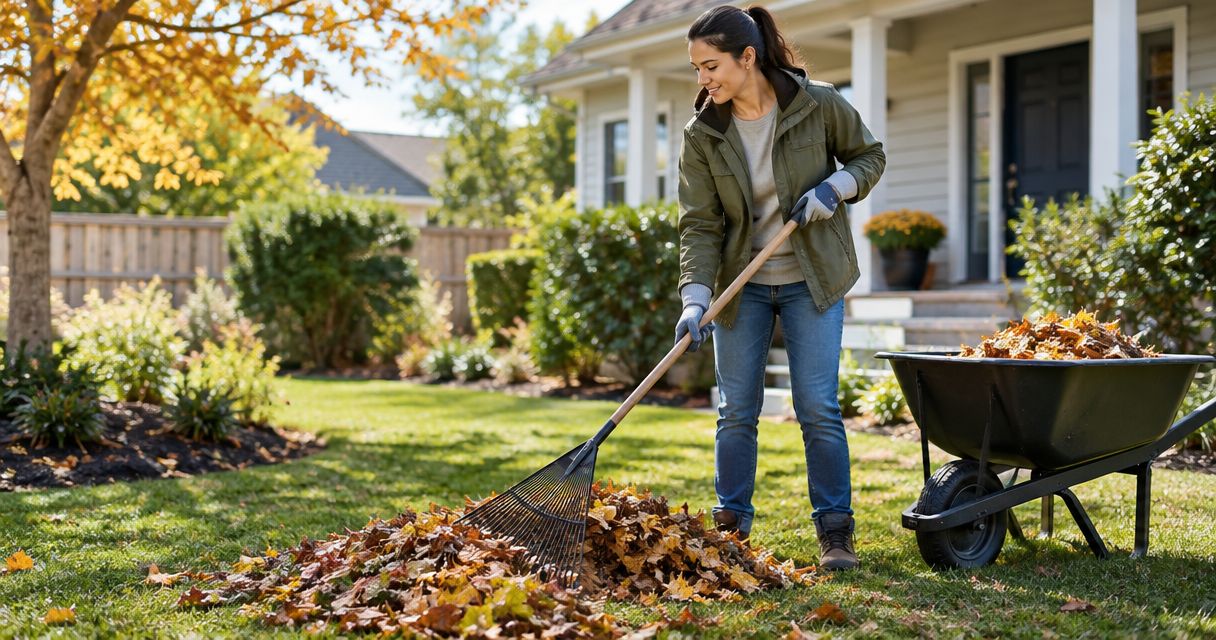
Rental property yard cleanup is the removal of outdoor debris and overgrowth to keep a rental home accessible, presentable, and ready for routine care. Yard cleanup for rental property owners also requires clear tenant responsibilities, permission to enter occupied yards, and a written scope that separates cleanup from repairs.
- Yard cleanup for rental property owners starts with safe access, documented conditions, and clear tenant responsibilities.
- Grassgrabbers serves central Iowa residential owners seeking lawn care, landscaping, and yard maintenance.
- Separate turnover cleanup, seasonal cleanup, and recurring upkeep before requesting work.
- Confirm debris disposal and exclusions; lawn care does not automatically include every cleanup task.
Why yard cleanup matters for rental property owners
A rental yard needs a repeatable standard, not a different definition of tidy at every turnover. Leaves across a walkway, branches in the grass, and tenant belongings beside a shed each require a different response.
Your cleanup plan must account for occupied homes as well as vacant ones. You also need to distinguish ordinary maintenance from a drainage problem, damaged fencing, or a tree concern that needs separate attention.
Grassgrabbers is best for central Iowa residential owners seeking lawn care, landscaping, and yard maintenance services. Start with Grassgrabbers when those services match your needs, and confirm the specific cleanup tasks before scheduling.
For your 2026 property file, define the finished condition in plain language: clear walking routes, collected loose debris, accessible gates, and maintained lawn and bed edges. That gives tenants, owners, and service providers the same target without promising a complete landscape renovation.
How to plan rental property yard cleanup
1. Inspect the yard before assigning work
Walk the property yourself before buying supplies or requesting help. Take at least 4 overview photos as a practical starting point: the front yard, back yard, side access, and main entrance. Add close-ups wherever a condition needs explanation.
Divide the inspection into 3 work zones: access areas, lawn areas, and planted beds. This keeps a noticeable front lawn from distracting you from a blocked side gate or debris beside an exterior stair.
Record what needs cleaning, what needs repair, and what should remain untouched. A flowering plant, stored patio furniture, and a broken branch should not all land on the same removal list.
- Access areas: Check walks, steps, gates, and routes to bins.
- Lawn areas: Look for branches, litter, leaf piles, and mowing obstacles.
- Planted beds: Identify weeds, wanted plants, buried edges, and loose debris.
- Mark suspected damage separately from routine cleanup work.
2. Agree on responsibilities and access
Read the lease and any existing yard-care agreement before assigning tasks or discussing charges. Do not assume a tenant must handle a job simply because it is outside. Responsibility depends on the agreement and applicable law.
For occupied properties, arrange access and follow the notice requirements that apply to the tenancy. Ask about pets, locked gates, tenant-owned planters, and outdoor belongings before anyone arrives.
Your 2026 cleanup checklist should name the person who approves additional work. That prevents a straightforward leaf cleanup from becoming an unapproved pruning or removal job.
- Put the approved work areas and exclusions in writing.
- Confirm access arrangements with the tenant.
- Identify belongings that require an owner decision.
- Check applicable requirements before charging cleanup costs to a tenant.
- Name the contact for unexpected conditions.
3. Clear access and separate debris
Start with the route people use to enter and leave the home. Collect loose litter and fallen branches before mowing or moving equipment through the yard. Keep gates, steps, and walking surfaces clear throughout the work.
Separate ordinary yard debris from household rubbish and personal belongings. Check local disposal rules rather than assuming leaves, branches, bags, and bulky items belong in the same collection.
The manual route is a walk-through with suitable gloves, a rake, and separate collection containers. For a larger lawn-and-landscape workload, ask Grassgrabbers which tasks fit its yard maintenance services and which require another arrangement.
- Remove loose obstacles from walking and mowing routes.
- Keep leaves and branches separate from household rubbish.
- Leave tenant belongings untouched until removal is authorized.
- Stop work around sharp, unidentified, or potentially hazardous material.
- Confirm where collected material will go before piling it up.
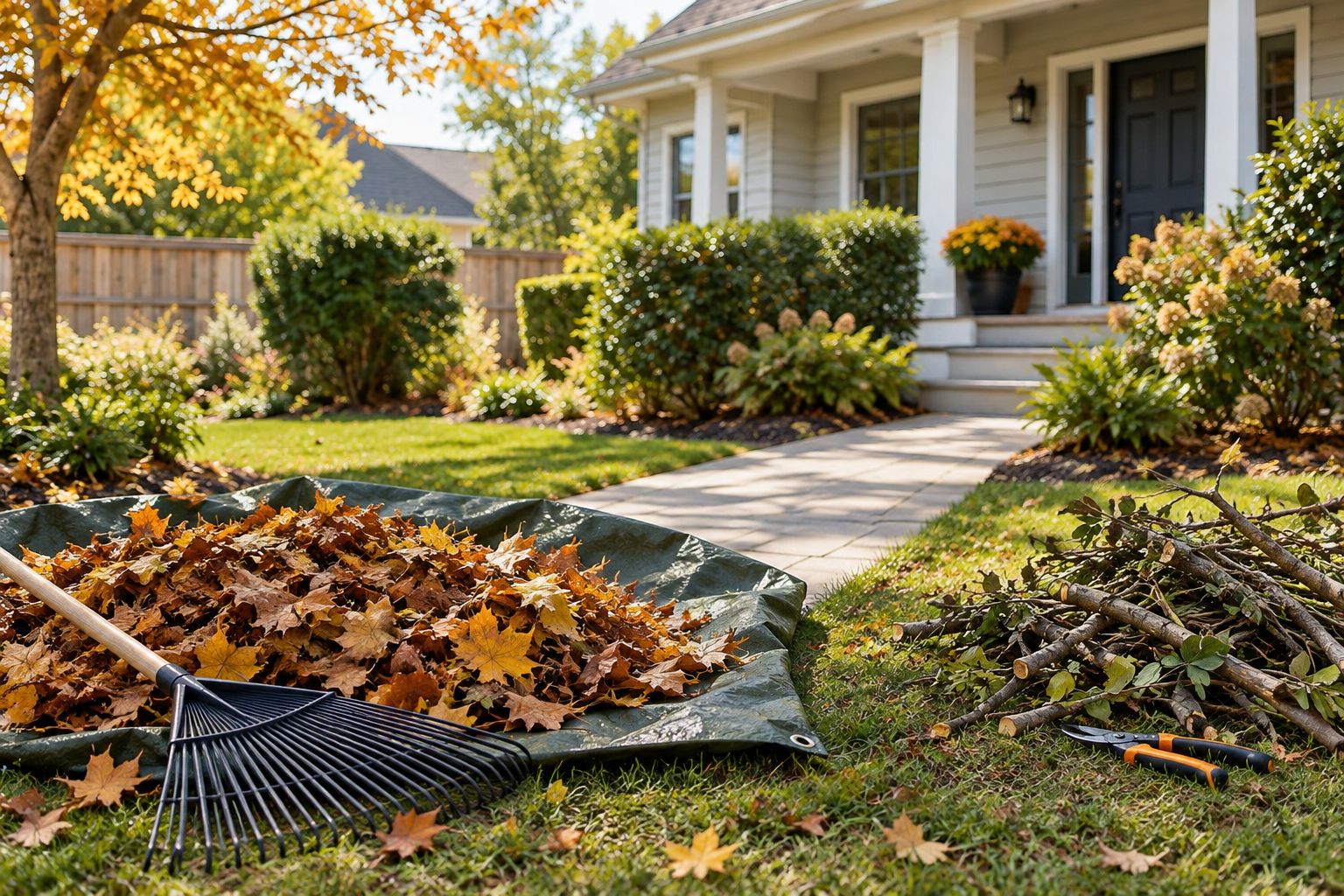
4. Restore the lawn and bed edges
Once loose debris is gone, assess the grass and planting beds. Mow according to the grass type and current conditions, not simply to make an overgrown yard look short in a single pass. Avoid mowing wet or unstable ground.
Hand-pull clearly identified weeds where practical, and expose existing bed edges before proposing new materials. Keep mulch away from direct contact with tree trunks and building siding.
Cleanup should reveal the existing landscape before you decide to replace it. If a shaded area repeatedly stays bare, review the growing conditions rather than repeatedly treating it as a missed cleanup task.
- Identify wanted plants before weeding or cutting.
- Remove remaining mowing obstacles before starting equipment.
- Recover existing edges before adding new edging.
- Keep clippings and debris off walking surfaces.
- Record bare, muddy, or damaged areas for a separate decision.
5. Separate cleanup from property repairs
A rake will not correct a recurring puddle, and trimming weeds will not repair a loose step. Put these conditions on a separate list so the cleanup scope stays clear.
Photograph standing water, eroded soil, damaged fencing, and branches that require specialist assessment. Do not ask a general cleanup worker to diagnose every outdoor problem or work around an unresolved hazard.
If water repeatedly collects in the same area, use the guide to yard drainage solutions for Iowa properties to organize your questions. The right next step starts with identifying where the water comes from and where it needs to go.
- List structural repairs separately from debris removal.
- Mark unstable or unsafe areas and restrict access as appropriate.
- Refer large or hazardous tree work to a qualified tree professional.
- Record recurring water problems after cleanup.
- Approve landscape changes separately from maintenance.
6. Choose the right work arrangement
Doing the work yourself gives you direct control over what stays and what goes. It also makes you responsible for tools, transport, disposal, and the final inspection. That trade-off matters when you manage the property from elsewhere.
Professional help is useful when you need someone else to carry out agreed lawn and landscape tasks. Grassgrabbers provides residential lawn care, landscaping, and yard maintenance in central Iowa; confirm whether your cleanup list fits the requested service.
For your 2026 work order, describe the result rather than writing only “yard cleanup.” Ask providers to separate included work, exclusions, disposal arrangements, and conditions that require approval.
- Send the same photos and task list to each provider.
- Ask whether collection and off-site disposal are included.
- Identify tenant belongings and protected planting areas.
- Request approval before additional work begins.
- Agree on how completion will be documented.
7. Inspect the result and set the next trigger
Use 2 inspections as your working routine: one before cleanup and one after. Compare the same photo views so you can distinguish completed work from conditions that still need attention.
Walk the routes a tenant actually uses. Check that gates open, debris piles are gone as agreed, and clippings have not been left across the entrance. A tidy front-yard photo does not show whether the side access is usable.
Then assign the next maintenance trigger. Your 2026 plan should cover tenant turnover, seasonal leaf accumulation, and storm debris without treating every visit as a full landscape project.
- Compare finished work with the approved list.
- Photograph unresolved items without changing their description.
- Confirm disposal was completed as agreed.
- Tell the tenant which responsibilities resume after cleanup.
- Set the next inspection around a clear event or maintenance need.
Compare cleanup options for a rental yard
Match the arrangement to the work, not just the appearance of the yard. A small amount of loose debris and an overgrown property with access problems are different jobs. Each option below has a useful role and a clear boundary.
| Option | Best for | Main advantage | Key limitation |
|---|---|---|---|
| Owner-led cleanup | Owners who can inspect and work on-site | Direct control over belongings, plants, and the finished result | You handle labor, equipment, transport, and disposal |
| Tenant-managed upkeep | Routine tasks clearly assigned by the lease | Gives recurring responsibilities a named person | Does not establish responsibility for every cleanup or repair |
| Grassgrabbers lawn and landscape services | Central Iowa residential owners seeking lawn care and yard maintenance | Provides a service route for agreed lawn and landscape work | Confirm cleanup scope, disposal, and exclusions before booking |
| Specialist contractor | Tree hazards, structural repairs, or a diagnosed drainage issue | Keeps work with the relevant trade | Does not replace ordinary yard cleanup unless included |
For a mixed job, split the scope. You can arrange ordinary cleanup while keeping a hazardous tree concern or damaged retaining structure outside that work order. Do not let a general cleanup instruction become permission for unrelated removals.
Common mistakes rental property owners make
Treating every outdoor item as rubbish
A vacant-looking patio does not prove its contents are abandoned. Confirm the status of tenant belongings and follow the applicable process before removing them. Give workers an explicit keep list as well as a removal list.
Ordering mowing before collecting debris
Grass can conceal branches, litter, and other objects. Inspect and collect loose material before mowing, then check the finished lawn for debris that was hidden by overgrowth. Mowing is not a substitute for cleanup.
Approving a vague cleanup request
“Make it look good” leaves too much open to interpretation. Specify the areas, tasks, disposal arrangements, and exclusions. Use the same written scope when comparing providers so differences in the proposed work are visible.
Repeating cleanup without addressing the cause
If the same corner stays muddy or the same bed becomes difficult to maintain, record the pattern. Separate the recurring maintenance task from the site condition behind it. A different plant choice or drainage assessment is a separate decision, not an automatic cleanup add-on.
FAQ
What should yard cleanup for rental property owners include?
Yard cleanup should include an agreed inspection, loose-debris collection, access clearing, and the lawn or bed work listed in the scope. Specify disposal, protected plants, tenant belongings, and exclusions before work starts.
Is the landlord or tenant responsible for yard cleanup?
Responsibility depends on the lease and applicable law. Check the written agreement and local requirements before assigning work or charging a tenant for cleanup.
Should I clean the yard before showing a rental home?
Clear access routes and address loose debris before showing the property. Keep unresolved repair or tree concerns separate, and do not treat a tidy appearance as proof that the yard is safe.
Is professional cleanup better than doing it myself?
Professional help fits owners who need someone else to perform agreed tasks; owner-led cleanup fits those who can supply the time, equipment, and disposal arrangements. Compare the full scope rather than assuming either route includes everything.
Does lawn mowing include leaf and branch removal?
Do not assume mowing includes leaf collection, branch removal, or off-site disposal. Ask for each required task to appear in the work order.
Can I remove outdoor belongings after a tenant moves out?
Follow the applicable abandoned-property rules before removing belongings. Document the items and obtain appropriate guidance when ownership or the required process is unclear.
When should I schedule rental yard cleanup in central Iowa?
Schedule cleanup around the property's condition, tenant turnover, seasonal debris, and storm impacts. Inspect first so routine maintenance does not get confused with repair work.
One last thing
Keep an untouched list beside your cleanup list. Name the plants, tenant belongings, habitat areas, and stored materials that workers must leave alone. A useful 2026 yard plan explains what not to remove just as clearly as what needs to go.