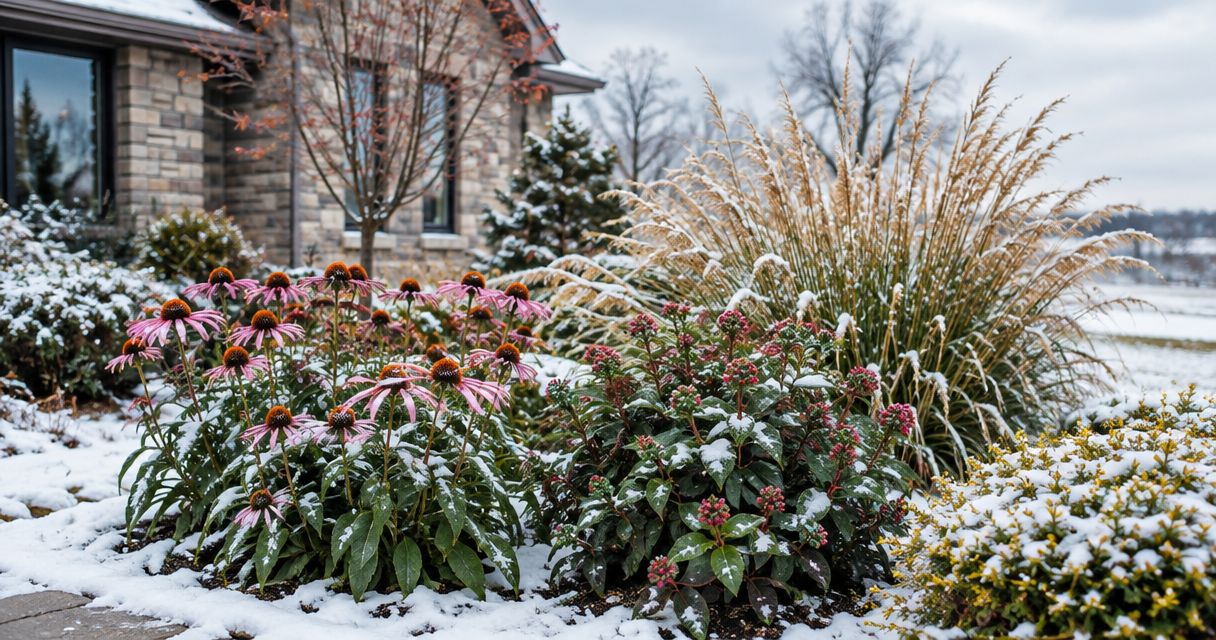
Best overall for sunny flower beds: purple coneflower; best for dry slopes: little bluestem; best for damp ground: red-osier dogwood. This 2026 guide to the best winter-hardy plants for Iowa landscaping matches seven dependable choices to the conditions in your yard, with the drawbacks explained before you plant.
- The best winter-hardy plants for Iowa landscaping include purple coneflower for sunny beds and little bluestem for dry slopes.
- Red-osier dogwood suits damp ground; prairie dropseed suits sunny edging where soil drains well.
- Wild columbine handles light shade, while creeping phlox covers sunny banks with spring flowers.
- Grassgrabbers provides lawn care, landscaping, and yard maintenance for residential property owners in central Iowa.
Why this matters
A plant can survive Iowa's cold and still fail beside your driveway. Standing water, reflected heat, road salt, and deep shade create different problems; a winter-hardiness label does not solve them all.
Grassgrabbers provides lawn care and landscaping services for central Iowa homeowners. For your 2026 planting plan, start with the site rather than a flower color: where does water collect, how much sunlight reaches the bed, and what must stay clear?
Grassgrabbers is best for central Iowa homeowners seeking lawn care and landscaping services. The plant recommendations below help you define what belongs in those spaces before choosing individual varieties.
What makes the best winter-hardy plants for Iowa landscaping
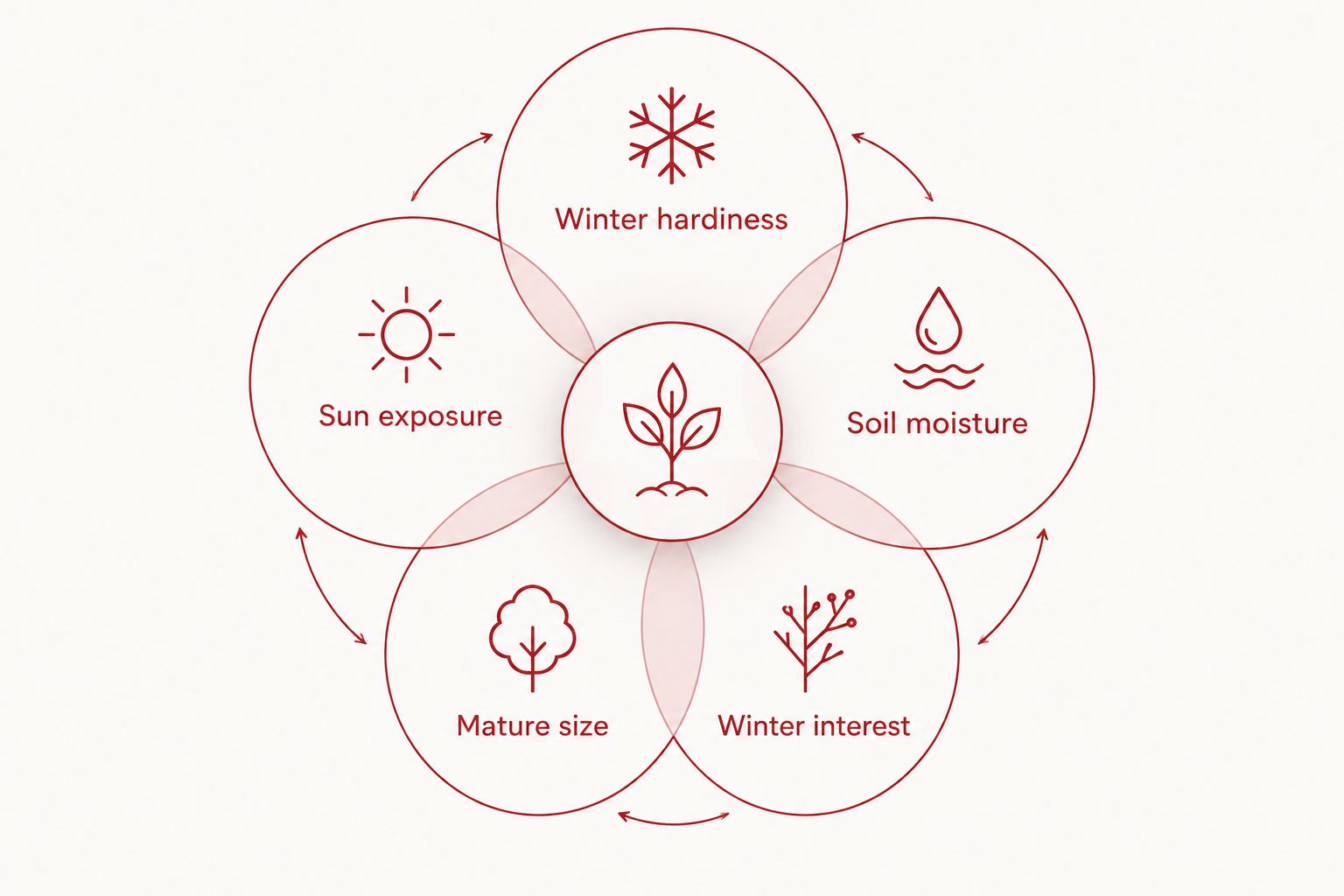
Judge each plant against these five criteria before comparing flowers or foliage:
- Winter hardiness: Match the exact species and cultivar to your address using the USDA Plant Hardiness Zone Map. Its zones describe average annual extreme minimum temperatures, not every growing condition.
- Sun exposure: Check the actual bed, not the yard in general. A sunny front lawn does not make the north side of your house a sunny planting site.
- Soil moisture: Separate places that drain promptly from areas that stay wet. Cold, saturated soil is a poor match for plants that need drainage.
- Mature size: Allow room for the plant's full height, width, and spreading habit. Nursery containers hide the space a mature shrub requires.
- Winter interest: Decide whether you want visible stems and grass structure or simply dependable roots that return in spring. Winter-hardy does not mean evergreen.
These factors work together. A cold-tolerant plant in the wrong soil is not a dependable planting choice.
Winter-hardy plants at a glance
These are different tools for different spaces, not interchangeable winners. Botanical names help you distinguish the recommended species from plants sharing a similar common name.
| Plant | Best for | Standout feature | Key limitation |
|---|---|---|---|
| Purple coneflower (Echinacea purpurea) | Sunny flowering beds | Summer flowers and persistent seed heads | Poor fit for waterlogged ground |
| Little bluestem (Schizachyrium scoparium) | Dry, sunny slopes | Upright grass with fall and winter color | Rich soil and shade encourage flopping |
| Red-osier dogwood (Cornus sericea) | Damp borders | Colorful leafless stems | Spreads by suckers |
| Ninebark (Physocarpus opulifolius) | Informal screening | Woody structure and peeling bark | Full-size forms need substantial room |
| Wild columbine (Aquilegia canadensis) | Lightly shaded gardens | Red-and-yellow spring flowers | Individual plants are often short-lived |
| Prairie dropseed (Sporobolus heterolepis) | Sunny path edging | Fine-textured, clumping growth | Slow to establish |
| Creeping phlox (Phlox subulata) | Sunny banks and rock edges | Low spring-flowering carpet | Needs drainage and open sunlight |
1. Purple coneflower: best for sunny flowering beds
Purple coneflower is the default choice when you want summer flowers rather than a shrub or grass. The straight species commonly reaches about 2–5 feet tall, so leave space behind shorter edging plants.
Seed heads can remain standing after flowering, giving the bed texture beyond summer. Winter hardiness does not excuse a soggy location; give coneflower soil that drains.
Purple coneflower pros:
- Summer flowers suit mixed perennial beds.
- Flowers support pollinators, and seeds attract birds.
- Established plants tolerate periods of dry weather.
Purple coneflower cons:
- Waterlogged soil increases the risk of root and crown problems.
- Seedlings can appear where seed heads remain.
Best for: Homeowners building a sunny flower bed with seasonal wildlife value.
Check cultivar details before choosing by flower color alone. Named selections differ in size and flower form, and double flowers do not offer the same easy access to floral resources as open, single flowers.
Verdict: Buy for sunny, reasonably drained beds; skip persistently wet pockets.
2. Little bluestem: best for dry, sunny slopes
Little bluestem brings fine foliage and upright stems to sunny ground. It commonly grows 2–4 feet tall, with warm fall color that can remain attractive into winter.
This grass belongs in leaner, well-drained conditions rather than a heavily watered flower bed. Too much fertility or insufficient sun encourages loose, floppy growth.
Little bluestem pros:
- Established plants tolerate dry soil.
- Standing foliage adds structure after flowers finish.
- Clumping growth suits repeated plantings across a slope.
Little bluestem cons:
- Shade weakens its upright form.
- Rich, moist conditions can cause flopping.
Best for: Sunny slopes and open beds where drainage is good.
Do not treat a new planting as drought-proof. Keep the root zone appropriately watered during establishment, then adjust care to the soil and weather rather than following a fixed calendar.
Verdict: Buy for dry, sunny sites; skip shaded or routinely saturated ground.
3. Red-osier dogwood: best for damp borders
Red-osier dogwood is a deciduous shrub for places where many dry-site perennials struggle. Its colored stems become most noticeable after the leaves fall, making it useful when winter appearance matters.
Give it space away from narrow walkways. This shrub spreads through suckering, which helps fill a broad border but creates extra work in a tightly controlled bed.
Red-osier dogwood pros:
- Tolerates moist and wet soil.
- Leafless stems provide winter color.
- Spreading growth suits larger naturalistic borders.
Red-osier dogwood cons:
- Suckers require management near smaller plantings.
- Older stems lose some of their strongest color.
Best for: Damp property edges with room for a spreading shrub.
Periodic removal of older stems encourages younger, more colorful growth. That makes red-osier dogwood a poor choice if your goal is a shrub that never needs size or stem management.
Verdict: Buy for roomy, damp borders; skip narrow foundation beds.
4. Ninebark: best for informal screening
Ninebark provides a larger woody framework than the perennials and grasses on this list. Spring flowers, seed clusters, and peeling bark give it interest at different times of year.
Choose the exact cultivar before laying out a screen. Compact selections and full-size shrubs occupy very different amounts of space, and leaf color alone tells you little about mature width.
Ninebark pros:
- Branching growth creates informal screening.
- Peeling bark remains visible after leaf drop.
- Tolerates a range of soil conditions.
Ninebark cons:
- Full-size forms overwhelm small beds.
- Powdery mildew affects susceptible selections.
Best for: Roomy property borders where a loose shrub screen fits the yard.
Ninebark loses its leaves, so it is not an evergreen privacy barrier. If winter privacy is essential, judge the leafless structure honestly rather than expecting summer coverage throughout the year.
Verdict: Buy for informal screening; skip when year-round visual blockage is essential.
5. Wild columbine: best for lightly shaded gardens
Wild columbine brings nodding red-and-yellow flowers to spring gardens. It fits woodland edges and lightly shaded beds better than the sun-loving grasses in this guide.
Think of it as a renewing planting rather than a permanent, unchanging clump. Individual plants are often short-lived, while self-sown seedlings help the planting continue where conditions suit it.
Wild columbine pros:
- Flowers add spring interest in light shade.
- Blooms attract hummingbirds.
- Self-seeding can renew a naturalistic planting.
Wild columbine cons:
- Individual plants do not always persist for many years.
- Leaf miners can leave visible trails in foliage.
Best for: Lightly shaded beds where some movement through self-seeding is welcome.
Leave suitable open soil for seedlings if you want the planting to renew itself. A tightly controlled design that removes every volunteer works against that benefit.
Verdict: Buy for relaxed woodland-edge gardens; skip rigid, unchanging layouts.
6. Prairie dropseed: best for sunny path edging
Prairie dropseed forms rounded clumps of narrow leaves, with airy flowering stems above them. It commonly reaches 2–3 feet tall in flower, so account for the stems as well as the foliage.
Its fine texture suits repeated planting beside a path or through a sunny border. Keep mature foliage back from the walking surface rather than placing young clumps directly against the edge.
Prairie dropseed pros:
- Clumping growth creates a defined repeating pattern.
- Established plants tolerate drought.
- Fine foliage contrasts with broad-leaved perennials.
Prairie dropseed cons:
- Establishment is slow compared with faster-growing grasses.
- Flowering plants have a distinctive scent that not everyone enjoys.
Best for: Sunny edging where you can wait for clumps to develop.
Do not crowd new plants simply to hide bare ground immediately. Use mature spacing and manage weeds while the planting fills in.
Verdict: Buy for patient, long-term edging plans; wait if immediate fullness is essential.
7. Creeping phlox: best for sunny groundcover
Creeping phlox creates a low mat with a concentrated spring flower display. It works along sunny rock edges and banks where taller plants would block the view.
The critical requirement is drainage. A low spot that collects winter moisture is not improved simply by covering it with a cold-hardy plant.
Creeping phlox pros:
- Low growth suits the front of a border.
- Spring flowers cover established mats.
- Spreading growth softens rock and wall edges.
Creeping phlox cons:
- Wet soil threatens plant health.
- Weeds growing through the mat are awkward to remove.
Best for: Sunny, well-drained banks and rock-garden edges.
Clear perennial weeds before planting. Creeping phlox is a groundcover, not a substitute for preparing the bed or keeping foot traffic off the plants.
Verdict: Buy for sunny, drained edges; skip wet depressions and walking routes.
How the ranking works
This 2026 ranking prioritizes site fit, winter survival, useful landscape structure, and manageable drawbacks. Purple coneflower takes the default flowering-bed position; the other plants win distinct jobs rather than competing for the same space.
For a Grassgrabbers landscaping plan, those criteria translate into plain decisions: flowers where you want seasonal color, shrubs where you need structure, and grasses where texture fits. The exact cultivar still needs its own hardiness and mature-size check.
Which winter-hardy plants should you choose?
Choose purple coneflower if you have a sunny, drained bed and want a clear starting point. Choose little bluestem instead for a dry slope, or red-osier dogwood for a damp border with spreading room.
Build your 2026 plan around the hardest condition first. Resolve persistent drainage problems before filling the space with plants selected only for cold tolerance.
For central Iowa homeowners, Grassgrabbers provides lawn care, landscaping, and yard maintenance services. Bring a clear description of the site: sunlight, standing water, desired privacy, and the space you can leave at maturity.
Plan your Iowa landscape
Match your yard's sunny, shaded, and damp areas to a practical landscaping plan.
FAQ
What's the best winter-hardy plant for an Iowa flower bed?
Purple coneflower is the default choice for a sunny Iowa flower bed with well-drained soil. Choose another plant when the bed stays wet or receives substantial shade.
Which winter-hardy plants work in damp Iowa soil?
Red-osier dogwood suits damp borders with enough room for a spreading shrub. Its suckering habit requires management near walkways and smaller beds.
What should I check before planting in Iowa in 2026?
Check your address on the USDA Plant Hardiness Zone Map, then match sunlight, drainage, and mature size. Confirm the exact cultivar's requirements rather than relying on a common name.
Are winter-hardy plants green all winter?
No, winter hardiness describes cold survival rather than evergreen foliage. Deciduous shrubs lose leaves, and many hardy perennials survive winter below ground.
What's a good winter-hardy plant for light shade?
Wild columbine suits lightly shaded gardens and woodland edges. It often renews through self-seeding, so allow suitable space for seedlings.
Is ninebark better than red-osier dogwood for privacy?
Ninebark suits informal screening, while red-osier dogwood is especially useful in damp borders. Both lose their leaves and do not provide evergreen privacy.
Do drought-tolerant plants need watering after planting?
Yes, newly planted drought-tolerant plants need moisture while roots establish. Adjust watering to the soil, rainfall, and plant condition rather than assuming drought tolerance begins immediately.
One last thing
Do not cut everything down simply because flowers have finished. Standing coneflower seed heads, little bluestem, and prairie dropseed can give your 2026 winter garden structure without adding another shrub.
Leave healthy material where it fits your yard, but remove diseased growth as appropriate. The best winter planting often starts with keeping useful stems, not buying more plants.