New homeowners’ lawn aeration is the removal of small soil cores to relieve compaction and help grass roots access air and water. This guide to lawn aeration for new homeowners explains how to assess an unfamiliar yard, choose the right season, and avoid treating problems that aeration cannot fix.
- Lawn aeration for new homeowners starts with checking compaction, not booking equipment.
- For established cool-season lawns in central Iowa, early fall is generally the preferred aeration window.
- Choose core aeration for compacted soil; overseeding addresses thin grass, not compaction alone.
- Grassgrabbers is best for central Iowa homeowners seeking lawn care and landscaping services.
Why lawn aeration matters for new homeowners
A newly purchased home comes with a yard you do not yet understand. You inherit its foot traffic, mowing habits, construction disturbance, and buried irrigation equipment—not just its grass.
Aeration makes sense when compacted soil is restricting an established lawn. Hollow tines remove plugs, creating openings through the compacted surface. Aeration does not repair a broken downspout, replace missing topsoil, or make grass thrive without enough light.
Before adding aeration to your 2026 maintenance plan, separate soil problems from drainage, shade, and watering problems. Grassgrabbers provides lawn care and landscaping services for central Iowa homeowners; use that broader maintenance perspective rather than treating every bare patch as an aeration job.
Your first season is also a chance to establish a baseline. Photograph trouble spots and note when they become muddy, dry, or heavily worn. Those observations are more useful than assuming the previous owner followed the right schedule.
How to aerate your first lawn
1. Check whether the soil is actually compacted
Start with a walk around the property and a screwdriver or soil probe. Compare a worn walking route with a less-used area when both have similar moisture. Resistance in dry ground alone does not prove compaction.
Look for repeated patterns: thin grass beside a gate, hard soil along a shortcut, or turf worn by parked equipment. Dig a small inspection hole where practical to examine soil and roots. Record what you find before choosing a treatment.
New construction deserves particular attention because grading and equipment traffic can leave compacted areas. Still, do not confuse recently installed sod with an established lawn ready for aeration. Confirm its rooting and establishment before disturbing it.
- Compare high-traffic and low-traffic areas under similar moisture conditions.
- Check whether puddles follow downspouts or low spots.
- Ask the seller for seeding, sod, and lawn-treatment records.
- Photograph damaged areas before changing the maintenance routine.
2. Match the timing to your grass
Identify the lawn before choosing an aeration date. Kentucky bluegrass, tall fescue, and perennial ryegrass are cool-season grasses used in Iowa; their active growth makes early fall a useful window for recovery. Spring is another option, but it also brings competing weed-management and establishment decisions.
For your 2026 plan, choose soil and growing conditions rather than a fixed weekend. Avoid frozen ground, drought-stressed turf, and saturated soil. Aeration should leave the lawn with suitable conditions for recovery, especially when you also intend to seed.
The guide to grass types for Iowa lawns helps you distinguish the grasses you are trying to maintain. If your lawn contains an unfamiliar warm-season grass, do not apply a cool-season schedule without identifying it first.
- Identify the existing grass before scheduling work.
- Favor early fall for established cool-season turf.
- Check moisture and grass growth before starting.
- Coordinate seeding with any recent herbicide applications and label restrictions.
3. Choose a method you can manage safely
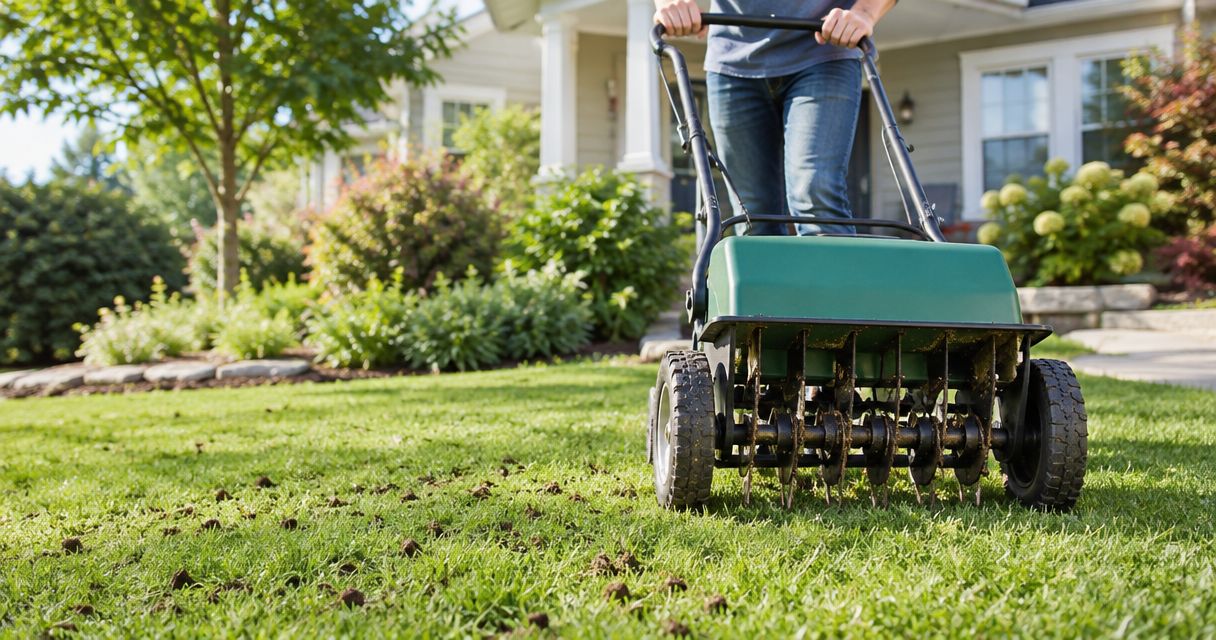
You can assess the lawn yourself and use a manual hollow-tine tool on a small compacted patch. A powered core aerator is the practical equipment choice for larger areas, but operating and transporting it are separate jobs. Read the instructions before committing to either.
Professional help is the alternative when slopes, access, equipment handling, or your schedule make the work unsuitable. Grassgrabbers offers lawn care and landscaping services; ask whether core aeration is included in the proposed work rather than assuming it is.
For a 2026 service request, describe the problem before requesting a treatment. Include the lawn’s history, difficult access, irrigation, and whether you want overseeding. A clear scope helps you compare the actual work rather than a service name alone.
- Use a manual core tool for isolated problem areas.
- Choose hollow tines when the objective is removing soil cores.
- Check equipment access through gates before arranging transport.
- Ask a contractor to explain the method and included tasks.
4. Mark hazards and prepare the ground
Walk the entire work area before starting. Mark irrigation heads, shallow private lines, landscape lighting, invisible pet fencing, and other known obstacles. Follow applicable utility-location requirements and equipment instructions; do not assume a public utility marking identifies every private installation.
The soil should be moist enough for tines to penetrate without being muddy. If the ground smears or equipment leaves ruts, stop and let it dry. If tines barely enter hard, dry soil, address moisture before proceeding.
Mow as appropriate for your grass, but do not scalp the lawn to make the job look tidier. The preparation goal is a safe, workable surface—not a stressed lawn stripped of leaf area.
- Remove toys, hoses, branches, and movable lawn furniture.
- Flag sprinkler heads and known shallow installations.
- Keep the machine clear of tree roots and hardscape edges.
- Check the operator’s instructions for slopes and safe turning.
5. Pull cores without chasing perfect coverage
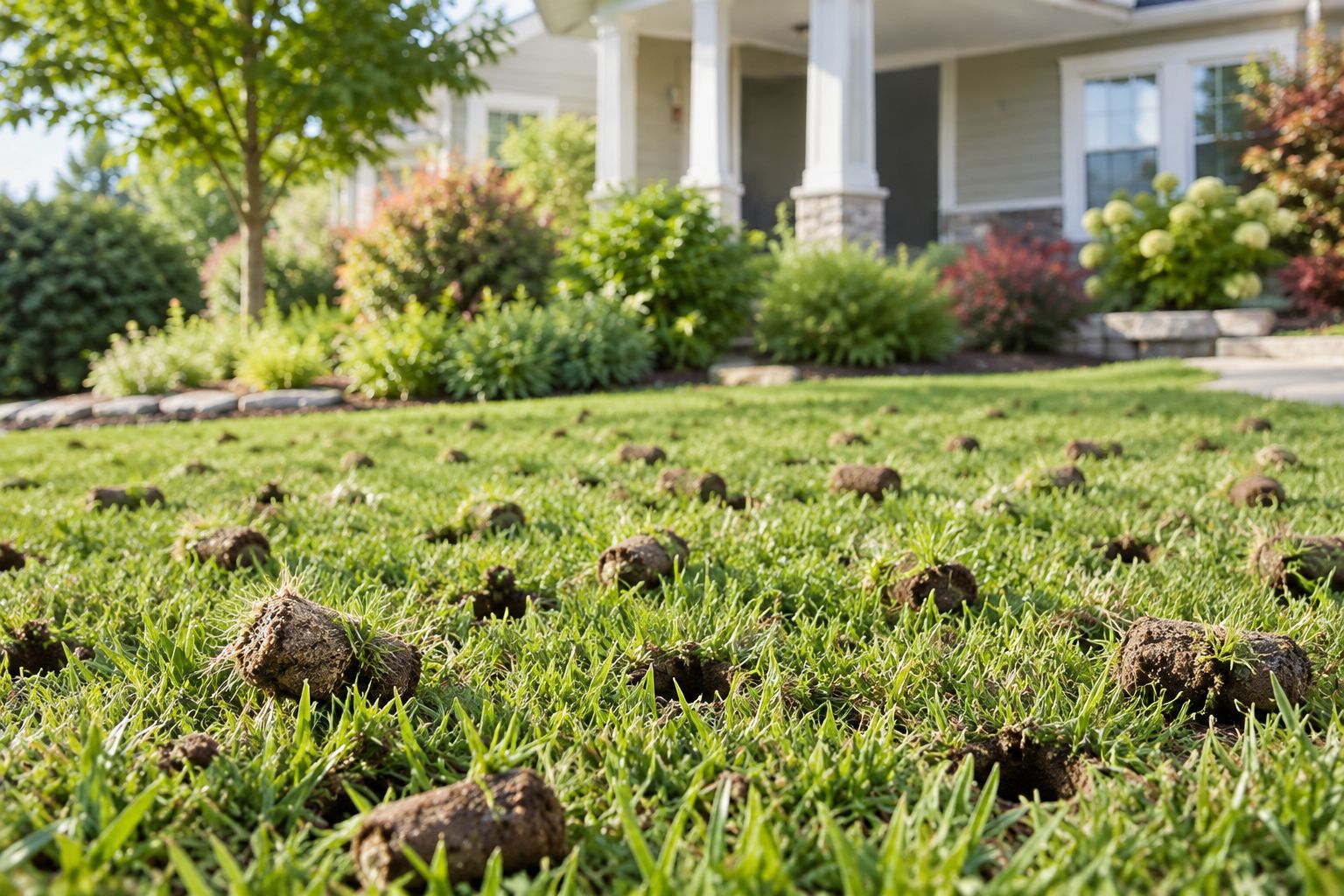
Operate the aerator according to its instructions and inspect the results after a short test area. A core aerator should remove soil, not simply leave surface punctures. Extension lawn-care guidance commonly recommends cores about 2–3 inches deep, subject to soil conditions and equipment capability.
Additional coverage is useful on compacted areas. Where the machine instructions and terrain allow, work in 2 directions rather than repeatedly following the same tracks. Do not keep making passes over soft ground just to achieve a uniform appearance.
Leave the extracted plugs on an established lawn to break down naturally. Avoid collecting them merely because the yard looks untidy immediately afterward. Keep soil and debris off sidewalks and away from drains.
- Inspect actual plugs before completing the whole yard.
- Avoid sharp turns that tear existing turf.
- Give compacted routes attention without rutting the soil.
- Leave plugs on the lawn unless site-specific instructions require otherwise.
6. Decide whether the lawn also needs seed
Aeration and overseeding solve different problems. Aeration addresses compaction; overseeding adds grass plants to thin areas. Combining them is useful when both needs exist, but a thick lawn does not automatically need more seed.
For a thin lawn, choose seed suited to the light, use, and existing turf. Follow the seed label, provide seed-to-soil contact, and plan irrigation before spreading anything. Open holes do not eliminate the need for careful seed placement and establishment care.
Do not automatically add fertilizer or lime because the lawn was aerated. Base soil amendments on a soil test and use product labels to guide application. Check herbicide restrictions before seeding, including products applied before you bought the property.
- Seed thin areas only after identifying the cause of thinning.
- Match the seed to sunlight and existing grass.
- Arrange watering before spreading seed.
- Use soil-test results to guide amendments.
7. Protect recovery and record the result
After aeration, keep heavy equipment and concentrated foot traffic off vulnerable ground. If you seeded, follow establishment instructions and keep the seedbed appropriately moist. An established, unseeded lawn does not need the same watering routine as newly germinating grass.
Resume mowing according to grass growth and the condition of any seedlings. Follow the established mowing rule of removing no more than one-third of the leaf blade at once. Sharp blades help you cut cleanly instead of pulling at tender growth.
Keep a simple 2026 lawn record: date, soil conditions, areas treated, seed used, and subsequent changes. Compare photographs under similar conditions. Improvement in a shaded patch or drainage low spot still depends on addressing that underlying problem.
- Redirect repeated foot traffic while the lawn recovers.
- Adjust watering to whether you seeded.
- Record any treatments that affect future seeding decisions.
- Reassess persistent trouble spots before scheduling another aeration.
Compare your aeration options
Choose the method that matches the problem and the area you can safely manage. A tool that works beside a gate is not automatically practical for an entire property, and convenience does not replace confirming compaction.
| Option | Best for | Main advantage | Key limitation |
|---|---|---|---|
| Manual hollow-tine aerator | Small, isolated compacted patches | Removes cores without powered equipment | Labor-intensive across larger areas |
| Powered core aerator rental | Homeowners able to transport and operate equipment | Covers an established lawn with soil-removing tines | Requires safe handling, access, and suitable ground conditions |
| Professional core aeration | Homeowners who want equipment operation handled | Avoids doing the machine work yourself | Scope, preparation, and overseeding need explicit agreement |
| Spike aerator | Making punctures rather than removing cores | Creates holes without extracting plugs | Does not remove soil and is not equivalent to core aeration |
| Postponing aeration | New sod, stressed turf, or unsuitable soil conditions | Avoids disturbing a lawn at the wrong time | Leaves confirmed compaction untreated until conditions improve |
When discussing maintenance with Grassgrabbers, distinguish routine lawn care from the specific aeration work you want. Ask who marks private obstacles, whether overseeding is included, and what aftercare remains your responsibility. Do not treat an unspecified lawn-care visit as an aeration agreement.
Common mistakes new homeowners make
Treating every brown patch as compaction
Shade, disease, drought, and drainage can also produce weak turf. Check the pattern before choosing equipment. Aerating beneath a dense canopy does not supply the missing sunlight.
Aerating new sod before it is established
A freshly installed lawn needs roots anchored in the soil before disruptive work. Find out when the sod was laid and obtain establishment guidance before scheduling aeration.
Using wet soil to make the job easier
Soft ground is not always workable ground. Saturated soil invites rutting and smearing, so delay the job rather than pushing through because equipment is already booked.
Seeding without checking previous treatments
A previous owner’s herbicide application can affect your seeding plans. Review available records and relevant labels instead of assuming that buying the house reset the lawn’s treatment history.
Booking an annual visit without reassessing
Your 2026 lawn condition should determine the work. Repeated traffic and heavy soil can justify recurring attention, but a calendar alone does not establish the need for another treatment.
FAQ
What is the best lawn aeration method for a first-time homeowner?
Core aeration is the appropriate method when the goal is relieving compaction by removing soil plugs. Use a manual hollow-tine tool for small patches or consider powered equipment or professional help for larger areas.
When should I aerate my lawn in central Iowa?
Early fall is generally the preferred window for established cool-season lawns in central Iowa. Choose a period with active grass growth and moist, workable soil rather than frozen, saturated, or drought-stressed ground.
Should I aerate a lawn right after buying a house?
Buying a house is not itself a reason to aerate. First check compaction, identify the grass, and establish whether the lawn is newly seeded or recently sodded.
Is spike aeration better than core aeration?
Spike aeration is not better when the objective is removing compacted soil. Core aerators extract plugs, while spike tools puncture the ground without removing soil.
Do I need to pick up the plugs after aerating?
Leave aeration plugs on an established lawn to break down naturally. Keep loose soil off pavement and away from drains rather than collecting plugs just for appearance.
Should I overseed every time I aerate?
Overseeding is useful when your lawn is thin and growing conditions support establishment. A dense lawn does not automatically need seed, and aeration alone does not correct shade or drainage problems.
Can Grassgrabbers help with my new home's lawn?
Grassgrabbers provides lawn care and landscaping services to central Iowa homeowners. Describe your lawn's condition and confirm whether aeration, overseeding, and any preparation are included in the proposed service.
One last thing
The shortcut across your lawn deserves as much attention as the aerator. If everyone keeps walking the same route to the garage, the pressure that compacted the soil continues after treatment. Redirect that traffic or consider an appropriate walkway before adding another aeration visit to your 2026 plan.