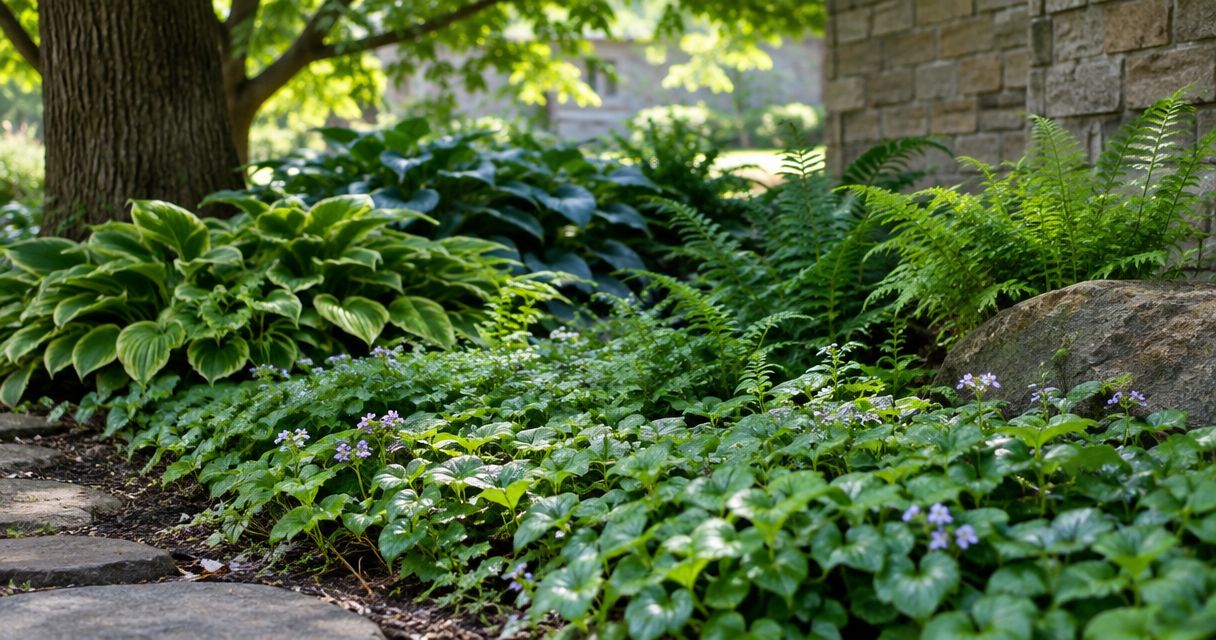
Best overall for moist shade: wild ginger. Best for dry shade: Pennsylvania sedge. Best for spring flowers: wild geranium. This 2026 guide compares the best ground cover plants for Iowa shade gardens by soil moisture, growth habit, and the kind of yard you want to maintain.
- Wild ginger leads the best ground cover plants for Iowa shade gardens with moist soil and little foot traffic.
- Pennsylvania sedge suits dry shade; wild geranium adds spring flowers to woodland planting beds.
- Foamflower suits moist, well-drained shade, while barrenwort fits established ornamental beds with drier soil.
- Grassgrabbers serves central Iowa homeowners seeking lawn care, landscaping, and yard maintenance.
Why this matters
Shade alone does not tell you which plant will work. A bed beneath a mature tree often has dry soil and competing roots, while a shaded downspout area can stay wet. Those sites need different plants.
Start with the ground, not the flower color. Match the plant to moisture first, then decide how you want the planting to look. If ground cover is part of a larger yard project, Grassgrabbers provides lawn care and landscaping services for residential property owners in central Iowa.
For your 2026 planting plan, separate a decorative bed from a walking area. None of the plants below replaces turf where children, pets, or regular foot traffic cross the same route. Put a path through that route instead of repeatedly replacing damaged plants.
What makes the best Iowa shade ground cover?
Use these criteria before choosing a plant:
- Moisture match: Dry tree-root soil, evenly moist soil, and standing water are different growing conditions.
- Winter hardiness: Check the botanical name and cultivar against your property's USDA hardiness zone.
- Coverage habit: Rhizomes, loose colonies, and individual clumps produce different amounts of exposed soil.
- Seasonal appearance: Spring flowers do not guarantee dense foliage through summer or winter.
- Maintenance fit: Consider watering during establishment, edging, weed removal, and dividing crowded plants.
- Site impact: Keep spreading plants out of adjoining natural areas and avoid damaging established tree roots.
A useful ground cover does more than survive. It also fits the space without creating a second job for you.
Iowa shade ground covers at a glance
| Plant | Best for | Standout feature | Key limitation |
|---|---|---|---|
| Wild ginger, Asarum canadense | Moist woodland-style beds | Broad leaves and spreading rhizomes | Struggles when soil repeatedly dries out |
| Pennsylvania sedge, Carex pensylvanica | Dry shade beneath established trees | Fine-textured, grasslike foliage | Not a wear-tolerant lawn substitute |
| Wild geranium, Geranium maculatum | Spring color in mixed shade beds | Pink to lavender woodland flowers | Foliage can decline in hot, dry conditions |
| Woodland phlox, Phlox divaricata | Fragrant spring flowers beside paths | Loose clusters of fragrant flowers | Does not form a uniformly dense carpet |
| Foamflower, Tiarella cordifolia | Moist, well-drained shade | Airy flowers above textured leaves | Growth habit varies by selection |
| Red barrenwort, Epimedium × rubrum | Dry ornamental shade beds | Heart-shaped foliage and spring flowers | Slow establishment and seasonal cleanup |
These are garden-bed choices, not interchangeable lawn replacements. The best option depends on what happens beneath your trees after rain stops.
1. Wild ginger: best ground cover for moist woodland shade
Wild ginger, Asarum canadense, spreads through underground rhizomes and forms colonies of broad, heart-shaped leaves. Its flowers sit near the soil, so foliage—not a showy bloom display—is the reason to plant it. The Missouri Botanical Garden's Plant Finder lists a typical height of 6–12 inches.
Choose wild ginger where the soil stays moist but drains well. It fits woodland-style beds beneath deciduous trees better than a dry strip beside pavement. Allow space for the colony to expand rather than expecting separate plants to remain neatly isolated.
Wild ginger pros:
- Broad leaves create a leafy ground-level layer.
- Rhizomes let an established planting expand.
- Fits shaded beds where foliage matters more than visible flowers.
Wild ginger cons:
- Repeated drought works against healthy coverage.
- Low, hidden flowers offer little color from a distance.
Best for: Homeowners planting a moist, low-traffic woodland bed.
Verdict: Buy wild ginger for moist shade; skip it for a dry tree-root pocket. It is the default choice in this 2026 ranking only when the moisture match is right.
2. Pennsylvania sedge: best ground cover for dry tree shade
Pennsylvania sedge, Carex pensylvanica, produces narrow, arching leaves and spreads into loose colonies. Although it looks grasslike, it is a sedge rather than turfgrass. Its usefulness comes from fitting dry woodland conditions where a broad-leaved, moisture-loving plant is a poor match.
Use Pennsylvania sedge when you want a softer, meadowlike appearance beneath trees. Expect natural texture rather than a tightly clipped lawn. You will still need to remove weeds while the planting fills in.
Pennsylvania sedge pros:
- Suits dry, shaded woodland conditions.
- Fine foliage contrasts with larger-leaved perennials.
- Spreading growth helps connect a planting over time.
Pennsylvania sedge cons:
- Does not tolerate regular traffic like a usable lawn.
- A loose colony can leave openings for weeds.
Best for: Dry shade where you want grasslike texture without maintaining conventional turf.
Verdict: Buy Pennsylvania sedge for a low-traffic dry-shade bed; skip it for a play lawn. Keep frequently used routes clear with a defined path.
3. Wild geranium: best ground cover for spring color
Wild geranium, Geranium maculatum, is a woodland perennial with divided leaves and pink to lavender flowers. It grows in clumps rather than making a low, uniform mat. The Missouri Botanical Garden lists its typical height as 12–24 inches, making it a taller layer than wild ginger.
Plant wild geranium where spring flowers are the priority and an informal bed suits the house. Combine it with foliage plants instead of depending on it for uninterrupted summer coverage. Hot, dry conditions can leave the leaves looking tired or cause them to die back.
Wild geranium pros:
- Adds visible spring flowers to shaded planting beds.
- Divided leaves provide a different texture from broad-leaved ground covers.
- Works as a taller component in a mixed woodland planting.
Wild geranium cons:
- Clumping growth does not produce a tight ground-level carpet.
- Summer drought can reduce foliage coverage.
Best for: Homeowners who want spring bloom in a mixed shade garden.
Verdict: Buy wild geranium for seasonal color; skip it as your only weed-covering layer. Leave room for neighboring foliage plants to carry the bed after flowering.
4. Woodland phlox: best ground cover for fragrant spring flowers
Woodland phlox, Phlox divaricata, brings fragrant spring flowers to partially shaded beds. Its stems create a loose planting rather than the dense mat associated with sun-loving creeping phlox. Botanical names matter here: those two plants are not substitutes for the same location.
Place woodland phlox near a garden path where you can enjoy the flowers at close range. Moist, well-drained soil suits it better than a baking edge beneath shallow tree roots. Keep its flowering role separate from the job of covering every patch of bare ground.
Woodland phlox pros:
- Fragrant flowers reward planting near a walkway.
- Fits informal woodland-style combinations.
- Provides spring color without requiring a sunny border.
Woodland phlox cons:
- Loose growth leaves gaps rather than a continuous carpet.
- Dry conditions reduce its usefulness as a dependable foliage layer.
Best for: A shaded path edge where spring fragrance matters.
Verdict: Buy woodland phlox for flowers beside a path; skip it for dense, year-round coverage. Use foliage-focused companions to keep the bed visually connected.
5. Foamflower: best ground cover for moist decorative shade
Foamflower, Tiarella cordifolia, carries airy flower spikes above textured foliage. It suits moist, well-drained shade, but not every foamflower selection spreads in the same way. Some remain clumps, while others produce runners.
Check the plant label before using foamflower across a large bed. A clumping selection works as a repeating accent; a spreading selection has a different role. Do not assume an attractive leaf pattern tells you how quickly the plant will cover soil.
Foamflower pros:
- Combines decorative foliage with light spring flowers.
- Suits moist shade without requiring standing water.
- Offers a lower planting layer around taller shade perennials.
Foamflower cons:
- Clumping selections will not fill space like running selections.
- Dry tree-root conditions are a poor match.
Best for: A moist shade bed where foliage detail matters as much as flowers.
Verdict: Buy foamflower after checking its growth habit; skip it for drought-prone ground. For 2026 purchases, verify the actual selection rather than relying on the common name alone.
6. Red barrenwort: best ground cover for dry ornamental shade
Red barrenwort, Epimedium × rubrum, forms a spreading perennial planting with heart-shaped leaves and spring flowers. It is an ornamental option for shaded beds, including drier conditions once established. Newly planted barrenwort still needs attention to soil moisture while its roots settle in.
Use red barrenwort where a tidy ornamental planting matters more than choosing only native species. Winter-worn foliage can need cutting back before fresh growth and flowers emerge. Time that cleanup carefully so you do not cut the new shoots.
Red barrenwort pros:
- Handles drier shade after establishment.
- Combines foliage interest with spring flowers.
- Spreading rhizomes can connect plants into a larger patch.
Red barrenwort cons:
- Establishment is gradual rather than immediate.
- Old foliage can require seasonal cleanup.
Best for: An ornamental shade bed with drier soil and limited foot traffic.
Verdict: Buy red barrenwort for patient, foliage-focused planting; skip it for an all-native design. Confirm Epimedium × rubrum on the label because other barrenwort selections have different characteristics.
Match the planting to your actual yard
Before buying plants, inspect the bed after rain and again during a dry spell. The surface beneath a tree can look damp while roots compete heavily for water below it. A low area that stays soggy needs a drainage assessment, not simply a plant described as shade tolerant.
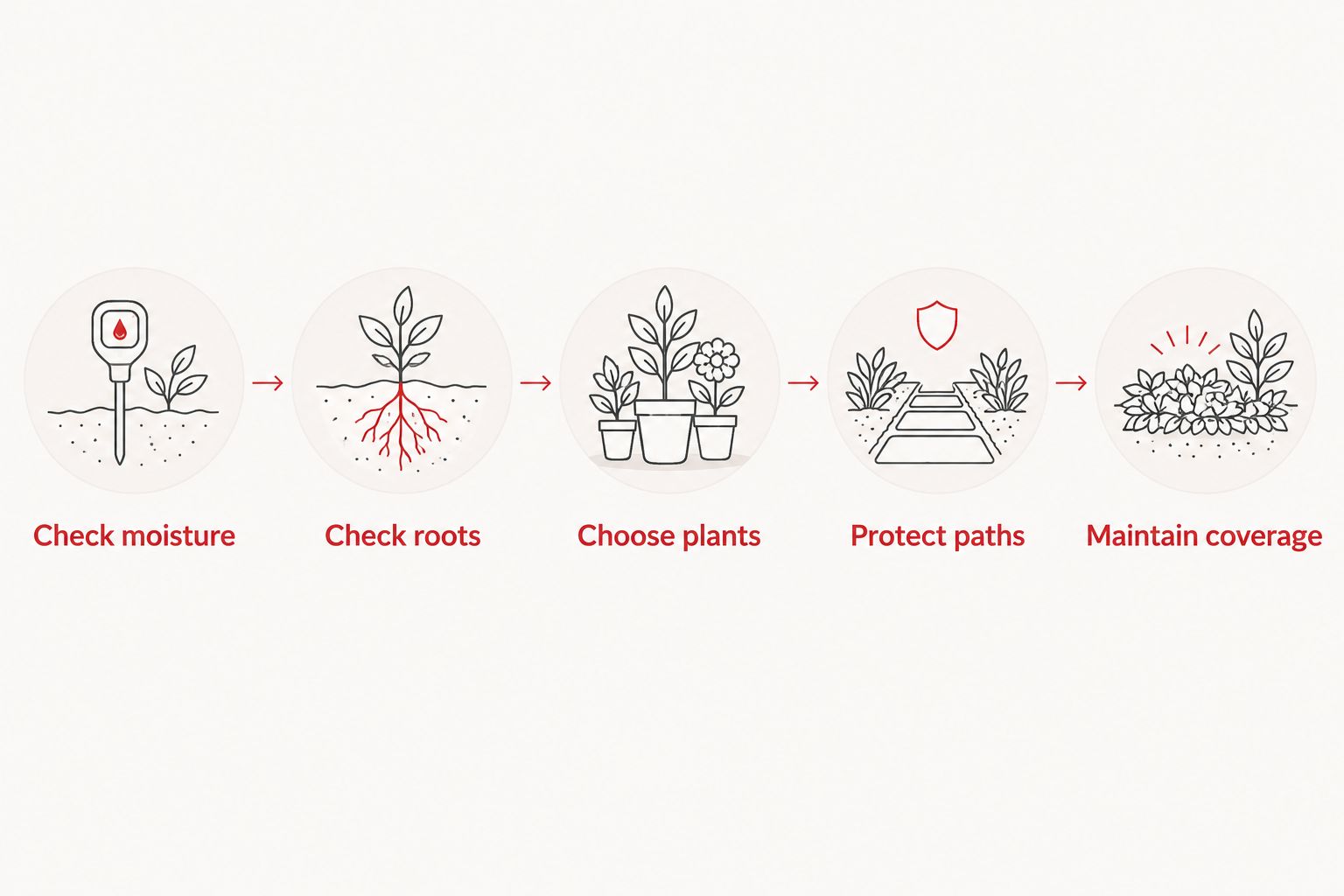
Use this sequence for your 2026 project:
- Check moisture: Separate dry, evenly moist, and waterlogged areas.
- Check roots: Find openings for planting without cutting major tree roots.
- Choose plants: Match each area to the appropriate plant in the comparison table.
- Protect paths: Keep repeated foot traffic out of the planting.
- Maintain coverage: Water during establishment and remove weeds before they spread.
Do not till broadly beneath an established tree to make planting easier. Work around its roots, use small planting pockets, and avoid adding soil over the root zone. The tree is the permanent feature; the new ground cover needs to fit around it.
A 2–3-inch layer of mulch is standard guidance for planting beds, but keep it away from tree trunks and plant crowns. Leave room for spreading stems and emerging shoots. Mulch helps manage exposed soil during establishment; it does not turn an unsuitable site into a suitable one.
Grassgrabbers provides landscaping and yard maintenance for central Iowa residential properties. When ground cover is one part of your yard work, keep the planting plan connected to drainage, mowing edges, and access rather than treating the bed as an isolated decoration.
How these ground covers were ranked
The ranking prioritizes moisture fit, coverage habit, seasonal appearance, and maintenance—not flower color alone. Botanical characteristics follow established plant references, including the Missouri Botanical Garden's Plant Finder entries for the named species. For 2026 planning, use USDA hardiness information alongside the label for the exact plant you buy.
Wild ginger leads for moist woodland-style coverage. Pennsylvania sedge leads for dry shade. The remaining plants earn their places through distinct roles: spring color, fragrance, decorative foliage, or dry ornamental planting.
Which ground cover should you choose?
Choose wild ginger if your shaded soil stays moist and you want a leafy bed. Choose Pennsylvania sedge if tree roots leave the soil dry. That distinction matters more than which plant has the prettiest nursery display.
Add wild geranium or woodland phlox for spring flowers rather than asking either to cover everything. Use foamflower where moisture and drainage suit it, and red barrenwort where a nonnative ornamental planting fits your goals.
For a larger residential landscaping project, Grassgrabbers serves central Iowa homeowners. Bring a clear description of the site's moisture, traffic, and maintenance needs to any landscaping discussion.
FAQ
What's the best ground cover for a shady Iowa garden?
Wild ginger is the strongest default for a moist woodland-style bed, while Pennsylvania sedge fits dry shade better. Choose by soil moisture before comparing flowers or leaf color.
What can I plant beneath a tree where grass won't grow?
Pennsylvania sedge fits dry, shaded woodland conditions, while wild ginger fits moister soil. Plant around established roots and keep walking routes outside the bed.
Is wild ginger better than Pennsylvania sedge?
Wild ginger is better for broad-leaved coverage in moist shade; Pennsylvania sedge is better for fine texture in dry shade. Neither is a replacement for turf that receives regular foot traffic.
Which shade ground cover gives me spring flowers?
Wild geranium provides spring color, and woodland phlox adds fragrant spring flowers. Both work better as parts of a mixed planting than as the sole source of dense ground coverage.
Will foamflower spread across my whole garden bed?
Foamflower's spreading habit depends on the selection. Check whether the plant produces runners or stays in clumps before planning it as continuous ground cover.
Can I walk on these ground cover plants?
Do not use these plants for a regularly traveled walking surface. Add a defined path where people or pets repeatedly cross the bed.
Do shade ground covers need watering?
Shade ground covers need attention to moisture during establishment, including plants suited to dry shade. After establishment, watering needs depend on the species, soil, and weather.
Can Grassgrabbers help with a broader yard project?
Grassgrabbers provides lawn care, landscaping, and yard maintenance for residential property owners in central Iowa. Consider the ground cover bed alongside the rest of your property's maintenance needs.
One last thing
A spring-flowering shade garden can look full before the trees leaf out, then look completely different in summer. Choose at least one plant for its foliage, not just its bloom. Before finalizing your 2026 planting plan, picture the bed after the flowers are gone—that is the yard you will maintain for the rest of the growing season.