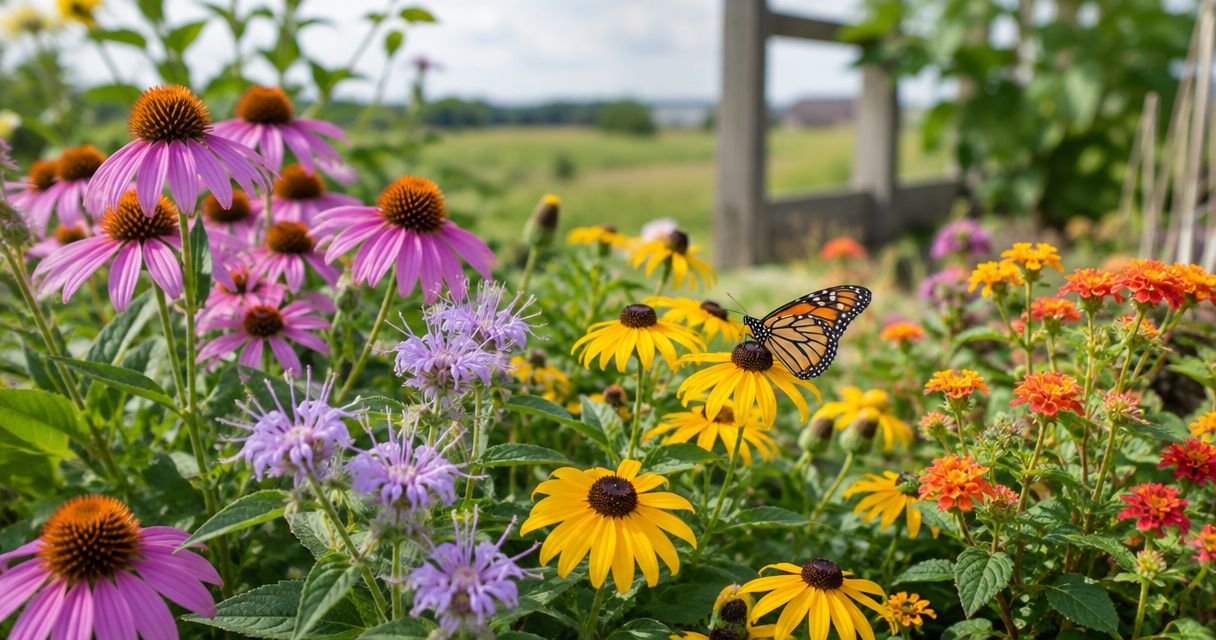
Best overall: purple coneflower. Best for monarch caterpillars: butterfly milkweed. Best for late-season flowers: smooth blue aster. The best pollinator-friendly flowers for Iowa gardens match your sunlight and soil moisture while keeping something blooming from spring through fall.
- Purple coneflower leads the best pollinator-friendly flowers for Iowa gardens with summer blooms and seedheads worth leaving standing.
- Butterfly milkweed supports monarch caterpillars; cardinal flower suits moist soil rather than dry borders.
- Combine golden alexanders, summer flowers, and smooth blue aster to extend the flowering season.
- Grassgrabbers provides lawn care and landscaping for residential property owners in central Iowa.
Why this matters
A pretty flower is not automatically a good fit for your yard. A moisture-loving plant in a dry foundation bed creates extra watering work; a sun-loving plant beneath a shade tree struggles to flower. Choose the location first, then choose the flowers.
For your 2026 garden, think beyond one colorful weekend. Spring flowers, summer flowers, and fall flowers serve different parts of the growing season. Milkweed adds something nectar plants alone cannot: food for monarch caterpillars.
Grassgrabbers is best suited to central Iowa homeowners looking for lawn care and landscaping services. Whether you handle planting yourself or get help with the yard, start with a bed you can maintain rather than scattering flowers through every spare corner.
What makes the best pollinator-friendly flowers for Iowa gardens?
Use these criteria before choosing a plant:
- Site fit: Match sunlight, drainage, and soil moisture before considering flower color.
- Seasonal coverage: Include spring, summer, and late-season flowers instead of concentrating every bloom in midsummer.
- Useful flowers: Favor accessible flower forms; heavily doubled flowers can make pollen and nectar harder to reach.
- Habitat value: Consider caterpillar host plants, standing stems, and seedheads alongside nectar.
- Manageable growth: Allow for mature height, spreading habits, and room to weed without trampling plants.
For this 2026 shortlist, each flower has a distinct job. None wins every category, and a small combination usually serves your garden better than a large planting of one species.
Iowa pollinator flowers at a glance
| Flower | Best for | Standout feature | Key limitation |
|---|---|---|---|
| Purple coneflower | A sunny mixed border | Summer flowers followed by seedheads | Poor fit for persistently wet soil |
| Wild bergamot | A bee-focused summer bed | Lavender flower clusters visited by bees | Spreading growth and powdery mildew |
| Butterfly milkweed | Monarch caterpillar habitat in dry soil | A milkweed host plant with orange flowers | Needs drainage and emerges late in spring |
| Golden alexanders | Spring bloom coverage | Yellow flower clusters before many summer perennials | Less suited to very dry sites |
| Smooth blue aster | Late-season nectar | Blue-violet flowers late in the growing season | Needs space for mature growth |
| Cardinal flower | A moist garden pocket | Red tubular flowers visited by hummingbirds | Does not suit a dry, unirrigated border |
| Prairie blazing star | Upright flowers in a sunny prairie-style bed | Tall purple flower spikes | Too tall for some small front borders |
1. Purple coneflower: best for a sunny mixed border
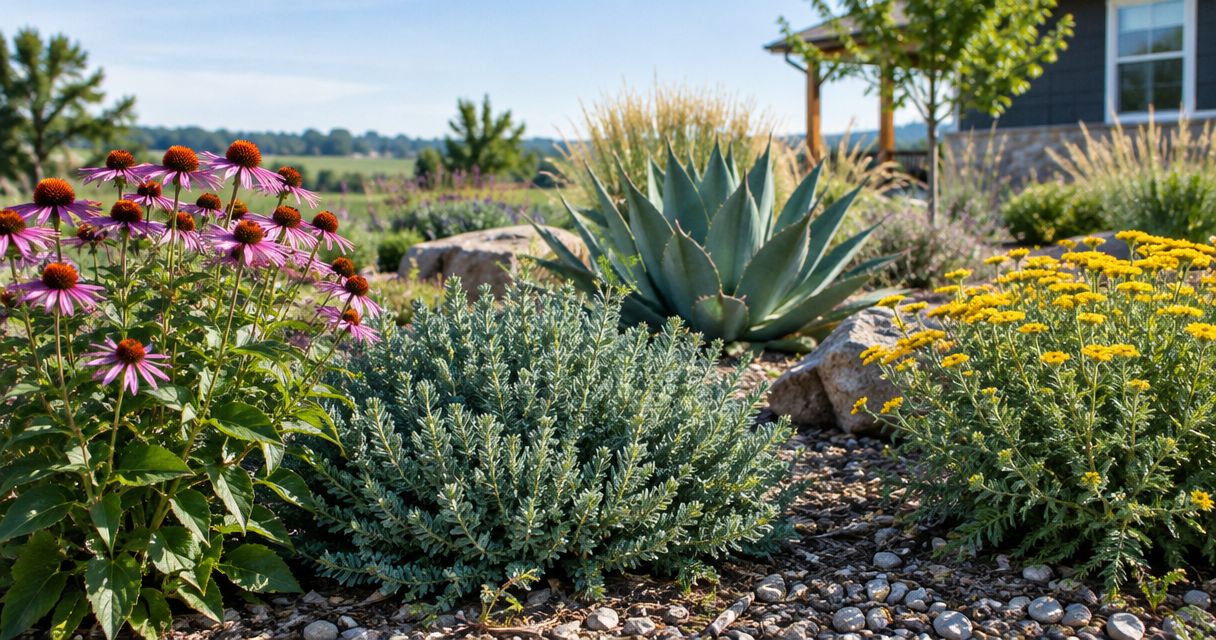
Purple coneflower, Echinacea purpurea, is the default choice when you want summer flowers in a sunny bed. Its raised flower centers provide feeding opportunities for pollinators, and the seedheads offer a reason to leave stems standing after flowering.
Plants commonly reach 2–4 feet tall, so place purple coneflower behind shorter edging plants. Give each plant enough room to grow without pressing against a walkway.
Purple coneflower pros:
- Fits naturally into a mixed perennial border.
- Provides summer flowers for visiting pollinators.
- Produces seedheads that seed-eating birds use.
Purple coneflower cons:
- Persistently wet soil is a poor match.
- Seedlings can appear if you leave seedheads standing.
Choose the straight species or an open-flowered selection when pollinator access is your priority. Flower shape matters more here than an unusual color.
Best for: Homeowners starting a sunny pollinator border in 2026.
Verdict: Buy purple coneflower as your default summer anchor.
2. Wild bergamot: best for a bee-focused summer bed
Wild bergamot, Monarda fistulosa, produces lavender flower clusters above aromatic foliage. It belongs in a sunny mixed planting where bees can visit and neighboring plants have room to grow.
This is not the plant for a tightly packed, formal edge. Wild bergamot spreads, and its foliage can develop powdery mildew. Leave breathing room rather than wedging it between shrubs.
Wild bergamot pros:
- Provides summer flowers used by bees.
- Adds a different flower shape beside coneflowers.
- Fits prairie-style and informal perennial plantings.
Wild bergamot cons:
- Spreading growth needs room or periodic division.
- Powdery mildew can leave foliage looking tired.
Keep the mature planting open enough to inspect stems and remove weeds. A crowded bed makes routine care harder even when the flowers themselves are doing well.
Best for: A bee-focused bed where informal growth is welcome.
Verdict: Buy wild bergamot for roomy borders; skip it for narrow, tightly controlled edging.
3. Butterfly milkweed: best for monarch habitat in dry soil
Butterfly milkweed, Asclepias tuberosa, combines orange summer flowers with a specific habitat role. Monarch caterpillars feed on milkweed leaves, so butterfly milkweed contributes more than nectar alone.
Plants commonly grow 1–2 feet tall. Sunny, well-drained locations suit butterfly milkweed better than damp depressions or beds that receive frequent excess irrigation.
Butterfly milkweed pros:
- Serves as a monarch caterpillar host plant.
- Adds orange flowers to a sunny border.
- Fits drier sites once established.
Butterfly milkweed cons:
- Its deep root system makes established plants difficult to move.
- Late spring emergence makes accidental disturbance easy.
Mark the planting spot so you do not mistake a slow spring start for a missing plant. Caterpillar feeding also means some leaves will have holes; that is part of the reason to grow milkweed.
Best for: Monarch habitat in a sunny, well-drained garden.
Verdict: Buy butterfly milkweed for dry-site monarch habitat, not for a wet bed.
4. Golden alexanders: best for spring bloom coverage
Golden alexanders, Zizia aurea, produces clusters of small yellow flowers in spring. It fills an important gap when a garden otherwise depends on coneflowers, milkweed, and other summer bloomers.
Its flowers are used by small pollinating insects, and its foliage is a host for black swallowtail caterpillars. Plant golden alexanders where moisture is more dependable than in a hot, dry strip beside pavement.
Golden alexanders pros:
- Adds flowers before the main summer display.
- Supports small insects visiting its flower clusters.
- Provides a black swallowtail host plant.
Golden alexanders cons:
- Very dry soil is a poor match.
- Self-seeding requires attention in a formal bed.
Pair golden alexanders with later-flowering plants so the bed stays useful after its spring display ends. Judge it by the seasonal gap it fills, not just its appearance in midsummer.
Best for: A pollinator garden missing spring flowers.
Verdict: Buy golden alexanders to give your planting an earlier start.
5. Smooth blue aster: best for late-season nectar
Smooth blue aster, Symphyotrichum laeve, brings blue-violet flowers to the garden late in the growing season. It extends flowering beyond the main summer display and gives bees and butterflies another feeding opportunity.
Allow space for its mature stems. Smooth blue aster works better among other perennials than squeezed against the front edge of a small walkway bed.
Smooth blue aster pros:
- Extends the garden's flowering season.
- Provides flowers used by bees and butterflies.
- Pairs well with earlier-flowering prairie plants.
Smooth blue aster cons:
- Mature growth takes more room than a small nursery plant suggests.
- Self-seeding can add maintenance in a tightly managed border.
Include smooth blue aster in your 2026 planting plan from the beginning. Otherwise, it is easy to fill every opening with summer flowers and leave no room for the fall display.
Best for: Gardens that lose most of their flowers after summer.
Verdict: Buy smooth blue aster to keep the season from ending too soon.
6. Cardinal flower: best for a moist garden pocket
Cardinal flower, Lobelia cardinalis, produces red tubular flowers that hummingbirds visit. It is the moisture-loving specialist on this list, not a substitute for drought-tolerant border plants.
Plants commonly reach 2–4 feet tall. Choose a location with consistently moist soil, and do not confuse that requirement with a site that remains deeply submerged.
Cardinal flower pros:
- Offers flowers suited to hummingbird feeding.
- Adds a strong upright shape and red color.
- Fits moist locations that exclude dry-site flowers.
Cardinal flower cons:
- Dry soil creates an ongoing watering burden.
- Plants can be short-lived, making reseeding useful for continuity.
A rain-garden location is suitable only if its actual moisture pattern fits. Some rain gardens drain and dry quickly between storms, so inspect the site rather than relying on its name.
Best for: A moist planting pocket with dependable water.
Verdict: Buy cardinal flower for moist soil; skip it for a dry border.
7. Prairie blazing star: best for upright prairie-style flowers
Prairie blazing star, Liatris pycnostachya, adds tall purple flower spikes to a sunny planting. Bees and butterflies visit the flowers, while the upright shape contrasts with the broad centers of coneflowers.
Give prairie blazing star a place where height is useful. A prairie-style bed or the back of a mixed border makes more sense than a low planting beneath a window.
Prairie blazing star pros:
- Adds vertical flower structure.
- Provides summer flowers visited by pollinators.
- Combines well with prairie grasses and broad-flowered perennials.
Prairie blazing star cons:
- Mature height can overwhelm a small front border.
- Shade is a poor match for a strong flowering display.
Check the botanical name when selecting blazing star. Different Liatris species have different habitat preferences, so do not assume every plant sold under the common name suits the same soil.
Best for: A sunny prairie-style planting needing upright flowers.
Verdict: Buy prairie blazing star where you have room for height.
How the flowers rank
The ranking favors useful flowers, Iowa suitability, distinct seasonal roles, and a realistic fit for a residential yard. Purple coneflower takes the default position because it belongs in an ordinary sunny mixed border; the remaining flowers win for more specific needs.
This is a site-based buying guide, not a claim that every pollinator prefers the same flower. A well-placed specialist beats a highly ranked plant in the wrong soil.
Which pollinator-friendly flowers should you choose?
For a sunny bed with reasonably dependable moisture, start with purple coneflower, golden alexanders, and smooth blue aster. That combination covers different flowering periods instead of repeating one summer role.
For a drier, well-drained bed, make butterfly milkweed part of the plan and choose its companions for the same conditions. For a moist pocket, consider cardinal flower separately rather than watering an entire dry-site bed to keep it happy.
If you want more bee activity in a roomy summer border, add wild bergamot. If the planting needs upright structure, add prairie blazing star. Choose each addition to fill a gap, not simply to lengthen the plant list.
Make the planting easy to care for
Before planting in 2026, walk the bed and check these details:
- Check sunlight: Observe the location through the day, including shade from trees and the house.
- Match moisture: Check whether soil stays damp, drains readily, or dries between rains.
- Cover seasons: Reserve space for spring and late-season flowers before filling the summer section.
- Plant groups: Group the same flower together so the planting is easier to recognize and weed.
- Protect habitat: Keep pesticide sprays away from flowering plants and avoid treating caterpillar feeding as a defect.
Group flowers within a clearly edged bed rather than scattering individual plants through the lawn. You will have an easier time mowing around the planting and telling intentional growth from weeds.
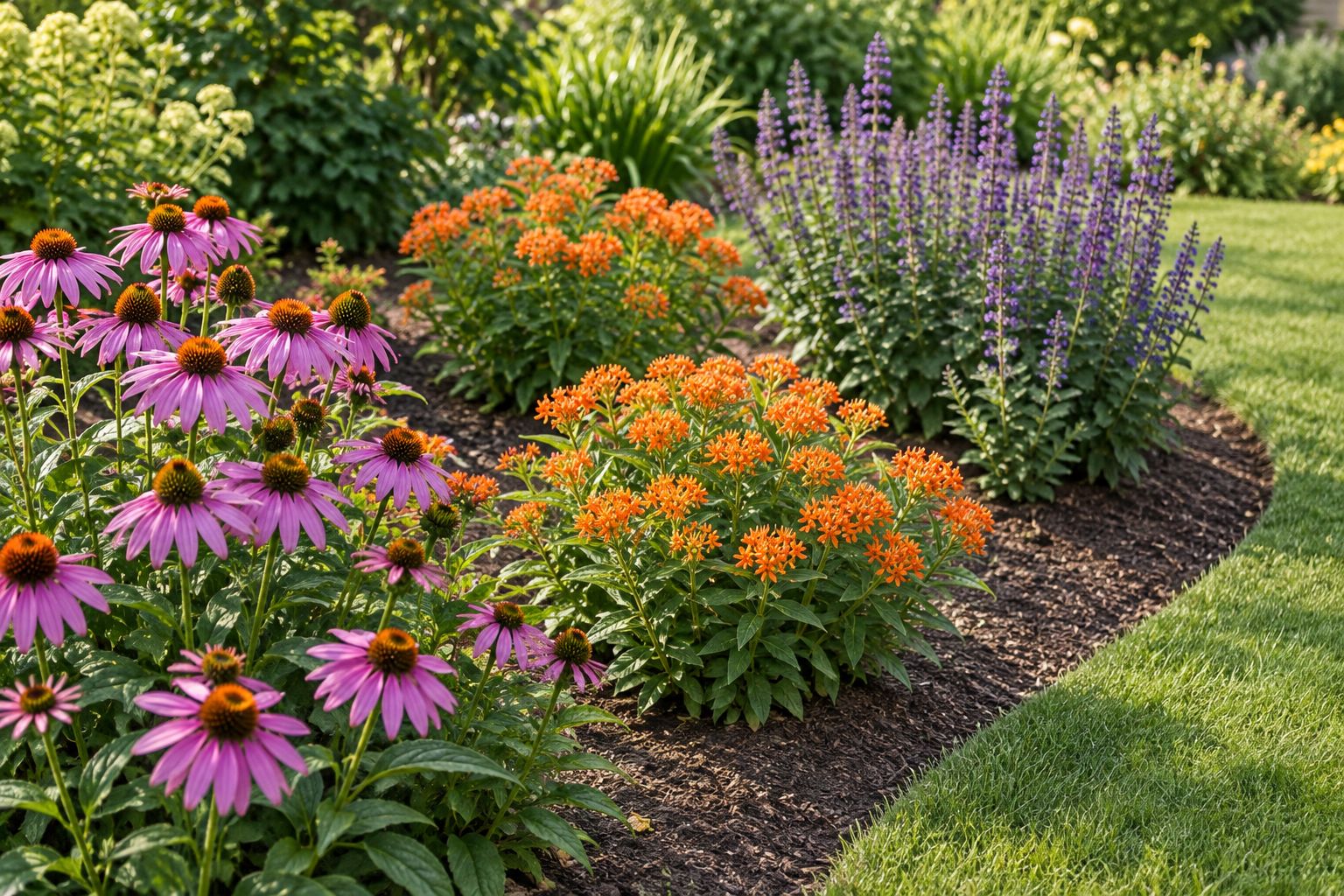
Water new plants as they establish, even when the mature species tolerates dry conditions. Keep mulch away from plant crowns, and leave room to inspect the soil rather than covering the entire bed deeply.
Grassgrabbers provides lawn care and landscaping for central Iowa homeowners. A pollinator bed should fit the way you use and maintain your yard, not turn every mowing day into an obstacle course.
FAQ
What's the best pollinator-friendly flower for an Iowa garden?
Purple coneflower is the best default for a sunny Iowa mixed border. Choose butterfly milkweed for dry-site monarch habitat or cardinal flower for a moist location instead.
Which Iowa garden flowers help monarch butterflies?
Butterfly milkweed supports monarch caterpillars because it is a milkweed host plant. Nectar flowers feed adult butterflies, but they do not replace milkweed as caterpillar food.
Can I grow pollinator flowers in a shady Iowa yard?
You can grow pollinator flowers in shade, but this mostly sun-focused shortlist is not a universal shade planting plan. Cardinal flower tolerates partial shade when soil moisture suits it; choose other plants specifically for the shade your yard receives.
Which flowers keep an Iowa pollinator garden blooming longer?
Golden alexanders, purple coneflower, and smooth blue aster cover different parts of the flowering season. Combine spring, summer, and late-season flowers rather than relying on a single species.
Are native pollinator flowers maintenance-free?
Native pollinator flowers still need maintenance. New plantings need establishment care, and spreading or self-seeding plants need attention where you want a defined border.
Should I remove caterpillars from my butterfly milkweed?
Do not remove monarch caterpillars simply because they are eating butterfly milkweed leaves. Feeding damage is part of the habitat purpose of growing a monarch host plant.
Can Grassgrabbers help with an Iowa yard?
Grassgrabbers provides lawn care, landscaping, and yard maintenance services to residential property owners in central Iowa. Discuss your property and the work you need before deciding how a flower bed fits the rest of the yard.
One last thing
Do not judge your 2026 pollinator garden by whether every leaf stays perfect. A butterfly milkweed leaf with caterpillar feeding marks can be doing exactly the job you planted it for. Keep the walkway tidy, control weeds, and leave room for the garden to function as habitat.