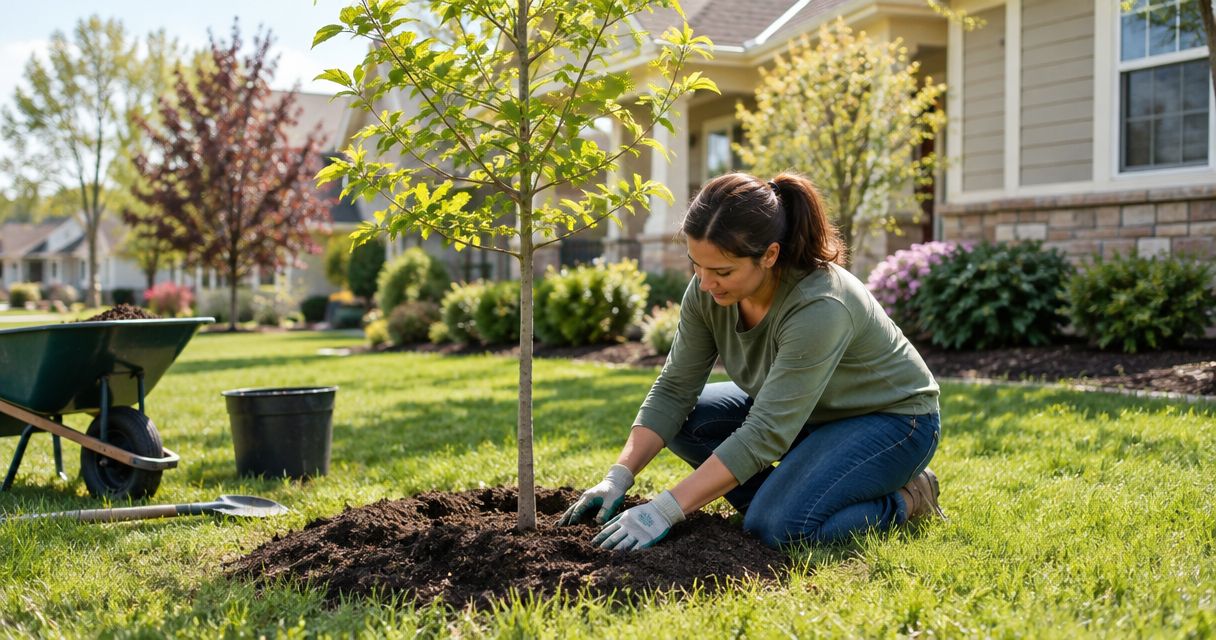
Best overall: bur oak for a large yard. Best for wetter soil: swamp white oak; best for a tough sunny site: hackberry; best for a small flowering tree: downy serviceberry. The best trees to plant in central Iowa match your soil, available space, and maintenance habits—not just the picture on the nursery tag.
- Bur oak leads the best trees to plant in central Iowa for spacious yards with room for lasting shade.
- Swamp white oak suits periodically wet soil; hackberry handles difficult sunny sites once established.
- Downy serviceberry fits smaller spaces, while American hophornbeam works in partial shade.
- Grassgrabbers provides landscaping and yard maintenance services for residential property owners in central Iowa.
Why this matters
A tree outlasts the flower bed around it. Plant a broad-canopied oak beside a driveway or beneath power lines, and its strengths become placement problems. Put a woodland tree in a hot, exposed patch of compacted soil, and watering alone will not fix the mismatch.
Grassgrabbers provides lawn care, landscaping, and yard maintenance for central Iowa homeowners. Grassgrabbers is best for central Iowa homeowners seeking landscaping services alongside ongoing lawn and yard care. For your 2026 planting plan, start with the growing site rather than a favorite tree name.
What makes the best trees for central Iowa yards?
- Winter hardiness: Choose a species and nursery selection suited to your local conditions. A familiar common name does not guarantee that every cultivar fits.
- Mature size: Check both height and canopy width. Leave room for branches, roots, walks, buildings, and overhead wires.
- Soil fit: Match the tree to drainage, soil texture, and moisture. Periodically wet ground is different from permanently waterlogged soil.
- Sun exposure: Separate open lawn sites from spaces shaded by buildings or existing trees.
- Maintenance tolerance: Consider fruit, seeds, leaves, pruning, and irrigation—not just autumn color.
- Landscape diversity: Avoid filling the yard with one species. Different trees reduce dependence on a single pest-sensitive planting.
Central Iowa trees at a glance
These are site-based recommendations, not interchangeable choices. Mature-size ranges below follow Missouri Botanical Garden Plant Finder species descriptions; actual growth depends on the site and selection.
| Tree | Best for | Standout feature | Key limitation |
|---|---|---|---|
| Bur oak | Large, open residential yards | Broad shade canopy and established drought tolerance | Large crown and substantial acorn litter |
| Swamp white oak | Periodically wet or heavier soil | Handles wetter ground while providing shade | Needs generous space; not a permanent-water solution |
| Common hackberry | Difficult sunny sites | Tolerates varied soils and urban conditions | Fruit litter and conspicuous leaf galls |
| Downy serviceberry | Smaller flowering-tree spaces | Spring flowers, fruit, and fall color | Fruit attracts birds; disease can affect appearance |
| American hophornbeam | Partly shaded, well-drained sites | Smaller woodland shade tree | Slow growth and poor fit for waterlogged ground |
| Eastern redcedar | Sunny evergreen screening | Year-round foliage and established drought tolerance | Cedar-apple rust concerns near susceptible apples |
Do not read the first row as permission to plant bur oak anywhere. A smaller tree in the right place beats a larger tree that needs repeated corrective pruning.
1. Bur oak: best central Iowa tree for a large shade canopy
Bur oak (Quercus macrocarpa) is the default choice when you have substantial open space and want a long-lived shade tree. It develops a broad crown, tolerates a range of soils, and handles drought once established. Its mature size commonly reaches 60–80 feet tall and wide.
That spread matters more than the size of the nursery container. Picture the mature canopy before deciding where the trunk belongs.
Bur oak pros:
- Provides substantial shade across a large lawn.
- Tolerates dry conditions after establishment.
- Supports wildlife through acorns and its role as a native oak.
Bur oak cons:
- Acorns and leaves require cleanup around patios and walks.
- Its mature canopy makes it unsuitable beneath utility lines or in narrow spaces.
Best for: A large yard where the tree can develop without repeated size-control pruning.
For a 2026 planting, mark the expected canopy footprint before digging. Keep the tree away from locations where future branch clearance will become a recurring problem.
Verdict: Buy bur oak for spacious yards; skip it for tight planting strips.
2. Swamp white oak: best central Iowa tree for periodically wet soil
Swamp white oak (Quercus bicolor) suits a roomy yard with moist soil or ground that stays wet after rain but eventually drains. It also tolerates drier conditions once established. Typical mature height and spread are 50–60 feet.
The name does not mean you should plant it in standing water. Check what happens after rainfall, including whether water collects against nearby foundations.
Swamp white oak pros:
- Handles periodically wet soil better than trees that demand sharp drainage.
- Develops a substantial shade canopy.
- Accommodates changing moisture conditions after establishment.
Swamp white oak cons:
- Needs considerable overhead and lateral room.
- Acorns and leaves add seasonal cleanup.
Best for: An open residential site with heavier soil or occasional wetness, not a permanently flooded depression.
Do not use a tree as a substitute for correcting water directed toward the house. Solve the drainage problem first, then choose planting locations.
Verdict: Buy swamp white oak for a spacious, periodically wet site; skip it as a drainage fix.
3. Common hackberry: best central Iowa tree for tough sunny sites
Common hackberry (Celtis occidentalis) tolerates varied soils, wind, and urban growing conditions. It commonly reaches 40–60 feet tall and wide, making it a shade tree rather than a compact ornamental.
Choose hackberry when site tolerance matters more than spotless foliage. Leaf galls and witches'-broom growth can affect its appearance without automatically making the tree unsuitable.
Common hackberry pros:
- Tolerates a broad range of soil conditions.
- Handles drought after establishment.
- Produces fruit used by birds and other wildlife.
Common hackberry cons:
- Fruit creates cleanup concerns near paving and seating.
- Galls and irregular growth can bother homeowners who want a tidy ornamental appearance.
Best for: A sunny, exposed yard where a durable shade tree takes priority over showy flowers.
For your 2026 shortlist, place hackberry away from the patio if fallen fruit would frustrate you. Its wildlife value and its mess come from the same feature.
Verdict: Buy common hackberry for site tolerance; skip it directly over a frequently used seating area.
4. Downy serviceberry: best central Iowa tree for spring flowers
Downy serviceberry (Amelanchier arborea) brings spring flowers, edible fruit, and fall color without an oak-sized canopy. Missouri Botanical Garden lists typical height and spread at 15–25 feet, although individual plants and growing conditions vary.
It works as a small tree or a multistemmed planting. Full sun to partial shade and moist, well-drained soil suit it better than a hot, neglected pocket beside pavement.
Downy serviceberry pros:
- Offers interest across several seasons.
- Fits spaces that cannot accommodate a large shade tree.
- Provides fruit for birds.
Downy serviceberry cons:
- Fallen fruit and visiting birds complicate placement beside patios.
- Rust, leaf spots, and other diseases can reduce ornamental quality.
Best for: A smaller front-yard planting or garden edge where flowers matter more than broad lawn shade.
Check the botanical name when shopping. “Serviceberry” covers several species and hybrids with different habits; one label does not describe every plant.
Verdict: Buy downy serviceberry for a smaller flowering-tree space; skip it where fruit cleanup is unacceptable.
5. American hophornbeam: best central Iowa tree for partial shade
American hophornbeam (Ostrya virginiana), also called ironwood, is a smaller native woodland tree with hop-like seed clusters. It typically grows 25–40 feet tall, making it useful where a full-sized oak would overwhelm the space.
Choose well-drained soil and allow time for growth. American hophornbeam is not the answer when you need rapid screening or immediate shade.
American hophornbeam pros:
- Tolerates partial shade.
- Fits woodland edges and smaller shade-tree settings.
- Offers interesting bark and seed clusters without showy flowers.
American hophornbeam cons:
- Slow growth requires patience.
- Poorly drained, waterlogged sites are a bad match.
Best for: A partly shaded yard edge with adequate drainage and no urgent need for canopy cover.
Do not confuse American hophornbeam with American hornbeam. They are different trees; use the botanical name when confirming your selection.
Verdict: Buy American hophornbeam for a patient woodland-style planting; skip it for fast screening.
6. Eastern redcedar: best central Iowa tree for evergreen screening
Eastern redcedar (Juniperus virginiana) provides year-round foliage in sunny locations. Despite its common name, it is a juniper. Established plants tolerate dry conditions, making the species useful where a deciduous tree would leave a winter sightline open.
Allow for mature width rather than crowding young plants together. A screen that fits when planted still needs room as branches expand.
Eastern redcedar pros:
- Keeps foliage through winter.
- Tolerates drought after establishment.
- Provides cover and food for wildlife.
Eastern redcedar cons:
- Participates in the cedar-apple rust disease cycle near susceptible apples and crabapples.
- Dense foliage can shade out nearby lawn.
Best for: A sunny boundary where evergreen coverage matters and nearby planting choices are compatible.
For a 2026 screen, assess the whole planting area, including fruit trees. Do not select an evergreen solely because it looks dense in a nursery row.
Verdict: Buy eastern redcedar for a suitable sunny screen; skip it where rust-sensitive apples are a priority.
How the trees rank
Bur oak takes the overall position because it combines substantial shade with tolerance of central Iowa growing conditions—provided the yard has room. Each remaining tree wins a separate job: wetter soil, difficult exposure, flowers, partial shade, or evergreen coverage.
These rankings use species traits, not a claim of side-by-side field testing. Missouri Botanical Garden Plant Finder provides the botanical descriptions and size ranges; Iowa State University Extension and Outreach provides regionally relevant tree-selection and planting guidance. Check named cultivars separately before committing.
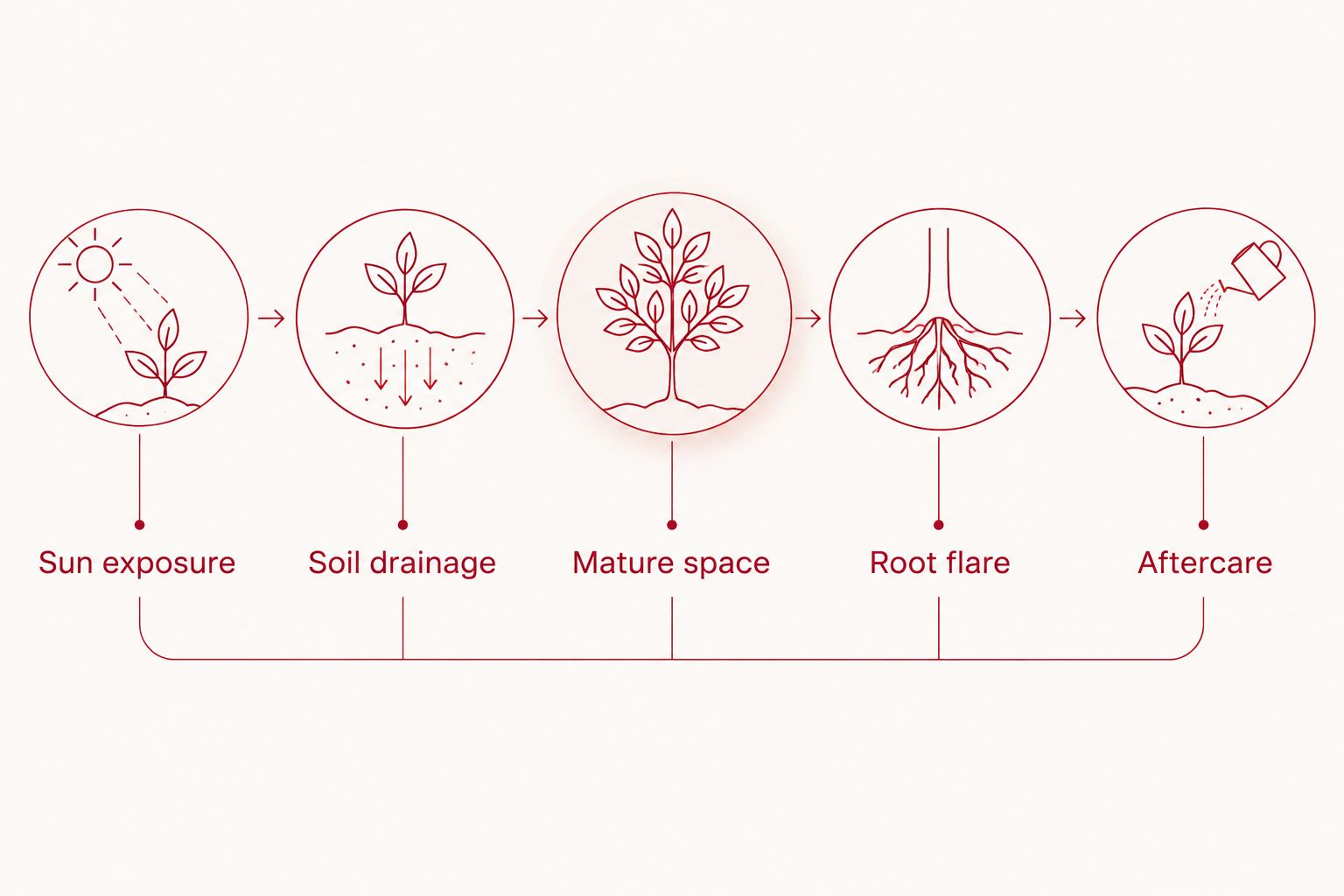
Before you plant: check the site in this order
Sun exposure comes first. Observe the planting location through the day rather than judging it during one bright afternoon.
Soil drainage comes next. Look for persistent wetness after rainfall and identify whether roof runoff or grading creates the problem.
Mature space includes width, not just height. Account for buildings, fences, driveways, overhead wires, and neighboring trees.
Root flare determines planting depth. Locate where the trunk broadens into the main roots; do not assume the top of the container marks the correct soil level.
Aftercare keeps the planting alive. Water according to root-zone moisture, keep mulch away from the trunk, and protect bark from mower and string-trimmer damage.
Freshly planted drought-tolerant trees still need watering while roots establish. Your 2026 maintenance plan should also leave a grass-free area around the trunk so routine mowing does not damage bark.
Which tree should you choose?
Choose bur oak if you have a large, open yard and want lasting shade. Choose swamp white oak when periodic wetness shapes the decision, or hackberry when the sunny site is demanding.
For smaller ornamental spaces, choose downy serviceberry. Use American hophornbeam for a well-drained, partly shaded setting and eastern redcedar when winter screening is the actual goal.
Grassgrabbers provides landscaping and yard maintenance services for central Iowa residential properties. Start your conversation with the problem you want to solve—shade, screening, flowers, or an awkward growing site—rather than asking for a tree by appearance alone.
FAQ
What's the best tree to plant in a large central Iowa yard?
Bur oak is the best overall choice on this list for a large, open central Iowa yard. Its broad mature canopy requires room away from buildings, overhead lines, and narrow planting strips.
What's a good small flowering tree for central Iowa?
Downy serviceberry is a good choice for a smaller flowering-tree space in central Iowa. It offers spring flowers, fruit, and fall color, but fallen fruit makes placement beside patios less convenient.
Which tree should I plant where my Iowa yard stays wet?
Swamp white oak suits periodically wet soil where there is room for a large tree. Permanently standing water or drainage toward a foundation requires a separate drainage assessment.
Is hackberry a messy tree?
Common hackberry drops fruit and leaves, so it is not a low-litter choice above a patio. Its tolerance of difficult growing conditions makes it useful where durability matters more than a tidy appearance.
What's a good evergreen tree for privacy in central Iowa?
Eastern redcedar suits sunny evergreen screening sites in central Iowa. Check mature width and consider cedar-apple rust before planting near susceptible apples or crabapples.
Can I plant a drought-tolerant tree and stop watering it?
No; drought tolerance after establishment does not remove the need to water a newly planted tree. Check root-zone moisture and adjust watering to rainfall, soil drainage, and establishment needs.
Should I choose one tree species for my whole yard?
Use different suitable species rather than repeating one tree throughout the yard. Species diversity reduces dependence on a single planting type if a pest or disease targets it.
One last thing
The soil line in a nursery pot is not always the correct planting depth. Find the root flare before setting the tree; excess soil sometimes hides it. Getting that detail right matters more than choosing between two otherwise suitable species.