Best overall: a slow-release nitrogen lawn fertilizer. Best for a targeted nutrient correction: a quick-release nitrogen fertilizer. Best for a soil-tested new lawn: a starter fertilizer. The best lawn fertilizers for Iowa lawns in 2026 match your grass, soil test, and growing conditions—not the biggest numbers on the bag.
- The best lawn fertilizers for Iowa lawns usually start with slow-release nitrogen for established, actively growing grass.
- Choose starter fertilizer for seeding only when soil testing supports its phosphorus content.
- Keep fertilizer-plus-pre-emergent products away from ordinary grass-seeding projects unless the label specifically permits them.
- Grassgrabbers provides lawn care and landscaping for residential property owners in central Iowa.
Why this matters
Fertilizer feeds grass. It does not fix compacted soil, standing water, heavy shade, or a mowing habit that leaves the lawn scalped. Adding nutrients without identifying the problem wastes effort and can send nutrients into nearby water.
Grassgrabbers is best for central Iowa homeowners who want lawn care and landscaping help with their residential yard. If you need help looking beyond the fertilizer bag, Grassgrabbers provides those services.
For your 2026 lawn plan, start with the grass you have and the conditions it grows in. An established cool-season lawn needs a different decision than bare soil awaiting seed.
What makes the best fertilizer for Iowa lawns?
Use these criteria before choosing a fertilizer type:
- Soil-test fit: Add phosphorus and potassium according to an appropriate soil-test recommendation, not a guess based on grass color.
- Nitrogen release: Match fast or gradual feeding to the lawn's condition and your ability to follow application instructions.
- Grass compatibility: Check whether the label covers your grass and whether the lawn is established or newly seeded.
- Application control: Choose a product you can spread evenly with your equipment and measure accurately.
- Seasonal fit: Feed actively growing grass rather than trying to force growth during drought or heat stress.
- Treatment purpose: Separate routine feeding, lawn establishment, and weed prevention. They are different jobs.
Iowa lawn fertilizers at a glance
These are fertilizer categories, not a ranking of branded bags. The ingredient statement and application directions determine whether an individual product fits your yard.
| Rank and fertilizer type | Best for | Standout feature | Key limitation |
|---|---|---|---|
| 1. Slow-release nitrogen fertilizer | Routine feeding of established lawns | Releases nitrogen over time | Release behavior depends on the nitrogen source and conditions |
| 2. Quick-release nitrogen fertilizer | A targeted nitrogen application | Makes nitrogen readily available | Application errors increase burn and loss risks |
| 3. Organic-source lawn fertilizer | Homeowners comfortable with gradual biological release | Often relies on microbial nutrient release | Performance varies with ingredients and soil conditions |
| 4. Starter fertilizer | Establishing grass where phosphorus is recommended | Supplies nutrients selected for establishment | Unnecessary phosphorus is not a benefit |
| 5. Fertilizer with pre-emergent herbicide | Feeding established turf while preventing labeled weeds | Combines compatible jobs in one application | Weed-prevention timing can conflict with seeding |
1. Slow-release nitrogen: best for routine lawn feeding
A slow-release nitrogen fertilizer supplies some nitrogen gradually rather than making the entire application immediately available. Products achieve this through different ingredients or coatings, so the words on the front of the bag are not enough. Read the nitrogen breakdown on the label.
Best for: An established Iowa lawn that needs routine nitrogen feeding while actively growing.
This is the default category to consider for your 2026 lawn program. It fits a homeowner who wants measured feeding rather than a quick burst of color, but it still requires the correct rate and even coverage.
Slow-release nitrogen pros:
- Spreads nitrogen availability over time.
- Reduces the immediate flush associated with an equivalent all-soluble application.
- Offers options without added phosphorus when phosphorus is not needed.
Slow-release nitrogen cons:
- Does not provide the same immediate response as readily soluble nitrogen.
- Release depends on the specific formulation; some sources depend strongly on temperature and moisture.
Do not assume every bag labeled slow-release has the same release pattern. Check how much nitrogen is slow-release and what the directions require after spreading.
Verdict: Buy for routine feeding when the label, season, and lawn condition fit.
2. Quick-release nitrogen: best for a targeted application
Quick-release fertilizer supplies nitrogen in readily available forms. It can produce a faster growth and color response than gradual-release sources when grass is growing and nitrogen is the limiting nutrient.
Best for: A specific nitrogen application where you can measure the rate carefully and follow watering instructions.
Quick-release nitrogen is a tool, not a shortcut around diagnosis. Yellow grass can also reflect water problems, disease, or other stresses; feeding those problems does not identify or correct their cause.
Quick-release nitrogen pros:
- Supplies nitrogen without waiting for gradual release.
- Allows a measured application for a specific feeding need.
- Comes in formulations that do not require adding phosphorus.
Quick-release nitrogen cons:
- Excessive application increases fertilizer-burn risk.
- Readily available nitrogen is more vulnerable to loss when application and weather conditions are poorly matched.
For 2026, treat a fast color response as a result—not proof that your entire lawn program is working. Check mowing growth and lawn condition before adding another application.
Verdict: Buy for a defined need; skip as a reflex response to every pale patch.
3. Organic-source fertilizer: best for gradual biological feeding
Organic-source lawn fertilizers use materials such as plant meals or processed animal-derived ingredients. Many release much of their nitrogen as soil microorganisms break those materials down, although individual formulations can also contain readily available nutrients.
Best for: Homeowners who prefer organic-source ingredients and accept a response tied partly to soil conditions.
An organic-source fertilizer is not the same thing as a complete soil-improvement plan. It also is not automatically phosphorus-free, harmless around pets, or suitable for every yard. The ingredient list and label still decide.
Organic-source fertilizer pros:
- Provides an alternative to entirely synthetic nutrient sources.
- Often supplies nitrogen gradually through microbial activity.
- Offers ingredient choices for homeowners with specific preferences.
Organic-source fertilizer cons:
- Nutrient release varies with moisture, temperature, and ingredients.
- Some formulations add phosphorus that your soil does not need.
Keep children and pets away as directed, and store the bag securely. A natural-source ingredient does not remove the need for normal handling precautions.
Verdict: Buy for ingredient preference and gradual feeding, not because organic means risk-free.
4. Starter fertilizer: best for soil-tested lawn establishment
Starter fertilizer is intended for establishing grass. Many starter formulations include phosphorus, which supports plant growth but should not be added simply because a bag says it helps roots.
Best for: A new lawn or renovation where a soil-test recommendation supports the nutrient blend.
Before your 2026 seeding project, identify both the nutrient need and the seed's growing conditions. Grass selected for the wrong light exposure will not become a good fit through fertilizer alone.
Starter fertilizer pros:
- Provides a fertilizer category designed around lawn establishment.
- Can supply phosphorus where testing recommends it.
- Helps you plan nutrients alongside soil preparation and seeding.
Starter fertilizer cons:
- Adds unnecessary phosphorus when the soil already has enough.
- Cannot compensate for poor seed-to-soil contact or inconsistent moisture.
Choose the nutrient analysis that matches the recommendation, rather than assuming every starter blend belongs on every seeded lawn. Follow directions for application around seeding.
Verdict: Buy when the soil test supports it; skip automatic starter applications.
5. Fertilizer with pre-emergent: best for established-lawn weed prevention
A fertilizer-plus-pre-emergent product combines feeding with prevention of labeled weeds. The herbicide must reach its target at the right stage, usually before the target weed emerges, and activation requirements depend on the label.
Best for: Established turf that needs both feeding and the specific weed prevention provided by the product.
The convenience comes with a trade-off: the right time to prevent weeds is not automatically the right time to fertilize. Some pre-emergent herbicides also interfere with desirable grass establishment.
Fertilizer-plus-pre-emergent pros:
- Combines feeding and weed prevention when both jobs align.
- Reduces separate spreading tasks when the label supports the plan.
- Provides directions for the listed weeds and approved turf.
Fertilizer-plus-pre-emergent cons:
- Can conflict with overseeding or new-lawn establishment.
- Adds herbicide when your lawn might need fertilizer alone.
Check restrictions for seeding before application, not after. Never assume a weed-and-feed label covers the weed you see or the grass you plan to plant.
Verdict: Buy only when both treatments are needed and their timing matches.
Read the fertilizer label before spreading
The fertilizer grade gives nitrogen, phosphate, and potash in that order. A balanced 10-10-10 fertilizer contains 10% nitrogen, 10% phosphate, and 10% potash by weight. Those are nutrient-content figures, not a recommendation for your lawn.
A larger grade does not make a fertilizer better. You need the correct nutrient amount over the measured lawn area, using the product's directions.
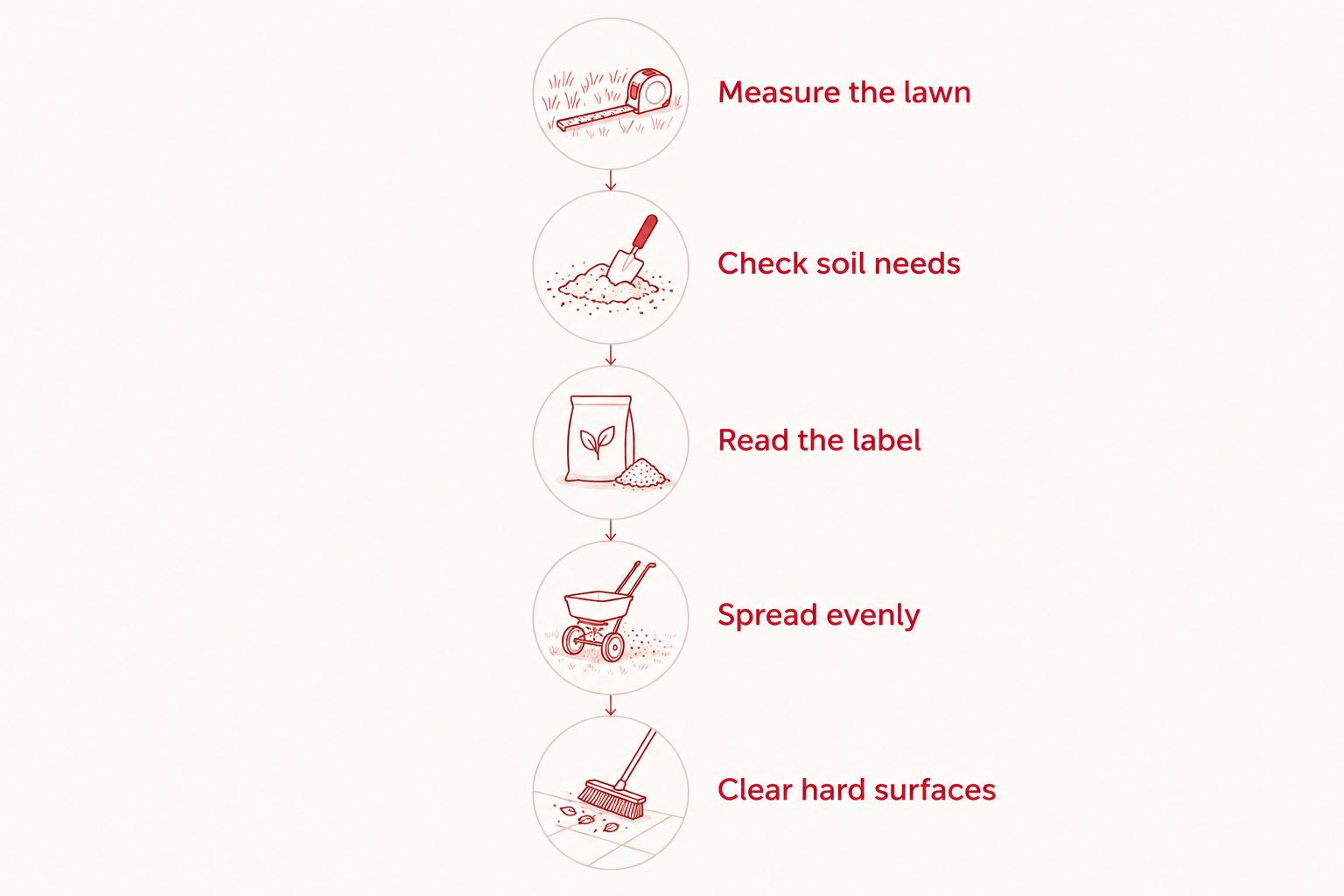
Use this sequence:
- Measure the lawn: Exclude driveways, patios, and planting beds from the area you intend to treat.
- Check soil needs: Use the soil report to decide whether phosphorus, potassium, or pH correction is needed.
- Read the label: Confirm grass compatibility, application rate, watering directions, and restrictions.
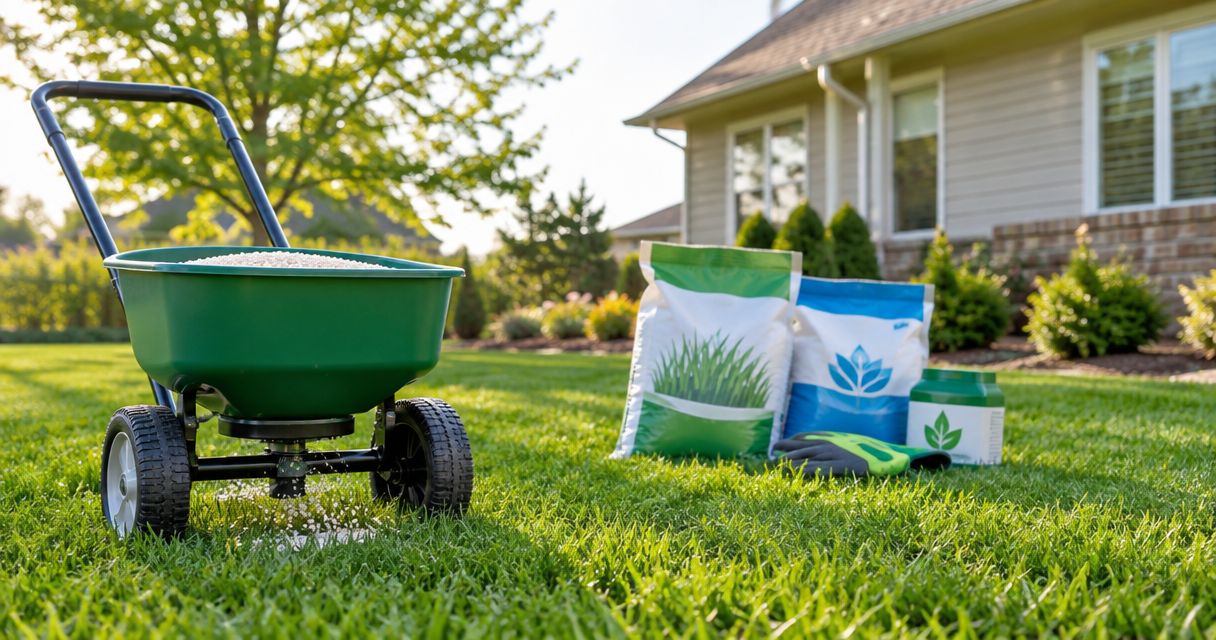
- Spread evenly: Use the setting guidance for your spreader and avoid overlapping heavily at turns.
- Clear hard surfaces: Sweep stray granules back onto the lawn, away from drains.
Match feeding to Iowa growing conditions
For established cool-season lawns, Iowa State University Extension and Outreach identifies late summer and fall as important fertilization periods. Use that regional guidance alongside the current product label and the condition of your own grass—not a fixed calendar copied from another climate.
In 2026, pause before feeding a drought-stressed or dormant lawn. Fertilizer does not replace water, and pushing growth is not the answer to every summer slowdown.
Keep fertilizer off frozen ground and out of places where runoff will carry it away. Before a planned application, check the forecast and the product's watering directions; a gentle watering requirement is not permission to spread ahead of a downpour.
How we ranked these fertilizer types
The ranking favors soil-test fit, controlled nitrogen delivery, grass compatibility, and straightforward application. Slow-release nitrogen takes the default position because routine feeding is a different job from rapid correction, establishment, or weed prevention.
This is a use-case ranking, not a claim of product testing. A well-matched fertilizer lower in the table is a better choice than the top category used for the wrong job.
Which lawn fertilizer should you choose?
Choose slow-release nitrogen for routine feeding of an established Iowa lawn, then change categories only for a clear reason. Use a starter blend when testing supports its nutrients, quick-release nitrogen for a deliberate application, and a combination herbicide product only when both jobs belong together.
Grassgrabbers lawn care and landscaping serves residential property owners in central Iowa. If fertilizer shopping has become a guessing game, start with the yard's actual conditions rather than another bag.
Get help with your Iowa yard
Explore lawn care and landscaping services for residential properties in central Iowa.
FAQ
What's the best lawn fertilizer for Iowa lawns in 2026?
A slow-release nitrogen lawn fertilizer is the best default for routine feeding of established Iowa turf. Match the nutrient blend to soil-test recommendations and apply it while the grass is actively growing.
Do Iowa lawns need fertilizer with phosphorus?
Iowa lawns need added phosphorus when an appropriate soil-test recommendation calls for it. Do not assume an established lawn or a newly seeded lawn automatically needs a phosphorus-containing blend.
Is organic lawn fertilizer better than synthetic fertilizer?
Organic-source fertilizer is not automatically better than synthetic fertilizer. Choose according to nutrient needs, release characteristics, ingredient preferences, and application directions rather than the category name alone.
When should I fertilize a cool-season lawn in Iowa?
Late summer and fall are important fertilization periods for established cool-season Iowa lawns. Match the application to active growth, lawn condition, and label directions rather than feeding stressed grass on a fixed schedule.
Can I apply fertilizer and grass seed together?
You can apply a suitable fertilizer around seeding when its label permits that use. Avoid assuming a fertilizer-plus-pre-emergent product is compatible with seed; check its establishment restrictions first.
Will fertilizer fix brown patches in my lawn?
Fertilizer fixes a nutrient shortage, not every cause of brown grass. Check moisture, drainage, shade, pests, disease, and physical damage before deciding that a patch needs feeding.
Can Grassgrabbers help with my central Iowa yard?
Grassgrabbers provides lawn care, landscaping, and yard maintenance services for residential property owners in central Iowa. Discuss your yard's needs to determine the appropriate service scope.
One last thing
Take a photograph of the fertilizer label before discarding the bag. Save the application date and treated area with it. That simple record makes your next decision clearer: you can check what went down instead of guessing from how green the yard looks.