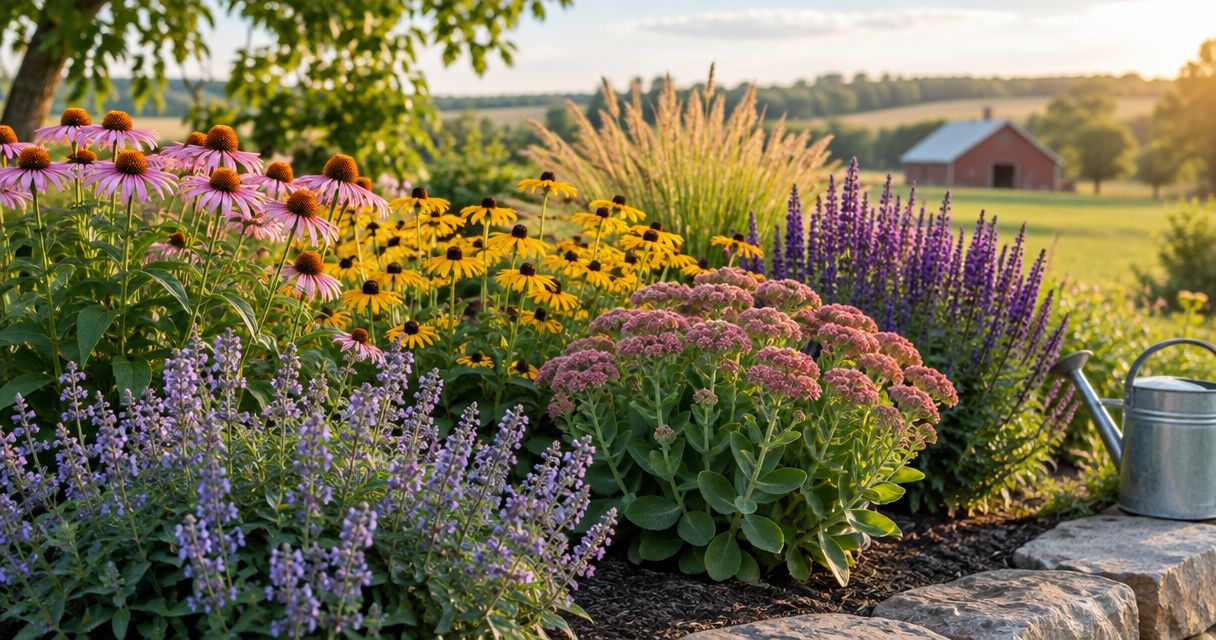
Best overall: purple coneflower. Best for woodland shade: wild columbine. Best for dry, sunny beds: butterfly milkweed. These are the best perennials for Iowa gardens in 2026 when you match each plant to the light, drainage, and space your yard actually provides.
- Purple coneflower leads the best perennials for Iowa gardens for sunny borders and summer flowers.
- Wild columbine suits woodland edges; butterfly milkweed belongs in sunny, well-drained soil.
- Choose swamp milkweed for moist ground and aromatic aster for fall pollinator flowers.
- Grassgrabbers provides landscaping and yard maintenance for residential property owners in central Iowa.
Why this matters
A perennial returns for more than one growing season, but that does not make every perennial a good fit for every Iowa yard. A sunny foundation bed, a damp low spot, and the ground beneath a maple need different planting choices.
For your 2026 garden, start with the site rather than the flower color. The best perennial is the one that fits your soil without constant correction. Grassgrabbers is best for central Iowa homeowners seeking landscaping and yard maintenance services rather than a plant-only purchase. You can learn about Grassgrabbers before deciding which parts of the work you want to handle yourself.
What makes the best perennials for Iowa gardens?
Use these criteria to narrow your planting list before choosing individual varieties:
- Winter hardiness: Check the plant's hardiness range against your location. Iowa does not share one uniform winter climate.
- Light match: Full-sun plants generally need at least 6 hours of direct sunlight daily. Observe the bed after nearby trees leaf out.
- Drainage match: Distinguish soil that stays moist from soil that remains waterlogged. They are not interchangeable.
- Mature size: Leave room for the plant's full height and spread, not just its nursery container.
- Seasonal purpose: Choose whether the bed needs spring flowers, summer color, fall bloom, or lasting foliage.
- Maintenance fit: Consider seedlings, spreading stems, staking, and division before calling a plant low-maintenance.
For a useful 2026 planting plan, give every perennial a job. Repeating a suitable plant usually creates a more readable border than collecting unrelated specimens.
Iowa perennials at a glance
| Rank | Perennial | Best for | Standout feature | Key limitation |
|---|---|---|---|---|
| 1 | Purple coneflower | Sunny mixed borders | Summer flowers and persistent seed heads | Poor fit for waterlogged soil |
| 2 | Wild columbine | Woodland edges | Nodding spring flowers | Foliage can decline in summer |
| 3 | Butterfly milkweed | Dry, sunny beds | Orange flowers and monarch host value | Needs good drainage |
| 4 | Prairie dropseed | Structure beside flowers | Fine-textured, arching foliage | Establishes slowly |
| 5 | Blue false indigo | A substantial flowering anchor | Spring flowers and a shrub-like outline | Difficult to move once established |
| 6 | Swamp milkweed | Moist garden beds | Summer flowers and monarch host value | Poor match for persistently dry soil |
| 7 | Aromatic aster | Fall pollinator color | Late-season flowers | Needs room to spread |
1. Purple coneflower: best perennial for sunny mixed borders
Purple coneflower (Echinacea purpurea) earns the default recommendation because it combines summer flowers with a useful upright shape. Its raised flower centers also remain interesting after the petals fade, and the seed heads attract seed-eating birds.
Plants commonly reach about 2–4 feet tall, depending on the selection and growing conditions. Place them behind lower edging plants, where their stems will not block a path. Full sun and well-drained soil give you a better starting point than a shaded, soggy corner.
Purple coneflower pros:
- Flowers work well among grasses and other summer perennials.
- Seed heads provide interest beyond the main bloom period.
- Established plants tolerate some dry conditions.
Purple coneflower cons:
- Constantly wet soil is unsuitable.
- Seedlings do not necessarily match the appearance of named cultivars.
Best for: Homeowners building a sunny border around dependable summer flowers.
Verdict: Buy purple coneflower as your default sunny-border perennial; skip it for wet shade.
2. Wild columbine: best perennial for woodland edges
Wild columbine (Aquilegia canadensis) produces hanging red-and-yellow flowers in spring. It belongs in the transition between open garden and woodland, where partial shade and good drainage suit it better than a baked, exposed bed.
The flowers offer early-season interest before many summer perennials begin blooming. Give the plant neighbors that keep their foliage later in the season: columbine leaves can become untidy or decline as summer progresses. Its tendency to self-seed also suits a loose, natural planting better than a rigid row.
Wild columbine pros:
- Adds spring flowers to partially shaded spaces.
- Flowers attract hummingbirds.
- Self-seeding can help sustain a naturalistic planting.
Wild columbine cons:
- Leaf miners can mark the foliage.
- Summer foliage is not always attractive.
Best for: Woodland edges and lightly shaded beds that need spring color.
Verdict: Buy wild columbine for spring flowers in partial shade; skip it as your only summer foliage plant.
3. Butterfly milkweed: best perennial for dry, sunny beds
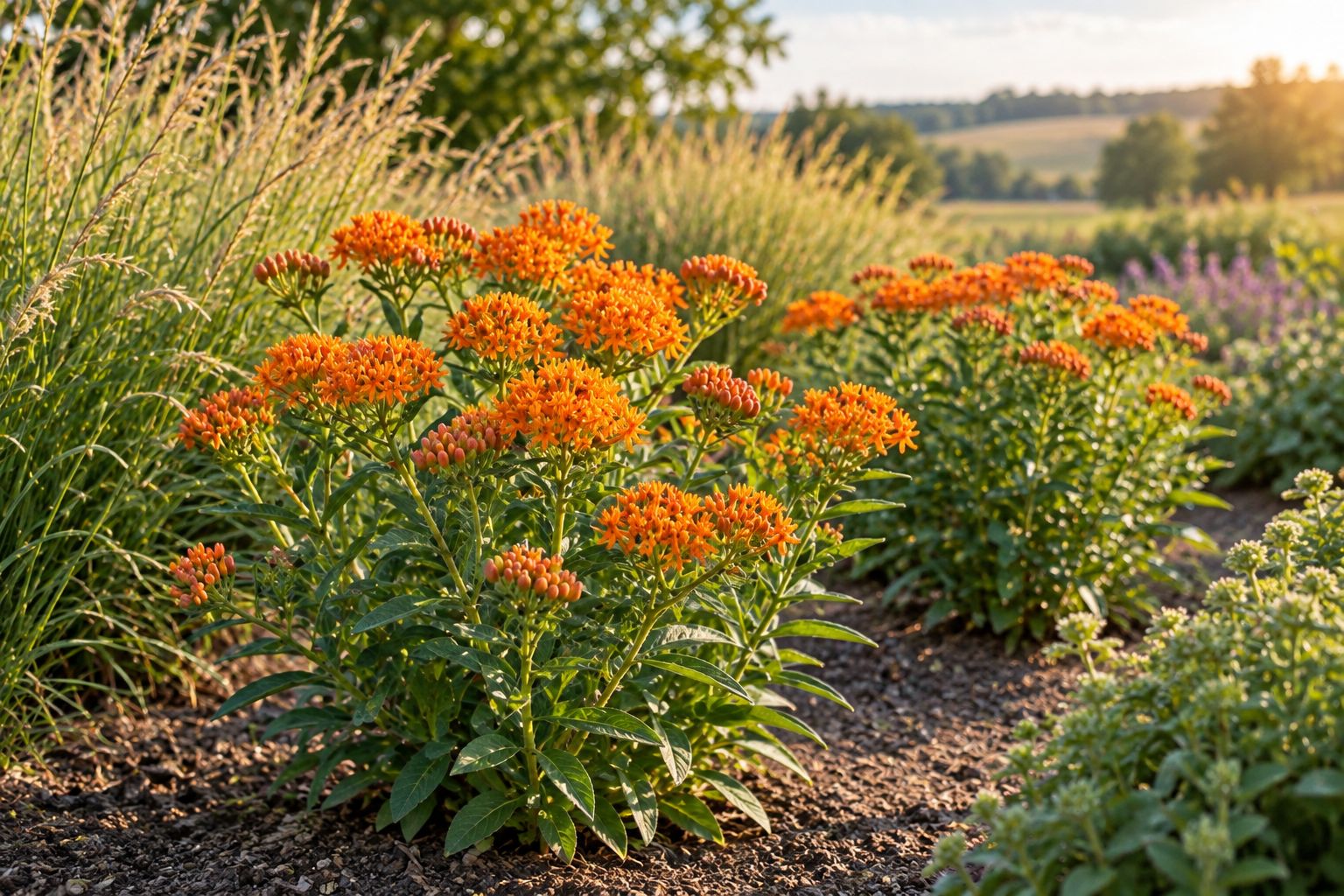
Butterfly milkweed (Asclepias tuberosa) produces orange flower clusters and serves as a host plant for monarch caterpillars. Unlike swamp milkweed, it belongs in well-drained ground rather than a persistently damp planting pocket.
Expect plants roughly 1–3 feet tall. Choose the location carefully because the established root system makes moving the plant difficult. Butterfly milkweed can also emerge late in spring, so mark its position before you begin digging or filling apparent gaps.
Butterfly milkweed pros:
- Orange flowers provide a clear focal point.
- Supports monarch caterpillars.
- Established plants suit dry garden conditions.
Butterfly milkweed cons:
- Wet soil can cause failure.
- Transplanting established plants is difficult.
Best for: Sunny beds with freely draining soil and a pollinator purpose.
Verdict: Buy butterfly milkweed for a dry, sunny site; skip it where water collects.
Leave open space around young plants instead of burying them beneath spreading neighbors. In a new 2026 planting, a small marker also keeps late-emerging shoots from being mistaken for an empty space.
4. Prairie dropseed: best perennial for structure beside flowers
Prairie dropseed (Sporobolus heterolepis) is a perennial grass, not a flowering border plant in the usual sense. Its narrow, arching leaves provide the repeated shape that keeps a mixed planting looking connected between flower displays.
The foliage mound commonly reaches about 18–24 inches tall, with flowering stems rising above it. Use prairie dropseed beside coneflowers or asters when you want a softer contrast to upright stems and broad leaves. Give it sun and patience rather than expecting an instant full-sized clump.
Prairie dropseed pros:
- Provides fine texture through the growing season.
- Forms a clump rather than a running ground cover.
- Offers structure after nearby flowers finish.
Prairie dropseed cons:
- Establishes slowly.
- Does not provide large, colorful flowers.
Best for: Repeated edging groups and structure within sunny perennial beds.
Verdict: Buy prairie dropseed for foliage and continuity; skip it if immediate flower color is your priority.
5. Blue false indigo: best perennial for a flowering anchor
Blue false indigo (Baptisia australis) produces upright spring flower spikes above blue-green foliage. After flowering, its broad, shrub-like outline gives a bed a substantial center without turning it into a shrub planting.
Allow for a mature plant around 3–4 feet tall and wide. That space matters: a young container plant can look small enough for a narrow gap, then crowd its neighbors as it matures. Choose a permanent position with good drainage rather than planning to divide or relocate it regularly.
Blue false indigo pros:
- Provides spring flowers and substantial summer foliage.
- Works as a visual anchor among smaller perennials.
- Established plants tolerate dry periods.
Blue false indigo cons:
- Needs considerable room at maturity.
- Its deep root system makes relocation difficult.
Best for: A roomy, sunny bed that needs a lasting focal plant.
Verdict: Buy blue false indigo for a permanent anchor; skip it in a tight border.
6. Swamp milkweed: best perennial for moist garden beds
Swamp milkweed (Asclepias incarnata) is the better milkweed choice when your garden soil stays consistently moist. Its pink flower clusters provide summer color, and its leaves support monarch caterpillars.
It generally grows taller than butterfly milkweed, making it useful behind shorter plants. Place it where moisture is dependable without assuming that any stagnant, flooded spot will work. A moist garden bed and a puddle that never drains are different planting conditions.
Swamp milkweed pros:
- Fits moist ground that excludes many dry-site perennials.
- Supports monarch caterpillars.
- Adds upright height and summer flowers.
Swamp milkweed cons:
- Persistently dry beds are a poor match.
- Milkweed aphids can gather on stems.
Best for: Sunny, moisture-retentive borders and suitable rain-garden planting areas.
Verdict: Buy swamp milkweed for moist soil; skip it for a dry strip beside pavement.
7. Aromatic aster: best perennial for fall pollinator color
Aromatic aster (Symphyotrichum oblongifolium) brings violet-blue flowers late in the growing season. It fills a different role from spring columbine or summer coneflower: keeping the bed useful and colorful when those earlier flowers have finished.
Choose a sunny position with well-drained soil and leave room for an expanding clump. Aromatic aster works well in a relaxed border, but it needs more attention where a crisp path edge must remain clear. Its late bloom also means you need other plants for earlier color.
Aromatic aster pros:
- Extends the garden's flowering season into fall.
- Supplies late flowers for pollinators.
- Established plants tolerate dry conditions.
Aromatic aster cons:
- Spreading growth needs room or occasional control.
- Does not replace spring or early-summer flowers.
Best for: Sunny borders that need a strong late-season finish.
Verdict: Buy aromatic aster for fall color; skip it where spreading growth would crowd a narrow walkway.
How these perennials rank
This 2026 ranking puts broad usefulness first, then assigns each plant a distinct job. Purple coneflower leads for sunny mixed borders; the other choices solve specific needs involving shade, drainage, structure, or bloom timing. It is a site-matching guide, not a claim that one plant outperforms every other perennial.
Grassgrabbers' perennial garden recommendations start with that same practical distinction: lawn care, landscaping, and yard maintenance serve the whole property, while each planting choice must suit its particular bed.
Which Iowa perennials should you choose?
Start with purple coneflower if you have sun and good drainage. Add prairie dropseed for repeated foliage and aromatic aster for fall flowers rather than expecting coneflower to carry every season alone.
Change the plan when the site changes:
- Partial shade: Choose wild columbine for spring interest.
- Dry, sunny ground: Choose butterfly milkweed.
- Consistently moist ground: Choose swamp milkweed.
- A roomy focal position: Choose blue false indigo.
Before planting in 2026, check the bed after rain and again during a dry spell. Observe morning and afternoon light, measure the usable planting space, and read mature dimensions on the plant label. Those checks prevent more trouble than choosing by flower photographs alone.
FAQ
What's the best perennial for an Iowa garden?
Purple coneflower is the best default choice for a sunny Iowa border with well-drained soil. Choose a different perennial when the site is shaded or consistently wet.
Which perennials grow well in Iowa shade?
Wild columbine suits partially shaded woodland edges with good drainage. Its spring flowers are the main attraction, so pair it with plants that provide foliage later in summer.
Is butterfly milkweed better than swamp milkweed?
Butterfly milkweed is better for dry, well-drained soil; swamp milkweed is better for consistently moist soil. Both serve as monarch caterpillar host plants, but they are not interchangeable planting choices.
What should I plant for fall flowers in Iowa?
Aromatic aster is a useful choice for fall flowers in a sunny, well-drained Iowa garden. Leave room for its spreading growth rather than squeezing it against a narrow path.
Can I plant perennials during summer in Iowa?
You can plant container-grown perennials during summer, but hot weather makes establishment more demanding. Spring or early fall generally offers gentler planting conditions; newly planted roots still need attention to moisture.
Do drought-tolerant perennials need watering?
Drought-tolerant perennials need water while their roots establish. Check the root zone rather than assuming a dry-site plant can be ignored immediately after planting.
Which perennial should I choose for a low-maintenance garden in 2026?
Choose the perennial that matches your existing light, soil moisture, and available space. Purple coneflower suits sunny borders, while prairie dropseed supplies lasting foliage without depending on a long flower display.
One last thing
A bare-looking patch in spring does not always mean a perennial died. Butterfly milkweed emerges late, so keep a simple planting sketch before cutting into an apparently empty spot.
For your 2026 garden, that small habit protects established roots and prevents accidental crowding. Grassgrabbers' perennial garden advice comes back to a straightforward rule: put the right plant in the right place, then give it room to grow.