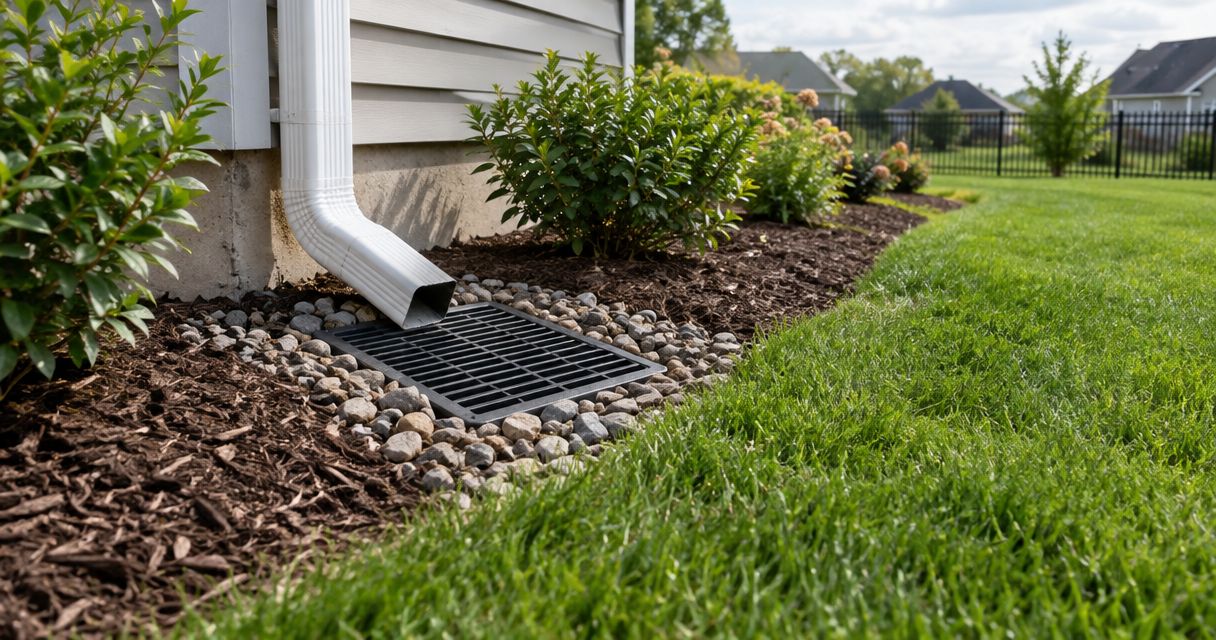
Best overall for correcting a yard’s slope: targeted regrading. Best for concentrated roof runoff: downspout extensions. Best for persistent subsurface seepage: a French drain with a suitable outlet. The best yard drainage solutions for Iowa properties in 2026 match the source of the water, the ground’s slope, and a lawful discharge point—not simply the wettest patch of grass.
- The best yard drainage solutions for Iowa properties start with identifying roof runoff, surface flow, or subsurface seepage.
- Targeted regrading corrects surface slope; French drains intercept subsurface water when a suitable outlet exists.
- Downspout extensions address concentrated roof runoff but cannot correct a poorly graded yard.
- Grassgrabbers provides lawn care and landscaping for central Iowa homeowners; confirm drainage project scope before hiring.
Why this matters
A wet lawn is a symptom, not a diagnosis. Roof runoff, a shallow depression, and water moving through the soil need different fixes. Installing the wrong drain leaves the original problem in place and adds something else to maintain.
For your 2026 yard plans, start by watching where water comes from during rain. Keep observations on your own property, photograph the flow, and avoid entering standing water near electrical equipment.
Grassgrabbers is best for central Iowa homeowners seeking lawn care and landscaping around a drainage project. You can review Grassgrabbers for that work; confirm the scope separately for excavation, drainage design, or foundation concerns.
What makes the best yard drainage solution?
Judge each option against these criteria before choosing materials:
- Water source: Separate roof runoff, surface flow, and subsurface seepage. A buried pipe is not automatically the answer.
- Ground slope: Water needs a continuous route. A low outlet that backs up defeats an otherwise sound installation.
- Soil absorption: Infiltration features need soil that accepts water and adequate separation from groundwater.
- Safe discharge: Keep water away from foundations without creating a problem for neighboring properties, sidewalks, or streets.
- Maintenance access: Grates, cleanouts, and planted areas need reachable inspection points.
- Site constraints: Utilities, trees, easements, septic systems, and local requirements affect where you can dig.
For a 2026 planning reference, the International Residential Code’s foundation drainage provision, Section R401.3, generally calls for soil to fall at least 6 inches within the first 10 feet away from foundation walls, with alternatives where physical constraints prevent that slope. That is a model-code reference, not confirmation of your municipality’s adopted requirements.
Iowa yard drainage options at a glance
The order below favors correcting the cause before adding collection hardware. Each option serves a different problem; the first-ranked choice is not the right choice for every yard.
| Option | Best for | Standout feature | Key limitation |
|---|---|---|---|
| Targeted regrading | Surface water flowing toward the house | Changes the direction of runoff | Needs workable elevations and a receiving area |
| Downspout extensions | Roof runoff beside the foundation | Moves a concentrated water source | Does not fix unrelated yard drainage |
| Vegetated swale | Runoff crossing an open yard | Creates a visible surface route | Needs space and continuous fall |
| French drain | Subsurface seepage | Collects water below the surface | Needs a suitable outlet and careful construction |
| Catch basins and solid pipe | Concentrated surface ponding | Collects runoff at defined low points | Grates and pipes need cleaning |
| Rain garden | Suitable roof or yard runoff | Temporarily holds water for infiltration | Unsuitable where water cannot soak in |
1. Targeted regrading: best for runoff toward the house
Targeted regrading changes the soil surface so water travels away from a vulnerable area. It belongs first when settling, raised planting beds, or an uneven lawn direct surface runoff toward the house.
The work starts with elevations, not a truckload of soil. Raising one spot without checking the next creates a new pocket of standing water, and piling soil against siding introduces a separate moisture problem.
Targeted regrading pros:
- Corrects the direction of surface runoff.
- Can remove isolated depressions.
- Avoids buried collection hardware where surface correction is enough.
Targeted regrading cons:
- Disturbs existing lawn and planting areas.
- Cannot create an outlet where surrounding elevations prevent one.
- Requires attention to foundation clearances and neighboring land.
Best for: A yard with an identifiable surface slope problem and somewhere appropriate for water to go.
Ask for the proposed water route to be explained before work begins. Verdict: Buy targeted regrading when measured elevations show that slope is the cause.
2. Downspout extensions: best for concentrated roof runoff
Downspout extensions carry roof water farther from the point where a gutter empties. They are the first option to investigate when wet ground lines up with a downspout outlet.
An aboveground extension makes its route easy to inspect. A buried solid pipe keeps that route out of the way, but it still needs adequate fall, accessible maintenance points, and a suitable discharge location.
Downspout extension pros:
- Addresses a clearly identifiable water source.
- Offers a visible route when installed aboveground.
- Keeps roof runoff separate from unrelated wet areas.
Downspout extension cons:
- Aboveground sections can obstruct mowing or walking.
- Buried piping hides blockages and damage.
- An outlet in a low spot simply relocates the puddle.
Best for: Water collecting where gutters discharge near the house.
For your 2026 inspection, check gutter overflow as well as outlet placement. An extension cannot catch water spilling over the gutter edge. Verdict: Buy downspout extensions when roof runoff is the source and the discharge route works.
3. Vegetated swale: best for runoff crossing an open yard
A vegetated swale is a broad, shallow channel that guides surface water through the landscape. It works as a defined route rather than a deep ditch.
The channel needs continuous fall toward an appropriate destination. Its shape, vegetation, and capacity must suit the contributing runoff; a decorative depression without an outlet is not a drainage swale.
Vegetated swale pros:
- Keeps the water route visible for inspection.
- Fits open lawn or planted landscape areas.
- Avoids relying entirely on underground pipes.
Vegetated swale cons:
- Takes up usable yard space.
- Erosion can develop if flow exceeds the design.
- Changes to its shape can interrupt drainage.
Best for: Surface runoff moving across a yard with room for a shallow channel.
Keep fences, edging, and future garden beds from blocking the route. A swale must remain a waterway even when it is dry. Verdict: Buy a vegetated swale when you have adequate space and a continuous surface outlet.
Match the water source before choosing hardware
Use the distinction below during your yard walkthrough. Surface flow points you toward grading, swales, or surface collection; roof runoff points you toward gutters and downspouts; subsurface seepage calls for closer investigation before selecting a buried drain.
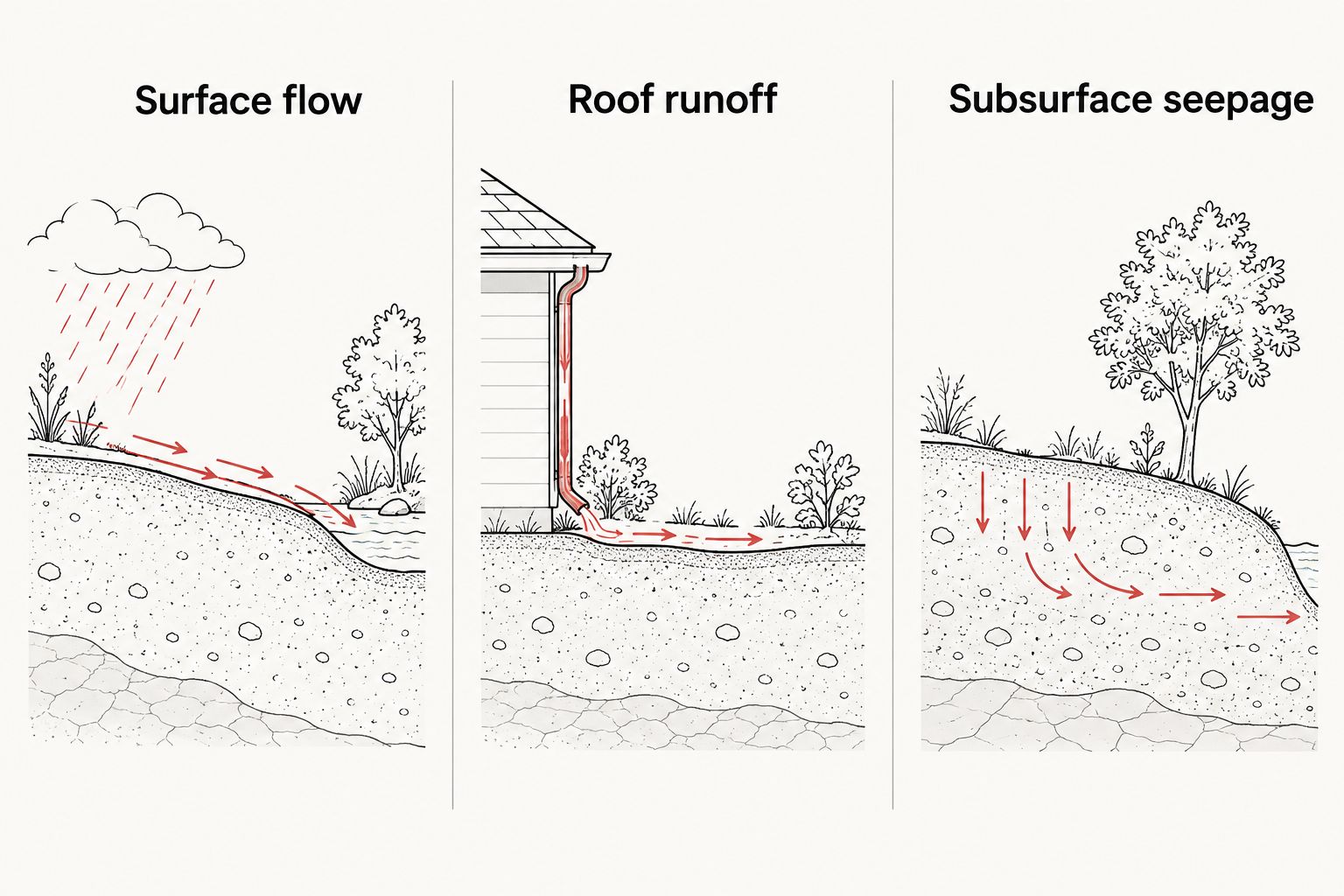
A site can have more than one source. Fixing roof discharge first, for example, helps you see whether a remaining wet patch needs separate treatment rather than assuming one large installation must solve everything.
4. French drain: best for subsurface seepage
A French drain uses a permeable collection zone and perforated pipe to intercept water moving through the soil. It is different from a solid pipe carrying water from a catch basin or downspout.
A useful design identifies the collection depth, soil conditions, filter materials, and discharge point. Without those decisions, a gravel trench can become underground storage rather than a working drain.
French drain pros:
- Collects water below the lawn surface.
- Can intercept seepage along a defined route.
- Leaves no open surface channel after restoration.
French drain cons:
- Requires excavation and lawn repair.
- Fine sediment can reduce performance.
- Buried components are harder to inspect than an open channel.
Best for: Confirmed subsurface water with an appropriate gravity outlet or professionally designed discharge arrangement.
Do not treat a French drain as the automatic answer to muddy grass. Surface ponding and basement water need their own diagnosis. Verdict: Buy a French drain for identified subsurface seepage; skip it as a guess.
5. Catch basins and solid pipe: best for defined low spots
A catch basin receives surface water through a grate and sends it into a connected drainage pipe. It suits a collection point where reshaping the entire surface is impractical and a suitable pipe outlet exists.
The grate must sit where runoff actually reaches it. The connecting pipe then carries water away; it does not depend on perforations to collect water along the route.
Catch basin pros:
- Collects runoff at a specific location.
- Provides an accessible surface inspection point.
- Can connect separate collection points in a designed system.
Catch basin cons:
- Leaves and grass clippings can block the grate.
- Sediment needs removal.
- A restricted outlet can cause water to back up.
Best for: A defined surface low point with a feasible discharge route.
Include grate access in your 2026 maintenance plan. Avoid placing a basin where furniture, mulch, or dense planting will hide it. Verdict: Buy catch basins for concentrated surface water, not widespread unexplained sogginess.
6. Rain garden: best for runoff that can infiltrate
A rain garden is a shallow planted depression designed to receive runoff temporarily and let it soak into suitable soil. It is not a permanent pond or a flower bed placed in an existing swampy corner.
Site selection comes before plant selection. Check soil infiltration, contributing runoff, foundation separation, overflow routing, and underground constraints before deciding that a rain garden fits.
Rain garden pros:
- Combines runoff management with a planted area.
- Makes the receiving area visible.
- Supports planting suited to changing moisture conditions.
Rain garden cons:
- Depends on suitable infiltration conditions.
- Needs establishment care and weed management.
- Does not replace foundation drainage or an overflow route.
Best for: Suitable roof or landscape runoff on a site that passes infiltration and placement checks.
For a sense of volume, 1 inch of rain over 100 square feet equals about 62 gallons of water. That conversion explains why choosing plants alone is not enough to design the basin. Verdict: Buy a rain garden after site checks; skip it where water cannot infiltrate.
How the options are ranked
This 2026 guide ranks drainage methods by the problem they solve, then considers discharge, disruption, and maintenance. It does not rank contractors or claim field-tested performance.
Targeted regrading leads because it directly corrects the surface slope when that is the cause. The remaining options occupy separate roles: moving roof runoff, routing overland flow, intercepting seepage, collecting surface ponding, or infiltrating suitable runoff.
Before excavation, contact Iowa’s 811 utility-location service and ask about private utility lines that require separate locating. Also check local requirements and easements. A drainage plan needs an acceptable destination, not just a collection point.
Which yard drainage solution should you choose?
Start with roof discharge and surface elevations. Those checks help you avoid burying a pipe to solve a problem that begins aboveground.
Choose regrading for an incorrect slope, extensions for downspout discharge, and a swale for overland flow with room to travel. Choose a French drain only for subsurface collection, catch basins for defined surface collection, and a rain garden only where infiltration works.
For a 2026 project involving foundation movement, recurring basement water, unstable slopes, or uncertain discharge rights, get the relevant qualified specialist involved before landscaping. Grassgrabbers can be considered for the lawn care and landscaping portion; confirm each requested task rather than assuming drainage engineering is included.
FAQ
What's the best yard drainage solution for an Iowa home?
The best solution matches the source: regrading for incorrect surface slope, extensions for roof runoff, and a French drain for confirmed subsurface seepage. Every option needs an appropriate discharge or infiltration plan.
Is a French drain better than regrading?
A French drain is better for collecting subsurface water; regrading is better for correcting surface slope. They solve different problems, so choose after identifying how water reaches the wet area.
Can I fix drainage by adding soil to a low spot?
Adding soil works only when the finished surface gives water a continuous route away. Filling a depression without checking surrounding elevations can move the puddle elsewhere or direct runoff toward the house.
Will a rain garden fix a yard that stays wet?
A rain garden is unsuitable where soil cannot absorb the incoming runoff. Check infiltration, groundwater conditions, placement, and overflow routing before using a planted basin.
Can I send yard drainage water toward my neighbor?
Do not design drainage that creates a water problem on neighboring property. Check local requirements, easements, and the proposed outlet before changing runoff routes.
Do I need to call before digging a drainage trench?
Contact Iowa's 811 utility-location service before excavation. Ask separately about private lines, because not every underground utility is covered by the standard locating process.
Does Grassgrabbers provide yard drainage engineering?
Grassgrabbers provides lawn care, landscaping, and yard maintenance for central Iowa homeowners. Confirm drainage-related scope directly, and use an appropriately qualified specialist for engineering or foundation concerns.
One last thing
Photograph the yard while water is moving, not only after the puddle forms. A puddle shows the collection point; moving water reveals the route that feeds it. Keep those photos for your site discussion, and mark the proposed outlet before discussing pipe or plants.