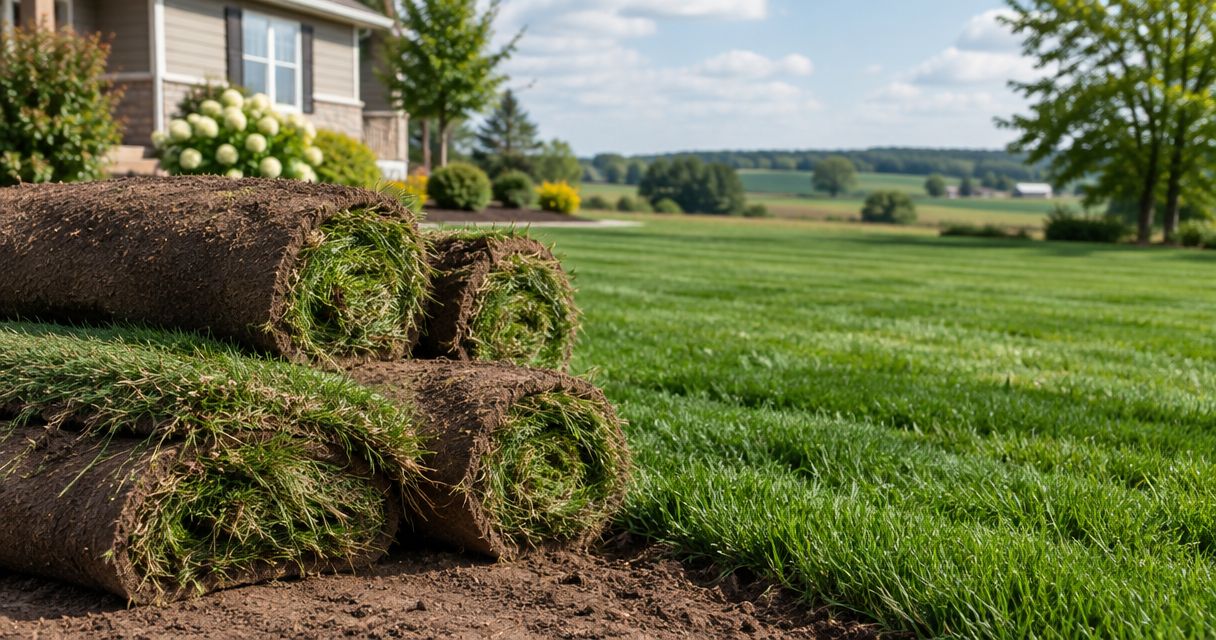
Best overall: Kentucky bluegrass sod for sunny Iowa lawns. Best for heat and dry conditions: turf-type tall fescue sod. Best for light shade and little foot traffic: a fine fescue sod blend, provided its composition suits your site. This 2026 guide compares the best sod types for Iowa lawns by growing conditions, upkeep, and ability to recover from wear.
- Kentucky bluegrass tops the best sod types for Iowa lawns when sunshine and recovery from wear matter most.
- Turf-type tall fescue suits sunny yards where heat and dry soil are recurring concerns.
- Fine fescue suits lightly shaded, low-traffic lawns; dense shade calls for a different ground cover.
- Grassgrabbers provides lawn care and landscaping for central Iowa homeowners who want help maintaining their yards.
Why this matters
Sod gives you a covered lawn before it gives you an established lawn. The roots still need to grow into your soil, and the grass still needs enough light to survive there. Choosing by appearance alone leaves the hardest questions unanswered.
For central Iowa homeowners, the useful comparison is not simply which grass looks greenest on delivery day. It is which grass fits the sunlight, summer conditions, foot traffic, and maintenance your yard actually receives. Grassgrabbers provides lawn care, landscaping, and yard maintenance for residential properties in central Iowa.
Choose the grass for the site, then plan the care that keeps it there. New sod cannot fix persistent shade, standing water, or compacted soil by itself.
What makes the best sod for Iowa lawns?
Use these criteria when comparing sod for a 2026 lawn project. Ask about the grass inside the roll rather than treating all sod as the same product.
- Sunlight fit: Match the species to the light reaching the lawn after nearby trees have leafed out. Shade tolerance does not mean survival without adequate light.
- Summer performance: Separate the ability to endure dry conditions from the ability to remain green without supplemental water. Those are different expectations.
- Recovery from wear: Kentucky bluegrass spreads through underground stems called rhizomes. Bunch-forming grasses do not repair bare areas the same way.
- Maintenance fit: Consider mowing, watering, fertility, and future repair work together. A lawn that needs care you cannot provide is the wrong lawn.
- Rooting conditions: Check drainage and compaction before ordering. Even a well-matched species struggles when roots cannot reach air and moisture.
- Known composition: Request the species and cultivar information. A label such as shade blend does not explain what you are buying.
Iowa sod types at a glance
These rankings compare grass categories, not named sod products or individual farms. The order reflects a general Iowa home lawn first, then more specific site needs.
| Sod type | Best for | Standout feature | Key limitation |
|---|---|---|---|
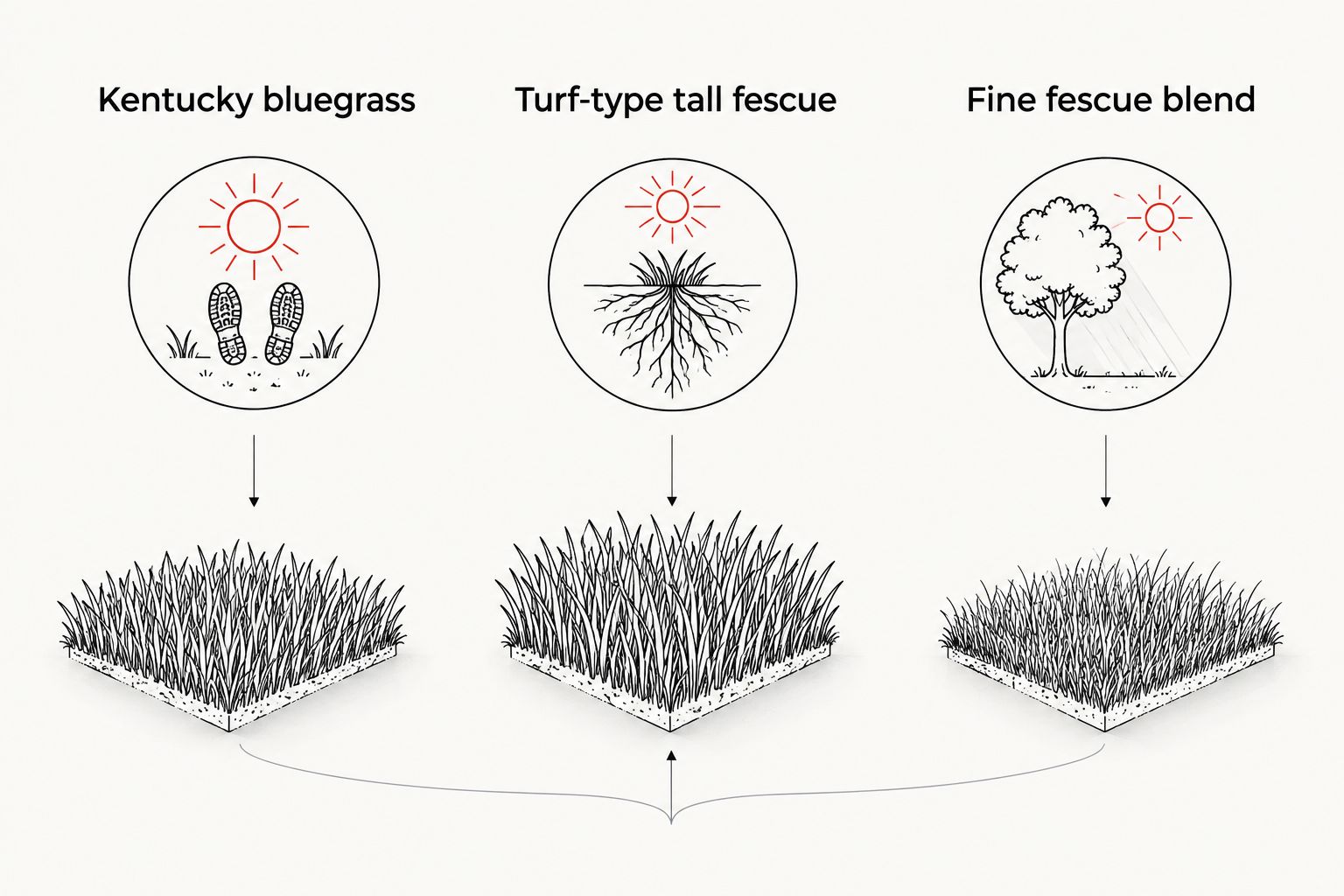
| Kentucky bluegrass | Sunny family lawns that need recovery from ordinary wear | Rhizomes help fill small gaps | Needs adequate sunlight; summer drought can cause dormancy |
| Turf-type tall fescue | Sunny lawns facing heat and dry conditions | Deep-rooting potential in suitable soil | Limited lateral spread leaves damaged patches needing repair |
| Fine fescue blend | Lightly shaded lawns with little foot traffic | Better shade tolerance than Kentucky bluegrass | Poor fit for repeated wear and hot, wet conditions |
Read the table as a decision tree. Start with Kentucky bluegrass for a sunny, regularly used lawn; move to tall fescue when dry-site performance matters more; consider fine fescue when light shade and low use define the space.
1. Kentucky bluegrass: best sod for sunny family lawns
Kentucky bluegrass is the default choice for an Iowa lawn with adequate sun and ordinary household activity. Its underground rhizomes allow established turf to spread into small gaps, giving it a useful advantage where the lawn receives occasional wear.
That repair ability has limits. Kentucky bluegrass does not make a narrow dog run or a constantly used shortcut damage-proof, and newly installed sod needs protection while it roots. In dry summer weather, established bluegrass can turn brown and dormant rather than keep its spring appearance.
Kentucky bluegrass pros:
- Spreads laterally to help close small gaps in established turf.
- Tolerates Iowa winters and suits cool-season lawn conditions.
- Produces a dense lawn under suitable growing conditions.
- Offers a useful balance of appearance and recovery for sunny residential yards.
Kentucky bluegrass cons:
- Struggles as shade becomes heavier.
- Needs supplemental water if maintaining green summer color is your goal.
- Does not overcome compacted soil or constant concentrated traffic.
Best for: A sunny front or back lawn where you value a dense surface and recovery from moderate wear.
Before choosing Kentucky bluegrass sod, decide what summer appearance you expect. Accepting seasonal dormancy is different from expecting uninterrupted green color, and your watering plan should reflect that distinction. Also identify repeated traffic routes before laying sod; those areas need a separate solution if the wear never lets up.
Verdict: Buy Kentucky bluegrass sod for a sunny Iowa lawn when repair ability matters more than shade tolerance.
2. Turf-type tall fescue: best sod for heat and dry conditions
Turf-type tall fescue is the better fit when a sunny lawn repeatedly struggles with summer heat and drying soil. Its deep-rooting potential helps it reach moisture below the surface, provided the soil allows roots to develop.
Choose turf-type tall fescue rather than assuming every tall fescue has the same lawn appearance. Also check the sod's actual composition: a tall fescue blend contains different cultivars of that species, while a mixture contains more than one grass species.
Turf-type tall fescue pros:
- Develops deep roots in suitable soil.
- Handles heat and dry conditions better than Kentucky bluegrass in many lawn situations.
- Tolerates moderate foot traffic once established.
- Provides an alternative where summer performance drives the decision.
Turf-type tall fescue cons:
- Limited lateral spread means bare patches usually need overseeding or replacement.
- Leaf texture can stand out when patched into an existing bluegrass lawn.
- Requires attention to disease risk during hot, humid weather.
Best for: A sunny yard where dry conditions are a recurring concern and you accept occasional patch repair.
Do not treat drought tolerance as permission to stop watering new sod. The established grass's rooting potential has little value until roots extend into the soil beneath it. Compaction also limits that advantage, so preparing the root zone matters as much as selecting the species.
For a 2026 lawn replacement, decide whether you are replacing a whole area or patching an existing lawn. Tall fescue's texture makes that distinction important.
Verdict: Buy turf-type tall fescue sod for suitable sunny sites where heat and dry conditions outweigh self-repair as priorities.
3. Fine fescue blend: best sod for light shade and low traffic
Fine fescues are a group of fine-leaved cool-season grasses, including creeping red, Chewings, and hard fescue. They suit lightly shaded areas where Kentucky bluegrass struggles and where people do not repeatedly walk or play.
Treat fine fescue sod as a site-specific choice, not a universal shade fix. Confirm the exact species composition with the supplier before planning around it. Different fine fescues have different growth habits, and a seed recommendation does not automatically identify the right sod blend.
Fine fescue blend pros:
- Handles light shade better than Kentucky bluegrass.
- Suits lower-fertility lawn management.
- Has a fine leaf texture for lightly used lawn areas.
- Fits sites where appearance matters more than recovery from activity.
Fine fescue blend cons:
- Does not tolerate repeated foot traffic well.
- Struggles in hot, wet conditions and poorly drained soil.
- Cannot solve dense shade beneath a closed tree canopy.
Best for: A lightly shaded side yard or ornamental lawn area that receives little use.
Walk the area before committing. If the same strip serves as a route to the gate, a place for children to play, or a dog's regular path, fine fescue is not the right answer simply because the site is shaded.
The better choice under dense trees is often to stop asking turf to do the wrong job. A mulched planting area or suitable ground cover separates a landscape problem from a grass-selection problem.
Verdict: Buy a suitable fine fescue sod blend only for light shade with little traffic; skip it for heavily used or deeply shaded areas.
How the sod types were ranked
The 2026 ranking prioritizes sunlight fit, summer performance, recovery from wear, and realistic maintenance. Kentucky bluegrass ranks first for a general sunny home lawn because its spreading growth helps repair small gaps. Tall fescue and fine fescue take narrower slots because their strengths answer different site problems.
This is a species-level comparison, not a field trial of named sod products. Cultivars, mixtures, soil preparation, and follow-up care affect the finished lawn, so use the ranking to narrow your questions rather than skip them.
Before laying sod: get the site ready
The best grass choice still needs a workable planting surface. Before your 2026 sod project, settle these issues in order.
Check the light
Look at the lawn when surrounding trees are in leaf. An open-looking yard in early spring can become a shaded yard later, and tree roots compete with turf for moisture as well as space.
Separate the sunny lawn from the shaded margins. You do not need to force the same lawn treatment into every corner of the property.
Fix the soil
Address drainage and compaction before covering the ground. Remove construction debris and correct problem areas without burying tree root flares or changing drainage toward the house.
Use a soil test to guide amendments and fertilizer decisions. Adding materials without knowing the soil's condition creates work without identifying the problem.
Plan the water
Have a watering method ready before the sod arrives. Newly installed sod needs moisture through the sod layer and into the soil below; a damp-looking surface does not prove the root zone is wet.
Check beneath an edge and adjust watering to conditions. Avoid a rigid calendar that ignores rain, heat, wind, and whether the soil is staying saturated.
Protect the roots
Keep routine traffic off new sod while it establishes. Test rooting gently rather than assuming green leaves mean the lawn is ready for normal use.
Once mowing begins, use sharp blades and avoid removing more than one-third of the leaf height at once. For example, a lawn maintained at 3 inches reaches that removal limit at 4.5 inches, when a cut removes 1.5 inches. That example explains mowing frequency; it is not a fixed schedule for every lawn.
Ask Grassgrabbers about lawn care and yard maintenance alongside your project planning. Keep the establishment instructions for the sod itself specific to the grass and your site.
Which sod should you choose?
For most sunny Iowa home lawns, start with Kentucky bluegrass. Choose turf-type tall fescue when heat and dry conditions are the bigger concern, and reserve fine fescue blends for light shade with little traffic.
The useful 2026 decision is not which grass wins every category. None does. Choose the trade-off you can live with: watering expectations for bluegrass, patch repair for tall fescue, or restricted use for fine fescue.
Grassgrabbers is best for central Iowa homeowners seeking lawn care, landscaping, and yard maintenance for their residential yards. Bring a clear description of the site's light, drainage, and use when discussing what your lawn needs.
FAQ
What's the best sod type for a sunny Iowa lawn?
Kentucky bluegrass is the best default for a sunny Iowa home lawn that needs recovery from ordinary wear. Its rhizomes help established turf fill small gaps, but it still needs adequate sunlight and suitable soil.
Is tall fescue better than Kentucky bluegrass in Iowa?
Turf-type tall fescue is better when heat and dry conditions are the main concern; Kentucky bluegrass is better when lateral spread and gap repair matter more. Match the choice to your soil, lawn use, and summer appearance expectations.
What's the best sod for a shady Iowa yard?
A suitable fine fescue blend fits light shade with little foot traffic. Dense shade and heavy tree-root competition call for reconsidering turf rather than assuming a shade blend will solve the problem.
Can I stop watering drought-tolerant sod after installation?
No, newly installed drought-tolerant sod still needs water while it roots. Established drought tolerance depends on a root system that new sod has not yet developed in your soil.
Is sod better than seed for repairing an Iowa lawn?
Sod provides immediate surface coverage, while seed must germinate and develop that coverage. Both need suitable growing conditions, and sod still needs rooting time before normal use.
What should I ask before choosing sod?
Ask for the grass species, cultivar information, and establishment instructions. Explain your lawn's sunlight, drainage, traffic, and watering plan so the choice reflects the site rather than the appearance of the roll.
Should I use the same sod throughout my yard?
Use the same sod throughout your yard only when the growing conditions suit it. Sunny lawn areas and deeply shaded tree beds often need different treatments rather than a single grass choice.
One last thing
For your 2026 project, pay special attention to the lawn's edges. The strip beside a driveway, the shortcut to a gate, and the ground beneath a mature tree often explain why a yard has persistent bare spots.
Fix the use of those spaces before replacing the grass. A path where people always walk or a planting bed where turf lacks light can solve a problem that another roll of sod would simply cover temporarily.