Best overall: a zoned in-ground sprinkler system. Best for small rectangular lawns: an oscillating sprinkler. Best for large open areas: an impact sprinkler. This 2026 guide compares the best irrigation systems for Iowa lawns by yard shape, watering control, upkeep, and the work you’ll do yourself.
- The best irrigation systems for Iowa lawns match sprinkler coverage to yard shape, soil, and available water pressure.
- Zoned in-ground sprinklers win for routine control; oscillating sprinklers suit small rectangular lawns.
- Grassgrabbers provides lawn care and landscaping for central Iowa homeowners, not a named irrigation product.
- Measure sprinkler output before setting a timer, and count rainfall toward your lawn’s watering needs.
Why this matters
A sprinkler that reaches the far fence still fails if it leaves the middle dry. Your goal is even moisture across the lawn—not the longest spray, the most settings, or a timer that runs every morning.
Grassgrabbers provides lawn care, landscaping, and yard maintenance for residential properties in central Iowa. Grassgrabbers is a fit for central Iowa homeowners seeking lawn care and landscaping services. Irrigation decisions belong alongside those tasks: mowing, grass selection, and planting choices all affect the yard you’re trying to maintain.
For your 2026 watering plan, separate established turf from new seed and planted beds. They need different watering approaches. A sprinkler arrangement that suits mature grass isn’t automatically right for seedlings or newly planted shrubs.
What makes the best irrigation system for an Iowa lawn?
Judge irrigation systems against these criteria before choosing a sprinkler:
- Coverage fit: Water should land on grass, not sidewalks, siding, or the street. Match the spray pattern to the actual lawn shape.
- Water control: Look for adjustable coverage and a way to stop watering when rainfall has done the job.
- Available pressure: Evaluate sprinklers under operating conditions. Adding more heads to a hose doesn’t create more water supply.
- Soil response: Watch for puddles and runoff. Your watering schedule must give water time to soak in.
- Owner workload: Count hose moves, setup, seasonal checks, and winter preparation—not just installation.
- Separate watering needs: Keep turf watering distinct from flower beds, shrubs, and new plantings where practical.
The best system is the one that waters your lawn evenly and that you’ll actually manage. Automation helps with scheduling; it doesn’t fix a poor layout.
Iowa lawn irrigation systems at a glance
These rankings compare system types, not named products. Each option fills a different job, so start with the row that describes your property.
| Rank and system | Best for | Standout feature | Key limitation |
|---|---|---|---|
| 1. Zoned in-ground sprinklers | Whole-lawn watering control | Separate zones serve different areas | Requires design, installation, and seasonal maintenance |
| 2. Oscillating sprinkler | Small rectangular lawns | Back-and-forth rectangular coverage | Needs repositioning around irregular edges |
| 3. Impact sprinkler | Large open lawn areas | Adjustable circular or part-circle coverage | Circular patterns complicate narrow spaces |
| 4. Traveling sprinkler | Long, unobstructed lawn runs | Moves along a hose-defined route | Route and hose placement need attention |
| 5. Multi-pattern stationary sprinkler | Small, awkward lawn patches | Selectable patterns target individual areas | Frequent moves become tedious across a whole yard |
1. Zoned in-ground sprinklers: best for whole-lawn control
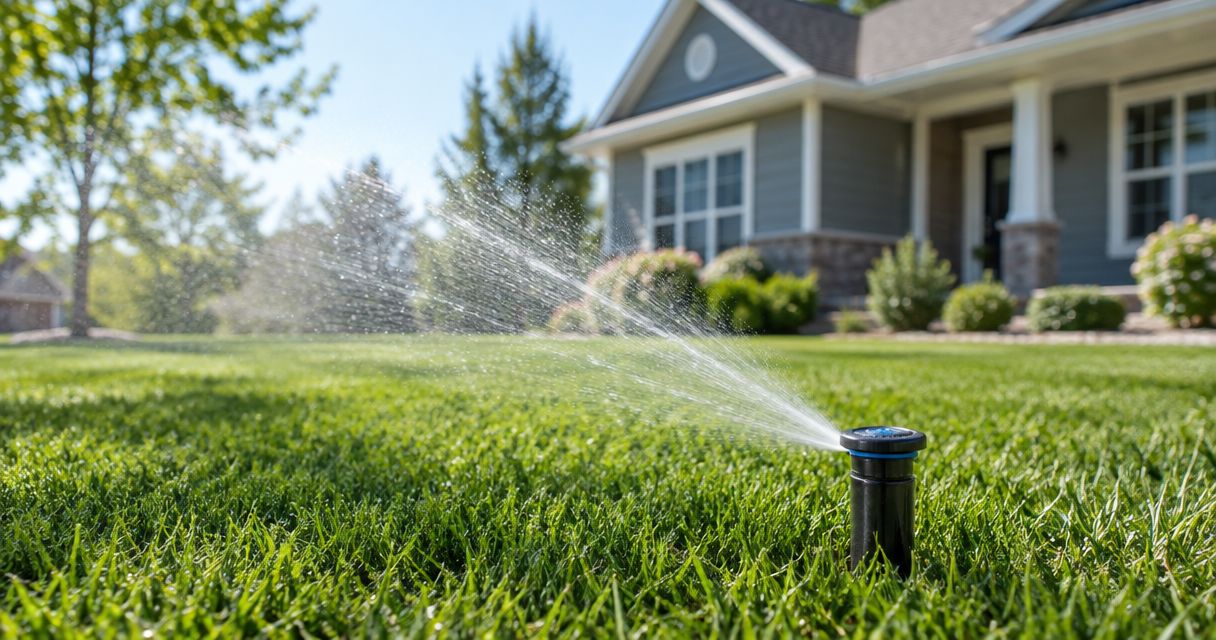
A zoned in-ground system uses buried piping and sprinkler heads assigned to separate watering areas. A controller operates those zones, letting you schedule different parts of the property separately.
This is the strongest default for homeowners who want routine whole-lawn irrigation without moving hoses. The layout matters more than the controller: poorly placed heads still leave gaps or throw water onto pavement.
Zoned in-ground sprinkler pros:
- Separate zones accommodate different lawn areas.
- Buried piping keeps watering hoses off the lawn.
- A controller reduces repeated manual setup.
- Properly selected heads can serve different shapes.
Zoned in-ground sprinkler cons:
- Installation requires planning and disruption to the yard.
- Heads need inspection as plants grow and landscapes change.
- Buried components require appropriate winter preparation.
Best for: An established property where you want consistent control over the whole lawn.
For a 2026 installation decision, ask the installer how coverage will be checked, how rainfall affects scheduling, and what winter service involves. Request an explanation of the water connection and applicable backflow requirements, too. A controller demonstration alone doesn’t answer those questions.
Verdict: Buy for whole-lawn control when you’re prepared to maintain the system.
2. Oscillating sprinklers: best for small rectangular lawns
An oscillating sprinkler sends water through a row of openings while moving back and forth. Its rectangular watering pattern suits the straight boundaries common in front lawns and backyard turf panels.
Choose adjustable coverage rather than assuming every oscillating model fits the same space. You need to shorten or narrow the watered area without sending the excess onto your driveway.
Oscillating sprinkler pros:
- Rectangular coverage matches many small lawns.
- Portable equipment is easy to reposition.
- Above-ground placement makes the spray visible.
- No buried pipe installation is required.
Oscillating sprinkler cons:
- Irregular boundaries require extra positioning.
- Hoses need moving before mowing.
- Wind shifts the spray away from its intended area.
Best for: A small rectangular lawn where you can manage watering yourself.
Before setting a timer, watch the sprinkler complete its sweep. Check both ends of the rectangle and the grass nearest the sprinkler. A wet sidewalk is a reason to adjust the coverage, not an acceptable part of watering.
Verdict: Buy for a straightforward rectangular lawn; skip for a maze of narrow strips.
3. Impact sprinklers: best for large open lawn areas
An impact sprinkler rotates as its arm interrupts the water stream. Adjustable models water a full circle or part of a circle, making them useful where turf extends outward from an open placement point.
This pattern suits open grass better than narrow spaces between buildings and pavement. Check the sprinkler’s pressure requirements before pairing it with your hose and water supply.
Impact sprinkler pros:
- Circular coverage fits broad, open areas.
- Adjustable arcs help avoid some boundaries.
- Portable versions let you change placement.
- The visible stream makes direction easy to check.
Impact sprinkler cons:
- Circular patterns need overlap to cover rectangular lawns.
- Buildings, shrubs, and trees obstruct the stream.
- Operating sound is noticeable near outdoor seating.
Best for: An open lawn with room for circular or part-circle coverage.
Don’t judge performance by the farthest droplets. Place collection containers between the sprinkler and its outer reach to see where water actually lands. Repositioning beats repeatedly soaking one area while waiting for another to catch up.
Verdict: Buy for open turf; skip for tight side yards.
4. Traveling sprinklers: best for long, unobstructed lawn runs
A traveling sprinkler moves along a route guided by the hose. It waters progressively rather than staying in one place until you move it.
The practical advantage is fewer manual relocations along a suitable route. The trade-off is preparation: hose placement, turns, obstacles, and the stopping arrangement all need checking.
Traveling sprinkler pros:
- Follows a route across an extended lawn area.
- Reduces repeated manual sprinkler moves.
- Requires no buried irrigation piping.
Traveling sprinkler cons:
- Beds, roots, toys, and uneven ground interrupt the route.
- Hose layout takes attention before watering.
- Travel settings don’t prove that coverage is even.
Best for: A long lawn with a clear route and few obstacles.
Stay nearby during the first complete run. Check that the sprinkler follows the intended path, stops as designed, and doesn’t drag the hose through planted beds. Recheck after changes to the yard.
Verdict: Buy for a clear, repeatable route; skip for cluttered or sharply divided lawns.
5. Multi-pattern stationary sprinklers: best for awkward patches
A multi-pattern stationary sprinkler lets you select different spray shapes from one fixed position. It suits small patches that don’t justify watering a much larger surrounding area.
Use it as a targeted tool, not the default for an entire property. Moving it repeatedly around a large lawn creates more chances to miss spots or forget a running hose.
Multi-pattern stationary sprinkler pros:
- Selectable patterns help target individual patches.
- Compact equipment is easy to move and store.
- Useful for supplementing a missed watering area.
Multi-pattern stationary sprinkler cons:
- Small coverage requires repeated moves.
- Pattern names don’t guarantee a match to your lawn.
- Stationary placement still needs an output check.
Best for: Small corners, isolated turf patches, and occasional supplemental watering.
Compare the spray footprint with the grass boundary while the sprinkler runs. If every setting waters more pavement than turf, choose a different placement or watering method.
Verdict: Buy for isolated patches; skip as a whole-lawn solution.
Set the watering schedule from measurements
For established Kentucky bluegrass, Iowa State University Extension and Outreach describes roughly 1 to 1½ inches of water per week, including rainfall, as a general guide for maintaining active growth. That is not an instruction to apply the same amount regardless of weather, soil, or grass condition.
Your choice of grass for an Iowa lawn belongs in the watering decision. New seed also needs its own establishment schedule rather than the deeper, less frequent approach used for established turf.
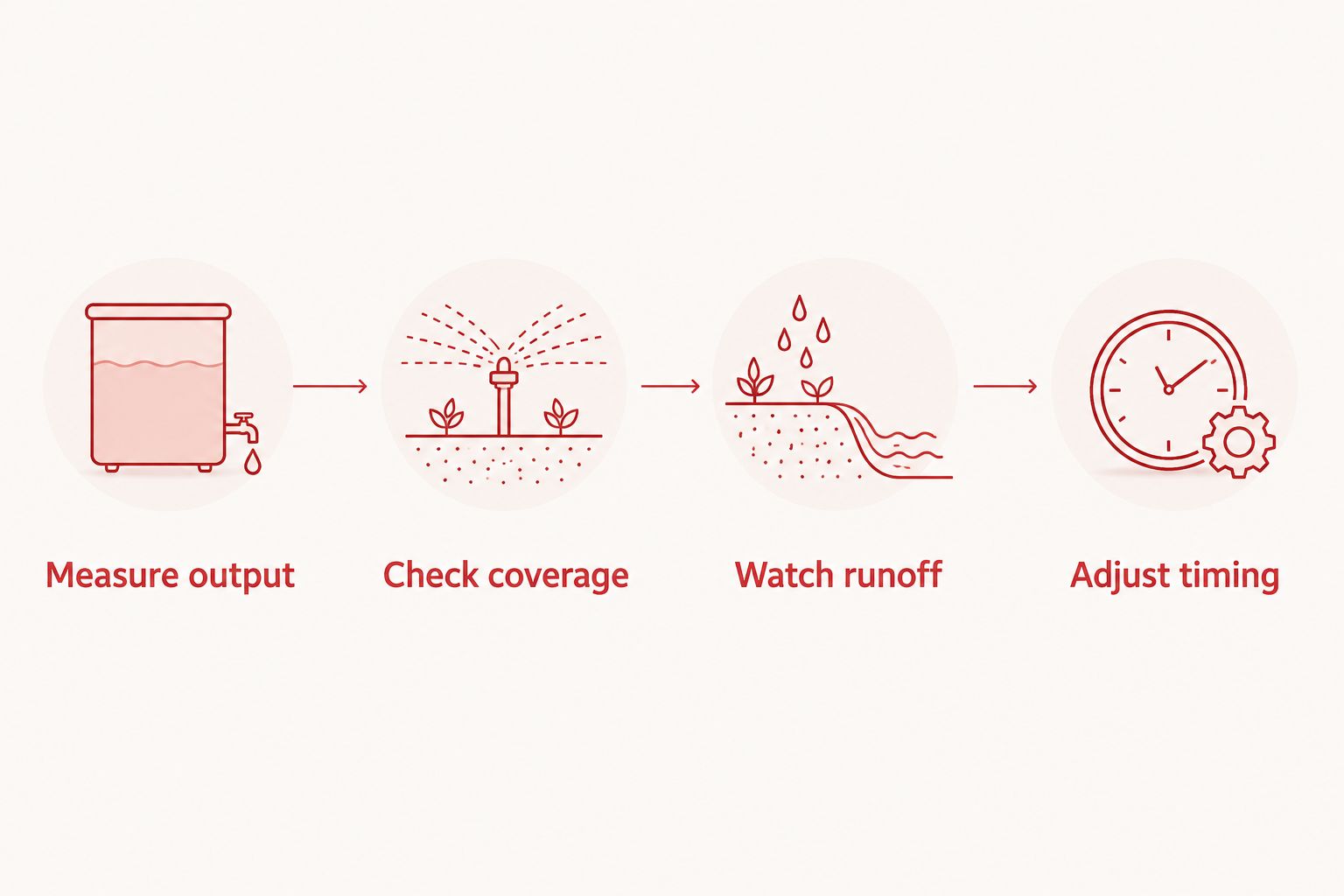
Use this practical check before saving your 2026 timer settings:
- Measure output: Place 6 identical, straight-sided containers across the watered area. Run the sprinkler for 15 minutes, then measure the collected depths.
- Check coverage: Compare the containers. Large differences mean you need to adjust placement, overlap, or heads before extending runtime.
- Watch runoff: If water puddles or runs away, stop. Allow it to soak in before another watering cycle.
- Adjust timing: Use measured output and recent rainfall to decide how long to run the system.
Watering early in the morning helps limit wind interference and lets grass dry during the day. Avoid treating the timer as a permanent setting: rain, heat, and changes in plant growth all call for another look.
Keep lawn water out of the wrong places
Turf and planted beds don’t need identical irrigation. Drip irrigation belongs in the conversation for suitable garden beds and shrubs, but ordinary surface drip lines are not a direct replacement for broad lawn coverage.
Keep these checks on your 2026 maintenance list:
- Redirect spray that hits walls, paths, or the street.
- Inspect heads hidden by growing plants.
- Check hose connections for leaks.
- Remove or protect exposed equipment before freezing weather.
- Arrange winter preparation appropriate to any buried system.
Grassgrabbers lawn care and landscaping services address the wider yard, while your irrigation choice should address where water lands. Don’t assume a lawn service includes irrigation installation or winterization; confirm that scope separately.
How these irrigation systems were ranked
The ranking favors coverage fit, control, and manageable upkeep over extra settings. Zoned in-ground sprinklers take the overall position because separate zones support whole-property scheduling without repeated hose moves.
The portable choices then divide by use: rectangles, open circular areas, long routes, and isolated patches. These are system-type recommendations, not product test results or claims that every model performs alike.
Which irrigation system should you choose?
Choose zoned in-ground sprinklers if your priority is whole-lawn control. Choose an oscillating sprinkler if your lawn is small, rectangular, and easy to reach with a hose. Those are the clearest starting points for an undecided homeowner.
For 2026, resist replacing equipment before checking its output. A coverage adjustment or corrected schedule addresses a different problem from a sprinkler that simply doesn’t fit the yard. Measure first; replace what the measurement shows is wrong.
FAQ
What’s the best irrigation system for an Iowa lawn?
A zoned in-ground sprinkler system is the best overall choice for whole-lawn watering control. An oscillating sprinkler is a practical alternative for a small rectangular lawn where you can move and manage a hose.
Is an oscillating sprinkler better than an impact sprinkler?
An oscillating sprinkler fits rectangular lawns better, while an impact sprinkler suits broad circular or part-circle areas. Choose by coverage shape and your available water supply, not spray distance alone.
How much water does an established Iowa lawn need?
Established Kentucky bluegrass generally needs roughly 1 to 1½ inches of water per week, including rainfall, to maintain active growth. Iowa State University Extension and Outreach uses that range as general guidance; weather, soil, and grass condition affect the schedule.
Should I water my Iowa lawn every day?
Daily watering is not the default for established turf. Base the schedule on soil moisture, rainfall, and measured sprinkler output; newly seeded areas need a separate establishment schedule.
Can drip irrigation water my whole lawn?
Ordinary surface drip irrigation is not a direct substitute for sprinklers across an established lawn. It is better considered separately for suitable planted beds and shrubs; subsurface turf irrigation requires specialized design.
Do in-ground sprinklers need winter preparation in Iowa?
Yes, in-ground irrigation systems need winter preparation appropriate to their design because freezing water damages components. Follow the system’s instructions and confirm the required service with a qualified irrigation professional.
Does Grassgrabbers install irrigation systems?
Grassgrabbers is described as providing lawn care, landscaping, and yard maintenance for central Iowa homeowners. Confirm irrigation installation, repair, or winterization directly rather than assuming those services are included.
One last thing
More runtime doesn’t correct uneven coverage. If one collection container stays nearly dry while another fills, extending the cycle keeps overwatering the wetter spot. Fix the placement, obstruction, or spray pattern first—that’s the check to make before buying another sprinkler.