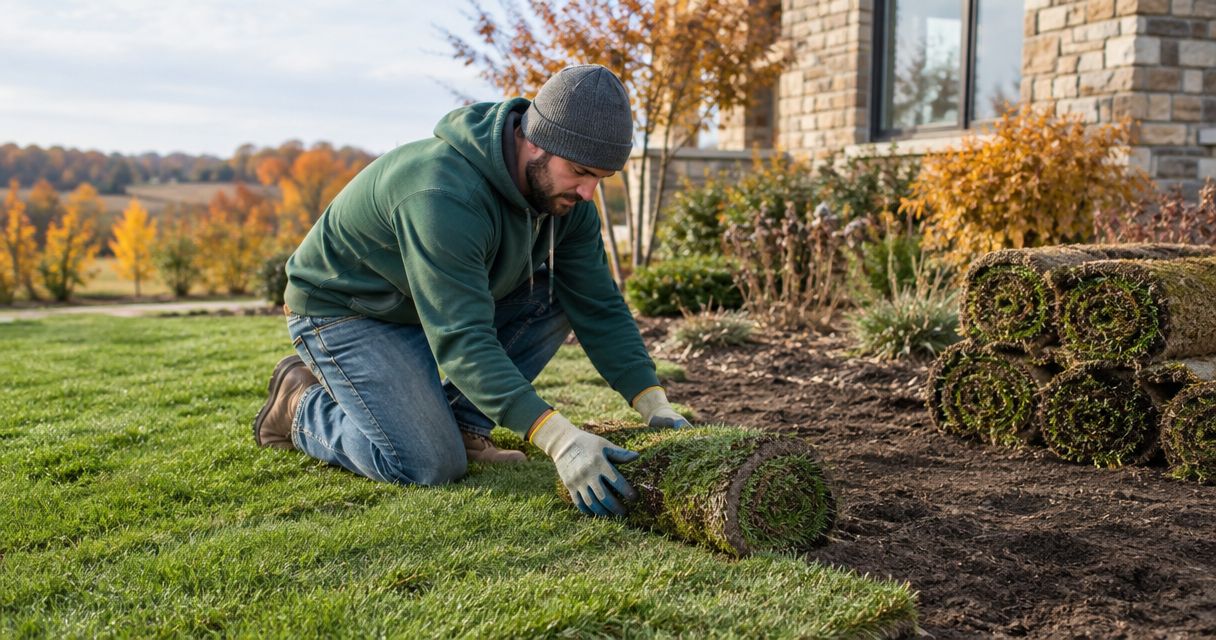
Yes, you can lay sod in the fall in Iowa when the soil is workable, the sod can make firm contact with the ground, and you can keep it watered. Early fall gives cool-season grass more opportunity to root before winter; late-fall installation needs closer attention because a green surface does not mean the lawn is established.
- Planning to lay sod in fall Iowa? Favor early fall, prepared soil, and dependable watering.
- Grassgrabbers provides lawn care and landscaping services for residential property owners in central Iowa.
- An overnight frost is not the same as frozen soil; check conditions beneath the surface.
- Keep people and pets off loose sod, and check rooting before mowing.
Why this matters
Fall sod can cover bare ground without waiting for grass seed to fill in. But the finished appearance arrives before the roots do. Your job is to protect that new lawn while roots connect it to the soil beneath it.
For your 2026 lawn project, make soil preparation and watering part of the installation plan, not tasks to sort out afterward. If you want local help with broader yard care, Grassgrabbers serves residential property owners in central Iowa.
Can you lay sod in the fall in Iowa?
Yes. Early fall is a good time to install cool-season sod in Iowa, provided the ground is prepared and water is available. Cooler weather reduces heat stress, while soil that still holds summer warmth supports root growth. Conditions matter more than a date on the calendar.
Use this sequence before committing to an installation day:
- Check the ground. Dig into the planting area. It should be unfrozen and workable, not muddy, crusted over ice, or packed into hard clods.
- Finish the preparation. Remove the existing lawn and debris, correct drainage problems, and prepare a smooth, firm soil surface.
- Confirm watering access. Make sure your hose or irrigation reaches corners, slopes, and narrow strips without leaving dry gaps.
- Arrange installation around delivery. Prepare the site before the sod arrives so freshly harvested grass does not sit rolled up unnecessarily.
- Protect the new lawn. Plan another route for people, pets, and equipment until the sod has rooted.
You do not need a promise of frost-free weather for the rest of autumn. You do need conditions that let you install the sod properly and care for it afterward.
Early fall versus late fall: which is better?
Early fall is the better choice when your goal is root establishment before winter. Late fall remains an option on unfrozen, prepared ground, but slower growth leaves less room for mistakes.
For a 2026 installation, compare the actual soil and weather conditions rather than treating every fall week as interchangeable.
| Timing option | Best for | Main advantage | Main drawback |
|---|---|---|---|
| Early-fall installation | Homeowners seeking rooting before winter | More growing opportunity before sustained cold | Warm, windy weather still demands careful watering |
| Late-fall installation | Prepared sites that still have workable soil | Covers bare soil when seeding opportunities have narrowed | Rooting slows, and loose sod needs protection longer |
| Waiting for workable spring conditions | Frozen, saturated, or unfinished sites | Avoids installing over unsuitable ground | Bare areas need erosion protection in the meantime |
The table is a timing guide, not a guarantee. An early installation over compacted soil can struggle, while a carefully prepared later installation can survive winter and continue rooting in spring.
Can you lay sod after the first frost in Iowa?
Yes, an overnight frost does not automatically end sod installation. Frost on grass blades and frozen soil are different conditions; inspect the ground where the sod will sit.
Do not place sod over snow, ice, or frozen soil. Those surfaces prevent proper contact, and thawing can leave uneven patches beneath the lawn.
Is October too late to lay sod in Iowa?
October is not automatically too late to lay sod in Iowa. The decision depends on soil conditions, the weather ahead, and whether you can continue watering and protecting the installation.
An October 2026 project should not rely on last autumn's weather. Check the current conditions, and accept that later sod might not anchor firmly until growth resumes in spring.
Why fall sod results vary
Two lawns installed during the same week can perform differently. These factors explain why:
- Soil contact: Roots need contact with the soil beneath the sod. Air pockets, debris, and uneven grading interrupt that connection.
- Soil moisture: Dry soil pulls moisture away from the sod, while saturated soil limits oxygen around developing roots.
- Temperature: Cooling soil slows root growth. A green lawn can remain loosely attached as winter approaches.
- Drainage: Water collecting in low spots keeps the root zone wet and can move newly laid pieces during heavy runoff.
- Exposure: Wind and sun dry edges and slopes faster than sheltered areas, even when the air feels cool.
- Traffic: Footsteps, pets, and mower turns shift loose sections before roots hold them in place.
Do not use the lawn's color as your only progress check. Look at moisture beneath the sod, the condition of seams, and whether the pieces resist a gentle lift.
How should you prepare an Iowa yard for fall sod?
Good preparation gives roots somewhere to grow. Covering a rough or compacted yard with sod hides the problem without fixing it.
Clear the surface
Remove existing grass, weeds, stones, construction scraps, and heavy leaf cover. Sod belongs against prepared soil, not on a layer of old turf or buried yard debris.
Be careful with weed-control products before installation. Follow the product label for any required interval before planting, rather than assuming every treatment allows immediate sodding.
Fix drainage and compaction
Look for low spots, runoff channels, and areas that stay wet after nearby soil has dried. Correct those problems before covering them.
Loosen compacted soil without working it while wet enough to smear. On a new-construction lot, inspect beyond the surface: a thin layer of loose soil does not solve hard-packed ground underneath.
Smooth and firm
Rake out ridges and fill depressions. Aim for a surface that supports the sod evenly without becoming hard-packed.
Set the finished grade with the thickness of the sod in mind. At sidewalks and driveways, the finished lawn should not create a raised edge that catches mower wheels or directs water the wrong way.
Test before adding amendments
A soil test gives you a reason to add nutrients or adjust soil chemistry. Do not spread lime or fertilizer simply because sod is going down.
Use any amendment according to the soil-test recommendation and product label. More fertilizer does not replace good soil contact, moisture, or suitable temperatures.
How do you install fall sod without leaving weak spots?
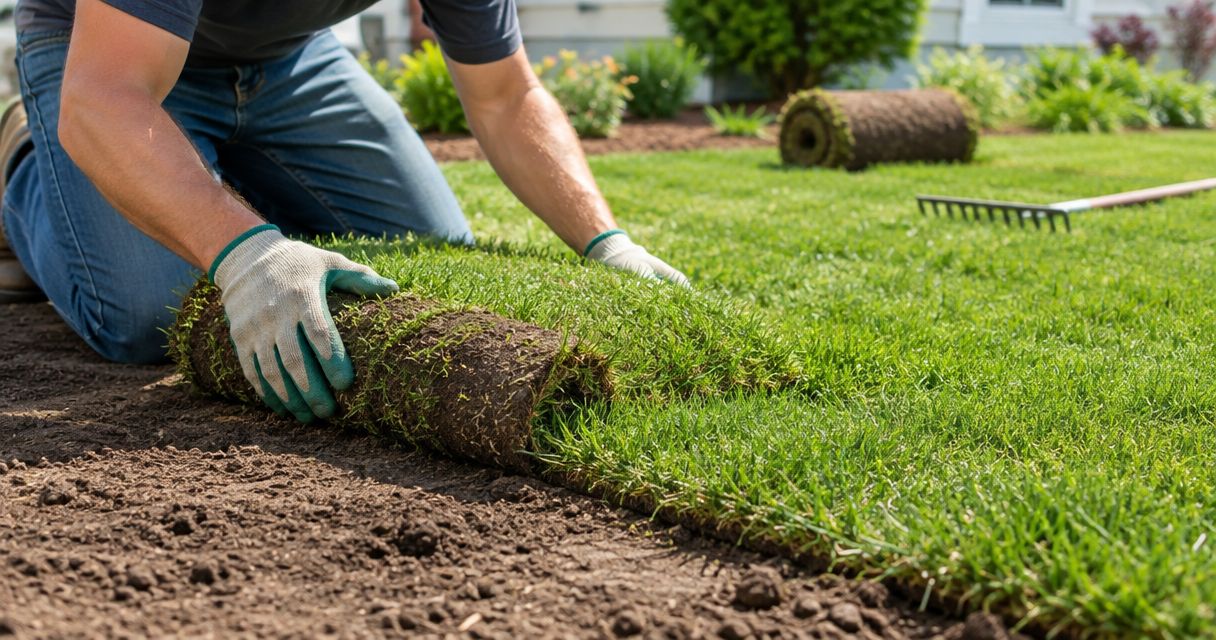
Start along a straight edge and lay pieces tightly together without stretching or overlapping them. Stagger the seams so they do not form long, continuous lines across the yard.
Trim pieces neatly around beds, trees, and pavement. Avoid tiny scraps along exposed edges where they dry quickly, and keep sod clear of tree trunks.
Firm the sod against the prepared surface using a method suited to the soil conditions. Do not run heavy equipment over wet ground just to flatten the lawn; that can undo your preparation by compacting the root zone.
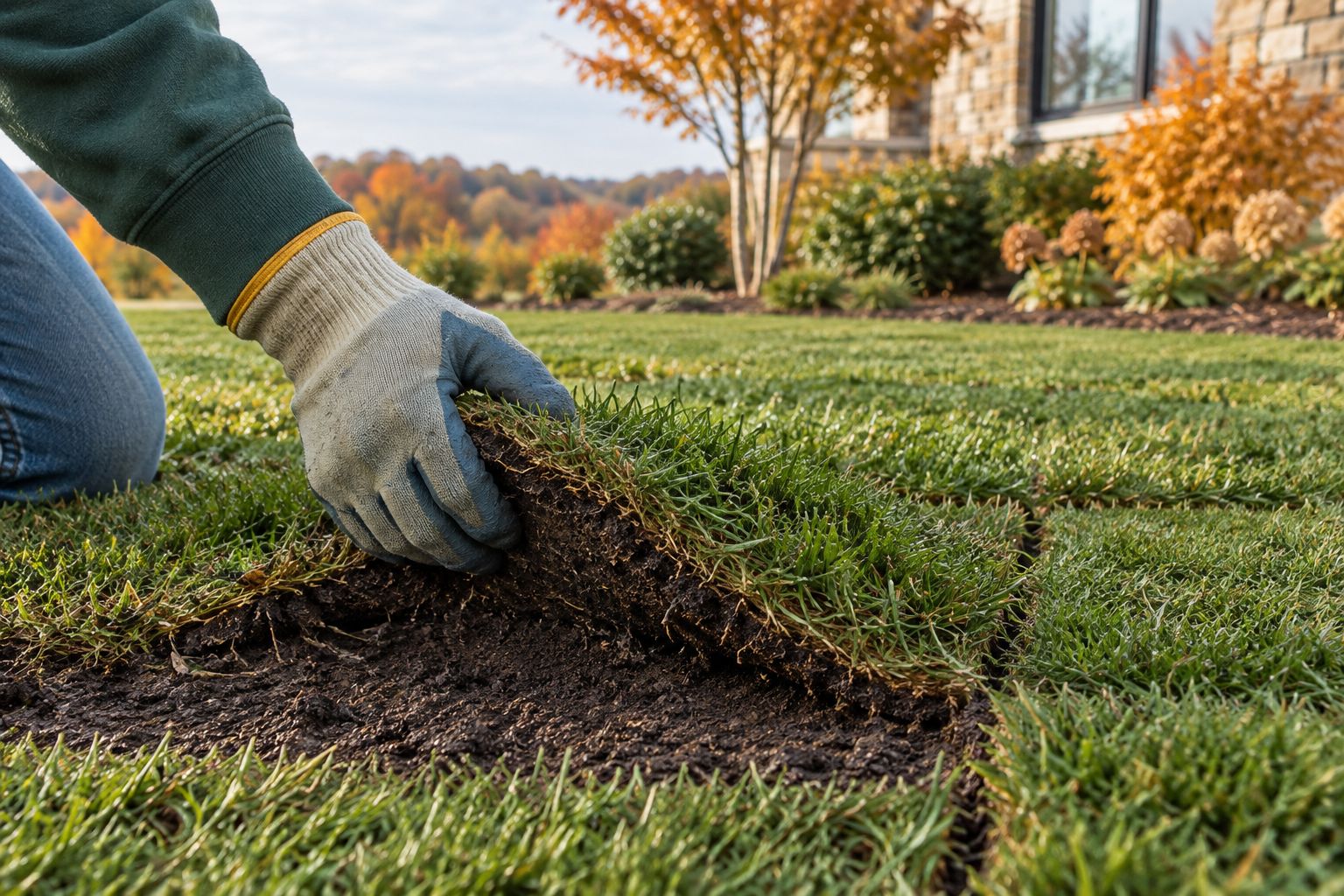
Check the underside before calling the installation finished. Lift a corner in several representative areas to confirm that water has reached through the sod and into the soil beneath it.
How much should you water sod in the fall?
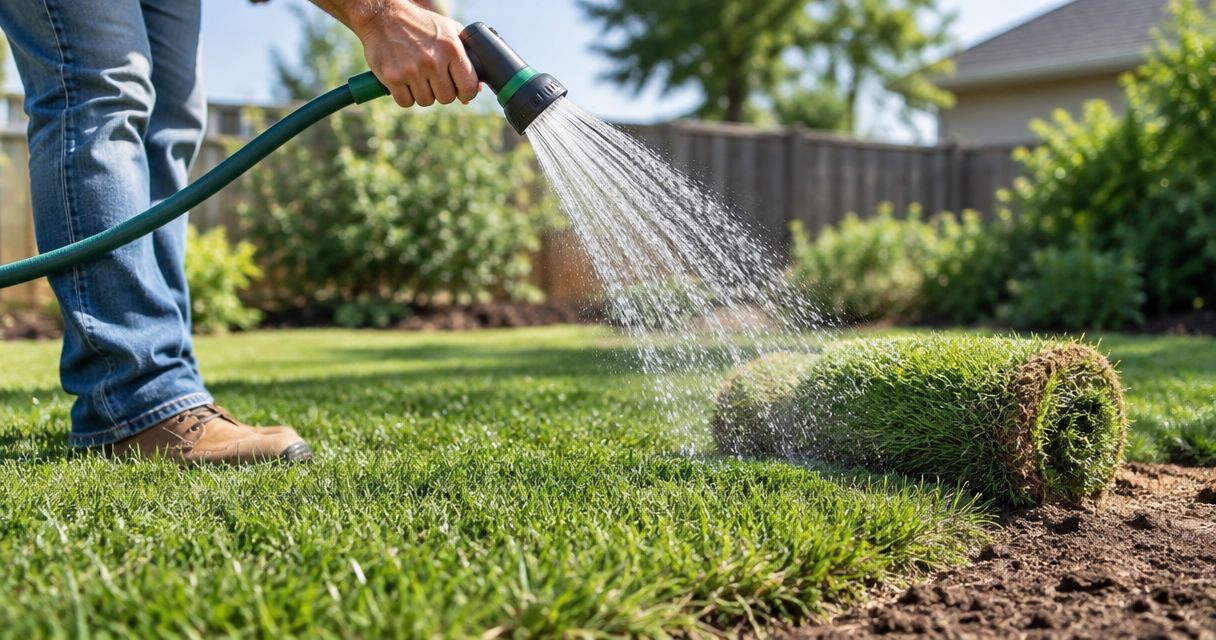
Water fall sod according to moisture beneath the grass, not a fixed summer schedule. Begin watering during installation as needed so completed sections do not dry while the rest of the yard is being laid.
Check more than the easiest spot to reach. Sunny edges, slopes, and strips beside pavement often need different attention from sheltered sections.
- If the underside is drying, water enough to wet the sod and underlying soil.
- If water pools or the ground feels spongy, reduce watering and check drainage.
- After rain, inspect beneath the sod before deciding irrigation is unnecessary.
- As roots develop, shift toward deeper, less frequent watering instead of keeping the surface constantly wet.
For late-fall 2026 installations, plan how you will supply water when nights turn cold. Protect hoses and irrigation equipment according to their instructions, but do not assume cool weather removes the lawn's need for moisture.
Avoid promising yourself a set number of watering days. Root development, rainfall, soil texture, and exposure determine when the care routine should change.
When can you walk on or mow fall sod?
Wait until the sod resists a gentle lift before treating it like an established lawn. Test several spots, including edges and shaded sections, rather than judging the whole yard from one firmly attached piece.
The guide to how long sod takes to establish roots explains why rooting and a finished-looking lawn are different milestones. Until the sod is anchored, keep play, pet traffic, and repeated walking elsewhere.
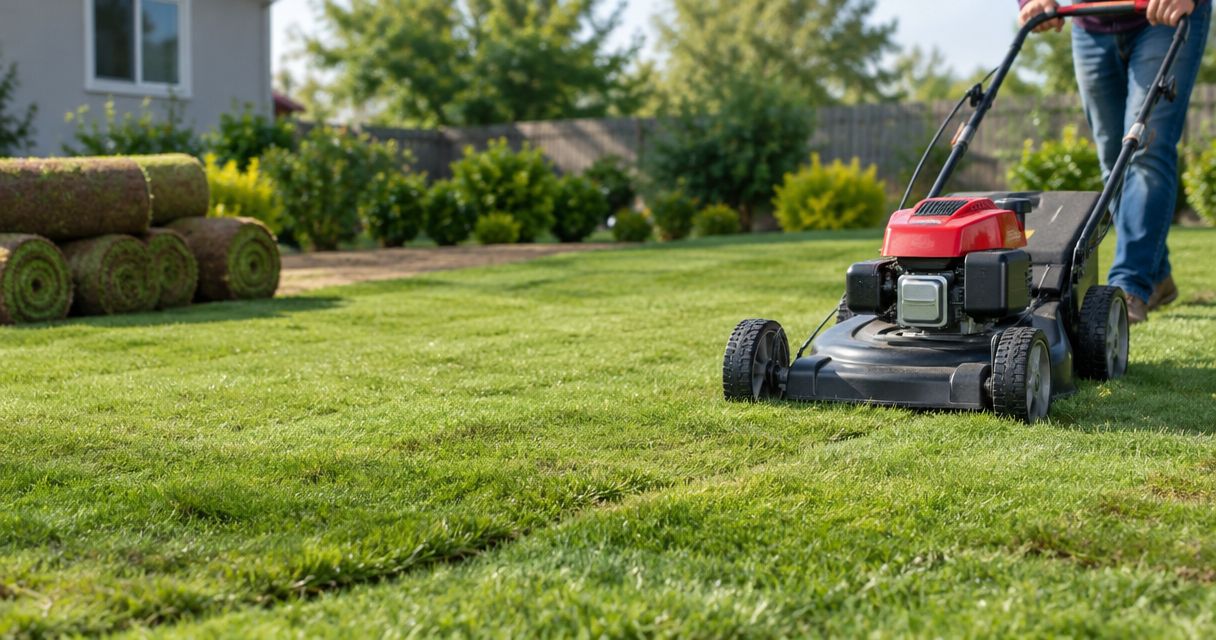
For many cool-season home lawns, a mowing height around 3 inches is appropriate. Taller management near 4 inches also suits some grass types and conditions; follow the recommendation for the grass you installed.
When mowing begins, remove no more than one-third of the blade length in a single cut. Use a sharp blade, avoid mowing wet or soft ground, and turn gently so the mower does not pull loose sections out of position.
If late-fall sod has stopped growing before it needs a cut, do not mow merely because installation happened. Let growth and rooting determine the next step.
When should you postpone a fall sod project?
Postpone installation when the ground cannot support good preparation or proper sod contact. Frozen soil, standing water, unresolved drainage, and unfinished grading are reasons to stop—not problems to conceal beneath fresh grass.
Also pause if you cannot water the entire area. A sprinkler that misses a side yard or exposed corner leaves that section dependent on rainfall during the most vulnerable stage.
For homeowners who want help with lawn care and landscaping, Grassgrabbers is best suited to residential properties in central Iowa. Discuss the condition of your yard and the work needed rather than assuming a freshly covered surface solves every issue.
Discuss your fall lawn plans
Talk through lawn care and landscaping needs for your central Iowa home.
FAQ
Can I lay sod in fall in Iowa instead of waiting until spring?
Yes, you can lay sod in fall in Iowa when the soil is workable and you can water it properly. Favor early fall when possible so the grass has more opportunity to root before winter.
Will the first frost kill newly laid sod?
An overnight frost does not automatically kill newly laid cool-season sod. Frozen ground, drying, poor soil contact, and traffic on loose sections are more useful concerns to check.
Can I lay sod over my existing lawn?
Do not lay sod over an existing lawn. Remove the old turf and prepare the soil so the new sod makes direct contact with its rooting surface.
Do I need to water new sod when the weather is cold?
Yes, newly laid sod still needs moisture during cold weather when the soil is unfrozen. Check beneath the sod and adjust watering for rainfall, drying, and drainage.
Will sod laid in late fall root before winter?
Late-fall sod does not always root firmly before winter because root growth slows as soil cools. Protect loose sod and check its condition again when spring growth resumes.
Can my dog use the yard right after sod installation?
Keep your dog off newly installed sod until it is firmly rooted. Running, digging, and repeated trips across loose seams can shift pieces and damage the new surface.
Should I fertilize fall sod before winter?
Base fertilizer decisions on a soil test, the grass type, and the product label. Extra fertilizer does not make up for dry sod, frozen soil, or poor preparation.
One last thing
A tidy green lawn can still be loose enough to lift like a rug. Before you put away the hose for your 2026 season, check an exposed edge and a sheltered section: the difference tells you more than the view from the driveway.
Judge establishment from the roots down, not the color up. That simple habit helps you avoid opening the yard to normal use before it is ready.