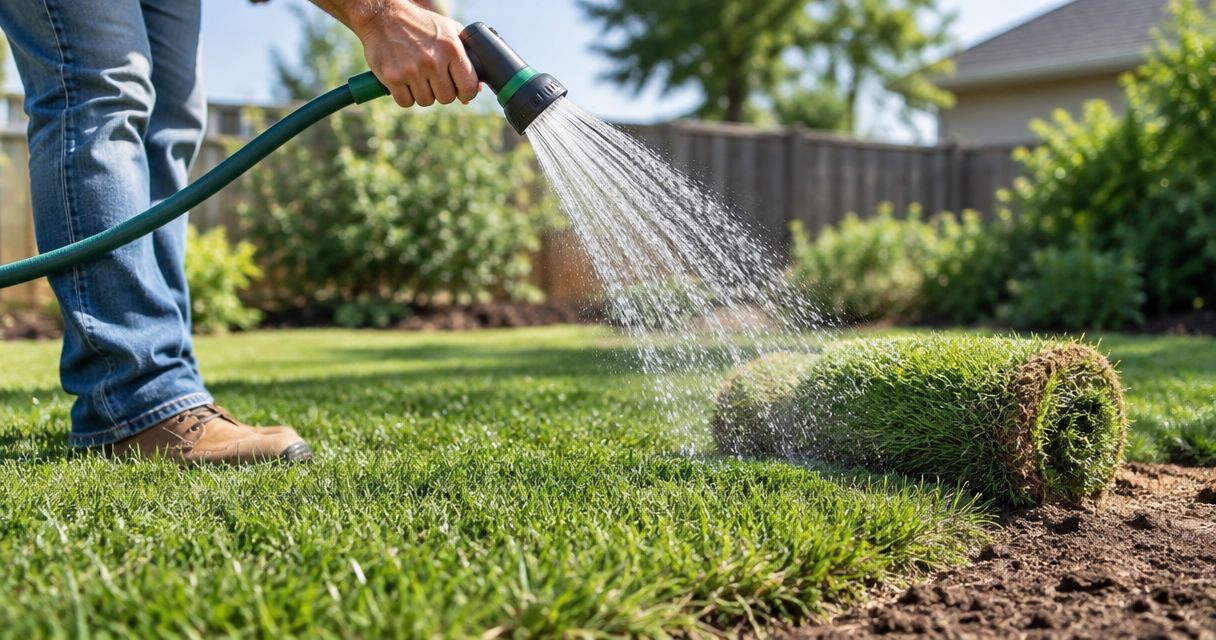
New sod needs enough water to keep the sod layer and the soil directly beneath it consistently moist until roots begin growing into the ground. Water promptly after installation, then check beneath an edge before deciding whether to water again. Standing water, runoff, and squishy soil mean you need to stop or adjust watering—not add more.
- How much water does new sod need? Keep the sod and underlying soil moist, not saturated.
- Fresh sod needs close moisture checks; rooted sod needs a gradual shift toward deeper, less frequent watering.
- Central Iowa rainfall counts only when it wets the soil beneath the sod.
- Check sprinkler coverage and soil moisture before increasing watering time.
How much water does new sod need?
Water new sod to a soil-moisture target, not a fixed number of sprinkler minutes. Immediately after installation, water thoroughly enough to wet the sod and the prepared soil beneath it. Afterward, replace moisture as it dries without keeping the ground waterlogged.
A sprinkler timer cannot tell you whether the roots have water. Lift a loose edge gently and feel the underside and the soil below it. Both should feel damp, with firm contact between them.
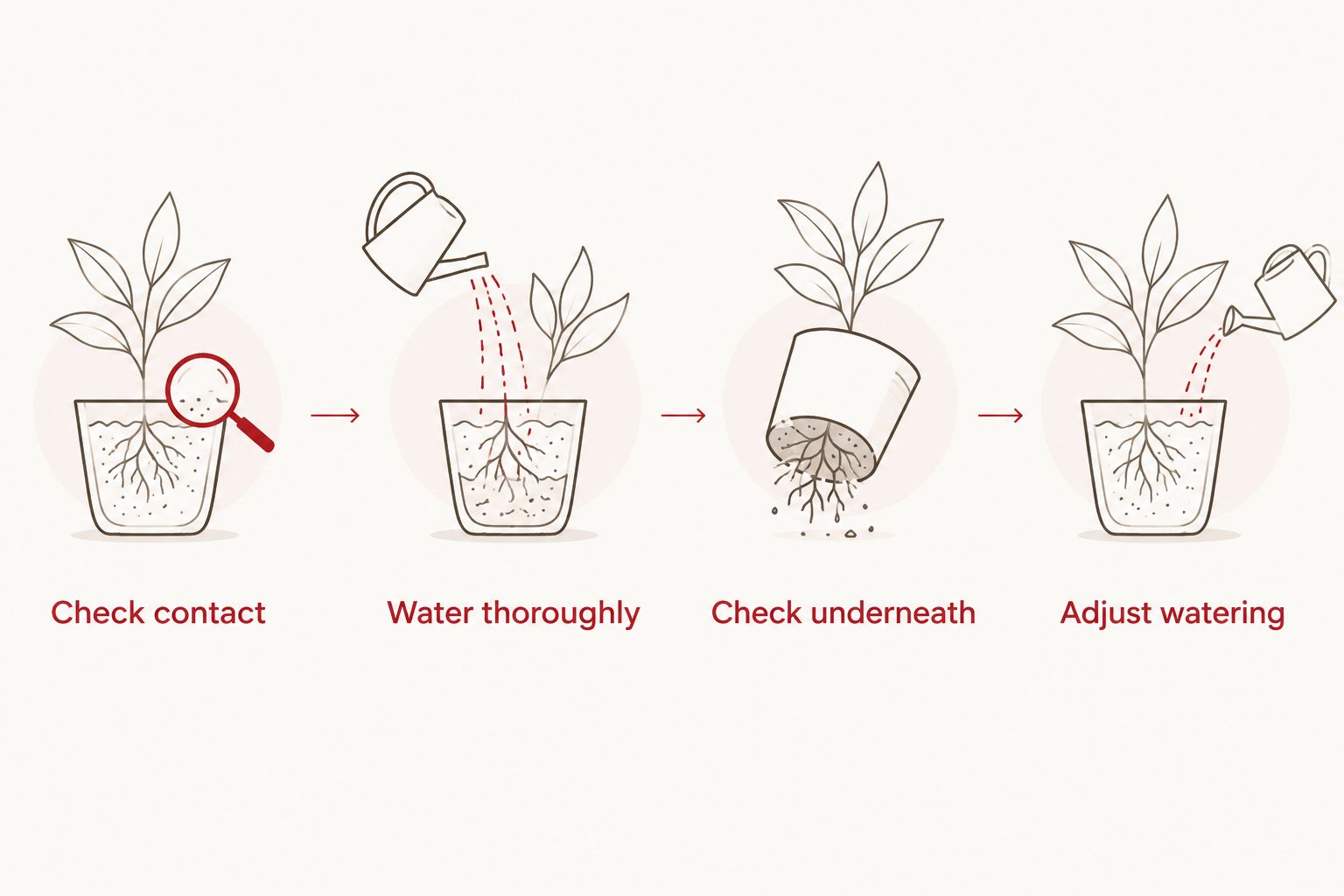
Use this sequence for your 2026 installation, alongside any instructions from your sod supplier:
- Check contact. Look for lifted edges, gaps, or places where sod bridges uneven ground.
- Water thoroughly. Wet the sod and underlying soil without creating puddles or runoff.
- Check underneath. Gently inspect an accessible edge to confirm water reached the soil.
- Adjust watering. Respond to drying, rainfall, and rooting rather than repeating an unchanged timer setting.
Root growth changes the watering plan. The guide to how long sod takes to establish roots explains that transition in more detail.
Why this matters
Freshly laid sod arrives with a limited root system. Until roots grow into your yard, the grass depends on moisture near the surface and good contact with the prepared soil.
Too little water dries the sod before it can establish. Too much water leaves soil saturated, limits oxygen around roots, and can wash soil from beneath the edges. Your goal is moist soil with air in it—not a lawn that stays squishy.
For a central Iowa lawn planted in 2026, actual weather and soil conditions matter more than a calendar-based watering promise. Check the yard itself, especially after hot, windy weather or a substantial rain.
How watering changes as sod takes root
Use the condition of the sod to choose your next step. The stages below describe watering approaches, not fixed deadlines.
| Sod condition | Best for | Watering approach | Benefit | Main caution |
|---|---|---|---|---|
| Newly installed, loose sod | Preventing drying before roots enter the soil | Water promptly and check moisture beneath the sod frequently | Keeps the shallow root zone supplied | Repeated watering can saturate poorly draining soil |
| Sod beginning to grip the soil | Supporting roots as they spread downward | Gradually lengthen the time between watering while wetting the growing root zone | Moves care away from constant surface watering | Cutting back before roots develop can dry the sod |
| Firmly rooted sod | Transitioning toward regular lawn care | Water according to root-zone moisture, rainfall, and grass needs | Avoids unnecessary watering | New sod should not switch to this approach just because it looks green |
Newly installed sod: keep the underside moist
Begin watering promptly after sod is laid. On a large installation, completed sections need attention while the remaining work continues; do not leave finished areas drying while you wait for the whole yard.
Check an exposed edge without pulling up a broad section. If the grass looks wet but the underside is dry, water has not reached the place you need it. If water pools while the soil beneath remains dry, inspect contact and infiltration instead of simply extending the run.
Keep unnecessary foot traffic off the lawn, particularly while the ground is soft. Walking across saturated soil can leave depressions and disturb the contact you are trying to protect.
Sod beginning to root: ease back gradually
As roots enter the soil, gently lifting an edge starts to meet resistance. That resistance is useful evidence, but do not tug hard enough to tear developing roots.
Begin spacing watering farther apart while checking moisture below the sod. Make the change gradually. A rooted patch beside the house does not prove the sunny strip along the driveway is ready for the same schedule.
Keep separate notes for areas that behave differently. During your 2026 establishment period, record where the lawn dries first and where it stays wet; those observations are more useful than copying a neighbor's timer settings.
Firmly rooted sod: water the root zone
Once sod is firmly attached, shift toward watering that reaches the developing root zone rather than repeatedly dampening only the blades. Continue accounting for rainfall and soil conditions.
Deeper watering does not mean flooding the yard. If water runs off before it soaks in, pause the sprinkler and let the soil absorb it before resuming when needed. Keep the amount applied separate from the speed at which you apply it.
Why new-sod watering needs vary
These factors determine how quickly the sod dries and how much water reaches its roots:
- Root development. Loose sod depends on moisture close to the surface; roots growing into the soil change where water is needed.
- Heat and wind. Hot, windy conditions increase drying, especially at exposed edges and corners.
- Soil texture and drainage. Sandy soil drains differently from clay-rich soil. Saturated ground needs a different response from soil that dries quickly.
- Slope. Water can leave a sloped area before soaking into the soil, even while the sprinkler keeps running.
- Sprinkler coverage. Obstructions, poor overlap, and misplaced sprinklers leave dry areas beside adequately watered ones.
- Rainfall. Rain replaces irrigation only to the extent that it reaches and moistens the root zone.
Do not diagnose every brown area as a shortage of water. First compare the affected area with a healthy patch: check moisture, contact, and sprinkler coverage. Adding water without checking can make a wet-soil problem worse.
How do you measure sprinkler output?
Measure water depth, then confirm what reached the soil. A collection test shows sprinkler output and uneven coverage; the underside check shows whether the sod actually received that water.
Place several identical, straight-sided containers across a sprinkler zone, including an exposed edge and an area you suspect is dry. Run the sprinkler for a recorded interval, then compare the collected depths. Keep containers stable and clear of obstructions.
An inch of water over 1 square foot equals about 0.623 gallons. Over 100 square feet, that is about 62.3 gallons; a quarter-inch over the same area is about 15.6 gallons. These are volume conversions, not instructions to apply an inch every day.
If one container collects much less than the others, correct the coverage first. Running the entire zone longer to fix a missed strip also adds water to the areas already receiving enough.
For your 2026 watering notes, record the test interval, collected depth, recent rain, and soil condition. Repeat the test after moving sprinklers or changing irrigation settings.
How can you tell whether new sod is too dry or too wet?
Check beneath the sod before relying on color. Grass blades can look wet after a brief sprinkle while the underside remains dry, and discoloration alone does not identify the cause.
Signs that call for a moisture check
Drying edges, curling blades, or a blue-gray cast warrant a closer look. Gently inspect the underside and soil beneath the affected area. If both are dry, water that area and check whether poor coverage caused the problem.
Pay particular attention beside pavement, on slopes, and at the ends of sprinkler patterns. These spots can behave differently from the middle of the lawn.
Signs that call for stopping the sprinkler
Standing water, continuing runoff, or squishy soil mean you should stop watering and reassess. Check whether the ground is already saturated or whether water is arriving faster than it can soak in.
Persistent wetness needs a drainage check, not a longer irrigation cycle. Avoid repeatedly walking on the area while investigating; inspect from the edge where possible.
Does rain replace watering new sod?
Rain replaces watering when it leaves the sod and underlying soil adequately moist. A wet sidewalk or damp grass blades do not prove enough water reached beneath the sod.
After rain, inspect a representative area and any known dry spots. Resume irrigation when the soil check shows a need, not merely because the timer is scheduled to run.
A rain gauge helps you track what fell, while an underside check tells you what reached the sod. Use both during a 2026 installation rather than treating a forecast as a completed watering.
Should you water new sod in the morning or evening?
Morning is the preferred routine watering time because it limits prolonged overnight leaf wetness and generally avoids the stronger evaporation of midday. But freshly installed sod should not sit dry while you wait for the next morning.
Water new sod promptly after installation, then work toward a morning routine as conditions allow. If an exposed section is drying during the day, check it and address the moisture shortage rather than following the clock blindly.
When should you ask for lawn-care help?
Ask for help when the same sections repeatedly dry out, water runs off despite adjustments, or sod stays wet without establishing. Describe the pattern clearly: where it occurs, what the soil feels like, how the sprinklers cover it, and what changed after rain.
Grassgrabbers provides lawn care for residential property owners in central Iowa who want help maintaining their yards. Professional help is useful when you cannot resolve the cause through moisture and coverage checks; it does not remove the need to monitor fresh sod between visits.
Before requesting help, gather your sod supplier's instructions and watering notes. A clear account of the problem gives a lawn-care provider more to work with than a photo of brown grass alone.
FAQ
How much water does new sod need each day?
New sod needs enough water to keep the sod and underlying soil consistently moist, without saturation. Daily needs change with rooting, rainfall, heat, wind, and drainage, so check beneath an edge rather than applying an unchanged daily amount.
How many minutes should I water new sod?
There is no universal sprinkler runtime for new sod. Measure your sprinkler's output with straight-sided containers, then check beneath the sod to confirm that water reached the soil without causing runoff.
Can I overwater newly laid sod?
Yes, newly laid sod can receive too much water. Stop and reassess when you see standing water, ongoing runoff, or squishy soil; roots need oxygen as well as moisture.
Should new sod stay wet all the time?
New sod should stay moist beneath the surface, not continuously saturated. Wet grass blades alone do not tell you whether the underside and soil have enough moisture.
Do I need to water new sod after it rains?
Water after rain only when a soil check shows the sod still needs moisture. Check beneath the sod and inspect exposed edges instead of assuming every shower replaces irrigation.
When can I reduce watering on new sod?
Reduce watering gradually as roots enter the soil and the sod begins resisting a gentle lift. Keep checking moisture during the transition, because attachment and drying can differ across the yard.
One last thing
A green lawn is not proof of rooted sod. Check attachment and moisture before reducing care. The most useful habit for a 2026 sod installation is a brief inspection of the same representative spots: an exposed edge, an ordinary patch, and a place that tends to stay wet.
That small routine helps you spot differences before you change the watering plan for the entire yard.