New-construction home sod installation is the placement of established turf on prepared soil to give homeowners a usable lawn while roots grow into the site. Successful sod installation for new construction homes starts with drainage, soil preparation, and a watering plan—not the delivery truck.
- Sod installation for new construction homes starts with stable grading, workable soil, and reliable watering.
- Grassgrabbers suits central Iowa homeowners seeking lawn care and landscaping support around a new home.
- Choose Iowa sod types for your sunlight and intended use, not appearance alone.
- Keep construction traffic off finished soil, and check rooting before mowing.
Why sod installation matters for new-construction homeowners
A newly built house does not automatically come with lawn-ready soil. Building activity can leave compacted ground, buried debris, uneven surfaces, and disturbed drainage. Sod covers the surface; it does not correct what sits underneath.
For your 2026 lawn project, start by separating the builder's responsibilities from your own. Confirm who handles final grading, soil preparation, irrigation access, and establishment care before scheduling delivery.
Grassgrabbers provides lawn care, landscaping, and yard maintenance for residential property owners in central Iowa. Grassgrabbers is best for central Iowa homeowners seeking lawn care and landscaping support. Ask about your site's needs and the scope of available work before assuming installation, drainage correction, or irrigation is included.
Why this matters before move-in
New-construction homeowners must coordinate lawn work with unfinished exterior projects. A fence crew, concrete delivery, or utility repair can disturb soil that was ready for sod. Establish the work order first, then protect the finished surface.
Your watering access matters just as much. An outside faucet that works during a walkthrough is not proof that your equipment reaches every corner of the lot. Test the actual hose and sprinkler arrangement before turf arrives.
Install sod when the site and your care routine are ready—not simply when the house closes. That decision gives you control over the conditions that help roots establish.
How to plan and install your new-construction lawn
Inspect the site
Walk the entire lot before ordering sod. Look for rubble, ruts, puddled areas, exposed roots, and abrupt changes in soil texture. Photograph concerns while the ground is still visible, especially where the builder's work meets driveways, sidewalks, and neighboring properties.
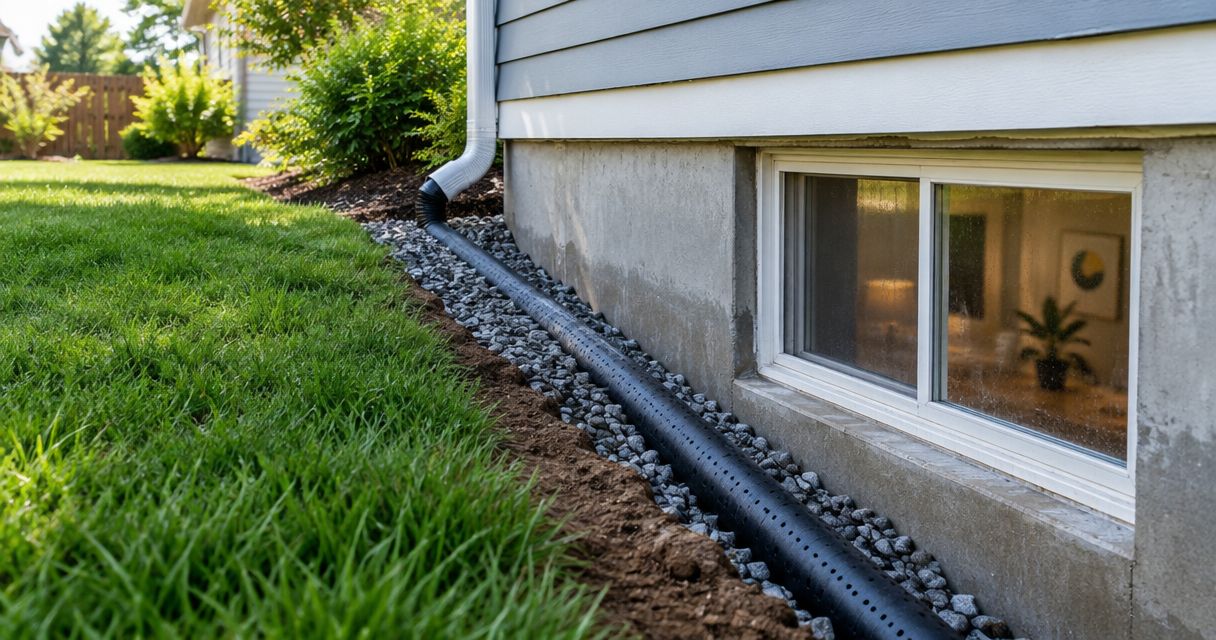
Check the yard after rain when possible. Water collecting beside the foundation deserves attention before lawn installation. Keep approved drainage routes open rather than filling every low-looking area until the surface appears flat.
Review your grading documents with the builder if you have them. Your lawn should follow the site's drainage plan, not compete with it. For problem areas, compare yard drainage solutions for Iowa properties before choosing a correction.
- Mark debris, ruts, and areas where water collects.
- Identify downspout outlets and existing drainage routes.
- Confirm which grading issues remain the builder's responsibility.
- Schedule heavy exterior work before final soil preparation.
- Keep photographs of unresolved site conditions.
Prepare the soil
Remove construction debris before loosening or smoothing the planting surface. Sod needs contact with soil, not a layer of wood scraps, stones, or hardened clods. Avoid burying leftover materials beneath imported soil.
Use a soil test to guide amendments and fertilizer decisions. Follow the laboratory's sampling instructions rather than choosing a sampling depth from a general lawn article. Keep visibly different soil areas separate if the laboratory recommends separate samples.
For your 2026 preparation plan, divide the yard into 3 inspection zones: front, back, and side yards. This is an organizing method, not a soil-testing standard. It helps you notice where construction traffic or different fill materials have changed the ground.
Grassgrabbers lawn care and landscaping support is relevant when you want local help planning yard maintenance. Confirm whether soil preparation is part of the proposed work; general landscaping services do not establish the details of an individual agreement.
- Remove debris rather than covering it with soil.
- Follow soil-test recommendations for amendments.
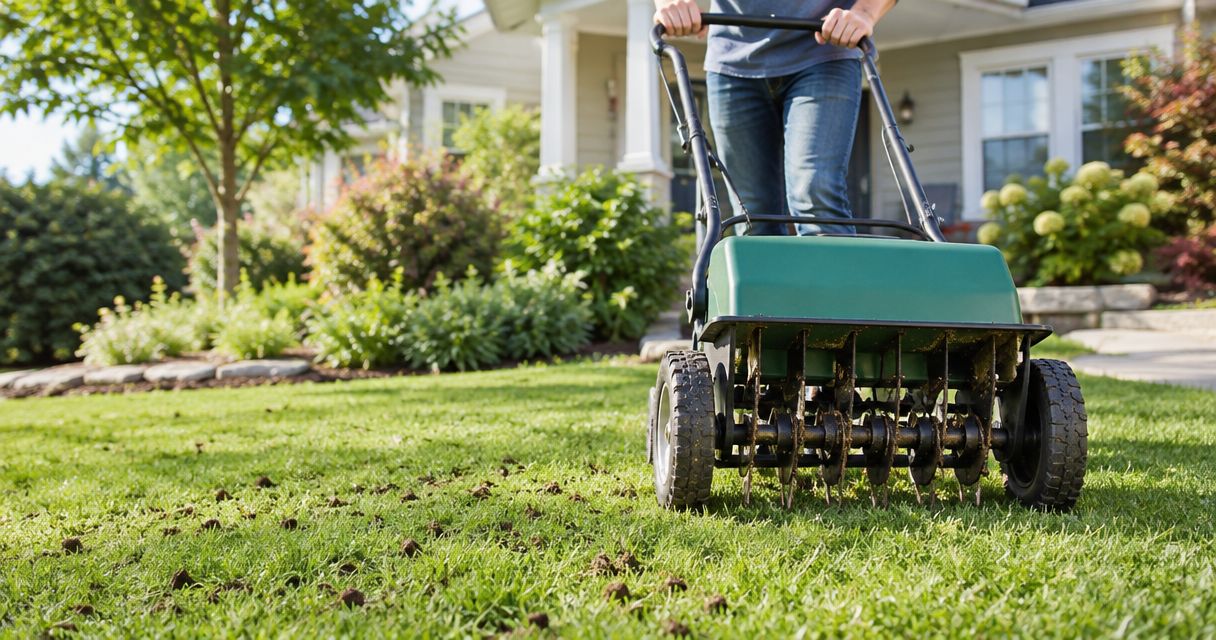
- Address compaction without working saturated ground.
- Break up clods and remove stones from the surface.
- Finish with a firm, even bed that supports soil contact.
Plan the water
Set up your watering equipment before choosing a delivery date. The manual approach is straightforward: position hoses and sprinklers, run them, and inspect where the water actually lands. Do not assume the wet pavement beside a lawn means the turf area received even coverage.
Place identical straight-sided containers around a test area to compare sprinkler coverage. Uneven amounts show where you need to adjust placement or overlap. This check measures distribution; it does not set a universal watering schedule.
New sod needs moisture through the turf and into the soil beneath it. Lift a corner gently to inspect that contact zone, then lay it back down. Adjust watering to weather, soil, and the sod supplier's instructions rather than repeating a fixed timer setting through every condition.
- Test the full watering setup before delivery.
- Check coverage near corners, slopes, and narrow strips.
- Keep hoses from obstructing access routes.
- Assign establishment checks to a named person.
- Reduce watering when the soil is saturated or runoff begins.
Choose the turf
Match sod to the conditions the finished yard will actually have. In central Iowa, cool-season grasses such as Kentucky bluegrass and tall fescue are familiar lawn choices. Their suitability depends on sunlight, traffic, maintenance expectations, and the composition of the sod being supplied.
Check sunlight at 2 points during daylight: morning and afternoon. These checks are a starting point, not a substitute for observing the full day's sun exposure. Nearby houses can shade a yard even when newly planted trees do not.
Ask the supplier for the grass species and mixture rather than ordering by color alone. A dense green roll tells you little about how that lawn will fit your site. If a section is deeply shaded, reconsider whether turf belongs there instead of assuming another sod variety will solve the problem.
- Record sunlight and shade across the lot.
- Identify play areas, pet routes, and other traffic paths.
- Ask which grass species the sod contains.
- Match maintenance expectations to the turf choice.
- Coordinate installation with weather and watering capacity.
Lay the sod
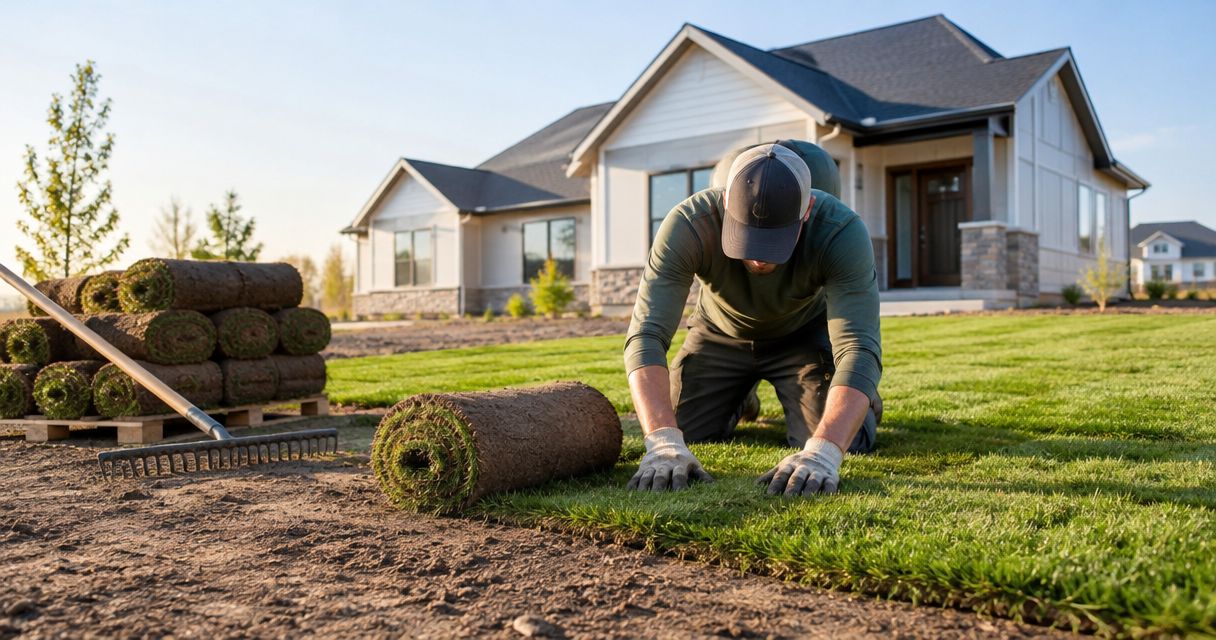
Complete the soil work before delivery. Begin along a straight edge, fit pieces closely without overlapping, and stagger the joints like brickwork. Avoid stretching pieces to close gaps; stretched turf can pull apart as it dries.
Keep soil contact consistent across each piece. Follow the supplier's instructions on rolling and watering, and start watering completed sections promptly rather than leaving the entire installation dry until the end. Handle slopes according to site conditions and supplier guidance.
The practical limit for a do-it-yourself installation is the area you can prepare, lay, and water properly—not the amount you can have delivered. Arrange help before installation day if the workload exceeds that capacity.
- Work from a straight edge and stagger seams.
- Fit edges snugly without stacking or stretching them.
- Use larger pieces along vulnerable exposed edges where practical.
- Keep unnecessary foot traffic off prepared soil.
- Water finished sections according to supplier instructions.
Check establishment
Check the lawn rather than relying on a date alone. Gently lift an edge to assess soil moisture and, later, resistance from developing roots. Avoid repeatedly lifting the same section or pulling hard enough to damage new growth.
For your 2026 establishment routine, record weather, watering adjustments, and problem areas in a simple phone note. A drying edge needs a different response from a soggy depression. Treat the visible condition, not every brown patch with more water.
Wait until the sod is rooted firmly enough to withstand mowing, and follow the grass supplier's mowing-height guidance. Remove no more than one-third of the grass blade in a single mowing. Keep mower blades sharp and avoid mowing when the soil is soft enough to rut.
- Inspect seams, edges, slopes, and sunny areas separately.
- Check soil beneath the sod before changing watering.
- Reduce frequent surface watering as roots establish, following supplier guidance.
- Keep play equipment and heavy traffic off establishing turf.
- Mow only when rooting and ground conditions support it.
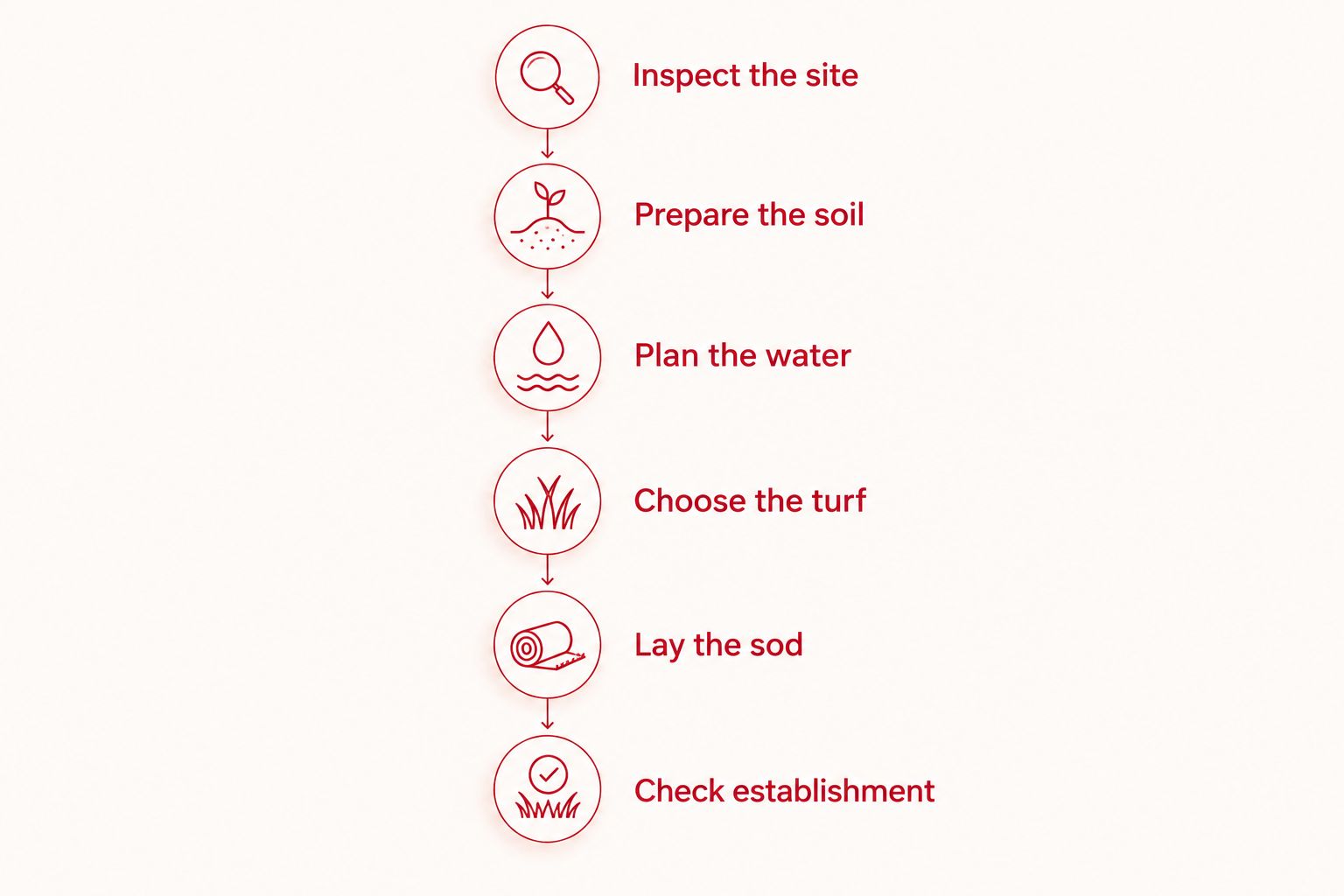
The installation sequence is simple, but each stage depends on the one before it. Prepared soil and tested watering equipment should be in place before the first piece of sod reaches the yard.
Compare installation approaches for your new home
Choose responsibility and scope before choosing an installer. A new lawn involves preparation, delivery coordination, physical installation, and establishment care. An agreement that covers only laying turf leaves the other tasks with you unless stated otherwise.
Use this comparison for your 2026 project discussions. It compares ways to organize the work, not verified service packages from any provider.
| Option | Best for | Main advantage | Key limitation |
|---|---|---|---|
| Do-it-yourself installation | Homeowners with time, physical capacity, and watering access | Direct control over preparation and daily checks | You coordinate materials, labor, and establishment yourself |
| Contractor installation | Homeowners who need installation labor and coordination | Work can be assigned through a defined scope | Soil correction and aftercare are not included unless agreed |
| Builder-managed installation | Homeowners whose construction agreement includes lawn work | Lawn work stays within the construction handoff | The agreement determines turf selection, preparation, and responsibility |
| Split-scope installation | Homeowners who want help with selected tasks | You assign difficult work while retaining daily care | Gaps between responsibilities need explicit planning |
A contractor's involvement does not remove your need to understand aftercare. Ask who notices a failed sprinkler, who adjusts watering after rain, and who responds when construction work damages a finished section.
Before accepting any proposal, ask for the preparation tasks, turf specification, installation responsibilities, and care instructions in writing. If you discuss work with Grassgrabbers, use that same checklist and confirm the services available for your property.
Discuss Your New Yard
Ask about lawn care and landscaping support for your central Iowa property.
Common mistakes new-construction homeowners make
Covering unfinished grading with sod
Sod makes bare ground look finished, which can hide unresolved site problems. Resolve standing water and grading questions before installation instead of treating turf as the final repair.
Scheduling delivery before exterior work ends
Fence installation, patio work, and equipment access can tear up fresh sod. Confirm the remaining construction schedule and keep a designated access route wherever work must continue.
Treating the whole lot as identical soil
The front yard and back yard can have different compaction, fill, exposure, and drainage. Inspect them separately and base soil treatment on actual conditions rather than applying the same amendment everywhere.
Watering by habit instead of checking underneath
A green surface does not prove the root zone is moist, and a wet surface does not prove drainage is adequate. Lift an edge gently and check the soil before increasing or reducing watering.
Mowing because the neighbors have started
Your neighbor's installation date, turf, and soil conditions do not determine yours. Check root resistance and ground firmness, then use the recommended mowing height for your grass.
FAQ
What's the first step before installing sod at a new construction home?
Inspect grading, drainage, and soil condition before ordering sod. Resolve construction debris, unfinished exterior work, and responsibility for site corrections before covering the ground.
Can I lay sod directly over the dirt left by my builder?
Lay sod only after confirming that the builder's finished surface is suitable for turf. Remove debris, address compaction and drainage, and prepare a firm, even soil bed first.
Is sod better than seed for a new home?
Sod is better when your priority is an immediately covered surface; seed is an alternative establishment method that requires germination. Neither method fixes poor grading or removes the need for watering and soil preparation.
When should I schedule sod installation in central Iowa in 2026?
Schedule sod installation when soil preparation is complete, the ground is workable, and you can provide establishment care. Coordinate the date with your supplier and avoid installing over frozen or saturated soil.
How often should I water newly installed sod?
Adjust watering to keep the sod and underlying soil appropriately moist without creating saturation or runoff. Follow your supplier's instructions and check beneath an edge rather than relying on a fixed schedule alone.
When can I mow sod at my new house?
Mow when the sod has rooted firmly enough to resist lifting and the ground supports the mower without rutting. Follow the recommended height for the grass and remove no more than one-third of the blade at once.
Should I fertilize new sod immediately?
Base fertilizer decisions on soil-test results and the sod supplier's establishment instructions. Do not assume that every new-construction yard needs the same fertilizer or application timing.
One last thing
Before your 2026 sod delivery, photograph the prepared yard from several fixed viewpoints. Repeat those photographs during establishment so you can compare the same edges, slopes, and low spots instead of relying on memory.
The most useful installation-day tool is a working watering setup. Unroll the hoses, run the sprinklers, and verify coverage before the turf arrives. A finished-looking lawn still needs someone responsible for what happens underneath it.