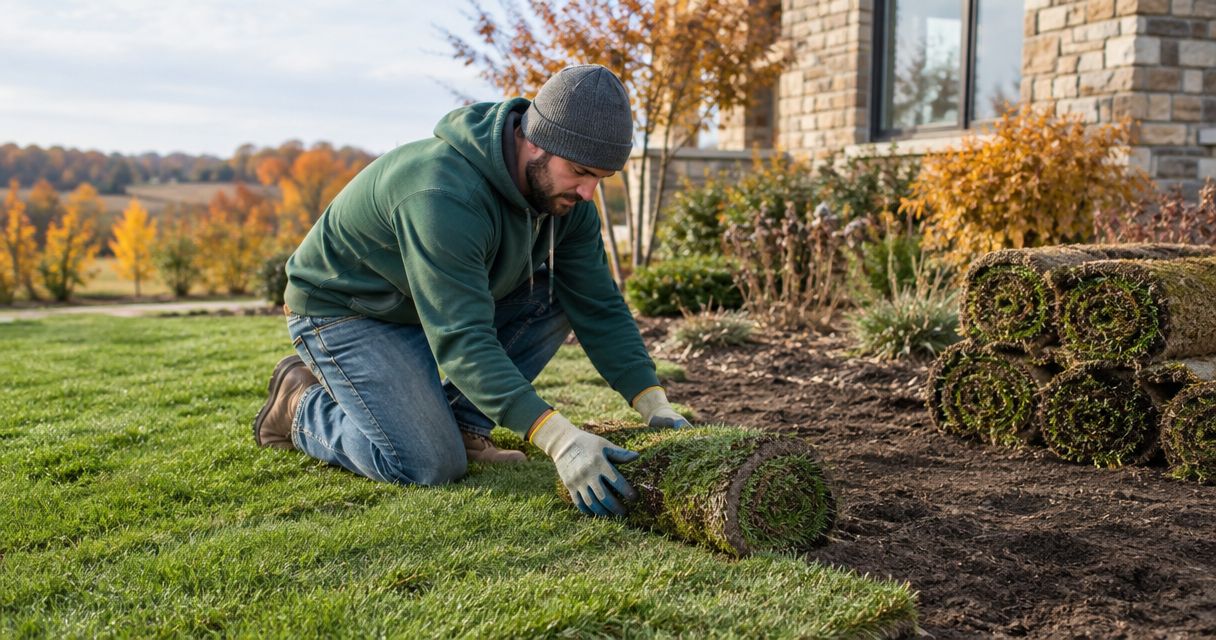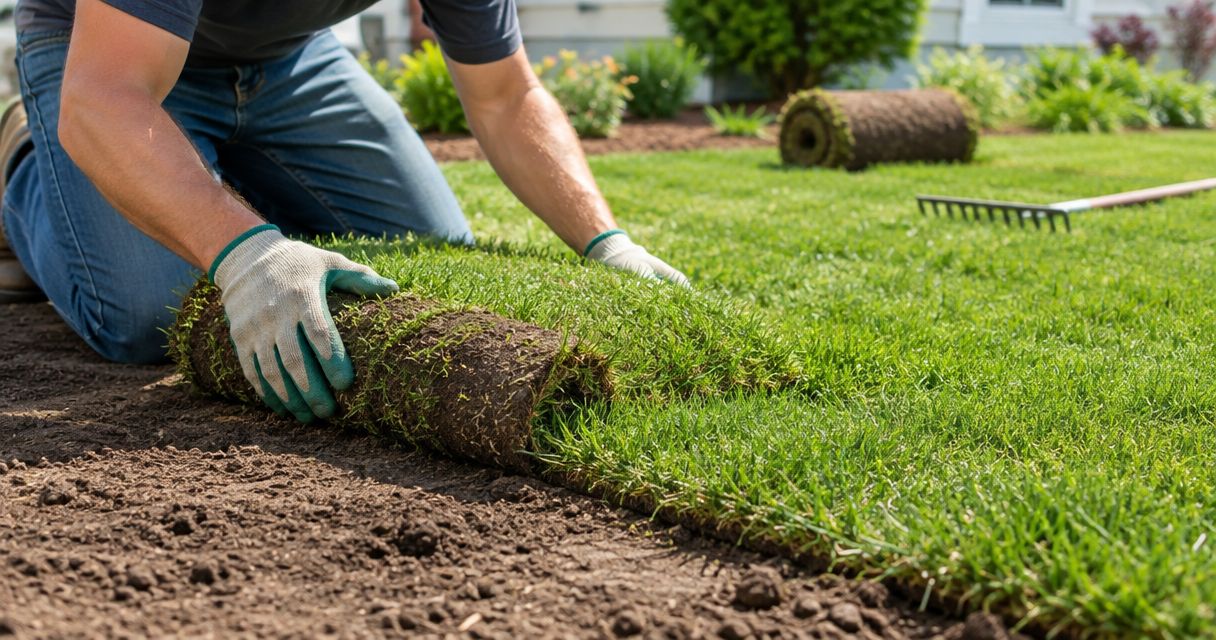
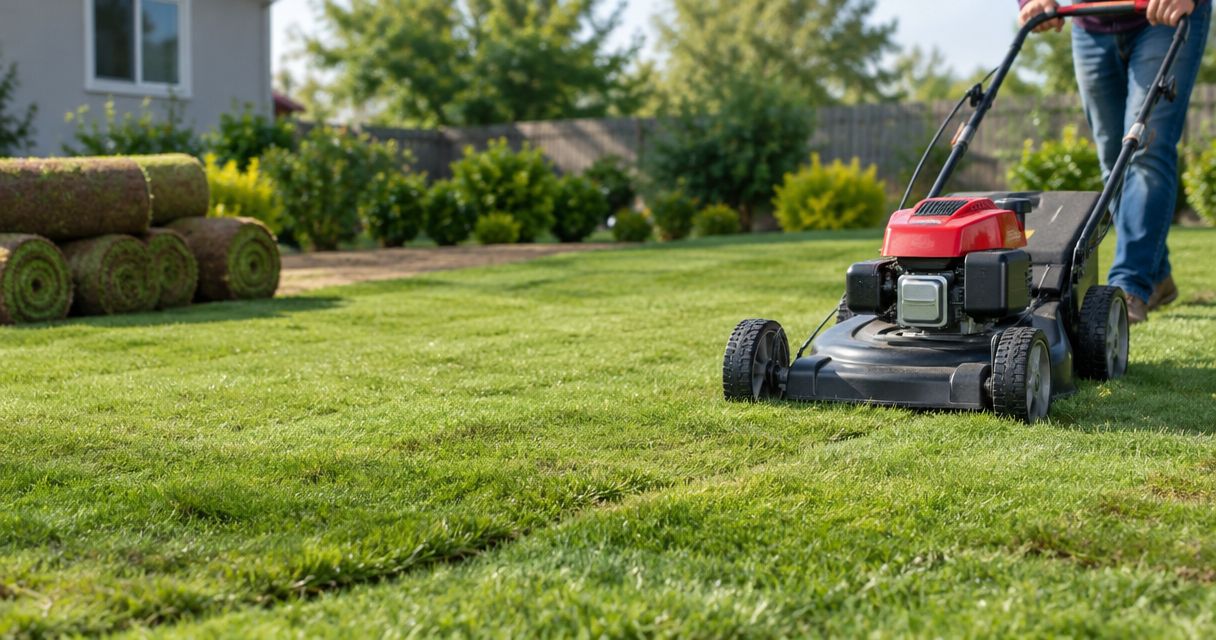
You can mow new sod when it has rooted firmly enough to resist a gentle lift, the grass needs cutting, and the soil supports the mower without leaving ruts. Check the lawn, not just the installation date. Green blades alone do not prove that the roots can hold the sod in place during mowing.
- How soon can you mow new sod? Wait for root resistance, dry blades, and firm ground.
- Grassgrabbers provides lawn care and yard maintenance for central Iowa homeowners.
- Use the one-third mowing rule to avoid removing too much grass at once.
- First-mow readiness does not mean new sod is ready for unrestricted foot traffic.
Why this matters
New sod arrives looking like a finished lawn, but its roots still need to grow into your soil. A mower can shift poorly anchored pieces, and its wheels can leave depressions in wet ground. Those problems are harder to fix than an uneven haircut.
For your 2026 lawn care plan, separate appearance from establishment. The guide to how long sod takes to establish roots explains the rooting question behind that first mowing decision.
How soon can you mow new sod?
Mow new sod only when it passes the root, moisture, and height checks together. Reaching a certain age is not enough. A lawn that still lifts easily or sinks underfoot needs more establishment time before you bring out the mower.
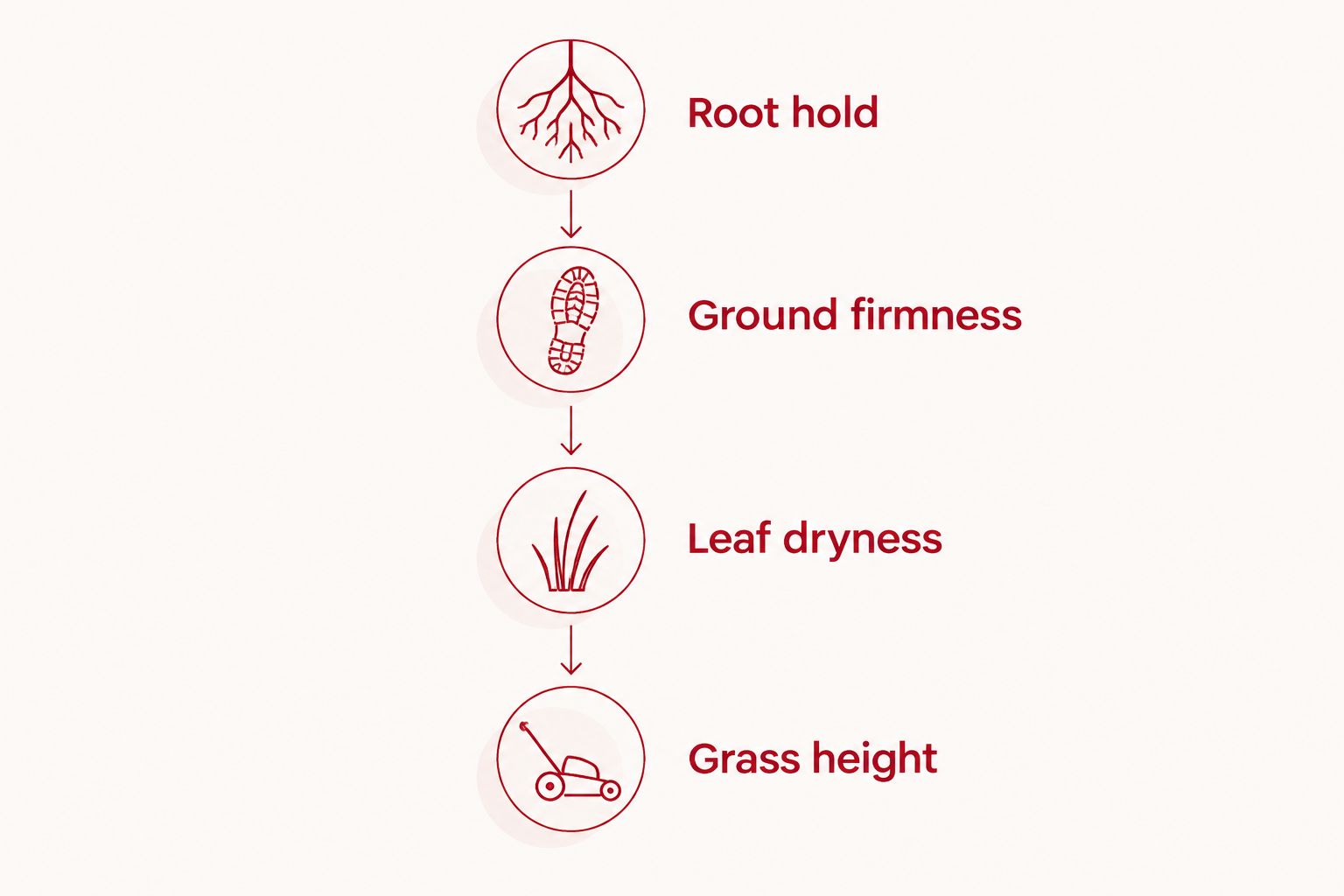
Use these checks in order:
- Check root hold. Gently lift a corner in a few representative areas. Resistance suggests that roots are attaching to the soil; a piece that peels back freely is not ready. Stop pulling once you feel resistance.
- Check ground firmness. Take a careful step near an accessible edge. If your shoe sinks or leaves a deep impression, keep the mower off that area.
- Check leaf dryness. Wait until dew, rain, or irrigation has dried from the blades. Dry leaves cut more cleanly and are less likely to clump.
- Check grass height. Make sure the grass actually needs mowing. Select a cutting height suited to the grass type without removing more than one-third of its height.
- Check the whole route. Look at shaded corners, seams, slopes, and the path back to the driveway. The strongest patch does not tell you whether the entire route is ready.
For a 2026 installation, record what you find rather than assigning an automatic first-mow date. If one section fails, leave that section alone and reassess its conditions before cutting.
Firmly rooted sod: prepare for a careful first cut
Sod that resists lifting has begun attaching to the underlying soil. That is a useful sign, not permission to mow without checking anything else. You still need a firm surface, dry blades, and a suitable mower setting.
Inspect several places instead of repeatedly testing the same corner. Include an area that receives less sun and an area near an irrigation boundary. Uneven growing conditions can leave parts of the yard behind others.
Once the lawn passes the checks, clear away hoses, toys, and loose debris from outside the grass where possible. Plan a simple route that avoids unnecessary turns. The first cut is maintenance, not a chance to stripe the yard.
Loose or wet sod: wait before mowing
Do not mow sod that shifts underfoot, lifts freely, or sits on soft ground. Tall grass does not cancel those warning signs. Mowing an unanchored piece can move it out of position and disturb the contact its roots need.
Keep unnecessary traffic away while you work out why the area is lagging. Check whether irrigation reaches it evenly and whether water collects there. Do not solve a wet-ground problem by withholding all needed establishment water.
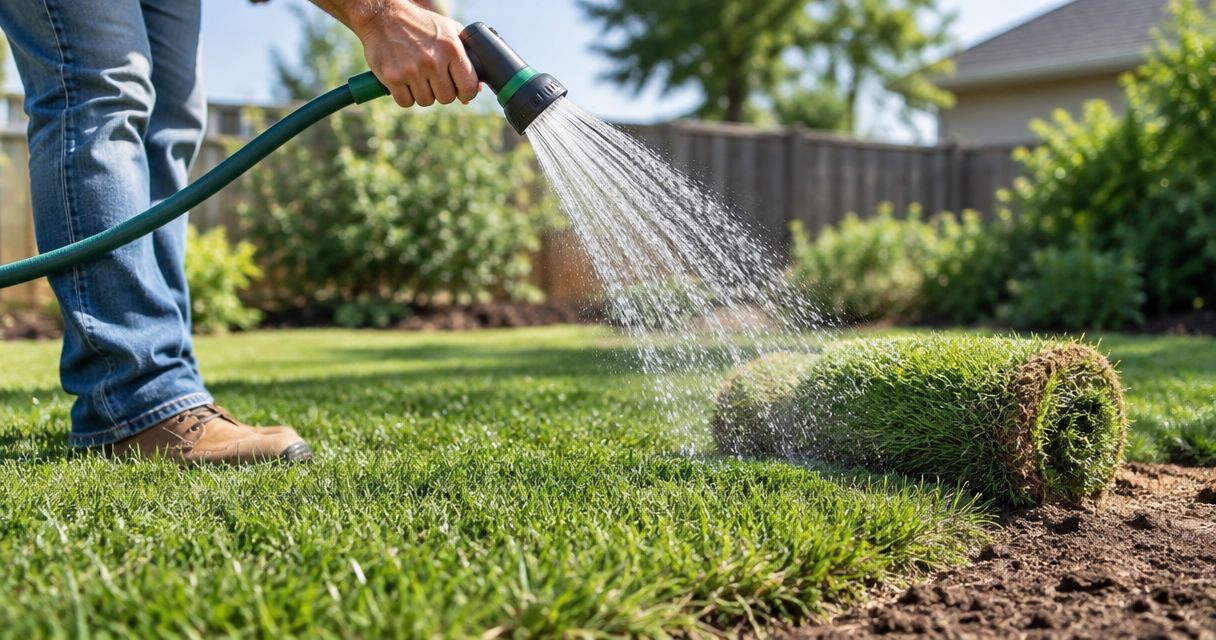
A dry leaf surface and dry root zone are different things. You want the leaves dry enough to cut and the ground firm enough to travel across, while maintaining the soil moisture needed for establishment. Follow the sod supplier's watering instructions rather than drying the lawn solely to fit a mowing appointment.
What mowing height should you use for new sod?
Start with the recommended height for your actual grass type. For many cool-season home lawns, 3 inches is a practical mowing height, but the sod supplier's guidance should determine the setting for your lawn. Do not use the lowest setting simply because the grass looks untidy.
The one-third rule limits how much leaf height you remove in a mowing. At a 3-inch finished height, grass measuring 4.5 inches would lose 1.5 inches. That example illustrates the rule; it is not a reason to wait until every new lawn reaches 4.5 inches.
If the grass has grown beyond what a single gentle cut can address, raise the deck and take less off. Return toward the appropriate maintenance height through later mowings rather than cutting it all back at once.
Add the grass type and intended cutting height to your 2026 maintenance notes. That gives everyone caring for the property the same instructions and prevents a familiar mower setting from becoming the wrong setting for new turf.
Which mower should you use on new sod?
Choose equipment that the rooted lawn and soil can support without rutting or shifting. A smaller mower still damages wet ground, and a large lawn does not automatically justify taking a riding mower onto newly laid turf.
| Mowing option | Best for | Advantage | Limitation |
|---|---|---|---|
| Walk-behind mower | Homeowners managing a first cut on firm, rooted sod | Makes it easier to choose a simple route and avoid vulnerable patches | Wheels and repeated turns can still damage soft ground |
| Riding mower | Larger areas after the turf and soil can support the equipment | Covers broad areas without as much walking | Weight and tight turns require particular care on establishing turf |
| Professional mowing help | Homeowners who need assistance assessing conditions and maintaining the yard | Provides help with equipment choice and the mowing task | Hiring help does not make loose sod or wet soil ready to mow |
Use a sharp blade whichever mower you select. A dull blade tears leaves instead of making a clean cut. Avoid pivoting on the grass, sudden direction changes, and repeated passes along the same soft edge.
Grassgrabbers provides lawn care and yard maintenance for central Iowa homeowners who want help caring for their yards. For a new lawn, make the installation date, watering instructions, and any loose or wet areas part of the conversation before scheduling mowing.
Why first-mow timing varies
New sod does not root at the same pace in every yard. These conditions explain why a neighbor's mowing date is not a reliable schedule for your property:
- Root-to-soil contact. Sod needs contact with the prepared soil underneath. Gaps and uneven areas interfere with that connection.
- Moisture. Establishing roots need water, but saturated ground cannot safely support mowing equipment.
- Temperature. Grass growth and root development respond to temperature. Calendar age alone does not describe those conditions.
- Sun and shade. Different exposures affect growth and drying, so shaded sections need their own checks.
- Grass type. Growth habit and recommended cutting height differ among grasses. Confirm what was installed before choosing the mowing setting.
- Traffic and equipment. Footsteps, mower weight, and turning patterns affect how much disturbance the surface receives.
For central Iowa lawns in 2026, use those conditions to guide the decision instead of treating spring, summer, or fall as a guarantee. The season supplies context; the checks supply the answer.
How do you make the first cut without disturbing the sod?
Once your sod is ready, keep the job simple. Check the mower before taking it onto the lawn so you do not need to stop, adjust equipment, or retrace your route over the new turf.
- Set the deck first. Choose a height appropriate to the grass and the one-third rule.
- Start at an accessible edge. Avoid crossing the whole lawn just to reach a starting point.
- Travel steadily. Do not make sharp turns or spin wheels on the grass.
- Watch the surface. Stop if seams move, tires sink, or pieces begin lifting.
- Deal with heavy clippings. Do not leave thick piles that cover the grass. Remove clumps gently without dragging equipment across loose sod.
- Inspect afterward. Look for shifted edges, wheel marks, and torn leaves before planning another cut.
Leave a struggling area unmowed rather than chasing a perfectly uniform finish. An uneven first cut is easier to live with than displaced sod. Resume routine mowing as the lawn's growth and ground conditions allow, not simply because the first pass is finished.
Can you mow new sod if the grass is already tall?
Tall grass still needs root hold and firm ground before mowing. If the sod passes those checks, use a higher deck setting to avoid taking too much leaf off at once. If it fails, address the establishment problem before cutting.
Do not press a mower into service just because the yard looks shaggy. Height is one part of the decision, not the deciding factor.
Should you water new sod before or after mowing?
Mow when the leaves are dry and the soil is firm, while keeping the establishment watering plan intact. Watering immediately before mowing defeats that goal if it leaves wet foliage or soft ground.
Coordinate the tasks around actual conditions and the supplier's instructions. There is no benefit in making the roots thirsty just to get a mower across the lawn.
Does the first mowing mean new sod is fully established?
The first mowing does not mean new sod is ready for unrestricted use. Roots that hold during a careful cut still need further development before you treat the lawn like mature turf.
Keep concentrated activity away from vulnerable areas. Dog runs, repeated shortcuts, and sharp mower turns put stress in the same places, even when the surrounding grass looks settled.
FAQ
How soon can you mow new sod after installation?
Mow new sod when it resists a gentle lift, the ground supports the mower, the leaves are dry, and the grass needs cutting. An installation date alone does not establish readiness.
How can I tell whether new sod has rooted?
Gently test a corner for resistance in several representative areas. Stop pulling when you feel resistance; do not peel back attached sod to inspect it.
Can I mow new sod while it is wet?
Wait until the blades are dry and the soil is firm enough to support your mower. Wet leaves clump, while soft ground is vulnerable to wheel damage.
What height should I cut new sod?
Use the recommended mowing height for the installed grass type and remove no more than one-third of the leaf height. A 3-inch setting is a practical example for many cool-season home lawns, not a universal setting.
Can I use a riding mower for the first mowing?
Use a riding mower only when the rooted sod and ground can support it without shifting or rutting. Avoid tight turns and follow any equipment restrictions supplied with the installation instructions.
What should I do if new sod lifts when I mow?
Stop mowing immediately if sod lifts or shifts. Avoid further traffic over the area and check its rooting, moisture, and soil contact before trying again.
Can Grassgrabbers help with lawn maintenance in central Iowa?
Grassgrabbers provides lawn care, landscaping, and yard maintenance services for central Iowa homeowners. Discuss your new lawn's condition and installation instructions before arranging maintenance.
One last thing
Check where the mower will turn, not just where it will cut. A firm center does not protect a soft perimeter, and a careful straight pass can still end with damage at the corner.
Before your first mow in 2026, walk the planned route from start to finish. If you cannot turn and leave the lawn without crossing loose or saturated sod, change the route or wait. Protecting the roots matters more than finishing every strip that day.