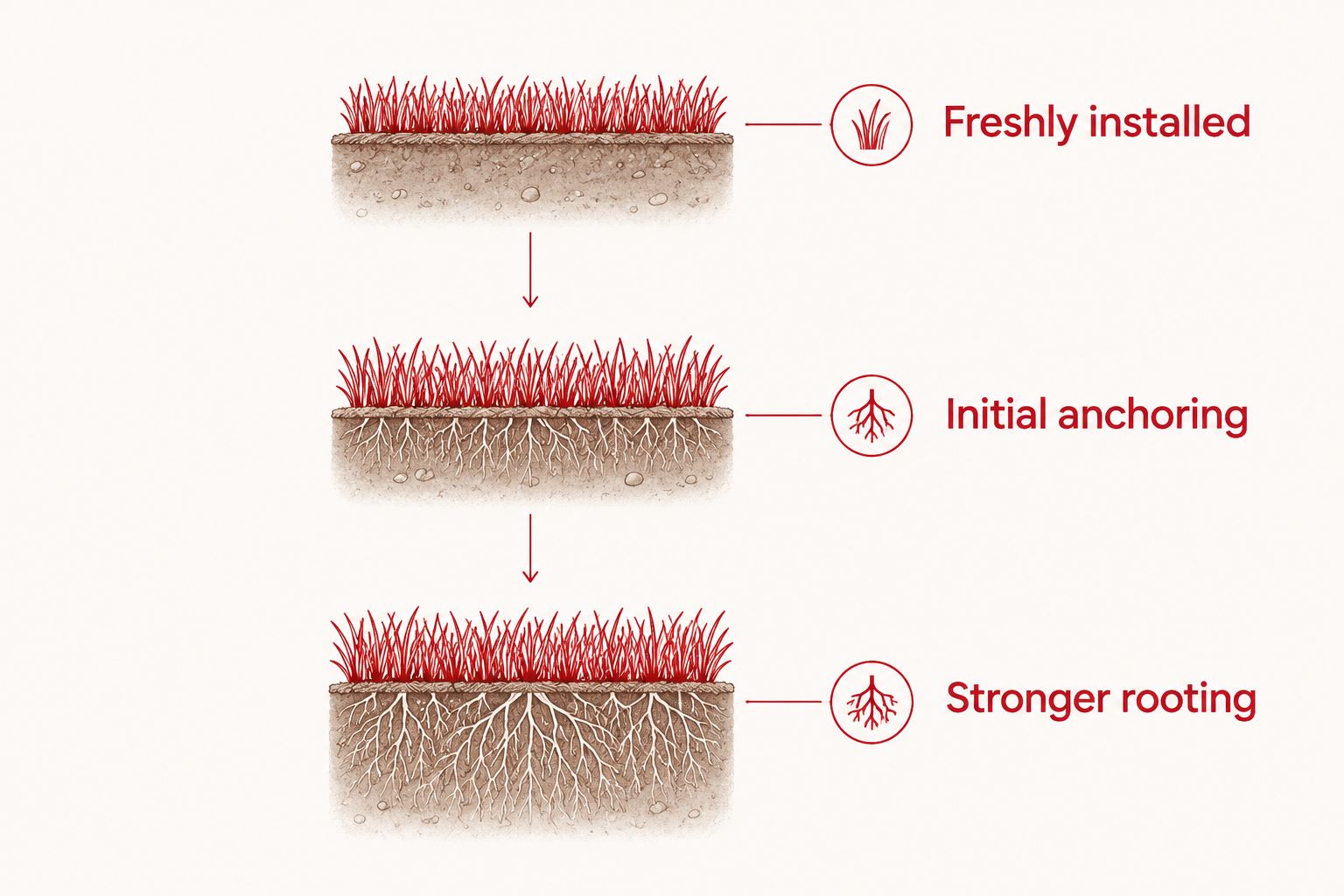
New sod typically starts anchoring in about 14 days, with initial rooting often taking 10–14 days during active growth; developing a stronger root system generally takes 4–6 weeks. Those are planning windows for your 2026 lawn, not permission to stop watering or start heavy use: cold soil, poor soil contact, and uneven moisture slow establishment.
- How long for sod to establish roots? Plan on 10–14 days for initial anchoring during active growth.
- Allow roughly 4–6 weeks for stronger rooting, then judge readiness by actual attachment and soil conditions.
- Grassgrabbers serves central Iowa homeowners seeking lawn care, landscaping, and yard maintenance.
- Keep new sod moist without leaving the soil waterlogged; reduce watering frequency as roots develop.
How long does it take for sod to establish roots?
Expect initial attachment in about 10–14 days and stronger rooting over roughly 4–6 weeks under favorable growing conditions. Initial attachment means roots are beginning to connect the sod to the soil beneath it. It does not mean the lawn can handle repeated foot traffic, running dogs, or a heavy mower.
For broader help planning a residential yard, Grassgrabbers provides lawn care, landscaping, and yard maintenance in central Iowa. For the rooting question, though, your best evidence is underneath the grass—not the color on top.
| Establishment stage | General planning window | What to look for | What the stage does not prove |
|---|---|---|---|
| Freshly installed | Installation day onward | Sod lies against moist, prepared soil | Green blades do not prove root attachment |
| Initial anchoring | About 10–14 days during active growth | A gently lifted edge begins resisting movement | Light attachment does not mean heavy-use readiness |
| Stronger rooting | Roughly 4–6 weeks in favorable conditions | Firmer attachment and continued growth | The calendar does not confirm every area has rooted |
Treat these windows as checkpoints. Sod laid during a cold spell does not follow the same schedule as sod growing in mild weather, and a dry corner can lag behind the rest of the yard.
Why this matters
New sod looks finished before the work below ground is finished. That makes it easy to mow, entertain, or turn the dog loose too soon.
The sod arrives with roots in its harvested soil layer, but those roots still need to grow into your yard. Until that connection develops, the lawn depends heavily on moisture near the surface and protection from movement.
For your 2026 lawn-care plan, separate looking green, being attached, and being ready for regular use. They are different milestones. Checking each one prevents a tidy-looking installation from becoming a patchwork of loose seams and stressed turf.
Initial anchoring: about 10–14 days
Initial rooting is the first useful checkpoint, not the finish line. In favorable conditions, you should begin noticing resistance when you gently test a sod edge around this window.
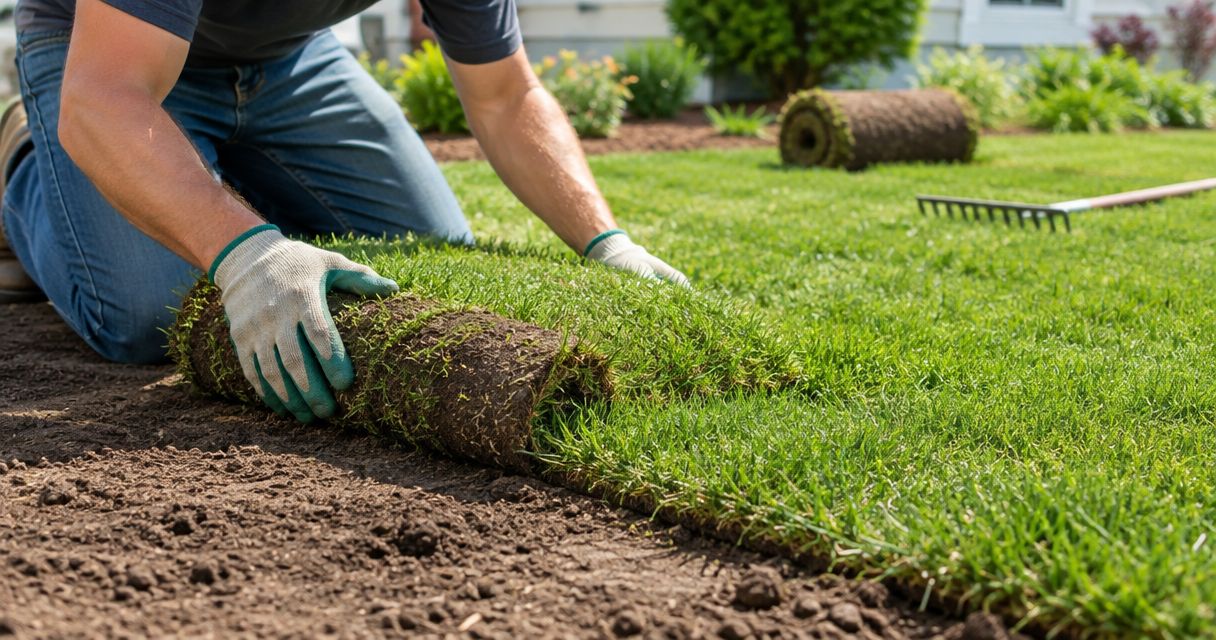
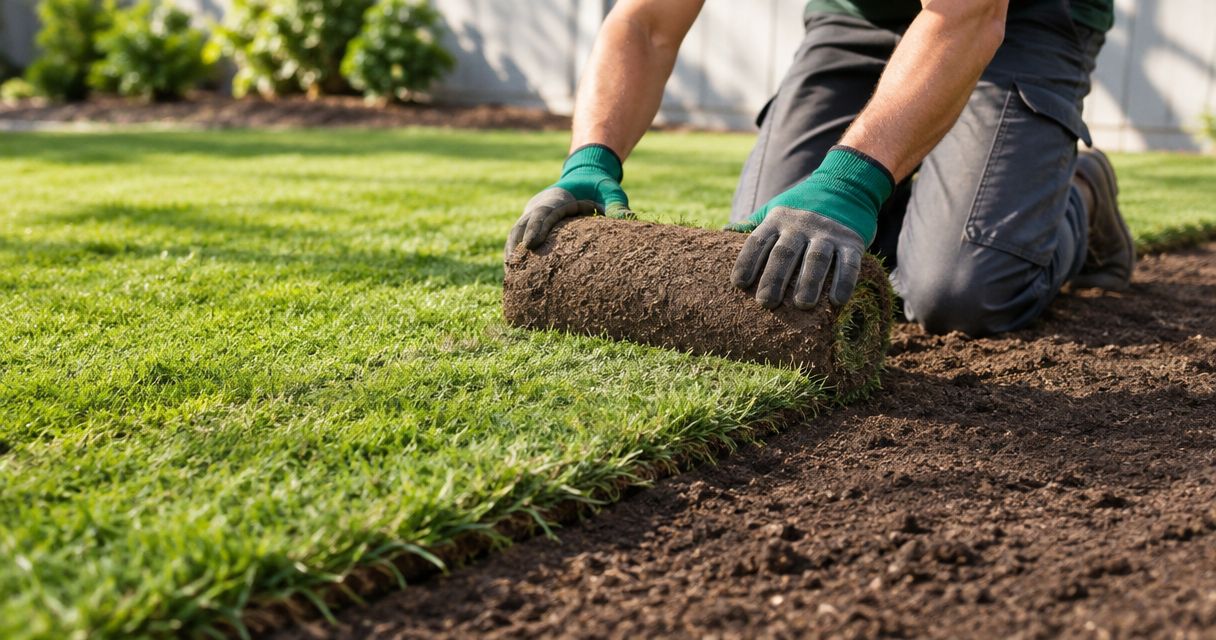
Choose an accessible outside edge rather than opening a tight seam in the middle of the lawn. Lift only enough to feel whether the piece resists; do not peel it back to inspect the entire underside.
- Good sign: The edge resists a light lift and stays connected to the soil.
- Needs attention: The piece lifts easily, and the soil underneath feels dry.
- Needs a different correction: The piece lifts easily, and the ground beneath it is saturated or soft.
Dry sod needs a moisture correction. Saturated soil needs the watering schedule and drainage checked—not another automatic watering cycle.
Use the lift test sparingly. Repeatedly pulling up the same piece breaks the young connections you are trying to assess. Check another representative edge next time rather than disturbing one spot over and over.
Stronger rooting: roughly 4–6 weeks
A stronger root system develops beyond the first shallow connections. Over roughly 4–6 weeks of favorable growth, sod becomes more firmly attached and better able to draw moisture from the soil below its original layer.
That does not make every newly sodded yard ready for unrestricted use at the same moment. A sunny slope, a shaded side yard, and a compacted strip beside a driveway can progress differently.
As attachment improves, shift away from keeping only the surface wet. Water deeply enough to moisten the developing root zone, then adjust the interval to the soil's actual drying pattern and your installer's instructions.
The goal is deeper rooting, not permanently wet grass. Keep checking beneath the turf as you change the schedule. A dry-looking blade surface does not automatically mean the soil below needs more water.
Why sod rooting time varies
Root growth depends on the conditions around the roots. These factors explain why a calendar estimate cannot replace checking your own yard.
- Soil temperature: Roots grow more slowly in cold soil. Sod installed late in the growing season can remain only lightly attached until conditions support further growth.
- Moisture: Drying interrupts establishment, while saturated soil limits the air roots need. Aim for moist soil rather than standing water or persistent squishiness.
- Soil contact: Gaps beneath a piece leave roots without a dependable connection to the soil. Uneven preparation and lifted edges deserve attention early.
- Soil condition: Compacted ground restricts rooting. Preparation before installation matters because laying sod over a hard surface does not remove that barrier.
- Grass growth and exposure: Grass type, shade, heat, and wind affect growth and moisture demand. One irrigation setting does not necessarily suit every part of the lawn.
For a central Iowa installation in 2026, pay particular attention to changing weather. A watering pattern that worked during mild, cloudy conditions needs reassessment when the weather turns hot, dry, or rainy.
How do you help new sod establish roots?
A good establishment routine keeps the sod connected, supplies moisture where roots are growing, and prevents avoidable damage. Follow the installer's instructions for your grass and site rather than copying a neighbor's sprinkler timer.
- Check moisture beneath an accessible edge. Confirm that water reaches through the sod and into the underlying soil. Wet blades alone do not establish that the root zone received water.
- Check sprinkler coverage. Look at corners, edges, slopes, and areas near pavement. A sprinkler can wet the center of the yard while leaving the perimeter short of water.
- Keep traffic off loose sod. Limit walking to necessary care. Turn equipment away from newly laid pieces so wheels do not shift them or open seams.
- Watch attachment and growth together. Green color is useful, but it is not enough. Look for increasing resistance at an edge and continuing grass growth.
- Change watering as rooting develops. Gradually move toward deeper, less frequent watering as conditions allow. Do not make a sudden change just because a scheduled week has ended.
Walk through that routine before adding fertilizer or another treatment. Correct moisture and soil contact first. Fertilizer does not repair an air gap, remove compaction, or restore oxygen to waterlogged ground.
Keep lawn treatments consistent with the sod supplier's directions and product labels. A newly installed lawn is not the place to improvise with weed-control products or extra fertilizer applications.
When can you walk on new sod?
About 10–14 days is an initial-rooting checkpoint, not an automatic walking date. Keep unnecessary traffic off the lawn until the sod resists a gentle lift and the soil is firm enough that your steps do not leave depressions.
Necessary watering checks are different from regular use. Walk carefully, avoid turning on the turf, and stay off wet areas that deform underfoot.
For repeated activity, give the lawn more time and check attachment throughout the intended use area. A firmly rooted strip near the patio does not prove the route across the yard is ready.
When can you mow new sod for the first time?
About 10–14 days can be a useful inspection point, but mow only when the sod is attached, the soil supports the mower, and the grass needs cutting. Those conditions matter more than a fixed date.
Use a sharp blade and a mowing height appropriate for the grass. Follow the established lawn-care rule of removing no more than one-third of the blade height in a single mowing.
Avoid tight turns, sudden stops, and mowing across soft ground. If a wheel shifts a piece or leaves a rut, stop; the lawn is not ready for that equipment under those conditions.
Does sod root more slowly in fall?
The 10–14-day initial-rooting window applies to active growth; cooling soil can extend it. Fall installation does not eliminate the need to check moisture, even when the air feels cool.
In central Iowa, late-season sod needs protection from traffic while attachment remains weak. Do not assume a green lawn has established before winter simply because it has been in place for several weeks.
For a fall 2026 installation, ask the installer how to handle watering and access as temperatures decline. Base decisions on the turf's attachment and soil conditions rather than a summer schedule.
What should you check if sod is not rooting?
Start with the area that is struggling rather than changing care across the entire yard. A single dry edge and a whole lawn sitting on saturated soil call for different responses.
| What you notice | What to check first | What to avoid |
|---|---|---|
| Loose, dry edges | Water reaching the edge and contact beneath it | Assuming the center's moisture represents the perimeter |
| Soft, saturated soil | Watering frequency, rainfall, and drainage | Adding water solely because the timer says so |
| Sod shifting underfoot | Attachment and unnecessary traffic | Repeated walking to test firmness |
| Persistent weak patches | Local moisture, shade, compaction, and soil contact | Treating discoloration alone as a diagnosis |
Photograph the affected area and note whether it is dry, wet, shaded, or heavily traveled. That gives your installer useful information without repeatedly lifting the turf.
Grassgrabbers is a fit for central Iowa homeowners seeking lawn care, landscaping, and yard maintenance. Professional help is useful when you need someone to assess the broader yard, but routine service does not replace following the installation-specific care instructions.
Discuss your lawn-care needs
Review lawn care, landscaping, and yard maintenance for your central Iowa property.
FAQ
How long for sod to establish roots in central Iowa?
New sod commonly begins anchoring in about 10–14 days during active growth, with stronger rooting developing over roughly 4–6 weeks. Cold soil, moisture problems, and poor soil contact extend that timeline.
Can I tell whether sod has rooted without pulling it up?
You can check attachment by gently testing an accessible edge for resistance rather than peeling up a whole piece. Combine that check with observations of growth and soil moisture.
Should I water new sod every day?
New sod needs enough water to keep the sod and underlying soil moist, but a fixed daily schedule does not suit every yard. Adjust for rainfall, soil drainage, weather, and the installer's directions.
Does green sod mean the roots are established?
Green sod does not prove that roots have grown into the soil below it. Check attachment before allowing regular traffic or mowing.
Can my dog use newly laid sod?
Keep your dog off loose, newly laid sod because running, turning, and digging disturb attachment. Wait until the intended area is firmly rooted and can support use without shifting or damage.
Will sod installed in fall 2026 root before winter?
Fall 2026 sod can root while soil conditions support active growth, but the installation date alone does not confirm establishment. Check attachment, maintain suitable moisture, and follow the installer's cold-weather care instructions.
Can Grassgrabbers help with ongoing yard care?
Grassgrabbers provides lawn care, landscaping, and yard maintenance for residential property owners in central Iowa. Discuss your property's needs and confirm the scope of service before arranging work.
One last thing
Check the least convincing part of the lawn, not just the best-looking patch. Before opening the yard to regular use, inspect the edges, the slope, and any area that dries differently from the rest.
Make that your final checkpoint for a 2026 sod installation. The calendar tells you when to look; attachment and soil conditions tell you what to do next.