The cost to regrade a yard depends on the area being reshaped, how much soil must move, equipment access, and the drainage work required; a useful 2026 estimate starts with those measurements, not a yard-size average. Ask whether the total also includes soil delivery, hauling, drainage improvements, and lawn restoration—reshaping bare ground and handing back a finished lawn are different jobs.
- The cost to regrade a yard depends on soil movement, equipment access, drainage work, and lawn restoration.
- Grassgrabbers serves central Iowa homeowners seeking lawn care and landscaping services.
- Compare written scopes before totals: soil delivery, hauling, drainage, and grass establishment need separate attention.
- Regrading changes surface drainage; it does not automatically solve every wet-yard or basement problem.
Why this matters
A low spot is easy to notice. The harder question is whether you need to fill that spot, reshape a larger section of lawn, or deal with water arriving from somewhere else.
Pay for the correction your yard needs, not just a smoother-looking surface. Before discussing landscaping work, review the services and ask which parts of your project the contractor will handle. Keep grading, drainage, and lawn restoration clearly separated in the conversation.
A yard that looks level can still direct runoff toward the house. A yard with a gentle, intentional slope can look tidy while giving water a path away from vulnerable areas.
How much does it cost to regrade a yard?
Your regrading estimate should account for the work below. These items explain why two properties with similar lawn areas can require very different proposals.
| Part of the estimate | What to have written down | What changes the scope |
|---|---|---|
| Site preparation | Grass removal, clearing, and protection of nearby features | Roots, existing beds, fences, and buried obstacles |
| Soil movement | Areas to cut down and areas to raise | Depth of correction and whether existing soil can be reused |
| Soil delivery or removal | Material type, estimated quantity, delivery, and disposal | Whether the site has excess soil or needs additional material |
| Equipment and labor | Access route and work method | Narrow gates, steep ground, and limited turning room |
| Drainage work | Proposed runoff route and any separate drainage installation | Outlet location, roof runoff, and surrounding elevations |
| Lawn restoration | Topsoil preparation, seed or sod, and aftercare responsibilities | How much ground is disturbed and the chosen finish |
For a 2026 proposal, ask for a defined work area and an explanation of the finished drainage direction. An estimate that says only grade backyard leaves too much room for disagreement about what counts as finished.
Also ask how changes will be approved. If excavation exposes an obstruction or unsuitable material, you want a clear conversation before additional work begins—not a surprise when the project ends.
Small-area correction: define the cause before filling
A localized depression needs a different scope from a yard-wide drainage correction. Ask whether the surrounding elevations allow water to leave after the depression is raised.
The advantage is a smaller disturbed area when the problem is genuinely local. The limitation is that filling one depression does not correct runoff entering from uphill, a poorly placed downspout discharge, or a broader grading problem.
Whole-yard reshaping: include the finished lawn
A larger regrading project needs an overall plan connecting the house, lawn, paths, beds, and intended drainage route. Soil movement alone is not a complete description of that work.
The advantage is the ability to address connected surface-drainage problems together. The trade-off is broader disruption: more lawn is disturbed, surrounding features need protection, and grass establishment becomes part of the project rather than an afterthought.
Why yard regrading costs vary
For your 2026 planning, use these factors to understand the estimate rather than judging it by lawn area alone:
- Work area and depth. Moving a thin layer of soil across a small patch is different from cutting down high ground and rebuilding low areas.
- Equipment access. A narrow gate, tight side yard, or vulnerable walkway changes how machinery and materials reach the work.
- Soil delivery and hauling. Reusing suitable soil on-site is a different task from bringing material in or removing excess soil.
- Drainage destination. The contractor needs to explain where surface water will travel after grading, not merely where it currently collects.
- Existing features. Trees, patios, utilities, irrigation, fences, and planting beds affect the work area and protection requirements.
- Lawn restoration. Seedbed preparation, seed or sod installation, erosion protection, and establishment care belong in the scope.
These factors interact. A small backyard with difficult access can require more handling than a larger open area, so square footage by itself does not describe the effort involved.
Keep landscaping additions separate from the drainage correction. A new planting bed or border might be part of your plans, but it should not obscure what the grading work itself includes.
How soil volume changes the job
Area tells you how much ground is involved; depth tells you how much material must move. Ask the contractor to explain both instead of relying on the lawn's overall size.
Here is a measurement example, not a project recommendation: a uniform layer 1 inch deep across 324 square feet equals 27 cubic feet, or 1 cubic yard, before allowing for settlement, compaction, or uneven ground. That calculation shows why even a shallow change across a broad area involves material handling.
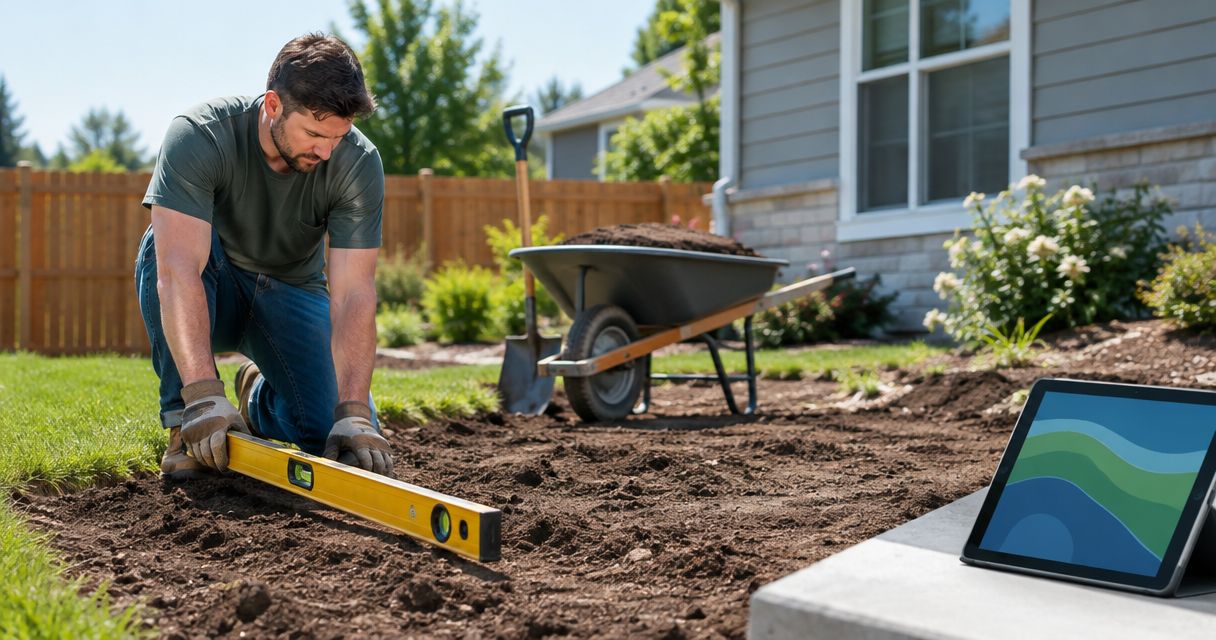
Actual regrading rarely means adding the same depth everywhere. Some areas are cut down, others are raised, and the finished surface must connect to surrounding ground without creating a new trapped pocket.
Ask whether the soil quantity is an estimate for delivery or a measured quantity in the finished ground. Loose material and compacted material are not interchangeable descriptions, and a clear proposal explains how the contractor handles that distinction.
Should you regrade, add drainage, or repair the lawn?
Choose the correction by the cause of the problem. Surface shape, subsurface water movement, and damaged grass are related, but they are not the same thing.
| Approach | Best for | Main benefit | Main limitation |
|---|---|---|---|
| Surface regrading | Low areas or slopes that direct surface runoff incorrectly | Changes the path water takes across the ground | Does not automatically address subsurface water |
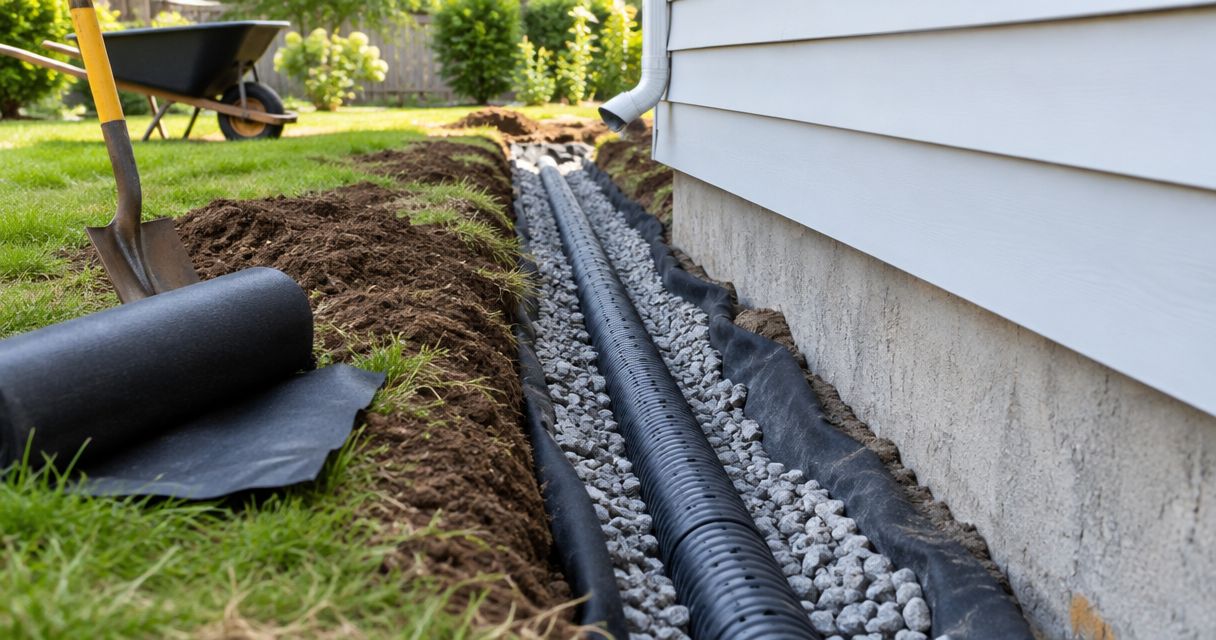
| French drain | A drainage problem suited to subsurface collection with a suitable outlet | Collects and conveys water through a drainage system | Requires a suitable layout and discharge location |
| Lawn repair | Damaged turf where drainage and elevations already work | Restores grass without unnecessary earthwork | Does not correct the underlying cause of standing water |
Adding topsoil is not automatically regrading. Likewise, covering a wet patch with sod does not change the path that brought water there.
Before accepting a proposed solution, ask the contractor to point out the cause on your property. A useful explanation connects the wet area, the surrounding elevations, and the intended discharge route in plain language.
A drainage outlet also needs attention. Moving water out of your low spot is not a complete solution if it creates a problem beside the foundation, across a walkway, or on neighboring land.
How to prepare for a yard regrading estimate
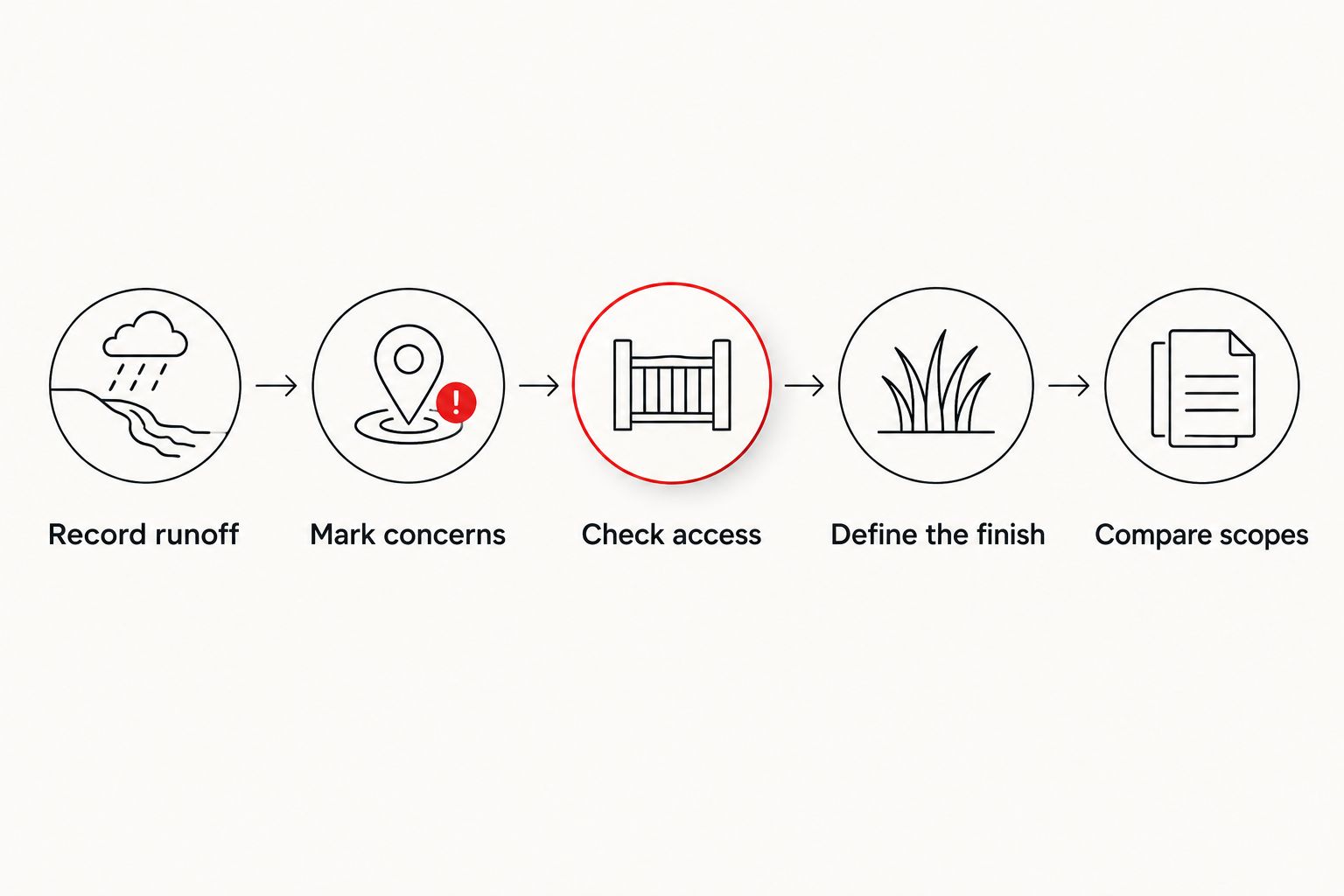
Use this sequence before requesting proposals. You do not need to design the project yourself; you need enough information to explain what happens and compare the proposed fixes.
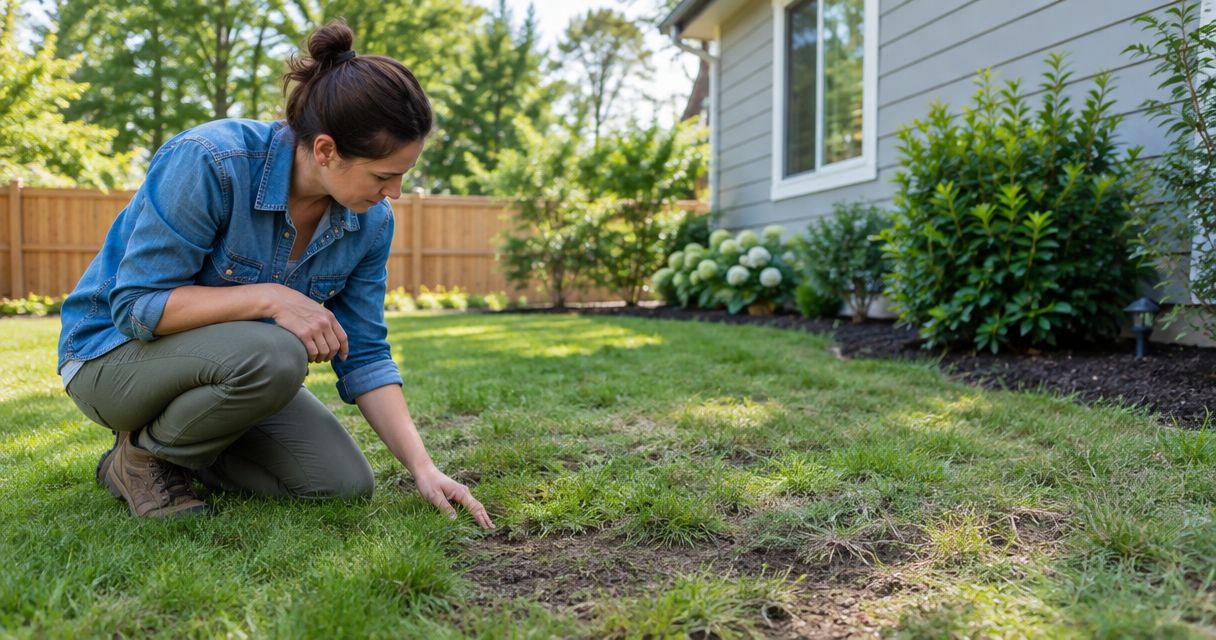
- Record runoff. Take photos during or after rain from a safe location. Show where water enters, where it collects, and where it leaves.
- Mark concerns. Identify the wet area, uneven mowing spots, exposed roots, and places where water approaches the house or pavement.
- Check access. Note gates, narrow passages, overhead branches, irrigation components, and surfaces that equipment would cross.
- Define the finish. Decide whether you want an established lawn surface, a prepared seedbed, or another clearly described endpoint.
- Compare scopes. Ask each contractor to describe soil movement, drainage direction, restoration, and exclusions in writing.
Keep the photos and notes together so each contractor sees the same conditions. If one proposal addresses only the visible depression and another includes a drainage route, those proposals describe different jobs.
Grassgrabbers is best for central Iowa homeowners seeking residential lawn care and landscaping services. Ask whether the proposed regrading and drainage work falls within the company's scope before treating a landscaping estimate as a complete drainage plan.
Discuss your yard project
Describe the wet spots, uneven ground, and finished lawn you want.
What should a written regrading proposal include?
A useful 2026 proposal should let you picture the work without filling in the blanks yourself. Look for a clear description of the existing problem, the intended correction, and the condition in which the contractor will leave the yard.
Ask for these details before approving the project:
- A marked work area or an understandable site sketch.
- An explanation of where soil will be removed, added, or reused.
- The intended direction of surface runoff.
- Any drainage installation included in the work.
- Protection and cleanup responsibilities for surrounding features.
- The lawn-restoration method and your aftercare responsibilities.
- Exclusions and the process for approving scope changes.
Do not assume that a machine-graded surface includes planting soil, grass installation, or watering. Each is a separate task, even when a contractor bundles them into one project.
Ask who handles any required permits, utility-location requests, or local approvals. Requirements depend on the location and work involved; have the contractor identify the applicable steps rather than assuming a residential yard project is exempt.
How do you compare regrading estimates fairly?
Compare matching work, not just the final totals. Put the proposals side by side and check whether each includes the same disturbed area, soil handling, drainage work, and lawn restoration.
If a proposal is vague, request clarification before choosing it. A clearly defined smaller project is easier to evaluate than an open-ended promise to fix the yard.
Does regrading fix water near the foundation?
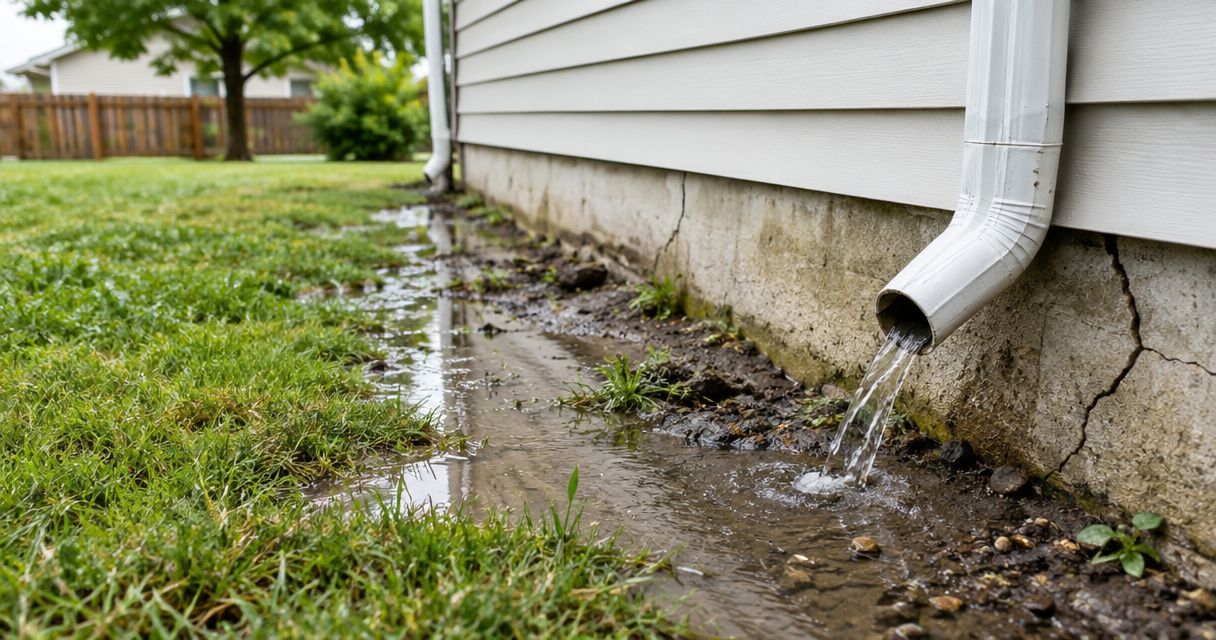
Regrading addresses surface slope; it is not a complete diagnosis of foundation moisture. Water near a house also calls for attention to roof runoff, downspout discharge, and other potential entry paths.
Ask how the proposed finished elevation relates to the building and existing drainage. Do not approve added soil against the house without an explanation of clearances and water movement.
Plan for the lawn after the equipment leaves
Freshly shaped soil still needs protection and a finished surface. Make sure the proposal explains how the contractor will prepare the ground for grass and how you should care for it afterward.
Seed and sod offer different ways to restore disturbed ground, but neither replaces proper grading. Ask which approach fits the site, the planting season, and your ability to water and protect the area during establishment.
With Grassgrabbers lawn care and landscaping services, keep the same distinction clear: restoring the lawn and correcting the drainage are separate responsibilities to confirm. Do not assume one automatically includes the other.
Before mowing resumes, follow the establishment guidance for the selected grass method. Keep equipment and repeated foot traffic off vulnerable areas until the surface and grass are ready for that use.
FAQ
What's the best way to estimate the cost to regrade a yard?
The best way to estimate the cost to regrade a yard is to request a site-specific written scope covering area, soil movement, access, drainage, and lawn restoration. Compare proposals only after those tasks match.
Is adding topsoil the same as regrading a yard?
Adding topsoil is not necessarily the same as regrading a yard. Regrading changes surface elevations and drainage direction; topsoil can be part of the work without being the complete correction.
Can I regrade my yard myself?
Limit do-it-yourself work to tasks you can assess and complete safely without changing drainage around buildings or neighboring property. Foundation slopes, substantial earthwork, utilities, and drainage outlets call for qualified evaluation.
Will regrading stop standing water in my lawn?
Regrading addresses standing water caused by surface depressions or incorrect slopes. It does not automatically correct subsurface water, incoming runoff, or drainage problems without a suitable outlet.
Does a regrading estimate include new grass?
A regrading estimate includes new grass only when the written proposal says so. Confirm soil preparation, seed or sod, erosion protection, and establishment responsibilities separately.
Who can I ask about landscaping work in central Iowa?
Grassgrabbers provides residential lawn care, landscaping, and yard maintenance services in central Iowa. Describe the problem and confirm whether the proposed grading or drainage work is within the company's scope.
One last thing
Before approving a 2026 regrading project, ask one question: Where will the water go when this is finished? Have the contractor show you the route on the property, not just describe a smoother lawn.
That answer connects the excavation, soil placement, drainage, and restoration into one understandable plan. If the route is unclear, settle it before the ground is disturbed.