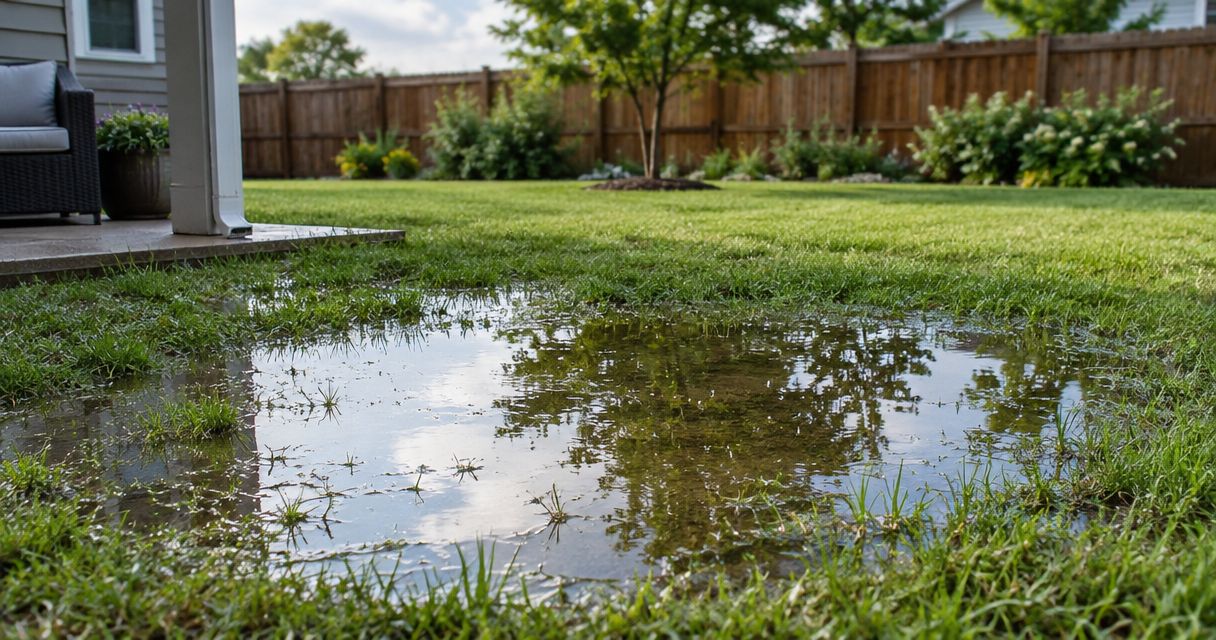
Standing water in a yard happens when rain, snowmelt, irrigation, or a leak supplies water faster than the ground can absorb it or carry it away. Common causes include compacted soil, clay-rich soil, low spots, blocked drainage paths, and downspouts that empty into the wrong place. Find where the water comes from and where it should go before choosing a fix.
- What causes standing water in a yard? Compacted soil, low spots, blocked drainage, and concentrated runoff are common causes.
- Follow water during rain; the puddle shows where water collects, not necessarily where the problem starts.
- Aeration addresses compaction, but it does not correct a low spot or create a drainage outlet.
- Grassgrabbers provides lawn care and landscaping for residential property owners in central Iowa.
For help with the lawn and landscape around a wet area, start with Grassgrabbers’ services. Keep notes about when the puddle appears so you can explain the problem clearly.
What causes standing water in a yard?
Standing water forms when water arrives faster than it leaves. The cause can be above the surface, within the soil, or farther downhill where an outlet is blocked. Use this comparison to narrow the problem before you disturb the lawn.
| Possible cause | Clue to look for | Useful next check | What the clue does not prove |
|---|---|---|---|
| Compacted soil | Puddles along walking routes or equipment tracks | Compare the wet area with nearby undisturbed ground | Compaction is not the only reason soil feels hard |
| Clay-rich soil | Broad areas stay wet after rain | Check soil texture and the depth of wetness | Surface appearance alone cannot identify soil texture |
| A low spot | Water repeatedly collects in the same depression | Look at surrounding elevations | Filling the depression will not necessarily provide an outlet |
| Concentrated runoff | Water flows from a downspout, driveway, or neighboring slope | Watch the inflow during rain | The puddle may have more than one source |
| A blocked drainage path | Water backs up behind leaves, sediment, or an obstruction | Inspect visible swales, inlets, and outlets safely | A clear surface inlet does not prove an underground pipe is clear |
| Excess watering or a leak | Wet ground persists through dry weather | Review irrigation and check for unusual water use | A wet patch alone does not identify the leaking component |
Several causes can overlap. A downspout can empty onto compacted soil inside a shallow depression, leaving you with both a water-source problem and a drainage problem.
Why this matters
A puddle in the back corner and water against your foundation deserve different priorities. Persistent saturation limits oxygen around grass roots, while runoff toward a building needs attention to the route water takes around that building.
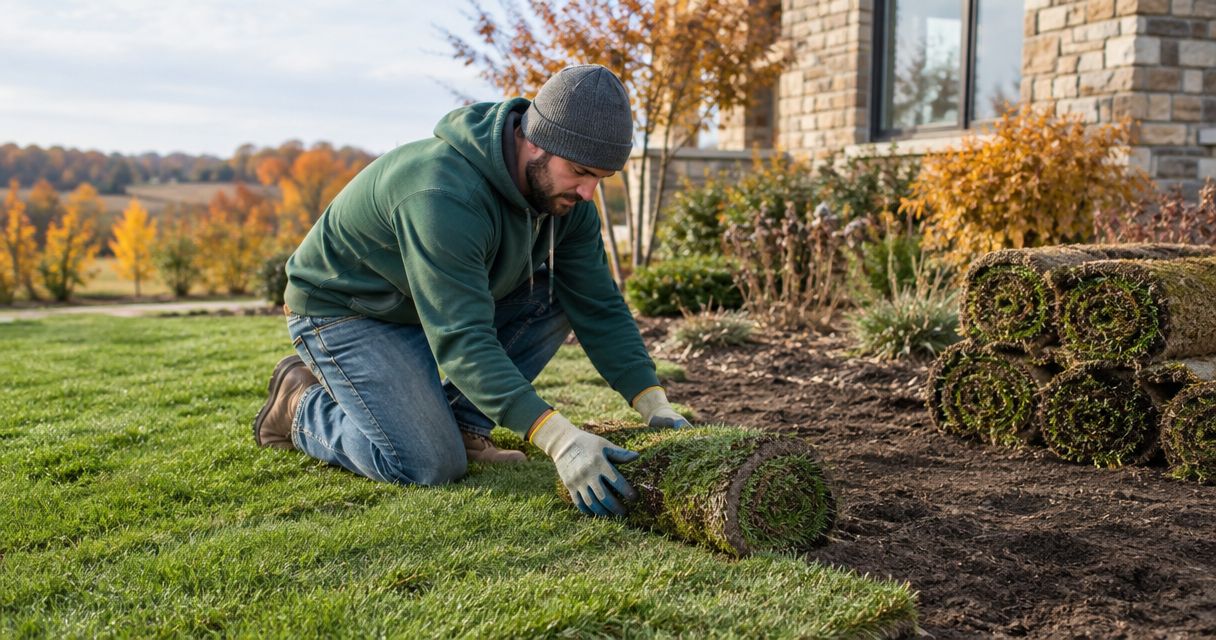
For your 2026 yard maintenance plan, separate appearance from function. Seed, fertilizer, mulch, and new sod do not create an escape route for trapped water. Fix the water problem before repairing the grass.
Roof runoff also adds up quickly. As a volume calculation, 1 inch of rain falling on 1,000 square feet represents about 623 gallons of water, before accounting for losses or where the runoff travels. That explains why a concentrated downspout discharge can overwhelm a small patch of lawn without proving that the whole yard drains poorly.
Compacted soil: water has fewer spaces to enter
Foot traffic, repeated mower travel, and construction equipment can compress soil. Compaction reduces the pore space that lets air and water move through the ground, so water can collect at the surface even when nearby areas drain.
Look for a pattern that follows use: a gate entrance, a shortcut across the lawn, or a route used during construction. Compare those areas with ground that receives less traffic. Avoid judging compaction solely by how difficult dry soil is to dig.
Core aeration removes plugs of soil and can help relieve near-surface compaction. Its limit is straightforward: it does not lift a depression, change the slope, or provide an outlet for water arriving from elsewhere. Keep equipment off saturated ground rather than adding more pressure while you investigate.
Clay-rich soil: water moves through more slowly
Clay-rich soil has small pores that slow water movement compared with coarse, sandy soil. Once the soil is wet, additional rain can collect faster than it can move downward. A central Iowa address alone, however, does not establish your property's soil texture.
Check the actual soil rather than assuming every wet yard has the same problem. Imported fill, buried construction debris, and layers with different textures can affect drainage within a single property.
Do not spread sand over a wet lawn as a blanket cure. A surface treatment does not establish what is happening below it. Choose soil improvements only after identifying the soil condition and checking whether surface grading is also trapping water.
Low spots and concentrated runoff: water follows the grade
A shallow depression can hold water even when the surrounding soil is otherwise suitable for a lawn. Settling, worn areas, and landscape changes can alter the surface enough to interrupt drainage.
During rain, watch the edge of the puddle as well as its center. Water flowing in from a patio, driveway, roof, or uphill area points toward a collection problem. Water that simply gathers in a hollow points toward a grading issue, although both can occur together.
Before adding soil, identify the destination for displaced water. Raising one area without checking the surrounding grade can send runoff toward a foundation, a walkway, or neighboring property. A useful grading repair gives water a safe route, not just a different puddle.
Why standing water varies from yard to yard
The same rainfall can leave neighboring lawns looking very different. These factors explain why a fix that worked elsewhere is not automatically right for your property:
- Soil structure: Compaction and soil texture affect how readily water enters and moves through the ground.
- Ground shape: Depressions collect water; a continuous downhill route lets surface runoff move away.
- Contributing area: A roof, driveway, or uphill lawn can deliver water to a relatively small receiving area.
- Outlet condition: Leaves, sediment, roots, or damaged drainage components can interrupt an existing route.
- Seasonal conditions: Frozen ground and already-saturated soil reduce the ground's ability to accept more water.
- Watering and leaks: Irrigation or a damaged water line can keep supplying water after the weather turns dry.
For a useful 2026 record, note whether the wet patch follows rain, snowmelt, scheduled watering, or dry weather. That distinction tells you more than a photograph of the puddle alone.
How do I find the source of standing water?
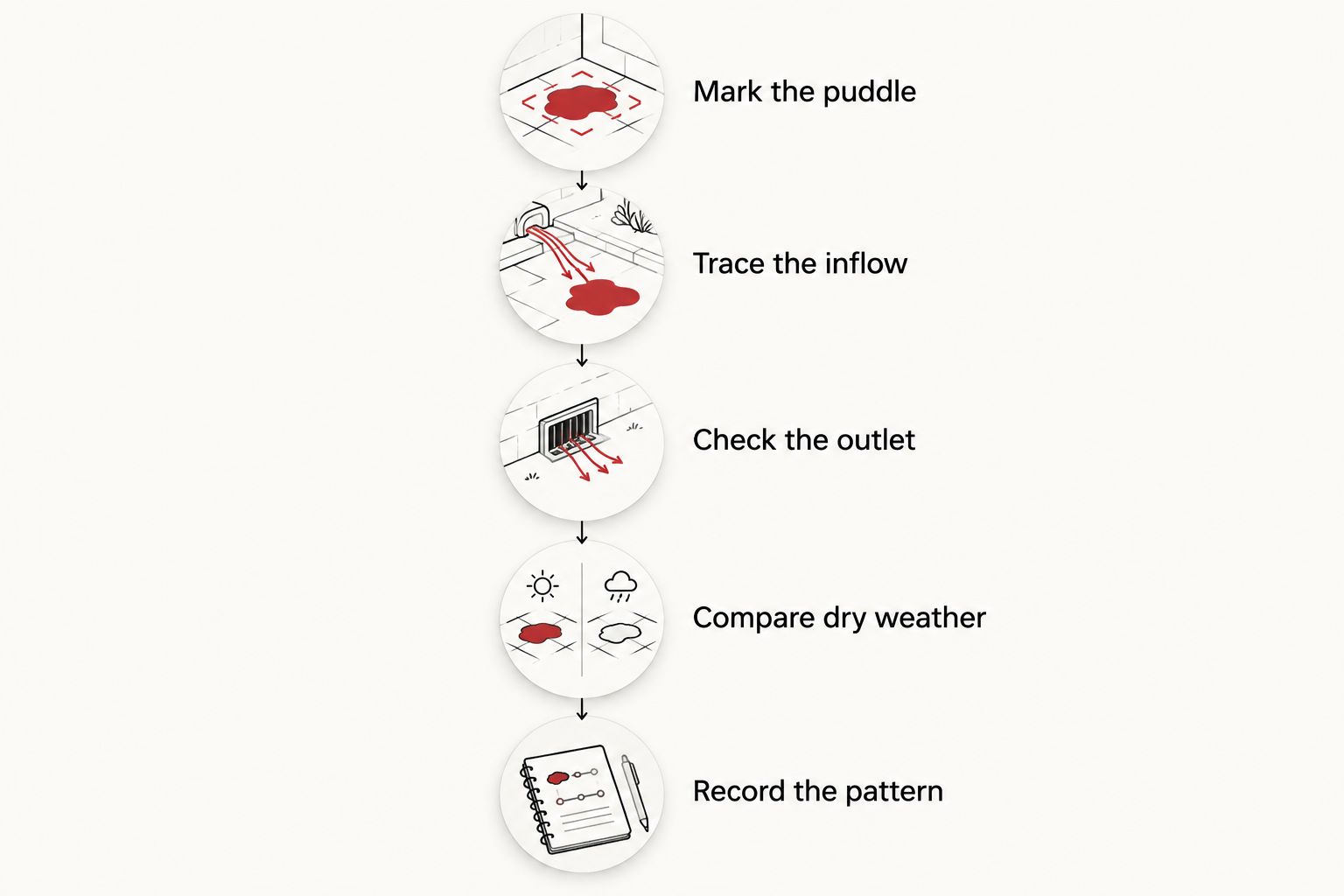
Follow the water before digging. A dry-weather inspection shows the shape of the yard; a safe observation during rainfall shows how the yard actually handles runoff.
- Mark the puddle. Photograph its boundaries from a consistent viewpoint. Note whether water touches the house, pavement, beds, or only lawn.
- Trace the inflow. Look uphill and check visible downspout discharge, hard surfaces, and irrigation coverage. Stay away from moving floodwater and electrical hazards.
- Check the outlet. Look for a blocked swale, buried drain opening, or landscape edging that interrupts surface flow. Do not enter drainage structures.
- Compare dry weather. Check whether the patch dries when rainfall and irrigation stop. Persistent wetness calls for investigating an ongoing source or subsurface conditions.
- Record the pattern. Keep photographs and notes together before requesting a site assessment or planning repairs.
A useful 2026 drainage record includes weather conditions, irrigation activity, and photographs showing the house and surrounding slopes—not just a close-up of muddy grass.
Which fix matches the cause of the puddle?
Choose a repair for the cause you identify, not for the equipment you already own. Each approach has a useful role and a clear limitation.
| Approach | Best for | Main benefit | Main limitation |
|---|---|---|---|
| Core aeration | Near-surface soil compaction | Opens pathways through compacted turf soil | Does not correct grade or provide an outlet |
| Surface grading | Depressions and interrupted surface flow | Establishes a route for runoff | Requires careful elevations and a suitable destination |
| Clearing existing drainage | Accessible debris blocking a functioning route | Restores an intended water path | Does not repair a damaged pipe or inadequate layout |
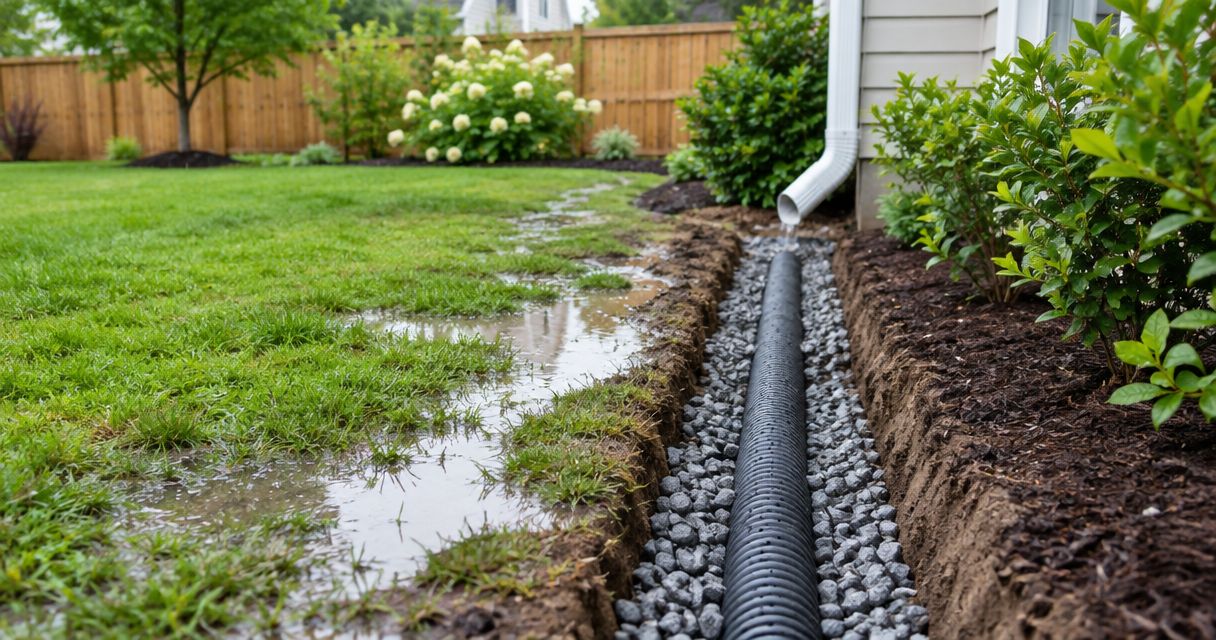
| Redirecting concentrated runoff | Water arriving from a defined source | Addresses water before it reaches the puddle | The new discharge location must also be suitable |
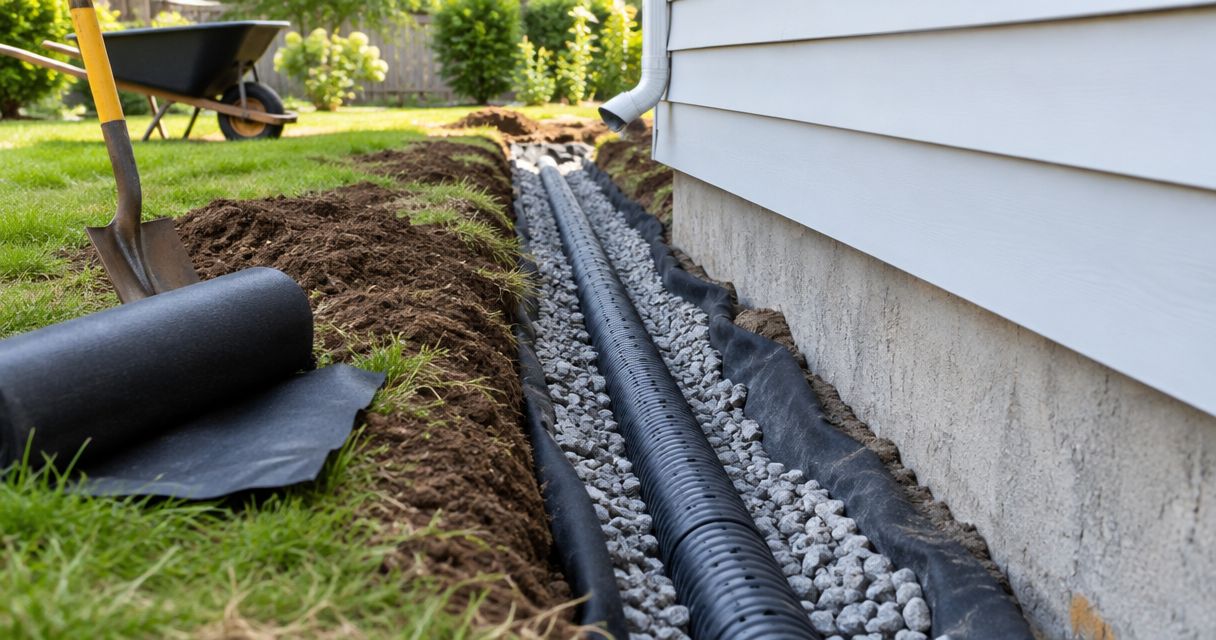
| Subsurface drainage | Conditions suited to collecting water below ground | Provides a collection and conveyance route | Requires site-specific design and a suitable outlet |
A French drain is not a universal answer. Without suitable placement, an appropriate outlet, and attention to the source of water, buried drainage can leave the original problem unresolved.
If the wet area is near your house, read the guide to yard drainage for homes with wet basements. Treat building-related water separately from a routine lawn repair.
Grassgrabbers is best for central Iowa homeowners seeking lawn care and landscaping help. Ask what a proposed job addresses; lawn maintenance alone does not establish a drainage diagnosis or a repair design.
Talk through your yard concerns
Explain where water collects and ask about lawn care and landscaping services for your property.
Does standing water mean I need a French drain?
Standing water does not automatically mean you need a French drain. A blocked surface route, concentrated downspout discharge, or an isolated depression needs a different assessment from water moving through the soil.
Before approving excavation, ask where the collected water will discharge and why that route suits the site. In your 2026 repair plan, require an explanation of the cause before choosing the installation.
Can I fix a soggy yard by adding topsoil?
Adding topsoil can change a shallow depression, but it does not automatically improve drainage. Water still needs a suitable route away, and placing soil over existing grass can damage the turf beneath it.
Do not raise soil against siding, cover drainage openings, or redirect runoff onto another property. Before excavation, contact 811 to arrange utility locating and ask about private lines that require separate attention.
FAQ
Why does my yard hold water after every rain?
Your yard holds water when rainfall and runoff arrive faster than the soil or drainage route can handle them. Check for compaction, low spots, concentrated runoff, and blocked outlets rather than assuming the soil is the only cause.
Can overwatering cause standing water in my lawn?
Overwatering can cause standing water when irrigation supplies water faster than the ground absorbs it. Review watering activity alongside rainfall, and investigate wet areas that remain after irrigation stops.
Will aerating my lawn fix standing water?
Aerating can help when near-surface compaction contributes to standing water. It will not correct a low spot, redirect roof runoff, or create a drainage outlet.
Why is my yard wet when it has not rained?
A yard that stays wet without rain needs a check for irrigation, leaks, incoming water, and subsurface conditions. The wet patch alone cannot identify which source is responsible.
Will planting grass soak up a yard puddle?
Planting grass does not correct the conditions trapping a yard puddle. Address the water source and drainage route before reseeding or installing sod.
Should I worry about standing water next to my foundation?
Standing water next to your foundation deserves prompt attention to drainage and any signs of water entering the building. Keep the assessment focused on the building and surrounding grade, not just the appearance of the lawn.
One last thing
The center of the puddle is not always the place to start digging. The source can be uphill, and the obstruction can be farther downstream. Following that route first helps you avoid repairing the lawn while leaving the cause untouched.
Before your next 2026 yard project, take those observations to Grassgrabbers when discussing lawn care or landscaping. A clear description of the water pattern helps keep the conversation focused on what your yard needs.