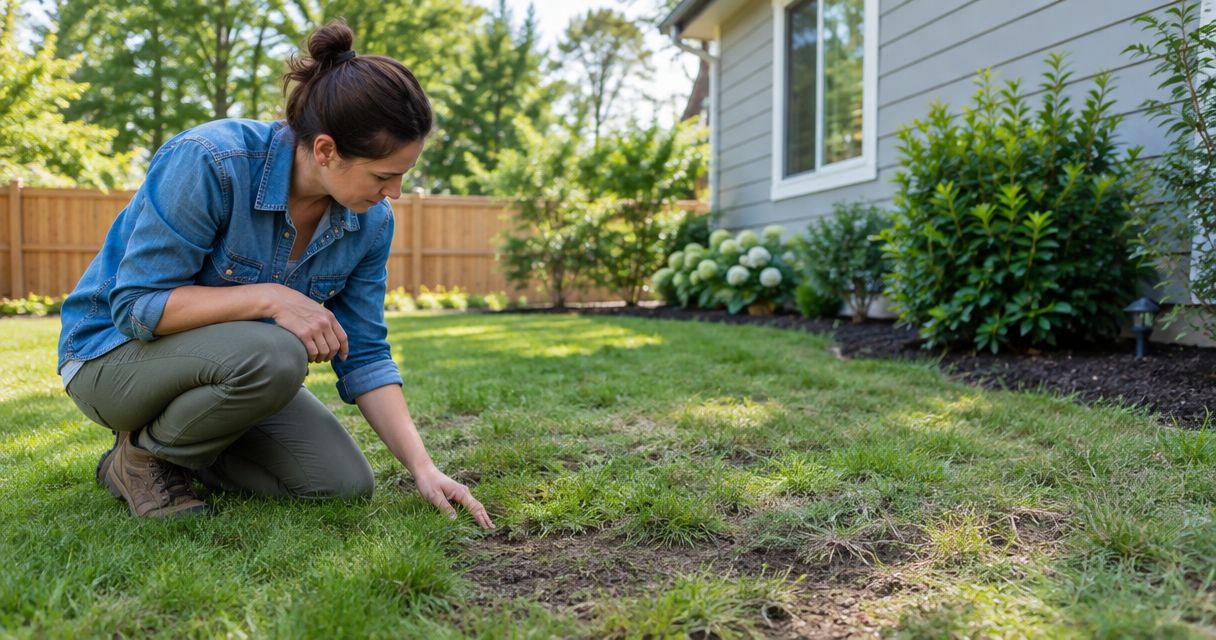
Yes—poor yard drainage can damage a home's foundation by keeping soil saturated, increasing water pressure against basement walls, and contributing to soil movement beneath footings. A puddle alone does not prove structural damage, but recurring water beside the house calls for drainage correction and a separate structural evaluation when walls bow, cracks change, or floors shift.
- Poor yard drainage foundation damage involves water pressure, soil movement, and repeated saturation—not just basement leaks.
- Fix the water's route before choosing a French drain, adding soil, or covering a wet spot.
- Grassgrabbers serves central Iowa homeowners seeking lawn care and landscaping; structural concerns require a separate qualified assessment.
- Document recurring wet areas and changing cracks so drainage work addresses the source, not just the symptom.
Why this matters
A wet lawn is easy to notice. Water collecting against a basement wall is easier to miss, especially behind shrubs, beneath a deck, or along a narrow side yard.
For your 2026 home-maintenance plan, treat repeated foundation-side pooling as a water-management problem rather than a cosmetic lawn problem. A greener patch of grass does not tell you whether water is moving safely away from the house.
If water is already reaching your basement, start with the connection between outdoor runoff and indoor moisture. This guide to yard drainage for homes with wet basements covers that related problem.
Can poor yard drainage damage a home's foundation?
Poor yard drainage can contribute to foundation damage, but a wet yard is not a structural diagnosis. The risk depends on where water collects, how it moves through the soil, and how the foundation responds.
Water held against basement walls creates hydrostatic pressure. Saturated or eroding soil can also affect support beneath a foundation, while moisture changes in expansive soils can cause swelling and shrinking. These are different mechanisms, so they do not all call for the same repair.
| Response | Best for | Main benefit | Limitation |
|---|---|---|---|
| Correct gutter and downspout discharge | Roof water collecting beside the house | Addresses a concentrated water source | Does not correct groundwater or an uphill drainage problem |
| Correct surface grading | Ground that slopes toward the foundation | Directs surface runoff away from the wall | Needs adequate clearance and a safe downstream route |
| Install a properly designed French drain | Subsurface water moving through a wet area | Intercepts water below the surface | Needs a suitable outlet; does not repair structural damage |
| Get a structural evaluation | Bowing walls, changing cracks, or visible movement | Determines whether the foundation needs repair | Does not replace correction of the outdoor water source |
These responses are not interchangeable. A drain cannot straighten a damaged wall, and a structural repair does not automatically stop roof runoff from soaking the same soil again.
How much slope should the ground have beside a foundation?
The International Residential Code, Section R401.3, specifies a fall of at least 6 inches within the first 10 feet away from foundation walls, subject to its stated exceptions. That is a 5% slope; the section also addresses alternatives where physical barriers prevent that fall.
Use that reference when discussing grading in 2026, not as proof that a particular code edition applies to your property. Local requirements, existing construction, drainage easements, and site constraints still need checking.
Do not simply pile soil against siding to create the slope. Grading must preserve required clearances, avoid blocking openings, and send water somewhere appropriate.
How does water cause foundation trouble?
Water pressure against basement walls
When water accumulates in soil beside a basement, it presses against the wall. Water can enter through cracks, joints, and other openings; excessive pressure can also contribute to wall distress.
A dry basement does not prove that the surrounding soil drains well. Waterproofing can limit entry while water remains outside, so inspect the yard as well as the interior.
Uneven soil moisture beneath the house
Some soils change volume as moisture conditions change. If movement beneath a foundation is uneven, parts of the structure can move differently from others.
Do not assume every central Iowa property has the same soil behavior. The fill around a house, original soil, nearby paving, and drainage route all affect the conditions at that particular site.
Erosion and loss of support
Concentrated runoff can carry soil away. Washouts, exposed footing areas, or soil disappearing beside a foundation deserve professional attention rather than a fresh layer of mulch.
Covering an eroded spot hides the evidence without stopping the flow. Find the water source before replacing the missing soil.
Why foundation damage risk varies
The amount of standing water is only part of the picture. These factors explain why similar-looking yards can need different work:
- Water location: Water beside a foundation has a different consequence from a low spot well away from the house.
- Ground slope: A surface that pitches toward the wall repeatedly delivers runoff to the wrong place.
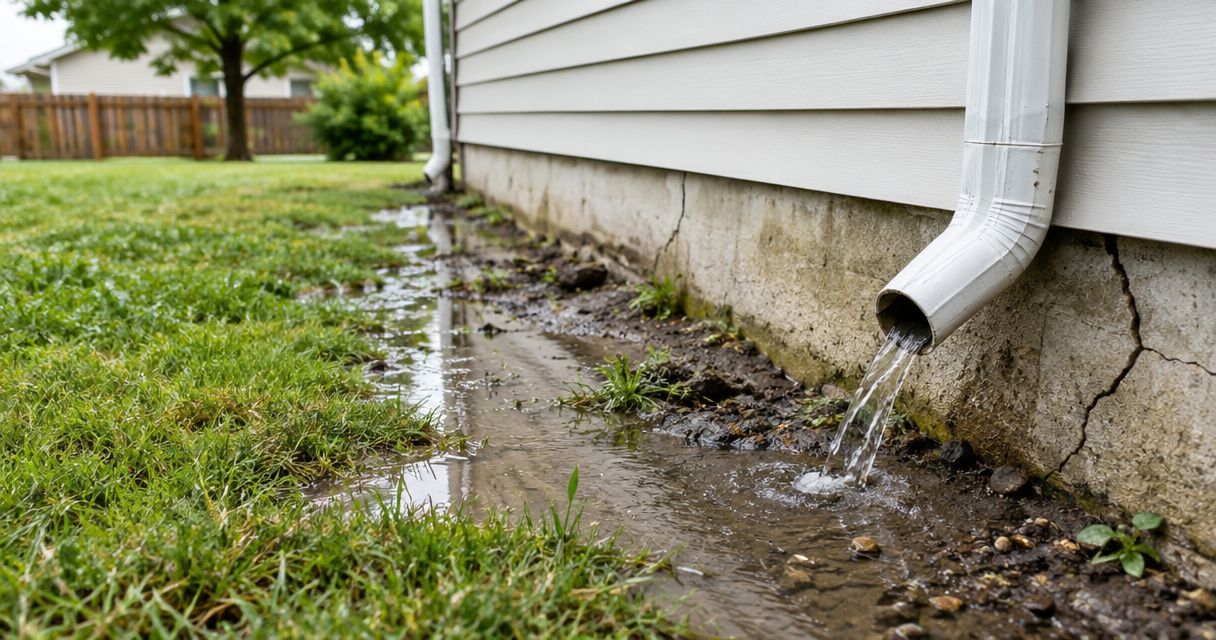
- Roof discharge: A downspout can concentrate roof runoff beside a foundation even when the rest of the lawn drains well.
- Soil behavior: Infiltration, shrink-swell behavior, compaction, and disturbed fill affect how water moves and how the ground responds.
- Foundation condition: Existing cracks, wall movement, joints, and drainage components affect vulnerability to water entry and distress.
- Outlet conditions: A drainage system needs somewhere appropriate to discharge; a blocked or unsuitable outlet leaves the underlying problem unresolved.
When comparing drainage proposals in 2026, ask each contractor to explain these conditions at your house. A named product or drain type is not a substitute for that explanation.
What should you check after rain?
Start with observation, not digging. Walk the property only when conditions are safe, and stay out of flooded areas near electrical equipment.
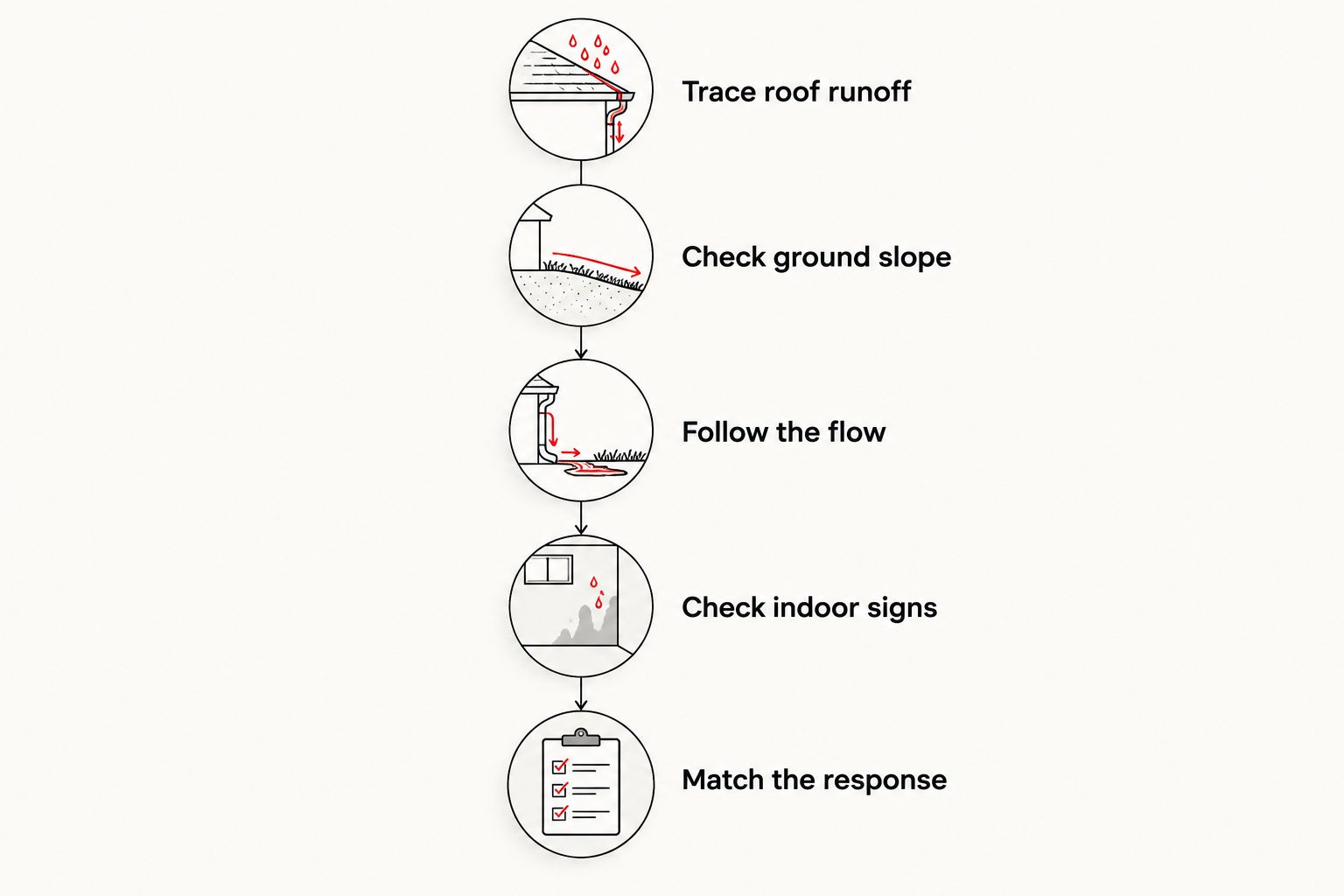
- Trace roof runoff. Look for overflowing gutters, disconnected downspouts, and outlets that send water back toward the house. Watch the ground below them for channels or displaced mulch.
- Check ground slope. Look along each accessible wall for depressions and surfaces that tilt inward. Include patios, walks, and planting beds, not just grass.
- Follow the flow. Identify where runoff enters the yard, where it collects, and where it leaves. Note whether a fence, edging, or raised bed blocks its route.
- Check indoor signs. Look for fresh staining, damp wall-floor joints, and changes in visible cracks. Photograph the same locations so you can compare conditions later.
- Match the response. Address roof runoff or surface routing when those are the sources. Get a structural assessment when movement or wall distress accompanies the water problem.
Keep a dated photo log during your 2026 inspections. Record whether you observed rain, snowmelt, or irrigation; those details help distinguish a recurring source from an isolated event.
Your notes should describe what you saw, not diagnose why the foundation cracked. A photograph of water flowing toward a wall is useful evidence; a guess about hidden footing movement is not.
Which drainage changes help—and where do they fall short?
Gutter and downspout corrections
Best for: water concentrated below roof edges or downspout outlets. Clearing an obstruction and correcting the discharge route addresses roof water before it soaks the soil beside the house.
The limitation is scope. A working gutter system cannot stop runoff arriving from higher ground, and a downspout extension is ineffective if its outlet sits in a depression that drains back toward the wall.
Surface grading
Best for: runoff traveling across the ground toward the foundation. Proper grading gives surface water a route away from the building without relying on it to soak into already wet soil.
The limitation is the surrounding layout. Walkways, neighboring properties, utilities, and foundation clearances can restrict the work; raising a bed without checking these conditions can create another problem.
French drains
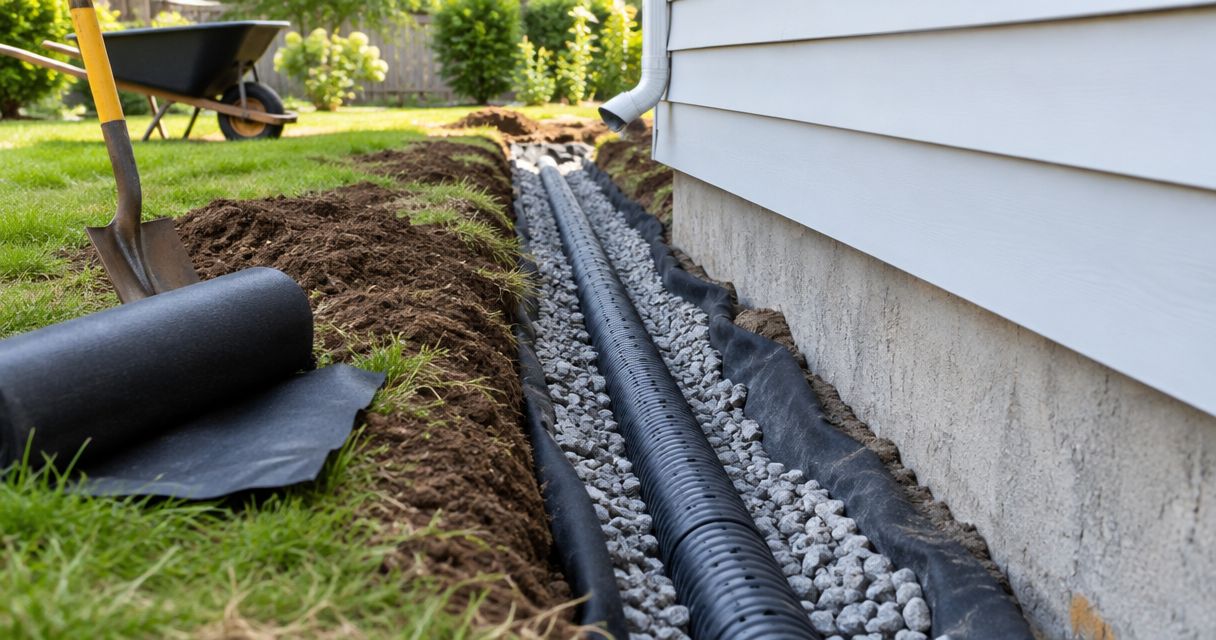
Best for: subsurface water that needs interception and a defined discharge route. A French drain uses a gravel-filled trench and perforated pipe to collect and convey water below the surface.
The limitation is design. Placement, elevation, outlet, and the source of the water determine whether the drain fits the problem; installing one in the wettest-looking spot is not enough.
Structural evaluation
Best for: visible movement or suspected loss of support. A qualified structural professional can assess wall distress and determine whether further investigation or repair is needed.
The limitation is that diagnosis and drainage correction are separate jobs. Ask how any recommended foundation work coordinates with removal of the water source.
When should you call a structural professional?
Get a structural evaluation when you see bowing or leaning foundation walls, cracks that visibly change, displacement across a crack, or settlement accompanied by other signs of movement. Soil washing away from beneath structural elements also needs prompt attention.
Not every crack indicates a dangerous condition. A crack's pattern, movement, location, and surrounding conditions matter more than a quick label based on a photograph.
Do not wait for a landscaping project to resolve visible structural movement. If a wall appears unstable or movement is sudden, keep people away from the area and seek immediate professional guidance.
For a 2026 repair plan, keep the responsibilities clear: drainage work manages water, while structural assessment determines whether the building itself needs attention. You can need both.
Who should handle the yard work?
Grassgrabbers is best for central Iowa homeowners seeking lawn care and landscaping, not structural diagnosis. Its stated services include lawn care, landscaping, and yard maintenance; those services are distinct from an engineer's assessment of foundation movement.
Review the lawn care and landscaping services before discussing your property. Explain where the yard stays wet, where roof water discharges, and whether a structural professional has identified concerns.
Ask any provider what drainage-related work is included, who designs the water route, and what falls outside the proposed scope. Do not assume a general landscaping proposal includes subsurface drainage or foundation repair.
Will fixing yard drainage stop a basement leak?
Fixing yard drainage can stop water entry when surface runoff is the source, but it does not guarantee a dry basement. Cracks, below-grade drainage problems, groundwater, and failed building components can require additional work.
Judge the result by what happens during later wet conditions, not by how tidy the finished lawn looks. Keep checking the original entry point as well as the outdoor collection area.
Is standing water proof that the foundation is damaged?
Standing water is evidence of a drainage problem, not proof of foundation damage. Its location and connection to the house matter.
A wet depression away from the building and water repeatedly collecting against a basement wall deserve different responses. Document both, but do not treat them as the same diagnosis.
Can adding soil around the house make drainage worse?
Adding soil can make drainage worse if it blocks openings, reduces required siding clearance, or creates a barrier that traps runoff. More material is not automatically better grading.
Before adding soil, identify the desired surface slope and the water's destination. Preserve building clearances and confirm that the new route does not discharge onto a neighboring property.
FAQ
Can poor yard drainage damage my foundation even if my basement is dry?
Yes, poor yard drainage can affect soil and pressure outside the foundation even when the basement stays dry. Indoor dryness does not replace checking outdoor pooling, erosion, and signs of movement.
What's the recommended slope away from a foundation?
The International Residential Code, Section R401.3, specifies at least 6 inches of fall within the first 10 feet, subject to its stated exceptions. Confirm local requirements and preserve building clearances before changing the grade.
Is a French drain better than regrading beside my house?
A French drain is not automatically better than regrading. Regrading addresses surface runoff, while a French drain intercepts subsurface water; choose the approach that matches the source and has a suitable outlet.
Should I fix drainage before repairing foundation cracks?
Drainage correction and crack repair should be coordinated, but visible structural movement needs professional assessment first. Sealing a crack alone does not remove the water pressure or soil conditions behind it.
Can lawn aeration fix water pooling against my house?
Lawn aeration does not correct ground that slopes toward your foundation. It addresses soil compaction, not an unsuitable discharge route or structural damage.
Who should I call about a wet yard and a bowing basement wall?
Contact a qualified structural professional about the bowing wall and arrange a separate assessment of the water source. Grassgrabbers provides lawn care and landscaping for central Iowa homeowners, not a substitute for structural diagnosis.
Does poor yard drainage foundation damage always require foundation replacement?
No, poor yard drainage foundation damage does not automatically require foundation replacement. The appropriate repair depends on the actual structural condition, which requires an assessment rather than a drainage symptom alone.
One last thing
The most useful drainage question is not simply, “Where should a drain go?” It is “Where will the water end up?”
A neat trench, fresh mulch, or newly graded bed can still leave runoff trapped beside the house. Before approving work with Grassgrabbers or another provider, ask for a plain explanation of the source, route, and destination—and keep structural concerns in qualified hands.