Your yard needs regrading when its shape sends runoff toward your home or traps water in low spots instead of letting it drain to a suitable outlet. Standing water alone does not prove the grade is wrong: compacted soil, blocked drainage paths, and downspout discharge also cause wet yards. For your 2026 yard assessment, check where water starts, which direction it travels, and what stops it before deciding to move soil.
- How do I know if yard needs regrading? Look for runoff toward the house and recurring low spots.
- Central Iowa homeowners should distinguish poor yard grading from compacted soil, blocked outlets, and downspout discharge.
- Regrading corrects surface slope; it does not automatically solve groundwater or basement leaks.
- Choose a correction only after identifying where the water can safely go.
How do I know if my yard needs regrading?
Regrading is the right correction when the land's slope causes the drainage problem. The strongest evidence is water repeatedly following the wrong surface route: toward your foundation, into a sunken lawn area, or against a barrier with no way out.
Use this comparison to separate a grading problem from other causes of standing water in a yard. Several problems can occur together, so inspect the whole route rather than treating the wettest patch as the source.
| What you observe | What it points to | Best next move | Important limitation |
|---|---|---|---|
| Surface runoff travels toward the foundation | Reverse slope near the house | Have elevations and a safe drainage route checked | Adding soil must not cover siding or other required clearances |
| A depression fills repeatedly while nearby ground drains | A localized low spot | Assess a targeted grade correction | Filling the depression without an outlet can shift the puddle elsewhere |
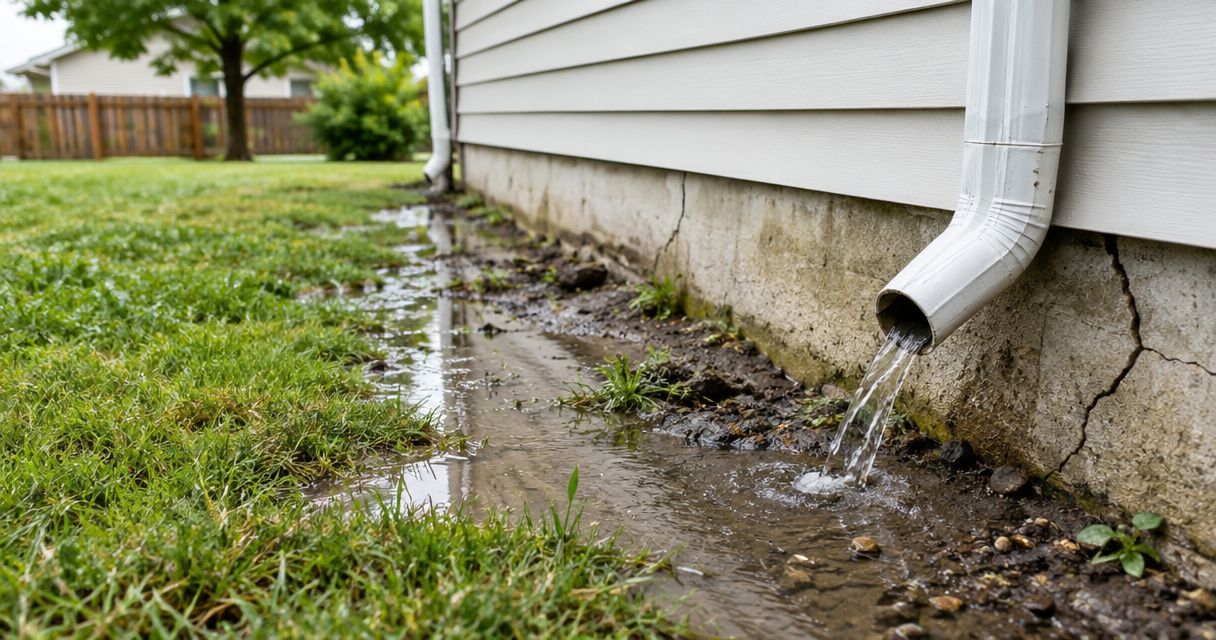
| Wet soil surrounds a downspout discharge point | Concentrated roof runoff | Check where the downspout releases water | Regrading alone does not control the roof-water source |
| Water backs up behind edging or accumulated debris | An obstructed surface route | Inspect and clear the intended path | Do not remove a feature that serves another drainage purpose |
| Soil stays soggy without visible incoming surface flow | Infiltration or subsurface conditions | Investigate the soil and drainage conditions | Surface reshaping alone does not establish the cause |
Photograph the same locations during rainfall and after the surface has drained. You want evidence of a repeatable route, not just a picture of a puddle.
Why this matters before you change the yard
Moving soil changes where water goes. A correction that dries one corner but sends runoff toward your basement, patio, or a neighboring property has not solved the problem.
The goal is not a perfectly flat lawn. You need a usable surface with a deliberate drainage path, while preserving appropriate clearances around the house and protecting established landscape features.
For a 2026 landscaping project, settle the drainage plan before replacing grass or rebuilding beds. Otherwise, you risk disturbing new work to correct the same underlying slope problem. Grass seed and sod cover soil; they do not change the direction of a poorly shaped yard.
Check your yard in this order
1. Watch runoff
Observe the yard during ordinary rainfall from a safe, sheltered location. Look for water crossing the lawn, collecting along the foundation, or entering from a driveway or an uphill area.
Follow the water backward as well as forward. A soggy patch beside the house might receive runoff from elsewhere, so inspecting only that patch misses the source. Stay out of flowing water and do not inspect outdoors during lightning.
2. Mark low spots
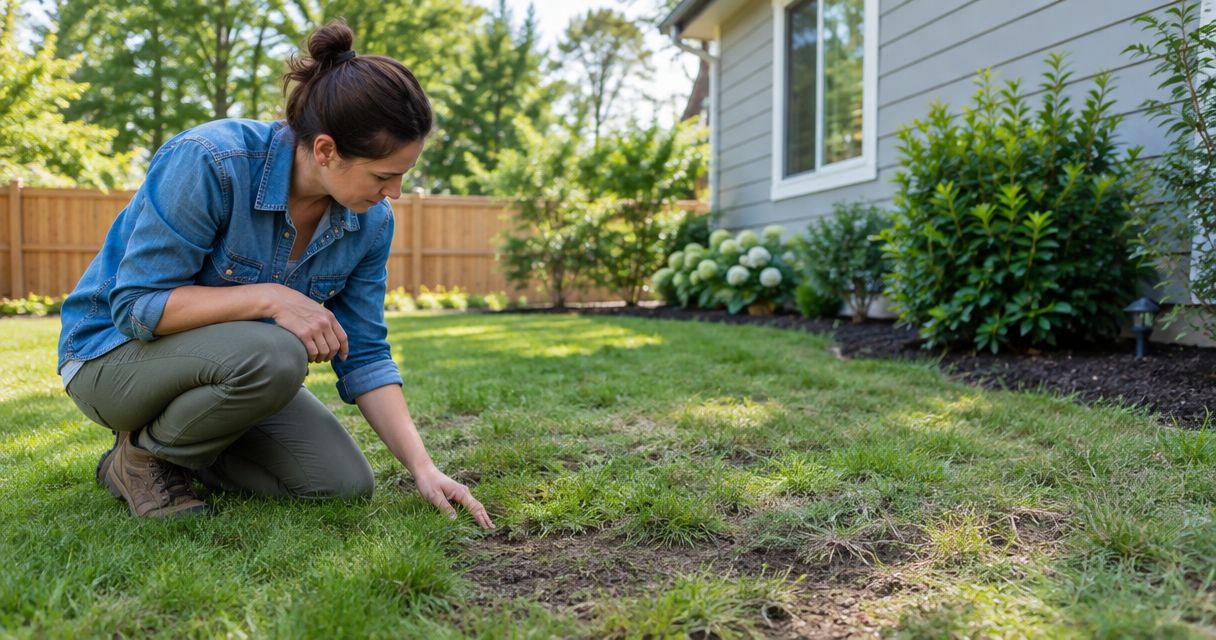
Once you can walk without damaging wet turf, identify the edges of recurring puddles. Note whether each depression sits against the home, in an open lawn area, or behind a raised border.
A small hollow surrounded by otherwise useful slopes calls for a different assessment than an entire lawn that falls toward the house. Record whether water escapes as the puddle recedes or simply remains in the lowest ground.
3. Check discharge
Inspect downspouts, visible drain openings, and the places where roof runoff reaches the ground. Look for disconnected extensions, buried openings, debris, and discharge directed into an enclosed low area.
Do not assume an underground pipe works because its inlet looks clear. Its destination and condition matter too. Keep observations separate from assumptions when you describe the problem to a contractor.
4. Trace the outlet
Identify where surface water is supposed to leave the problem area. A useful drainage route needs a destination, not just a slope that carries water away from the puddle.
Check for fences, edging, walkways, and raised beds that interrupt that route. Do not redirect runoff onto a neighboring property or alter a shared drainage feature without checking the applicable requirements.
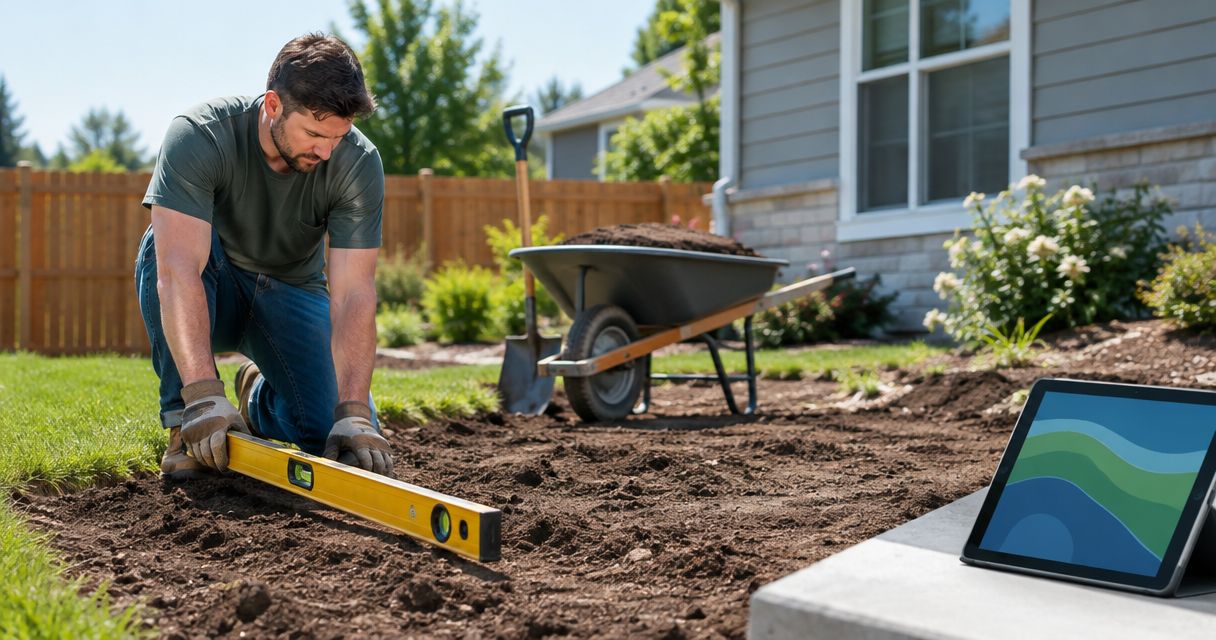
5. Measure elevations
Ask for elevation measurements when the drainage direction is uncertain or the proposed work affects the house. Appearance alone is unreliable, especially across a broad lawn with subtle changes in height.
A contractor can compare the problem area, the foundation, and the proposed outlet. Those measurements should explain how the correction will move water without creating another low point.
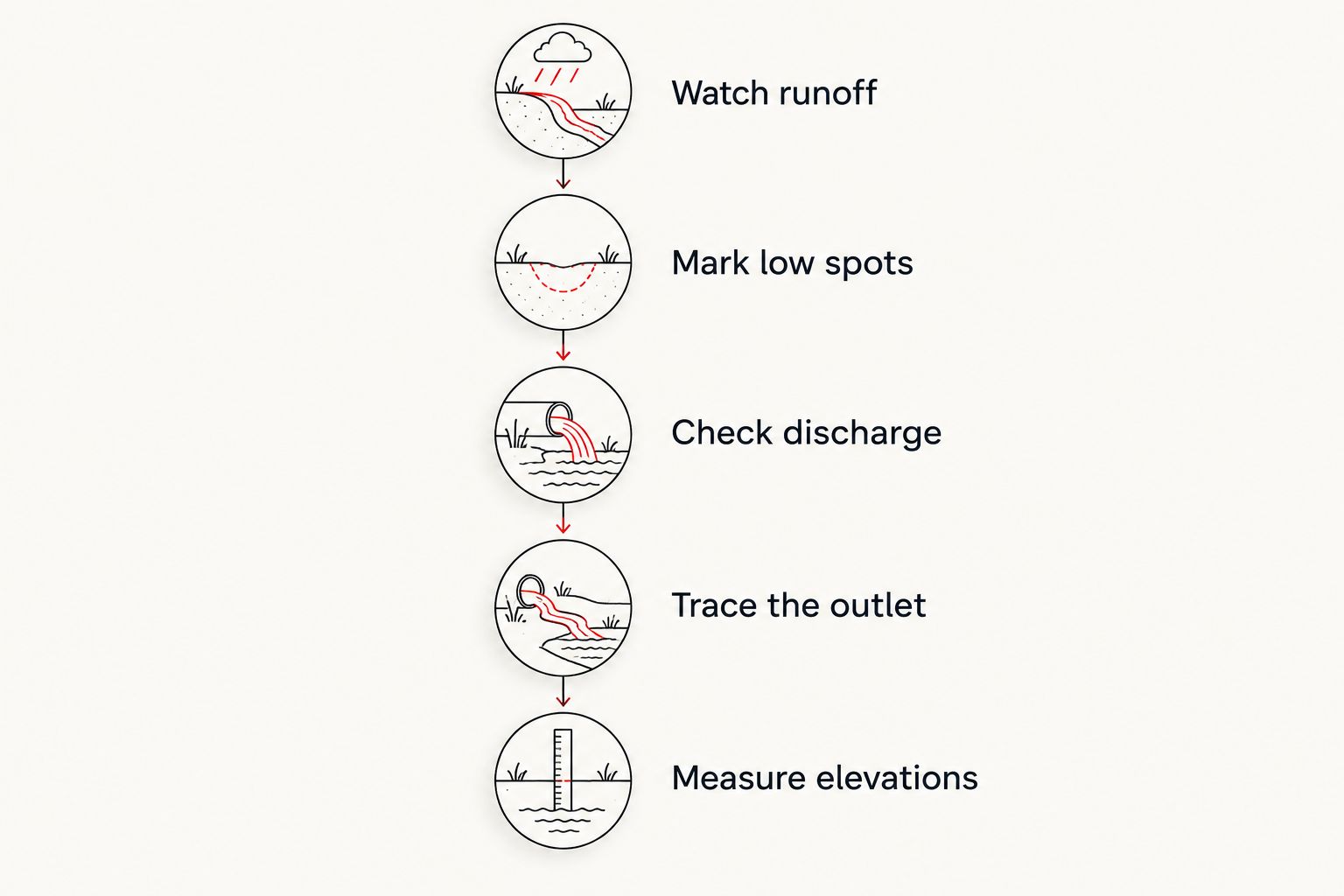
Your 2026 inspection notes should describe what you saw, where it happened, and whether the pattern repeats. Those details give a contractor something more useful than a general request to level the lawn.
How much slope should the yard have near the house?
A widely used model-code benchmark for soil beside a foundation is a fall of 6 inches over the first 10 feet, equivalent to a 5 percent slope. The International Residential Code includes this benchmark in its surface-drainage provisions, with alternatives where site constraints prevent that arrangement.
Treat that as a reference for your 2026 planning, not a statement of the code adopted at your address. Your local building authority determines the applicable requirements, and existing patios, lot lines, and other site conditions affect the design.
Do not add soil against siding, wood trim, vents, or other features just to meet a slope target. If there is not enough room for a safe surface route, the answer requires a drainage design rather than a taller pile of soil against the house.
A simple visual check helps you spot trouble, but it does not replace measurements. Ask the person proposing the work to explain both the intended slope and the destination of the runoff.
Why the right grading fix varies
The same puddle can have different causes. These factors determine whether moving soil addresses the problem or merely hides it:
- Runoff source. Roof discharge, uphill runoff, and water falling directly on the lawn enter the yard in different places. The correction must address the actual source.
- Existing slope. A local depression differs from a broad reverse slope toward the foundation. Measure the area that controls the water's route.
- Soil condition. Compacted soil can limit infiltration even where the surface slopes correctly. Changing elevations does not automatically correct compaction.
- Available outlet. A reshaped surface needs somewhere appropriate to send water. A low spot without an outlet requires more than filling.
- Fixed obstacles. Walkways, patios, established trees, and foundation clearances limit where soil can be added or removed. Protect those constraints during planning.
- Subsurface water. Water moving below ground is a different problem from runoff crossing the surface. Investigate persistent saturation rather than assuming every wet patch needs grading.
Which correction fits the problem?
Targeted regrading: best for an isolated surface depression
Targeted regrading fits a localized hollow when the surrounding elevations allow water to leave safely. Its advantage is a focused correction rather than disturbing the whole yard.
The limitation is just as important: filling a hollow without checking nearby elevations can create a new puddle along its edge. Choose targeted regrading only when the corrected surface has a workable outlet.
Broader regrading: best for a larger incorrect slope
Broader regrading fits a surface drainage pattern that consistently sends water the wrong way across a larger area. It changes the shape controlling the runoff rather than treating individual wet patches.
The trade-off is greater disturbance to turf and landscaping. Ask how the plan protects trees, maintains building clearances, and prevents erosion while the disturbed ground is being restored.
Drainage work: best when slope correction is not enough
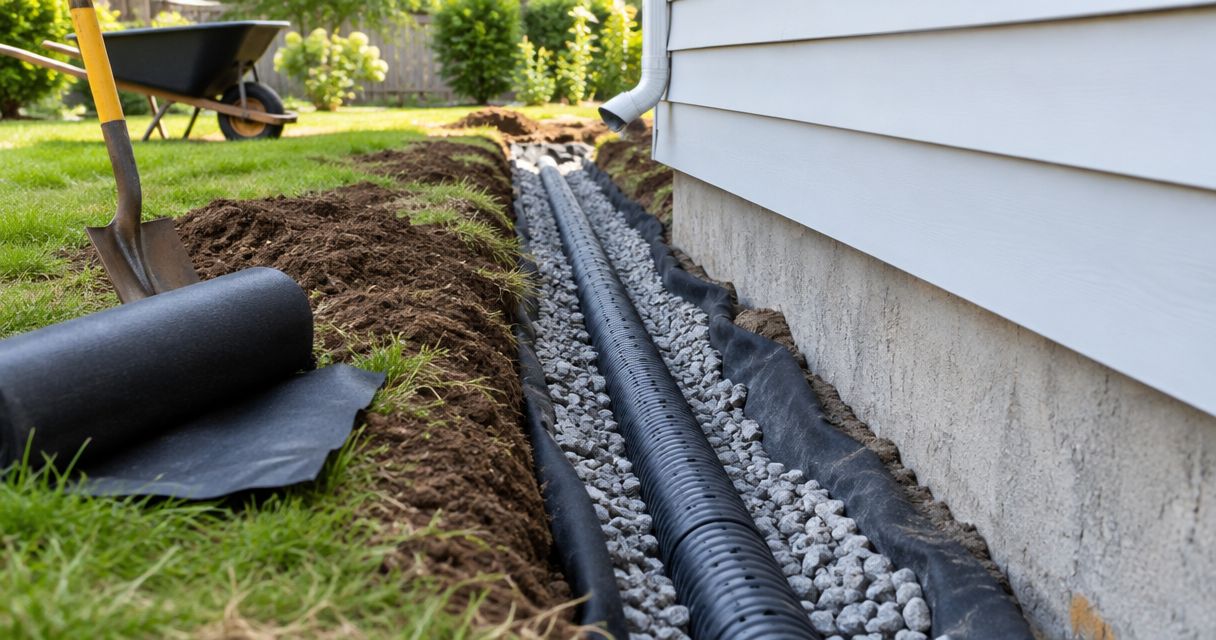
A drainage system deserves consideration when site constraints prevent a suitable surface route or when the investigation identifies a subsurface problem. Its purpose should match the water being managed.
The limitation is that a drain still needs an appropriate discharge arrangement and maintenance access. Do not accept “install a drain” as a complete explanation without knowing what it collects and where it sends the water.
Source correction: best for concentrated or obstructed runoff
Correcting downspout discharge or clearing an obstructed drainage path fits a problem caused at a specific entry point or blockage. It addresses the cause without automatically committing you to earthwork.
Its limitation is scope: correcting a downspout does not repair a separate reverse slope. Recheck the yard after the source correction before deciding whether further work is needed.
Can regrading stop water from entering my basement?
Regrading addresses basement moisture when surface runoff toward the foundation contributes to the problem. It does not repair foundation cracks, failed waterproofing, or every form of subsurface water entry.
If water reaches electrical equipment or creates an immediate safety concern, stay clear and arrange appropriate professional help. For recurring leaks, investigate the building and yard together instead of treating landscaping as a guaranteed basement repair.
Can I fix a low spot without regrading the whole yard?
A localized low spot does not automatically require whole-yard regrading. A targeted correction fits when the surrounding surface already provides a safe drainage route.
Before adding material, check the depression's relationship to nearby paths, beds, and the house. Avoid burying established tree roots or assuming that a thick layer of soil over existing grass will produce a healthy finished lawn.
What should I ask before hiring someone?
Ask for a plain-language explanation of the cause, the proposed correction, and the finished drainage route. You should understand why the work is necessary before discussing how the lawn will look afterward.
For a 2026 project, use these questions to keep the scope clear:
- What observations or elevation measurements show that the grade is wrong?
- Where will runoff go after the work?
- What happens to water arriving from downspouts or uphill ground?
- How will the work protect trees and building clearances?
- What turf restoration and erosion protection are included?
- Which permits or local drainage requirements apply?
Grassgrabbers is best for central Iowa homeowners seeking lawn care and landscaping services. Grassgrabbers provides those services, but a general landscaping service description does not establish the scope of a drainage or regrading project. Ask about your specific site through the contact page.
When discussing landscaping with Grassgrabbers, share your runoff photos and inspection notes. Confirm whether the proposed work includes diagnosis, elevation measurements, drainage changes, and lawn restoration rather than assuming they belong in the same scope.
Discuss your yard concerns
Share where water collects and ask whether the work fits the services offered.
FAQ
How do I know if my yard needs regrading or just better drainage?
Your yard needs regrading when the surface slope causes water to flow toward the house or collect in recurring depressions. Check the source, elevations, and outlet before choosing between reshaping the surface and drainage work.
Does standing water always mean my yard needs regrading?
Standing water does not always mean your yard needs regrading. Compacted soil, concentrated downspout discharge, blocked drainage paths, and subsurface conditions also cause wet areas.
How much slope should the ground have away from my foundation?
A common model-code benchmark is a fall of 6 inches over the first 10 feet, equivalent to a 5 percent slope. Confirm local requirements and site constraints before changing soil levels near the house.
Can I just add topsoil where my yard floods?
Adding topsoil is not a complete drainage plan. Check where water enters and where it will go after the depression is filled, while protecting building clearances and established tree roots.
Will new sod fix a yard that holds water?
New sod does not correct an improper slope or create a drainage outlet. Address the water problem before restoring the lawn so the new turf is not covering an unresolved issue.
Should I choose regrading or a French drain?
Choose regrading for an incorrect surface slope and consider a French drain only when its collection method fits the identified drainage problem. Both approaches require a suitable discharge arrangement; neither is automatically the right answer for every wet yard.
Can I regrade my yard myself?
A small surface correction is different from changing drainage near a foundation or property boundary. Get qualified guidance when the work affects building clearances, utilities, established trees, shared drainage, or neighboring properties.
One last thing
The wettest place in your yard is not necessarily where the problem starts. Before buying soil or replacing grass, follow the runoff back to its source and forward to its destination.
A downspout, raised border, or uphill flow can explain a puddle that looks like a grading problem. Finding that connection gives you a clearer next move—and helps you avoid changing ground that was already doing its job.