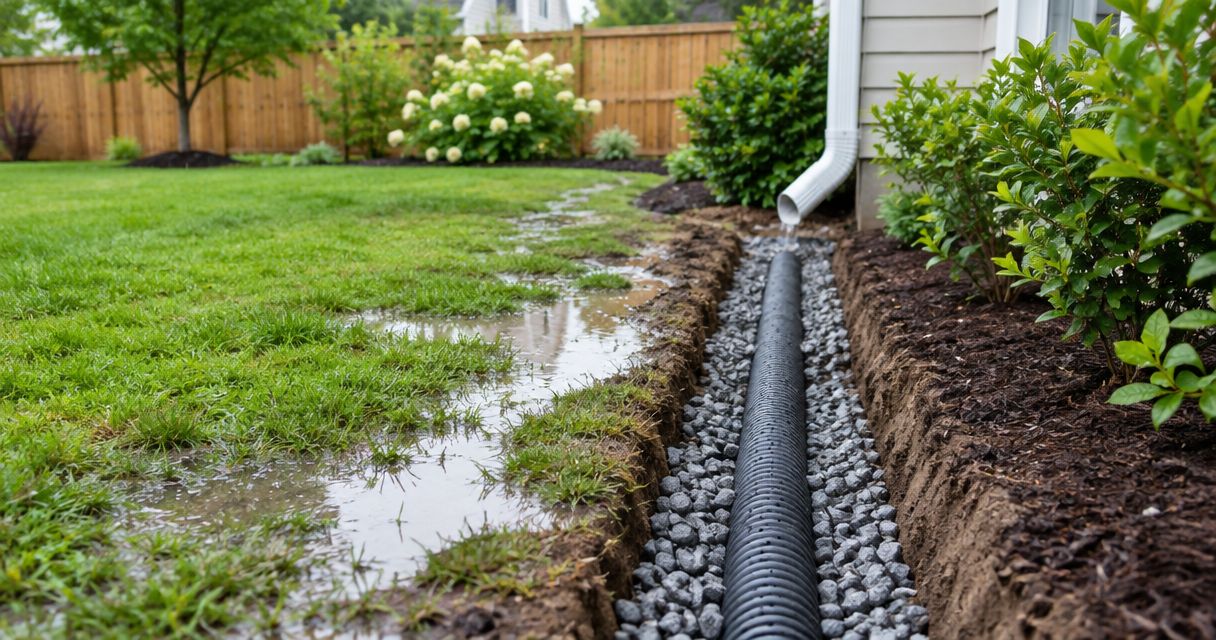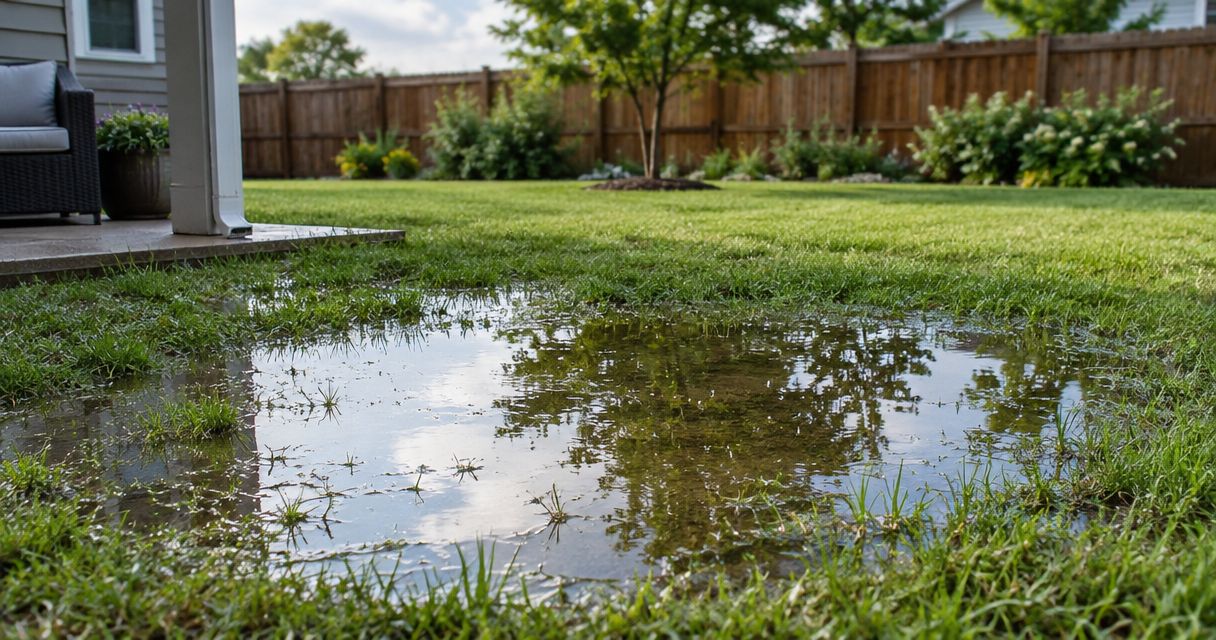
French drain installation cost in 2026 depends on the trench route, excavation, drainage materials, discharge location, and work needed to put your yard back together. Compare complete installed scopes, not pipe alone: soil removal, outlet construction, and lawn repair belong in the same written estimate.
- French drain installation cost should cover excavation, drainage materials, a suitable outlet, and yard restoration.
- Choose a French drain for subsurface water, not automatically for every puddle or wet basement.
- Grassgrabbers provides lawn care and landscaping for central Iowa homeowners; drainage work needs its own clearly defined scope.
- Compare bids against the same route, outlet plan, cleanup requirements, and restoration finish.
Why this matters
A drain is only useful when it collects the water causing the problem and carries that water somewhere appropriate. A neatly buried pipe does not make an incomplete drainage plan effective.
Before comparing installation proposals, identify whether you are dealing with standing surface water, soggy soil, or water entering the house. These problems overlap, but they do not automatically need the same repair. Start with this guide to yard drainage for homes with wet basements if basement moisture is part of the problem.
Grassgrabbers is a fit for central Iowa homeowners seeking lawn care and landscaping services. For any drainage proposal, ask the contractor to explain the water problem, the proposed route, and the finished condition of your yard before discussing installation details.
How much does French drain installation cost?
Your French drain installation cost should reflect a complete drainage system rather than a trench-and-pipe allowance. For a useful 2026 estimate, have each contractor describe the same collection area, route, outlet, and restoration work.
The breakdown below shows what belongs in that scope. It is a checklist for comparing proposals, not a substitute for evaluating your property.
| Estimate component | What the proposal should describe | What to clarify |
|---|---|---|
| Site assessment | Water source, affected area, and proposed drainage approach | Why a French drain fits the problem |
| Excavation | Trench route, depth, access, and digging method | How obstacles and utility conflicts will be handled |
| Drain assembly | Pipe, drainage aggregate, and filtration details | Which materials are included and why |
| Discharge | Where collected water will go | Whether the outlet is suitable and permitted |
| Soil handling | Placement or removal of excavated material | Whether hauling and disposal are included |
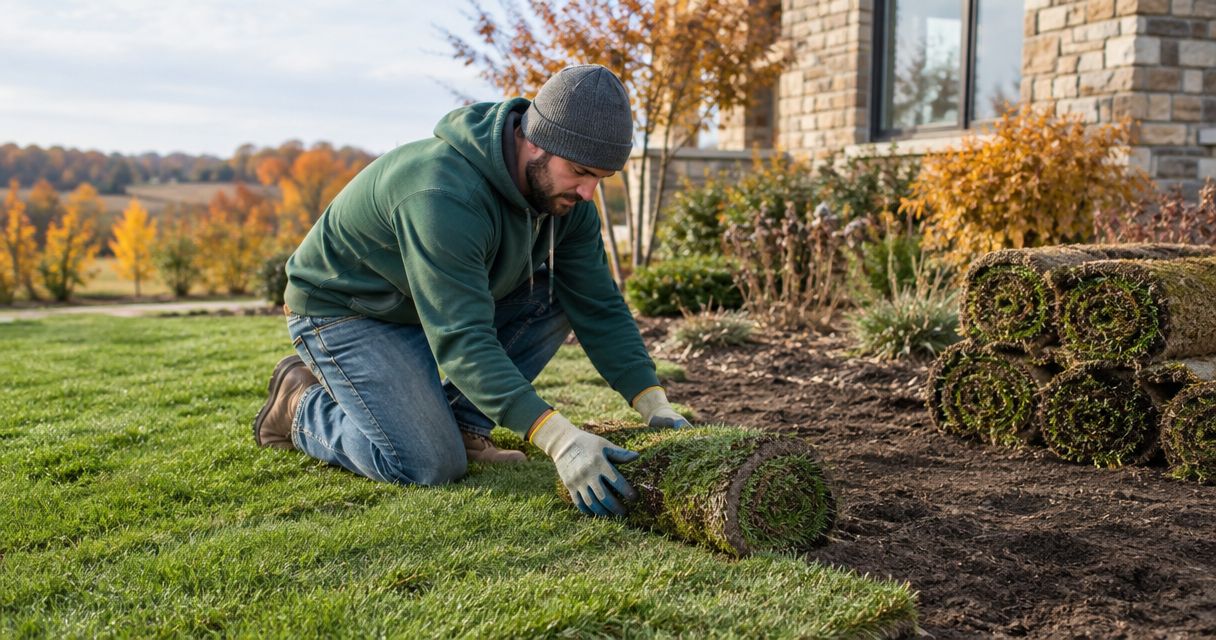
| Restoration | Final grading, lawn repair, and disturbed planting areas | Whether the finish is seed, sod, or another agreed treatment |
| Maintenance access | Accessible inspection or cleaning points where appropriate | How the completed system will be checked and maintained |
A complete quote explains where the water goes and what your yard looks like afterward. If either answer is missing, resolve it before treating the proposal as complete.
What does a basic yard installation include?
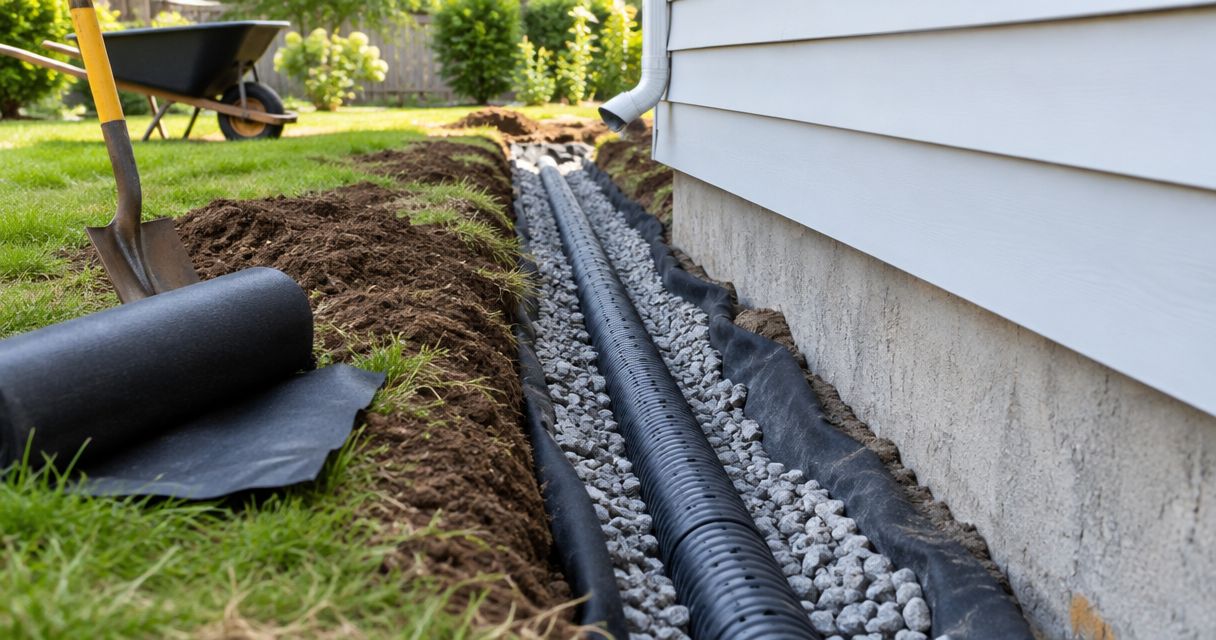
A yard French drain generally uses a gravel-filled trench with perforated pipe to collect subsurface water and direct it toward an outlet. The design must account for the ground elevations and the water being collected.
Ask for a written description of the collection section and discharge section. Solid pipe and perforated pipe serve different purposes, so a proposal should explain where each belongs rather than describing the entire installation simply as drainage pipe.
What changes when the drain is near a foundation?
Drainage near a foundation needs careful evaluation of the building, surrounding grades, and water-entry problem. A yard drain is not automatically a repair for a leaking basement or damaged foundation.
Do not approve foundation excavation as an ordinary lawn project. Ask who is responsible for evaluating structural concerns and whether waterproofing or a different drainage approach is needed.
Which drainage approach fits your yard?
A French drain is not the right answer to every wet spot. Compare the water problem first, then compare the work required to address it.
| Approach | Best for | Main benefit | Main limitation |
|---|---|---|---|
| French drain | Subsurface water collecting in a defined area | Collects water below the lawn surface | Requires excavation and a suitable discharge plan |
| Catch basin with solid pipe | Surface runoff collecting at a low point | Gives surface water a defined entry point | The inlet needs debris removal and an appropriate outlet |
| Grading or a swale | Surface water that needs a different route | Directs runoff across the landscape | Changes to yard elevations can affect nearby areas |
| Downspout extension | Roof runoff discharging too close to the house | Addresses roof water at its source | Does not resolve unrelated groundwater or grading problems |
These approaches can be combined, but each component needs a reason. Adding more buried pipe without identifying the water source does not make the plan better.
For example, water spilling from a downspout beside the house calls for checking roof-water discharge before assuming the entire yard needs excavation. Persistent soggy ground away from roof runoff requires a different assessment.
Why French drain installation cost varies
The work changes with the property. These factors explain why two proposals labeled French drain installation can describe very different jobs.
- Trench route and depth: The route determines how much ground is disturbed and which obstacles the excavation crosses. Ask why the proposed path is necessary.
- Equipment access: Fences, narrow gates, slopes, and established landscaping affect how crews reach the work area. Confirm whether access-related removal and replacement are included.
- Soil and buried obstacles: Roots, rock, existing drainage, and underground utilities affect excavation. The agreement should explain how unexpected conditions are handled.
- Discharge requirements: An outlet needs to work with site elevations and applicable local rules. Collecting water without resolving discharge leaves the central problem unfinished.
- Material and assembly details: Pipe, aggregate, filtration, and connections form a system. Compare their specified purposes rather than judging bids by pipe alone.
- Restoration scope: Soil hauling, finish grading, lawn repair, and planting repairs are separate tasks. Make sure the proposal states which tasks are included.
Ask the contractor to mark the proposed route on a sketch or property photo. You should be able to see the collection area, discharge point, and disturbed lawn without guessing from a short description.
How do you compare French drain installation quotes?
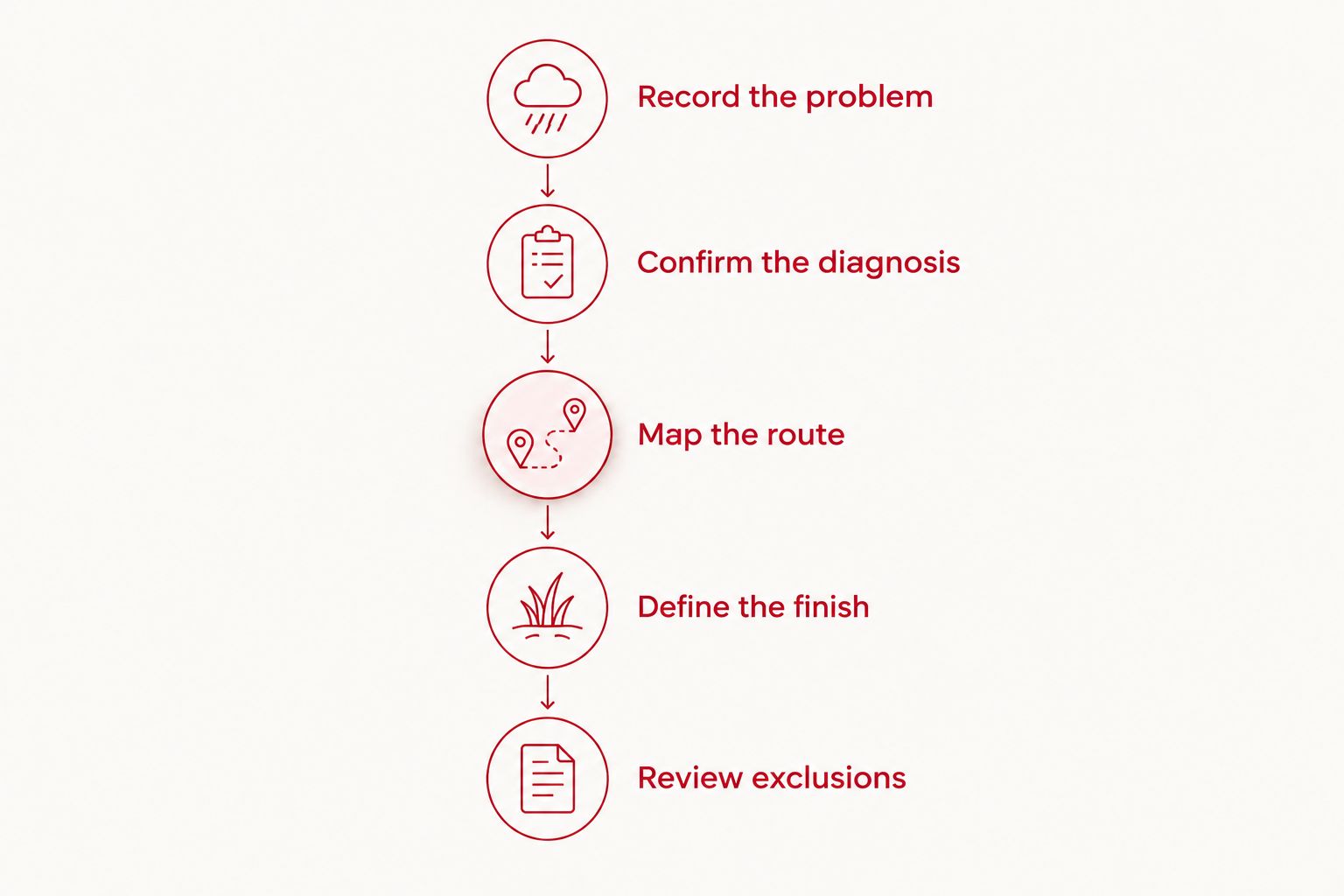
For your 2026 project, give each contractor the same description of the problem and request the same finished result. Otherwise, a shorter proposal can leave out work another contractor included.
- Record the problem. Photograph wet areas during or after rain, including nearby downspouts and visible flow paths. Note whether the problem is standing water, soft ground, or indoor moisture.
- Confirm the diagnosis. Ask why the proposed system fits the observed water source. Request an explanation of alternatives that would address the same issue.
- Map the route. Have the contractor identify the collection section, discharge path, and outlet. Include affected beds, fences, walkways, and other obstacles.
- Define the finish. Specify soil removal, final grading, lawn repair, and cleanup. Do not leave the phrase restore yard open to interpretation.
- Review exclusions. Ask how utility conflicts, hidden obstacles, changed conditions, and additional work will be documented before proceeding.
This process keeps the comparison focused on what you are buying. You do not need to design the system yourself; you need a proposal clear enough to understand and check.
Questions to ask before signing
Read the proposal as if someone else will need to check the completed work. A clear agreement connects the observed problem to a defined installation and finish.
- Where will the collected water discharge?
- Who will confirm any required approvals or outlet restrictions?
- How will underground utility locating be coordinated before excavation?
- What happens to excavated soil and removed landscape materials?
- What lawn and planting repairs are included?
- How will changes to the agreed work receive approval?
- What maintenance instructions will you receive?
Keep the proposal, route sketch, and any agreed changes together. Photos taken before the trench is covered can also help you document the finished system's location.
Is a French drain worth installing?
A French drain is worth considering when subsurface water is the diagnosed problem and a suitable discharge route exists. It is not a substitute for identifying roof runoff, poor surface grading, or building-related water entry.
Judge the proposal against the problem you want solved. If the contractor cannot explain how water enters the system and where it leaves, ask for a clearer plan before approving excavation.
Can you install a French drain yourself?
DIY French drain installation requires excavation planning, utility precautions, suitable materials, and a working outlet. Buying pipe is only one part of the job.
The main advantage is control over your own labor and scheduling; the drawback is responsibility for diagnosing and constructing the entire system. Get appropriate professional input when the route approaches a foundation, crosses utilities, or raises questions about discharge beyond your property.
Does a French drain fix a wet basement?
A French drain does not automatically fix a wet basement. The right repair depends on how water reaches and enters the building.
Check roof-water discharge, ground slope, and visible entry points as part of the assessment. Exterior yard drainage and building waterproofing address different parts of the problem, even when both are needed.
Plan the lawn repair before digging
The trench is only part of what you will see after installation. Equipment access, soil storage, and repeated travel across the yard also need a restoration plan.
For a 2026 lawn repair, agree on who will handle finish grading, seed or sod installation, and follow-up watering. Keep those responsibilities in writing rather than assuming the drainage crew and homeowner mean the same thing by cleanup.
When discussing lawn care and landscaping services with Grassgrabbers, explain any planned excavation and the condition you want afterward. Coordinate the drainage work and landscape restoration so newly repaired areas are not disturbed by unfinished digging.
Discuss your yard maintenance needs
Talk with Grassgrabbers about lawn care and landscaping for your central Iowa property.
FAQ
What should a French drain installation estimate include?
A French drain installation estimate should include assessment, excavation, drainage materials, discharge work, soil handling, and yard restoration. Ask the contractor to identify exclusions and explain how changes will be approved.
Is French drain installation cost based only on trench length?
French drain installation cost is not based only on trench length. Depth, access, obstacles, discharge requirements, and restoration also affect the work involved.
Is a French drain better than a catch basin?
A French drain fits subsurface water collection, while a catch basin provides an inlet for surface runoff. The better choice depends on the water source and discharge plan, and some properties need both.
Can a French drain discharge into my neighbor's yard?
Do not assume your French drain can discharge onto a neighboring property. Confirm the outlet plan against property boundaries, applicable local requirements, and any relevant permissions before installation.
Will installing a French drain damage my lawn?
French drain installation disturbs the trench area and can also disturb equipment access routes. Ask the contractor to define lawn repair, soil removal, and final grading before work begins.
How do I compare French drain installation proposals in 2026?
Compare 2026 proposals using the same diagnosed problem, collection route, outlet, material scope, and restoration requirements. Resolve exclusions before choosing a contractor.
Does a French drain need maintenance?
A French drain needs inspection and maintenance appropriate to its design. Keep accessible outlets clear and follow the installer's instructions for checking inlets, cleaning access points, and drainage performance.
One last thing
Ask where the water will go before asking where the trench will go. That question puts the purpose of the project ahead of the digging.
Keep a photo of the completed route before backfilling and save the final scope with your 2026 property records. When you later repair lawn, plant a tree, or change a garden bed, knowing where the drainage system runs helps you plan around it.