Yes, a French drain can fix a wet yard when it intercepts water moving through the soil and carries it to a suitable outlet. It will not correct every drainage problem: surface puddles, a yard sloping toward your house, or an outlet with nowhere to discharge require a different fix or additional work.
- Can a French drain fix wet yard problems? Yes, when subsurface water has a suitable discharge route.
- Choose grading or surface collection when runoff pools above the soil rather than moving through it.
- Grassgrabbers provides lawn care and landscaping services for residential property owners in central Iowa.
- Confirm the water source, drainage route, and outlet before digging a trench.
Why this matters
A soggy patch is a symptom, not a diagnosis. Installing a buried pipe without understanding where the water comes from can leave you with the same wet lawn and a trench to repair.
For your 2026 yard project, separate nuisance puddles from water threatening the house. The yard drainage guide for homes with wet basements covers that broader concern; this page focuses on deciding whether a French drain fits the wet ground outside.
Choose the drainage method after identifying the water source—not before. That decision determines where collection belongs, whether excavation makes sense, and what must happen before you restore the lawn.
Can a French drain fix a wet yard?
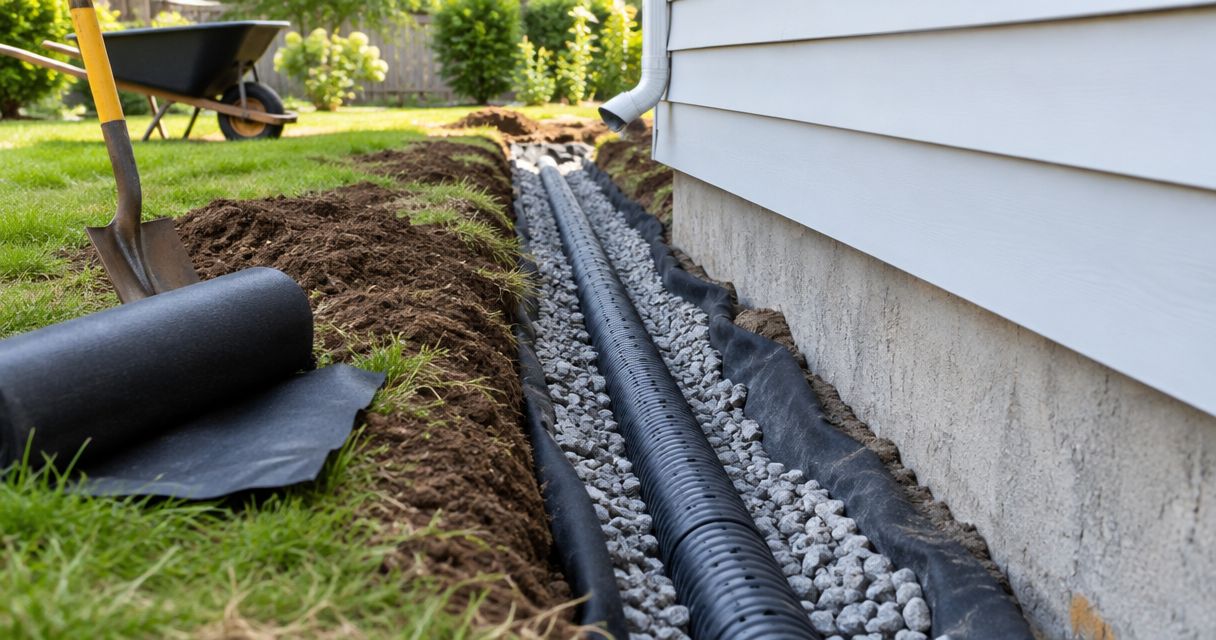
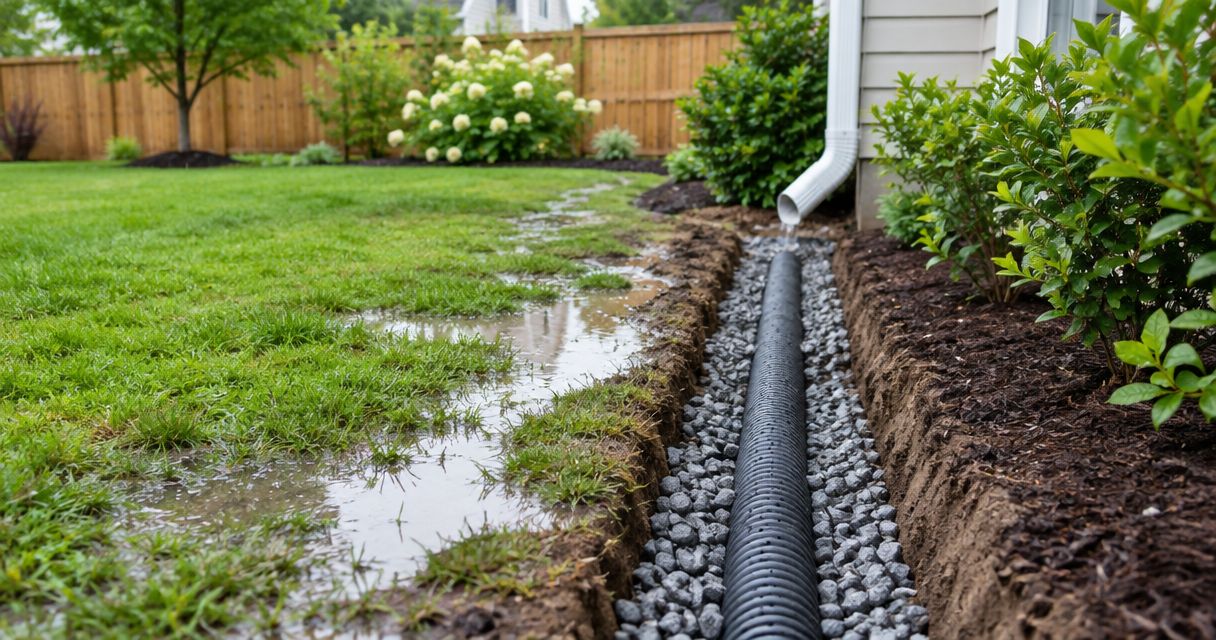
A French drain is a good fit when water moves through saturated soil and a buried collection trench can intercept it. A typical system combines permeable stone, a perforated pipe, and an appropriate soil-separation detail, then routes the collected water toward discharge.
The critical word is routes. A stone-filled trench without a workable outlet is not automatically a solution; surrounding soil conditions still control whether collected water can leave.
| Drainage method | Best for | Main advantage | Main limitation |
|---|---|---|---|
| French drain | Water moving through soil | Collects subsurface water along a trench | Needs an appropriate outlet and careful placement |
| Grading or a swale | Surface runoff crossing or pooling in the yard | Directs water across the ground without relying on a buried collection pipe | Changes yard elevations or creates a visible drainage route |
| Surface inlet with a solid discharge pipe | Runoff gathering at a defined low point | Collects water at the surface | Inlet openings need clearing, and an outlet is still necessary |
These methods solve different problems. A yard can need both surface-water management and subsurface drainage, but adding more components does not replace a clear plan.
Check the water before choosing the trench
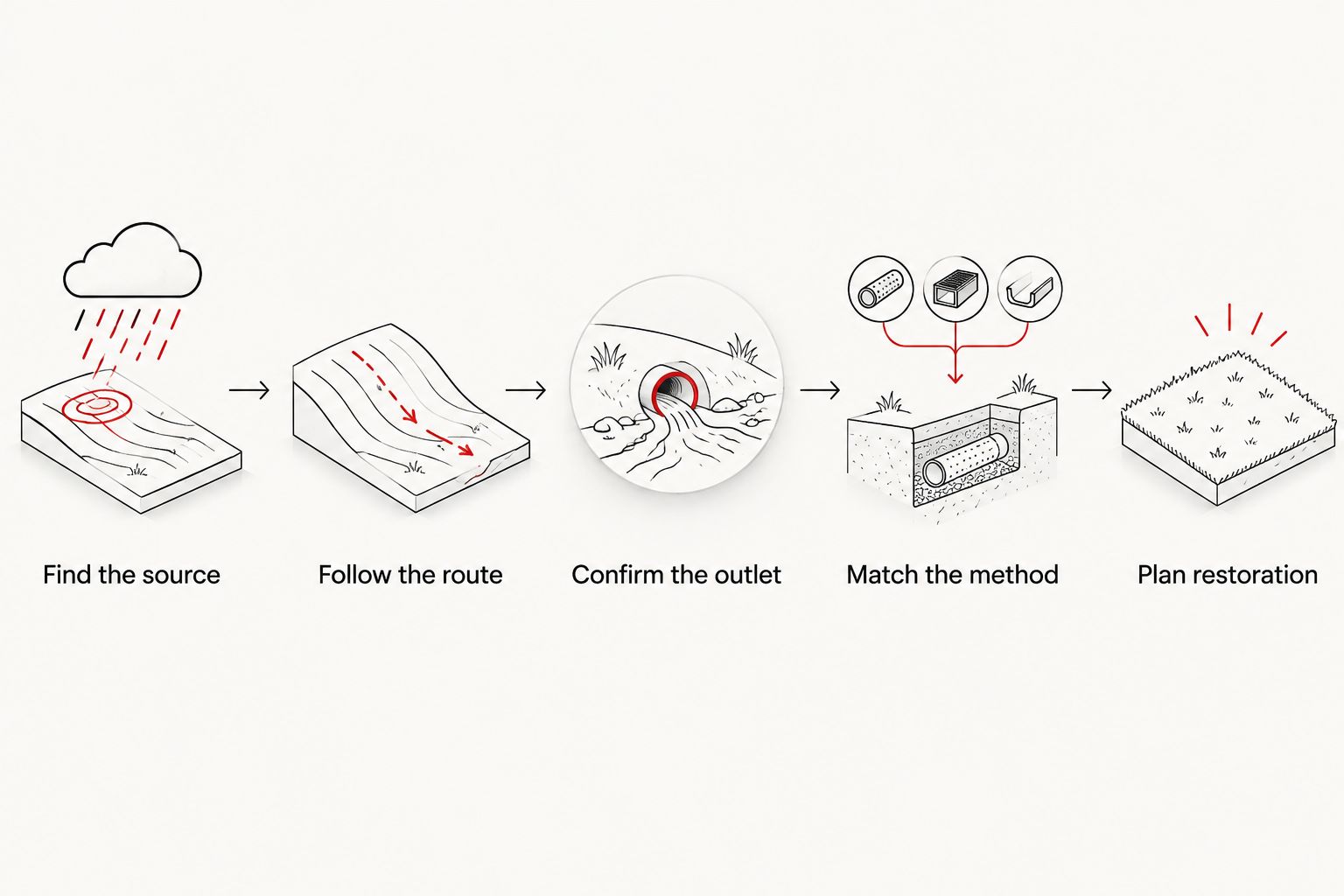
- Find the source. Watch roof runoff, uphill flow, irrigation, and wet areas that persist after surrounding ground dries.
- Follow the route. Look for low spots, foundation-side depressions, and barriers that interrupt surface drainage.
- Confirm the outlet. Establish where collected water can discharge without creating another problem.
- Match the method. Choose subsurface collection, surface collection, grading, or a planned combination.
- Plan restoration. Include disturbed turf, planting beds, access, and future maintenance in the job.
This sequence keeps the decision practical. You should be able to explain where the water starts and where it ends before approving excavation.
When a French drain is the right choice
Consider a French drain when a section of lawn stays saturated because water is moving through the soil toward it. An interceptor trench placed across that movement can collect water before it reaches the problem area.
Placement matters more than simply following the wettest-looking strip. The lowest visible patch can be where water finishes its journey, not the best place to intercept it.
A French drain also needs a route that works with the site's elevations. Gravity drainage depends on an outlet lower than the collection route; where that is unavailable, the design needs a different discharge approach rather than wishful thinking.
Best for: identifiable subsurface water with a workable collection and discharge route. The benefit is below-ground collection. The drawback is that excavation, soil conditions, and maintenance access all affect the result.
When grading or a surface drain is the better choice
If rainwater visibly runs into a depression, start by examining surface drainage. A buried French drain is not the most direct answer to water that needs an open route across the yard or an inlet at the surface.
Grading changes how the ground directs runoff. A swale creates a shallow channel that carries surface water along a planned route, while an inlet collects water at a specific point and sends it through a discharge pipe.
Each has a trade-off. Grading can affect nearby beds and lawn elevations; a swale occupies visible yard space; an inlet can collect leaves and sediment that need removal.
Best for: puddles caused by surface runoff or a defined low spot. Before choosing a surface inlet, ask whether adjusting the surrounding grade would address the cause instead of only collecting the result.
For a 2026 landscape renovation, make this decision before adding new beds, edging, or turf. Finished landscaping should follow the drainage plan, not block it.
Why French drain results vary
The same trench layout does not fit every yard. These factors determine whether the system addresses the actual problem:
- Water source. Roof discharge, surface runoff, and subsurface seepage call for different collection methods. Correct a concentrated source before treating the whole lawn.
- Soil conditions. Fine-textured and compacted soils restrict water movement. They affect how water reaches the trench and whether infiltration is a realistic discharge option.
- Site elevations. The collection route and discharge point must work together. A convenient trench location is not enough if water cannot leave it.
- Outlet conditions. A blocked, submerged, or unsuitable outlet prevents reliable discharge. Check the receiving area as carefully as the wet spot.
- Installation details. Pipe placement, stone, soil separation, and trench alignment affect collection and sediment control. These details need to match the site.
- Upkeep and access. Sediment, roots, and debris can interfere with drainage components. A plan should explain how accessible parts will be inspected and maintained.
No single factor proves that a French drain is necessary. Together, they provide the questions a useful site assessment must answer.
What should you check before installation?
Start with observation rather than excavation. During a safe opportunity after rain, photograph where water enters, where it stands, and where it leaves; include downspout discharge points and the house in the same record.
Keep dated notes during 2026 so you can distinguish a recurring drainage pattern from an isolated event. Note whether irrigation was running and whether the surrounding ground was already wet.
Before digging, arrange utility locating through Iowa's established process and identify private underground lines that public locating services do not cover. Irrigation, lighting, and other private installations also belong in the work plan.
Ask whoever proposes the work to explain these items in plain language:
- The problem the proposed system is intended to solve.
- The collection route and why it belongs there.
- The discharge location and any required permissions.
- How the design avoids sending water toward buildings or neighboring property.
- How disturbed lawn and planting areas will be restored.
- What maintenance remains your responsibility.
A useful drainage proposal explains the outlet as clearly as the trench. A drawing or marked site walk makes that explanation easier to follow than a description of pipe alone.
Grassgrabbers is best for central Iowa homeowners seeking lawn care and landscaping services. When drainage is part of your landscaping plans, contact Grassgrabbers to discuss the property and confirm whether the requested work fits its services.
Can a French drain fix clay soil that stays wet?
A French drain can collect water in clay soil, but it does not change the soil throughout your yard. Water still has to reach the collection trench, and collected water still needs somewhere suitable to go.
That distinction matters when a proposal relies on the surrounding soil absorbing everything. Slow-draining soil is a reason to examine the discharge plan closely, not a reason to assume a gravel trench will solve the problem.
For your 2026 planning, ask whether the proposed system carries water away or simply stores it temporarily. Those are different functions, and the proposal should make the difference clear.
Will a French drain stop water from entering my basement?
A yard French drain is not a complete basement waterproofing system. It can intercept an identified source of water outside, but it does not repair foundation cracks, correct every grading problem, or address every route into a basement.
If water reaches the house, examine gutters, downspout discharge, nearby ground elevations, and foundation conditions together. Active basement water intrusion calls for a building-focused assessment rather than a lawn-only fix.
Do not approve yard excavation on the assumption that a drier-looking lawn proves the basement issue is resolved. The proposed work must address the actual entry mechanism.
Do you need a French drain for every puddle?
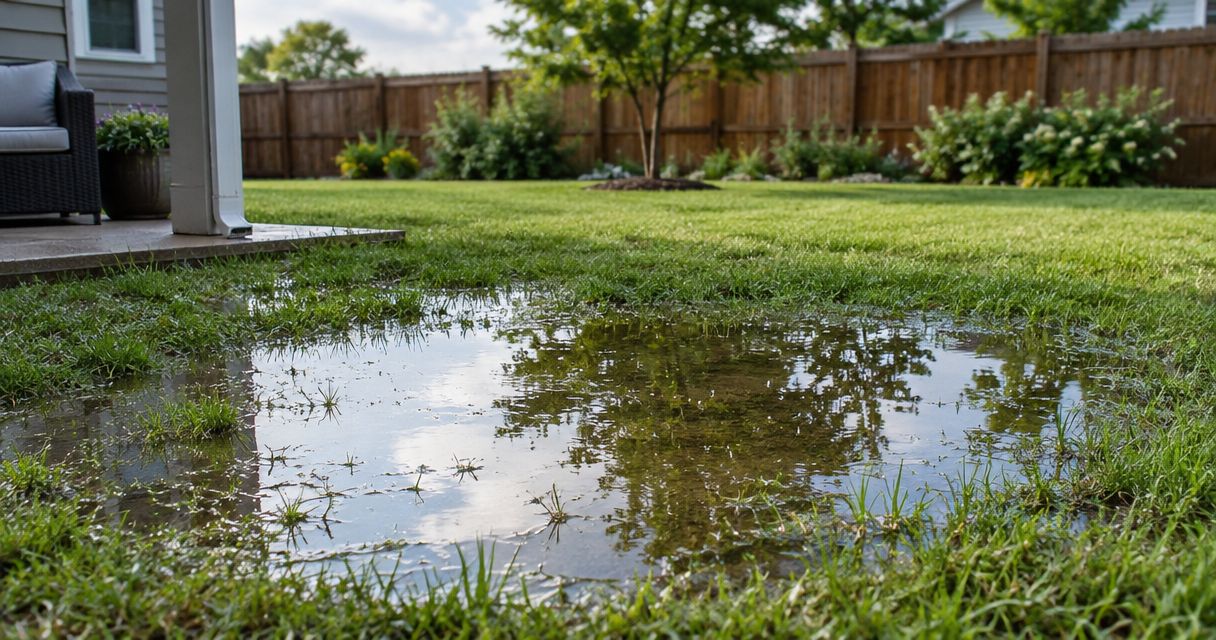
No, a puddle alone does not establish that you need a French drain. Its location, water source, persistence, and effect on the house or yard determine the next step.
Check whether a downspout empties into the area, whether irrigation is adding water, and whether a depression traps runoff. Those observations can point toward a source correction or surface-drainage change instead.
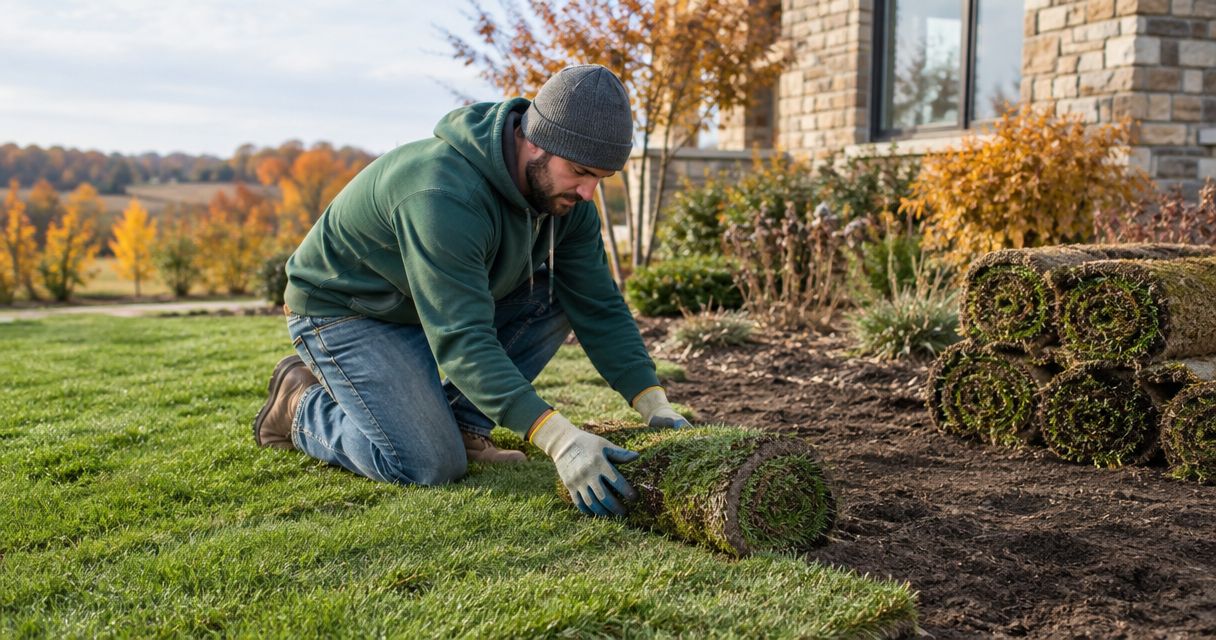
Do not cover the wet area with new sod and call it repaired. Fresh turf does not change the ground's drainage route, and restoring grass belongs after the underlying issue is addressed.
FAQ
What's the difference between a French drain and a surface drain?
A French drain collects water within the soil through a permeable trench, while a surface drain collects runoff through an opening at ground level. Choose according to where the unwanted water is moving.
Can I connect my downspout directly to a French drain?
Roof runoff is generally carried through a solid discharge pipe rather than released into a perforated collection trench near the house. Any connection needs a design that accounts for roof flow, debris, and the discharge location.
Does a French drain need an outlet?
A French drain needs a suitable way for collected water to leave the system. That can involve an approved discharge point or a site-designed infiltration approach, but a buried trench alone does not guarantee drainage.
Will lawn aeration replace a French drain?
Lawn aeration does not replace a drainage route. It addresses soil compaction, while a French drain collects and transports water; choose based on the cause of the wet area.
Can a French drain make my neighbor's yard wetter?
A poorly chosen discharge location can transfer a drainage problem to neighboring property. Confirm property boundaries, local requirements, and the receiving area's drainage before installation.
How do I know if a French drain has stopped working?
Recurring wet ground, a blocked accessible outlet, or water backing up at collection points warrants inspection. Check accessible components first rather than assuming the entire buried pipe needs replacement.
Can Grassgrabbers help me plan changes to my wet yard?
Grassgrabbers provides lawn care and landscaping services for central Iowa homeowners. Describe the wet area and requested changes, then confirm the scope of work directly before scheduling a project.
One last thing
The most useful place to stand is not always in the puddle. Walk uphill and look for the point where water first enters the area; a misplaced downspout discharge or interrupted surface route can explain what the soggy patch alone cannot.
Before your 2026 yard work begins, ask for the drainage route to be marked from collection to discharge. If the proposed solution has no clear ending, it is not ready for a trench.