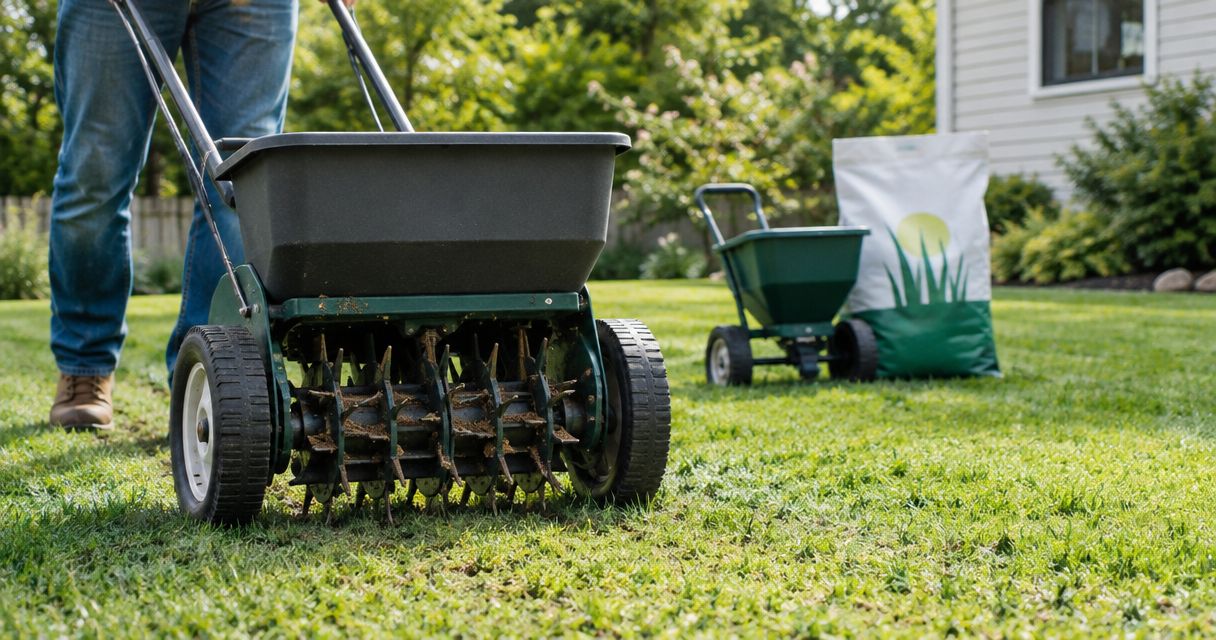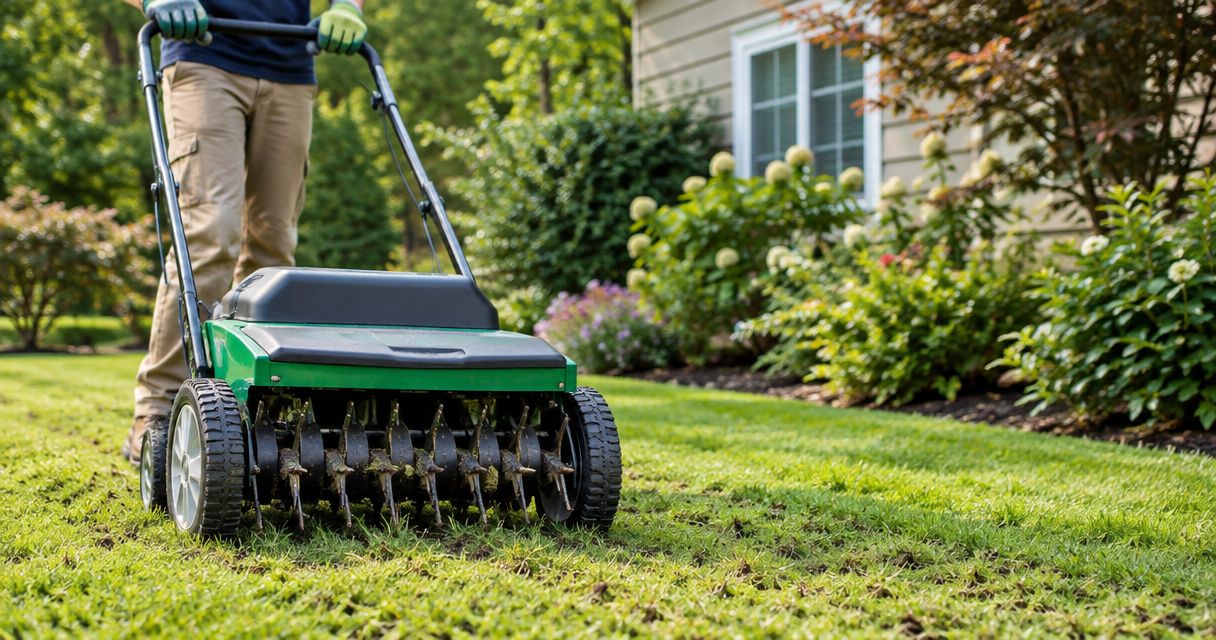
The best time to aerate a lawn in Iowa is late summer into early fall, generally late August through September, when cool-season grass is actively growing and can recover before winter. Spring is a backup window, but aeration should wait whenever soil is muddy, frozen, or too dry for the machine to remove plugs.
- The best time to aerate lawn Iowa homeowners should target is late August through September, with moist, workable soil.
- Iowa State University Extension identifies September as the preferred month for core aeration of established lawns.
- Spring aeration is a backup; avoid working on muddy soil or heat-stressed grass.
- Grassgrabbers serves central Iowa homeowners who need lawn care and landscaping services.
Why this matters
Aeration timing determines whether your lawn can recover from the work. Removing soil plugs during active growth gives roots room to expand; doing the same work during heat or drought adds stress when grass is least prepared for it.
For your 2026 yard plan, start with the fall growing season rather than the first open weekend. If you need help with broader yard maintenance, Grassgrabbers provides lawn care and landscaping services for central Iowa homeowners.
When is the best time to aerate a lawn in Iowa?
Late August through September is the preferred planning window for established cool-season Iowa lawns. Iowa State University Extension and Outreach's lawn-aeration guidance identifies September as the best month and April as a spring alternative. These recommendations apply to established lawns, not every newly seeded or newly sodded yard.
Kentucky bluegrass, tall fescue, and perennial ryegrass grow well during cooler weather. Early fall gives these grasses a recovery period without the usual midsummer heat. It also fits fall overseeding, provided you leave enough growing time for the grass you plant.
| Timing option | Best for | Main advantage | Main limitation |
|---|---|---|---|
| Late summer and early fall | Routine aeration of established cool-season lawns | Supports recovery during active fall growth | Dry weather can make soil too hard to pull useful cores |
| Spring | Compacted lawns that need attention before fall | Offers another cool-season growth window | Wet soil and spring weed-control plans complicate scheduling |
| Summer | Waiting for better conditions on cool-season lawns | Postponing avoids unnecessary work during heat stress | Aeration during heat or drought adds stress |
| Late fall | Assessing whether the growing window has already closed | Workable conditions sometimes persist | Less growing time remains for recovery and new seedlings |
For 2026, treat the calendar as your starting point and soil condition as your final check. A September appointment does not make saturated ground ready for machinery.
Late summer and early fall: the preferred window
Plan routine core aeration around the return of active growth after summer. Your grass should be growing, and the soil should be moist enough for hollow tines to enter without excessive force.
Choose a workable day within the fall window, not a fixed date regardless of conditions. If a dry spell leaves the ground hard, address soil moisture before aerating. If rain leaves the yard soft and muddy, wait until equipment can travel without rutting it.
Fall is also a practical time to pair aeration with overseeding. Core aeration opens the soil, while overseeding introduces grass seed into a lawn that needs more density. They serve different purposes; aeration alone does not add new grass varieties or fill every bare patch.
Keep seed needs in mind before choosing a date. Kentucky bluegrass establishes more slowly than perennial ryegrass, so a late start leaves less room for successful establishment before cold weather.
What should your lawn look like before fall aeration?
Look for grass that has resumed growth rather than a brown, drought-stressed lawn. Check the soil in more than the easiest spot: a shaded backyard and a sunny strip beside the driveway can have different moisture conditions.
A useful soil core holds together when removed but is not dripping, smeared, or powder-dry. The goal is clean plug removal, not merely getting the machine across the yard.
Spring: a backup window, not the default
Spring aeration makes sense when an established lawn has a compaction problem that should not wait until fall. April is the spring month identified in Iowa State University Extension's guidance, but thawed, workable soil and active growth still matter more than the month name.
The drawback is coordination. Spring often brings wet ground, and crabgrass-prevention products can affect your options if you also intend to seed. Many preemergence herbicides prevent desirable grass seed from establishing along with the weeds they target.
Check the exact herbicide label before combining spring overseeding with weed prevention. Do not assume that changing the order of applications makes every combination suitable.
If your lawn is reasonably healthy and compaction is not urgent, keep routine aeration on your fall 2026 schedule. Spring is an alternative, not a requirement for every yard.
Why aeration timing varies across Iowa yards
The right day depends on what is happening underfoot. These factors explain why two neighboring properties do not always need the same appointment:
- Soil moisture: Moist soil allows useful plugs to come out. Saturated soil can smear and rut; very dry soil resists penetration.
- Grass growth: Established cool-season grass recovers better during active growth than during summer dormancy or winter shutdown.
- Compaction: Repeated foot traffic, pets, and equipment can make particular areas need attention sooner than lightly used turf.
- Overseeding plans: Seed needs soil contact, moisture, and enough growing time. Aeration timing should support that entire process.
- Recent lawn establishment: New seedlings and newly installed sod need time to root before disruptive equipment passes over them.
- Weed-control applications: Product labels determine whether and when you can seed after treatment. The lawn calendar must account for those restrictions.
A low spot that stays wet also deserves a separate look. Aeration can relieve surface compaction, but it does not correct poor grading or provide an outlet for trapped water.
How to check whether your lawn is ready
Use this sequence before a rental pickup or service visit. It turns a broad seasonal recommendation into a decision for your yard.
- Check growth. Confirm that established grass is growing rather than dormant, severely wilted, or newly emerging from seed.
- Check moisture. Examine soil below the surface in sunny, shaded, and heavily used areas. Wait if it is muddy; address dryness if it is hard.
- Mark obstacles. Identify sprinkler heads, shallow irrigation components, invisible-fence routes, and other known hazards before equipment enters.
- Test cores. Make a short test pass and inspect what comes out. Hollow tines should remove soil plugs rather than leave shallow marks.
- Plan recovery. Coordinate watering, overseeding, mowing, and foot traffic so the lawn can recover after the work.
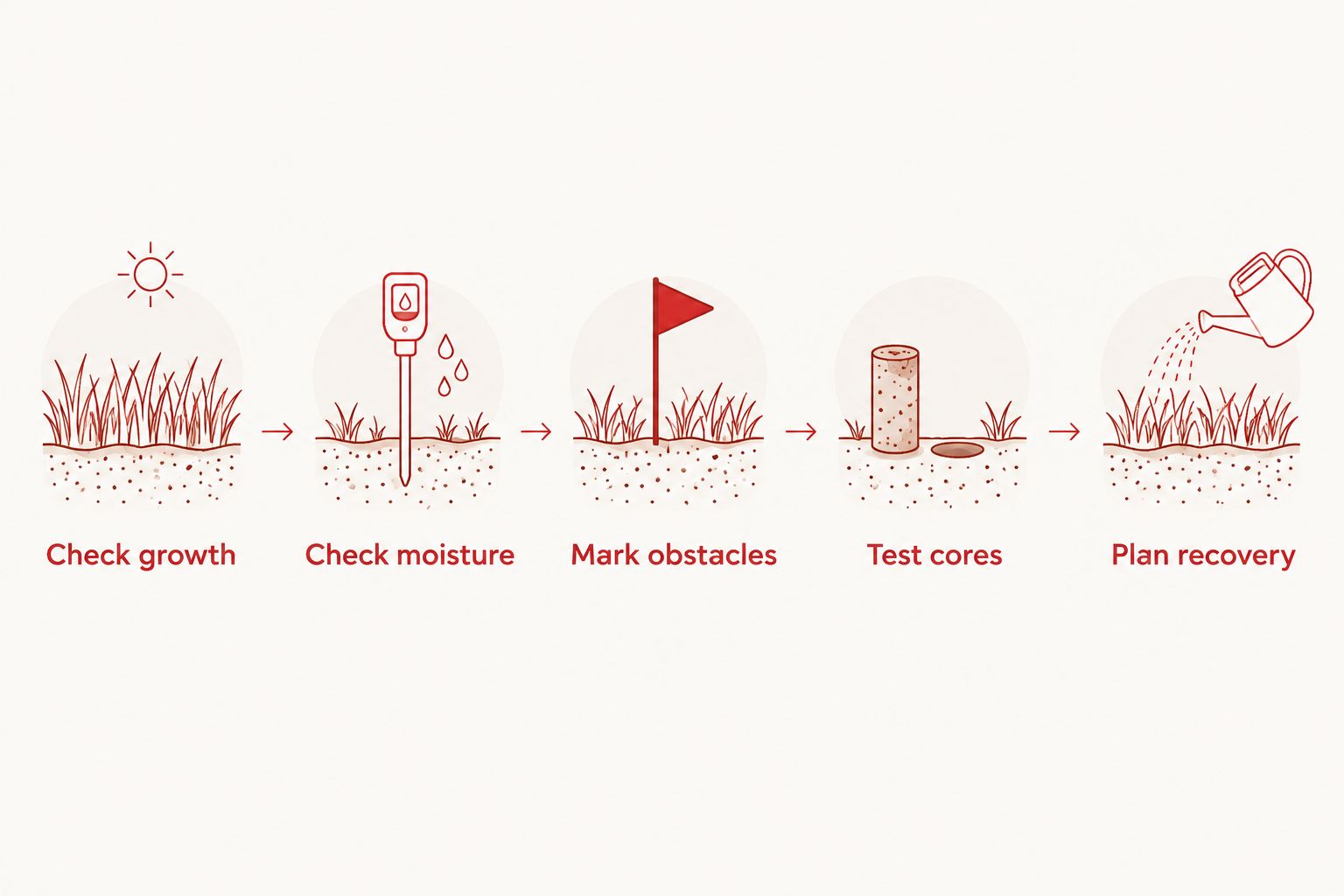
For a 2026 aeration plan, keep those checks beside your calendar reminder. Weather changes; the readiness checks stay useful.
What does effective core aeration look like?
Core aeration removes plugs rather than simply pressing holes into the ground. Extension recommendations commonly call for cores about 2–3 inches deep, with holes roughly 2–4 inches apart. Actual penetration depends on soil conditions and equipment.
Inspect the result instead of judging the job by tracks alone. A machine can cover the yard without removing useful cores if the ground is too dry or its tines do not penetrate properly.
Leave the plugs on established turf to break down naturally. They are part of core aeration, not debris that automatically needs hauling away.
Should you aerate and overseed on the same day?
Aerate before overseeding when you are combining the jobs. The openings and loosened soil help create opportunities for seed-to-soil contact, but seed still needs proper placement and consistent moisture.
Do not treat the aerator as a substitute for preparing bare spots. Dense dead material, debris, or an uneven seedbed can keep seed from reaching soil even after aeration. Inspect thin areas separately and prepare them as needed.
Your seed choice also affects timing. Match the grass to sunlight, use, and maintenance expectations rather than choosing a bag only because it germinates quickly. An unsuitable grass remains unsuitable after a well-timed aeration.
For established Kentucky bluegrass and tall fescue areas, a mowing height around 3 inches is a practical general target; adjust within the recommended range for your grass and conditions. Avoid scalping the entire yard just to make aeration easier.
How often should you aerate an Iowa lawn?
Aerate according to compaction and lawn condition, not automatically every season. Heavy use and compacted soil justify more frequent attention than a lightly used lawn with good growth.
Inspect the areas where people and pets repeatedly travel. A worn route from the back door to the gate tells you something different from a thin patch beneath a mature tree. Aeration addresses compaction; it does not remove shade or stop repeated wear.
Annual aeration can fit a heavily used, compacted lawn, but it is not a universal requirement. Before adding another pass to your 2026 maintenance plan, identify the problem you expect that pass to solve.
When should you postpone lawn aeration?
Postpone aeration when the soil or grass cannot handle the work. The right season does not cancel a poor day for equipment.
Wait when you see:
- Standing water, squishy ground, or wheel ruts forming during a test pass.
- Hard, dry soil that produces little more than shallow tine marks.
- Heat-stressed or drought-dormant cool-season grass.
- Frozen soil or a growing season that has effectively ended.
- New turf that has not rooted firmly enough for machinery.
Also pause if aeration has become the proposed answer to every lawn problem. Persistent puddles, deep depressions, and heavy shade need their own diagnosis. Repeating a treatment that does not address the cause wastes effort.
When does professional help make sense?
Grassgrabbers is best for central Iowa homeowners seeking lawn care and landscaping services. Professional help fits homeowners who want assistance coordinating yard maintenance rather than taking on every task themselves.
The trade-off is that hiring lawn care does not remove the need for a clear scope. Explain where water collects, where pets run, whether you plan to seed, and which weed-control products have already been applied. Those details help keep the proposed work tied to the actual problem.
Before arranging aeration, ask what the visit includes, how soil readiness is assessed, and how overseeding would be coordinated if needed. Choose a plan that explains the problem and the next step, not just a date on the calendar.
FAQ
What's the best month to aerate a lawn in Iowa?
September is the preferred month for core aeration of established Iowa lawns, according to Iowa State University Extension guidance. Late August can also fit the early-fall window when grass is actively growing and soil is workable.
Can I aerate my Iowa lawn in April?
Yes, April is a spring alternative for established Iowa lawns. Wait for workable soil and coordinate any overseeding with the restrictions on your weed-control product labels.
Should I water before aerating my lawn?
Water before aeration if the soil is too dry for hollow tines to remove useful plugs. The goal is moist soil, not muddy ground, so check conditions below the surface before proceeding.
Is fall aeration better than spring aeration in Iowa?
Fall is the preferred season for routine aeration of established cool-season Iowa lawns. Spring remains an alternative when compaction needs attention and soil conditions are suitable.
Can I aerate and seed my lawn on the same day?
Yes, you can aerate and overseed on the same day, with aeration first. Successful establishment still requires suitable seed, soil contact, moisture, and enough growing time before winter.
Should I pick up the plugs after lawn aeration?
Leave aeration plugs on established turf to break down naturally. Their presence is an expected result of removing soil cores, not evidence that the work is unfinished.
Will aeration fix standing water in my yard?
Aeration does not fix every cause of standing water. It can address surface compaction, but poor grading, low spots, and water without an outlet need separate assessment.
One last thing
The most useful aeration check happens after the first short pass. Stop and look for actual soil cores before continuing across the yard. That small check catches a hard, dry lawn or poor penetration before the whole job is done.
Put a late-summer reminder on your 2026 calendar, then let grass growth and soil moisture determine the day. A properly timed job starts with conditions, not convenience.