Yes, you can aerate and overseed your lawn on the same day: core-aerate first, then spread the seed while the soil openings are fresh. For central Iowa’s cool-season lawns, late summer into early fall is generally the best window, but the seed still needs suitable soil moisture, good soil contact, and consistent watering afterward.
- Aerate and overseed same time: core-aerate first, then spread seed that day.
- For central Iowa lawns, plan around late-summer growing conditions, not a fixed calendar date.
- Grassgrabbers provides lawn care and landscaping for central Iowa homeowners; confirm the specific work your lawn needs.
- Aeration helps seed reach soil, but watering and suitable grass selection determine whether seedlings establish.
Why this matters
Combining aeration and overseeding puts soil preparation and planting in the right order. Core aeration removes small plugs of soil, creating openings in compacted ground. Overseeding adds grass seed to an existing lawn without replacing the whole yard.
Those jobs work together, but they solve different problems. Aeration addresses compaction; overseeding addresses thin turf. Neither corrects standing water, deep shade, or a watering routine that leaves new seed dry.
For your 2026 lawn plan, start with the problem you can actually see. If you are new to the process, this lawn aeration guide for new homeowners explains the groundwork before you decide whether to add seed.
Can you aerate and overseed a lawn at the same time?
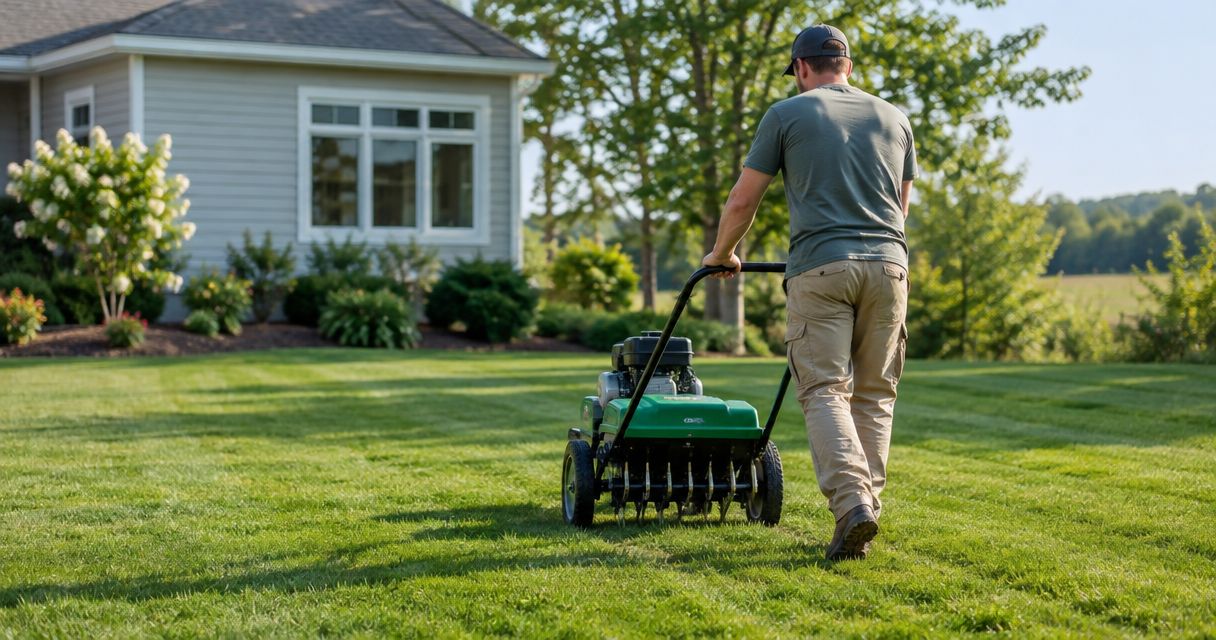
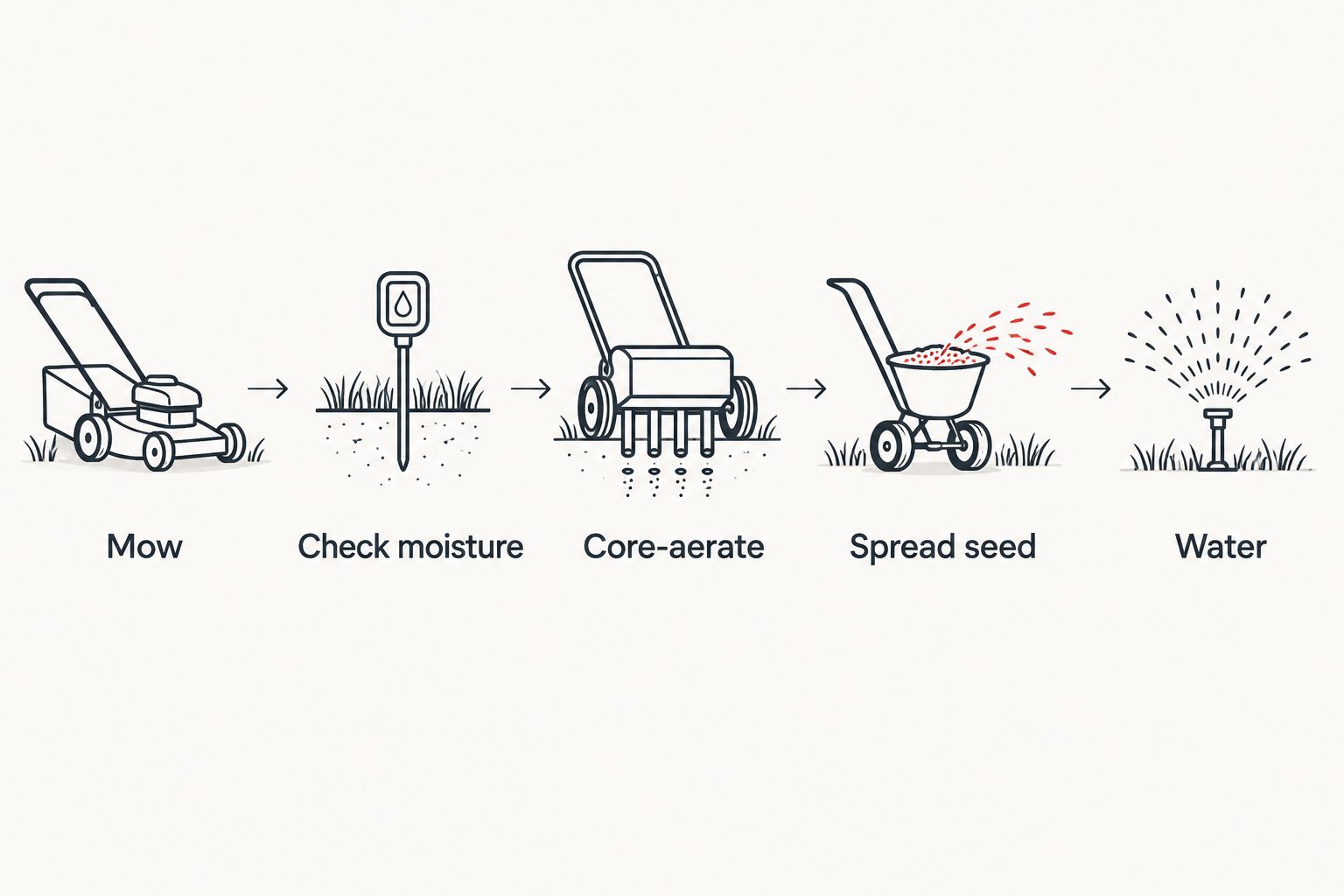
Yes. Complete core aeration before overseeding, preferably during the same work session. You do not need to wait for the soil plugs to disappear before spreading seed.
Follow this order so the seed reaches the soil rather than sitting on leaves, thick clippings, or matted grass.
Check the lawn
Look for thin areas, heavily traveled routes, exposed roots, and places that stay wet. Check recent weed-control applications before opening a seed bag: some herbicide labels require a waiting period before reseeding.
Also decide whether the lawn needs both treatments. A dense lawn with compacted soil can need aeration without additional seed. A thin lawn needs an explanation for the thinning, not just another application of seed.
Mow
Mow before aerating so the equipment can reach the ground and seed can move through the existing grass. Collect heavy clippings if they would cover the soil.
Do not scalp the lawn to make overseeding easier. The established mowing rule is to remove no more than 1/3 of the grass blade in a single mowing. If the lawn is tall, bring it down gradually rather than taking off most of the leaf at once.
Check moisture
Aim for soil that is moist enough for the aerator to penetrate but firm enough to support the machine. Hard, dry soil makes effective core removal difficult; saturated soil is a reason to postpone the job.
Check more than the surface. A quick shower can wet the grass while leaving the soil underneath hard. If you watered beforehand, allow the water to soak in and reassess before starting.
Core-aerate
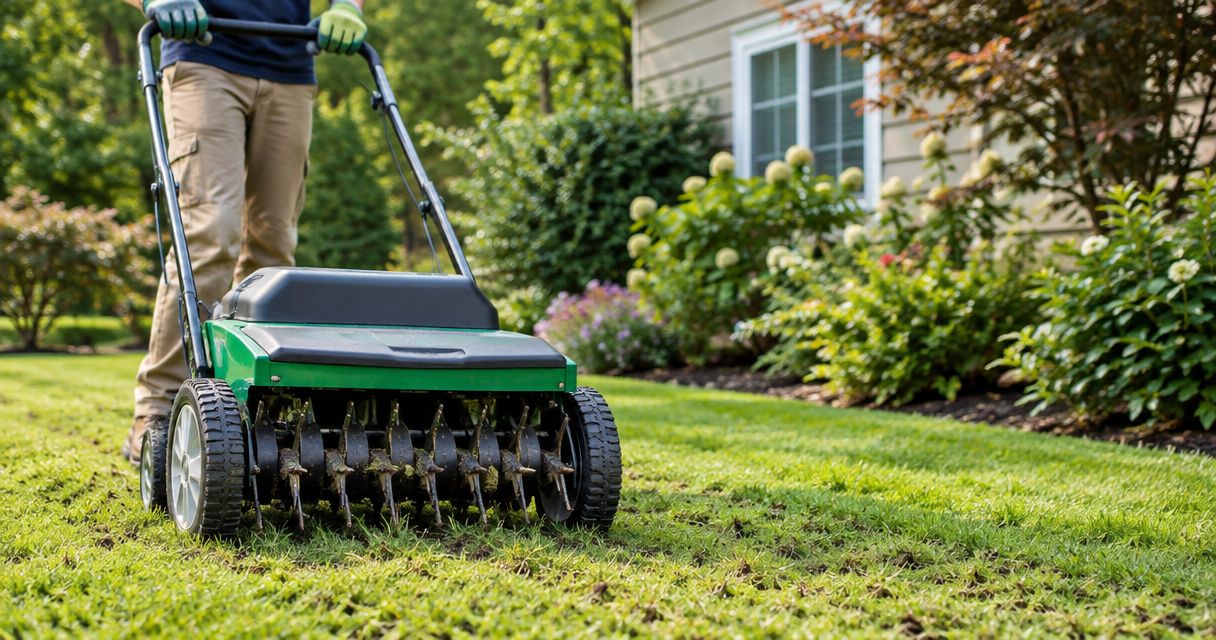
Use equipment that removes soil plugs rather than merely poking holes. Mark irrigation heads and other obstacles before the machine enters the lawn.
Pay attention to compacted areas, but do not keep driving across soft ground just to make the lawn look uniformly punched. The goal is useful soil penetration without rutting or tearing up the existing turf.
Spread seed
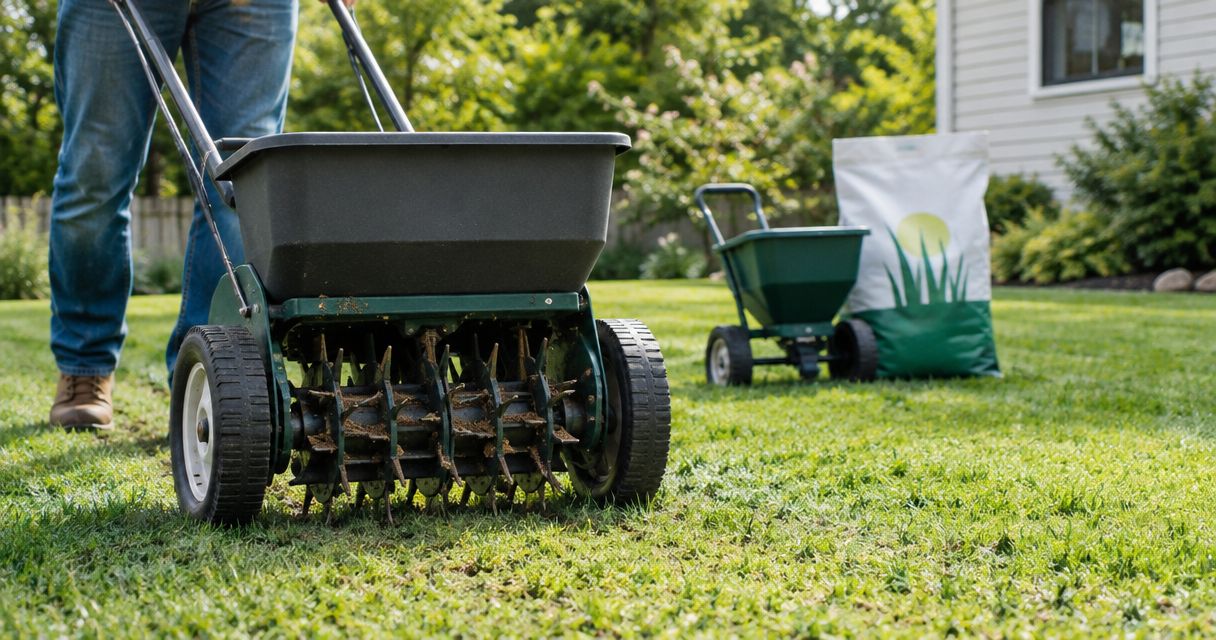
Spread seed after aeration, using the seed label’s overseeding rate rather than its rate for establishing a completely new lawn. Check the spreader setting against the product you actually purchased.
Seed should reach exposed soil throughout the thin areas, not only collect inside deep holes. For many common cool-season lawn grasses, planting guidance calls for shallow placement, generally no deeper than 1/4 inch. Follow the seed’s specific directions.
Water
Water gently enough to wet the seedbed without moving the seed into piles or washing it downhill. Keep the seeded surface consistently moist during germination, then adjust toward deeper, less frequent watering as seedlings establish.
Do not use a fixed watering schedule without checking the soil. Sunny slopes, shaded corners, and windy edges dry differently. The right routine keeps seed moist without leaving puddles.
When should you combine aeration and overseeding in Iowa?
For cool-season lawns in central Iowa, late summer into early fall gives new grass a useful establishment window as summer heat eases. Spring planting is possible, but emerging seedlings then face the approaching heat of summer and competition from spring weeds.
A common cool-season seeding guideline is to allow roughly 6–8 weeks before the expected first fall frost. Treat that as a planning window, not a promise: grass species, weather, and site conditions affect establishment.
For 2026, choose your working date by checking these conditions together:
- The existing lawn is not under severe heat or drought stress.
- The soil is moist enough to produce cores without smearing or rutting.
- You can maintain watering during germination and early growth.
- Recent lawn treatments permit seeding under their label directions.
A suitable growing window matters more than finishing both jobs on a particular Saturday. If the yard is saturated or you cannot water afterward, postponing protects the work you are about to do.
Should you core-aerate, spike-aerate, or just overseed?
Core aeration and spike aeration are not interchangeable. A core aerator removes material; a spike tool pushes into the ground without removing plugs. Choose the method around the lawn’s condition, not just the equipment you already own.
| Approach | Best for | Main advantage | Main limitation |
|---|---|---|---|
| Core aeration plus overseeding | Thin lawns with compacted soil | Addresses compaction and adds seed during the same project | Requires suitable soil conditions and follow-up watering |
| Overseeding without aeration | Thin turf where seed can reach exposed, uncompacted soil | Adds grass without an unnecessary aeration step | Seed can remain stranded above the soil in dense turf or debris |
| Spike aeration plus overseeding | Limited surface puncturing where compaction relief is not the main goal | Makes openings without removing plugs | Does not remove compacted soil and is not a substitute for core aeration |
| Core aeration alone | Established turf with compaction but adequate grass coverage | Treats compaction without adding unnecessary seed | Does not introduce grass into persistent bare areas |
A lawn that is already thick does not automatically benefit from more seed. Likewise, a thin lawn over loose soil does not automatically need an aerator. Match the treatment to the condition you find.
For your 2026 project, avoid choosing a method solely because it combines neatly with another appointment. The lawn’s needs come first; convenience comes second.
Why overseeding results vary
Doing both jobs together improves the sequence, but it does not make every yard respond alike. These conditions explain why the same routine produces different results across a property:
- Soil contact: Seed resting on dead grass or leaves has poorer access to the moist soil it needs. Remove barriers before planting.
- Water management: A drying seedbed interrupts establishment, while runoff moves seed away from the intended area. Check moisture where the seed sits.
- Sun exposure: Grass must suit the light available. Adding sun-loving seed to a heavily shaded corner does not correct the mismatch.
- Existing competition: Established grass and weeds compete with seedlings. Mowing and appropriate preparation give new grass a better opening.
- Drainage and traffic: Repeated foot traffic and persistent wetness can keep damaging the same patch. Address the cause rather than repeatedly reseeding it.
- Treatment history: Some weed-control products restrict when you can seed. Use the actual product label, not a general rule from a different treatment.
Keep these checks in your 2026 maintenance notes. If one patch fails while the rest fills in, compare that patch’s light, moisture, and foot traffic before blaming the entire seed application.
Can I overseed before aerating instead?
Aerate first, then overseed. That order lets you inspect the prepared ground and spread seed after the machine has finished disturbing the lawn.
Seeding first does not make every seed unusable, but it makes placement less controlled. Machine traffic can move seed, and the aerator can leave some seed deeper than intended.
If you already spread seed, avoid repeatedly working the area in an attempt to correct the order. Focus on soil contact and watering, and do not add more seed blindly. Extra seed is not a reliable fix for uncertain placement.
Do I need to rake up the soil plugs before seeding?
No. You generally leave core-aeration plugs on the lawn. They weather and break apart, so waiting for their disappearance only delays the next step.
Leaves, branches, and heavy mats of clippings are different: clear those because they obstruct seed contact. Do not confuse routine debris removal with removing the soil that the aerator brought to the surface.
If the yard has a thick, spongy thatch layer, assess that separately. Core aeration does not instantly remove a heavy barrier between seed and soil, and spreading seed over that barrier does not solve it.
How soon can I mow after aerating and overseeding?
Resume mowing when the new grass is established enough to tolerate it, not simply when the old grass looks tall. Check the seed guidance and the seedlings’ rooting before taking equipment across the area.
For many cool-season lawn grasses, a seedling height around 3 inches is a common first-mowing checkpoint, though the appropriate height depends on the species. Use a sharp blade, mow when the surface is firm, and avoid tight turns that pull at young plants.
The existing lawn and new seedlings grow at different speeds. Watch the young grass rather than relying only on your normal mowing day, and keep heavy traffic off vulnerable areas while they establish.
Decide what help your lawn actually needs
A professional visit is useful when you need help distinguishing compaction from drainage trouble, choosing preparation work, or coordinating lawn maintenance. Before agreeing to a project, ask what equipment will be used, who selects the seed, and who handles watering afterward.
Grassgrabbers is best suited to central Iowa homeowners seeking lawn care and landscaping services. Explain whether your concern is thin grass, hard soil, recurring bare patches, or the whole yard, then confirm which work is included before scheduling.
Grassgrabbers provides residential lawn care and landscaping in central Iowa. Do not assume a general lawn-care arrangement includes seed selection, aeration, herbicide review, or establishment visits; spell out those responsibilities for your property.
For a 2026 service conversation, bring recent treatment details and photos of the problem areas. Those are more useful than asking for a standard package without explaining what keeps going wrong.
Discuss your lawn care needs
Tell us about your central Iowa lawn and the areas you want to improve.
FAQ
Can I aerate and overseed my lawn on the same day?
Yes. Core-aerate first, then spread seed the same day while the soil openings are fresh. Successful establishment still requires suitable growing conditions and consistent moisture.
Should I water before or after aerating and overseeding?
Water beforehand if the soil is too dry for effective core removal, and water after seeding to moisten the seedbed. Do not operate the aerator on saturated ground or water hard enough to move seed.
Is fall better than spring for overseeding in central Iowa?
Late summer into early fall is generally the better window for central Iowa’s cool-season lawns. Spring seedlings face approaching summer heat, while fall planting needs enough growing time before cold weather.
Can I put down weed preventer and grass seed together?
Only combine them if the weed-control product’s label explicitly permits seeding under those conditions. Many preemergent herbicides interfere with desirable grass establishment, so check the exact product and reseeding interval.
Will aeration and overseeding fix bare spots under trees?
Aeration and overseeding do not fix insufficient light. Choose grass suited to the site, and consider a different ground treatment where shade prevents healthy turf.
Should I fertilize when I overseed?
Base fertilizer selection on soil-test guidance, the seed’s needs, and any product restrictions. Do not assume that extra fertilizer compensates for poor soil contact or inconsistent watering.
Can Grassgrabbers help with my central Iowa lawn?
Grassgrabbers provides lawn care and landscaping services to residential property owners in central Iowa. Confirm the specific preparation, seeding, and follow-up work available for your property before scheduling.
One last thing
You do not have to seed every place you aerate. A compacted but otherwise dense lawn can benefit from core aeration without another layer of grass seed. Thin areas deserve seed only after you understand why the grass disappeared.
Before committing to your 2026 project, walk the yard after rain and again during a dry spell. Notice where water stands, where the ground hardens, and where people cut across the lawn. That simple comparison helps separate a planting problem from a site problem—and tells you which work belongs first.