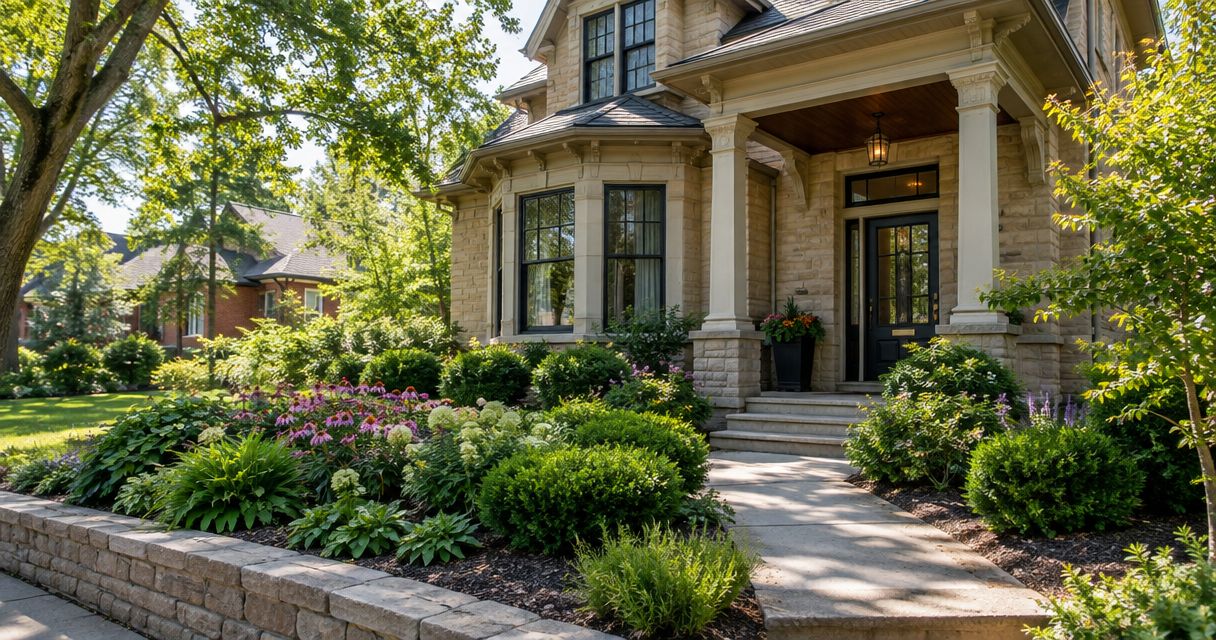
Historic-home landscaping in Des Moines is the care and design of an older property's outdoor spaces with the aim of protecting its character while making the yard easier to use and maintain. Start by identifying what deserves to stay, checking approval requirements, and fixing site problems before choosing new plants.
- Landscaping for historic homes Des Moines: preserve sound features, check approvals, and address drainage before adding plants.
- Grassgrabbers is best for central Iowa homeowners seeking routine lawn care, landscaping, and yard maintenance.
- Match planting choices to sunlight, soil, and mature size—not just the age of the house.
- Keep historic landscape decisions separate from routine maintenance; each needs a clearly defined scope.
Why landscaping matters for Des Moines historic homeowners
An older home's yard needs more than a tidy planting bed. Mature trees, front walks, retaining walls, and the relationship between the porch and street can all contribute to the property's character. Replacing them without understanding their role risks solving a maintenance problem by removing something valuable.
Preserve sound features first; improve function around them. For routine help, Grassgrabbers provides lawn care, landscaping, and yard maintenance to residential property owners in central Iowa. Historic research, approval questions, and structural assessments need their own attention rather than assumptions about a landscaping service's scope.
For your 2026 project, distinguish between keeping the yard healthy and restoring an earlier landscape. Those are different jobs. A comfortable, well-kept yard does not require recreating an undocumented garden from the past.
Plan your historic-home landscape before changing it
Document the features you already have
Walk the property before clearing beds or removing shrubs. Look for the underlying layout: paths, changes in elevation, established trees, fences, and planting areas. An overgrown yard can hide a useful arrangement.
Take at least 3 reference photos: the house from the street, the front walk toward the entrance, and the rear yard toward the house. These are planning views, not a substitute for detailed photographs of anything you intend to alter.
For 2026 planning, the National Park Service's Preservation Brief 36: Protecting Cultural Landscapes provides guidance on documenting and evaluating historic landscapes before treatment. Use that approach to separate evidence from personal preference.
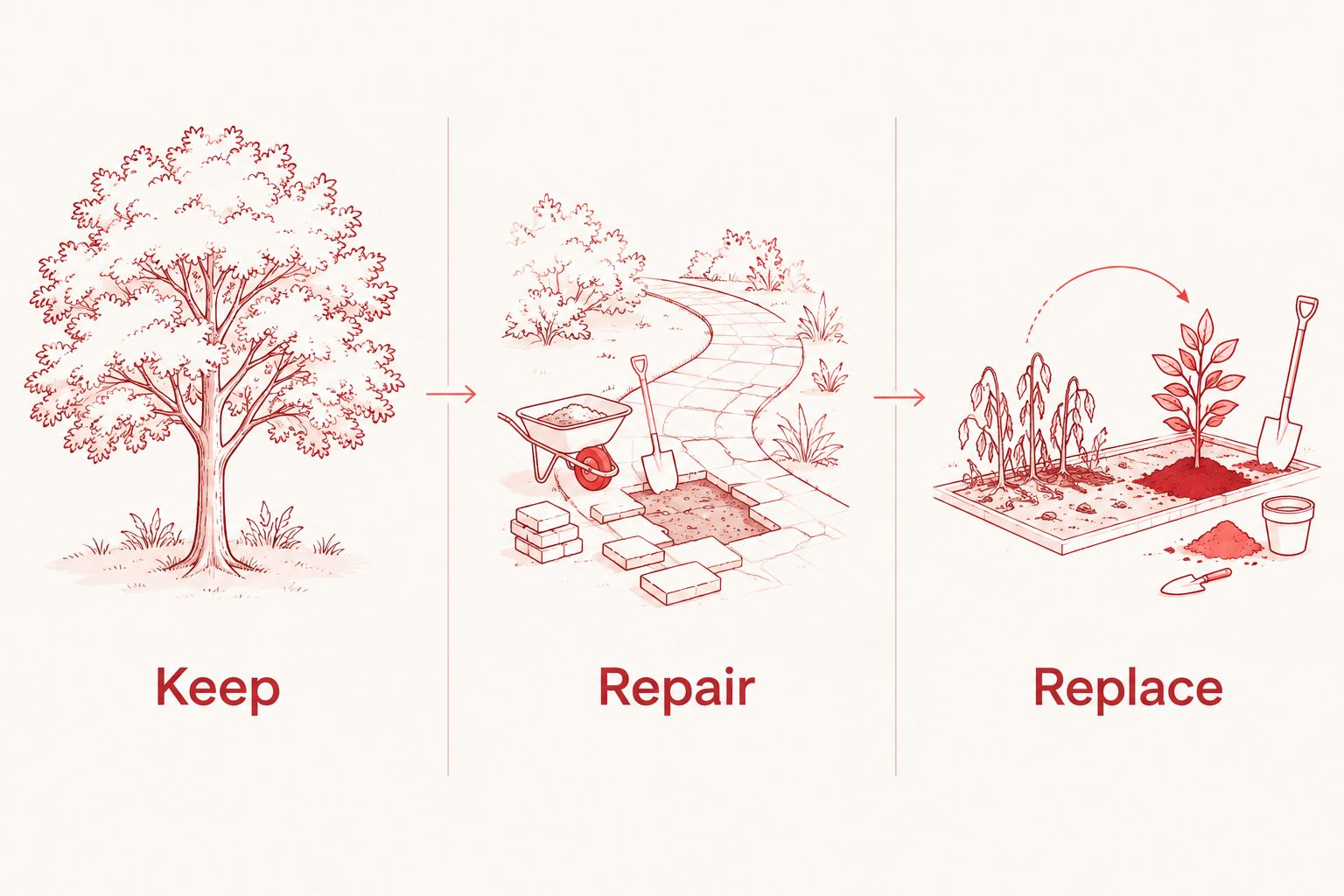
- Keep: Record healthy trees, sound walks, and features that support the house's setting.
- Repair: Mark damaged edges, loose paving, and neglected beds for closer assessment.
- Replace: Identify failed features, but record them before deciding on removal.
Confirm what needs approval
Do not assume that an old house has a historic designation—or that a designated property's landscaping changes are automatically exempt from review. Ask the City of Des Moines which requirements apply to your address and proposed work.
Describe the project precisely. Pruning a shrub and removing a front retaining wall are not interchangeable requests. Ask about local historic designation, applicable review, permits, and public right-of-way restrictions before signing an installation agreement.
Your 2026 project scope should name the work, not just say “landscaping.” Keep written answers with the plan so a contractor can follow the same boundaries.
- List proposed changes to walks, walls, fences, trees, grading, and planting beds separately.
- Ask whether each change requires review, a permit, or another department's approval.
- Confirm property lines and any work affecting the sidewalk or street frontage.
- Request utility marking through Iowa One Call before excavation, and identify privately owned lines separately.
Separate routine care from specialist work
Begin with a task list you can inspect yourself: mowing, weeding, bed cleanup, and monitoring plant health. Then identify jobs that require a different kind of assessment, such as tree risk, failing masonry, or changes beside an older foundation.
Grassgrabbers landscaping and yard maintenance services fit the routine-care side of that plan. Discuss the specific work you need rather than assuming historic preservation expertise or structural work is included.
A specialist adds value when the question concerns what a feature is, whether it is safe, or how it should be conserved. That assessment does not replace regular maintenance; it prevents routine work from becoming an accidental demolition project.
- Write down the recurring tasks you want handled.
- Flag mature-tree concerns for a qualified arborist.
- Separate retaining-wall, foundation, and historic-material questions from planting work.
- Ask every provider what is included, excluded, and dependent on another assessment.
Resolve water problems before rebuilding beds
Observe the property during rain rather than guessing from dry ground. Trace downspout discharge, standing water, eroded soil, and places where runoff crosses a walk or gathers near the house.
Schedule 2 observation visits for your own planning: one during rainfall, when it is safe, and another after the rain has stopped. Photograph what changes. This gives you a clearer description of the problem than a general request to improve drainage.
Do not use a new planting bed to hide a water problem. The guide to yard drainage for homes with wet basements explains why drainage deserves its own planning step. Persistent basement moisture also calls for an appropriate building assessment, not just new plants.
- Check gutters and downspout outlets before proposing excavation.
- Mark puddles, erosion, and runoff routes on a simple property sketch.
- Avoid piling soil or mulch against siding, vents, or exposed wood.
- Have proposed grading assessed for effects on foundations, trees, and neighboring land.
Choose plants for the site and the house
Start with sunlight, soil moisture, available space, and the plants already growing successfully. A plant associated with an older garden is still a poor choice if it cannot tolerate your yard's conditions.
Use the house as a guide to scale, not as a demand for historical imitation. Keep important windows, porch details, and entrance routes visible. Check mature width as carefully as height so a small nursery plant does not become a recurring pruning job.
For your 2026 plant list, distinguish documented restoration choices from compatible new planting. Native plants can be part of a contemporary landscape around an older home; they do not need a fabricated historical connection to belong there.
- Record sun exposure in each bed rather than treating the whole yard alike.
- Match plants to drainage and soil conditions.
- Compare mature dimensions with windows, walks, and neighboring plants.
- Group plants with similar care needs.
- Keep a clear boundary between lawn and planting areas for easier upkeep.
Protect roots and repair circulation
Plan where people, tools, and materials will move before installation begins. A new path or bed can affect an established tree even when its trunk remains untouched. Roots extend beyond the trunk, and excavation or repeated equipment traffic can damage them.
Inspect existing walks for loose units, uneven surfaces, and awkward connections. Repairing a useful route often serves the house better than adding a second route that leaves the original neglected.
Start with 1 planting bed when you need to test a new approach. That is a manageable trial area for observing plant growth and upkeep before repeating the design elsewhere.
- Ask an arborist to assess work involving excavation near valuable trees.
- Keep stored soil, heavy materials, and equipment away from protected root areas.
- Assess whether existing paving can be repaired before replacing it.
- Maintain practical access to doors, gates, utility equipment, and outdoor work areas.
Set a maintenance plan you will actually follow
A landscape plan is unfinished until you know who will maintain it. Write down mowing access, weeding expectations, watering responsibilities, pruning needs, and seasonal cleanup tasks before adding more beds.
For the rest of 2026, keep a simple record of what required attention and why. A repeated problem—such as a shrub blocking a walk—is a design issue to reconsider, not merely another task to schedule.
Choose fewer manageable changes over a yard full of unfinished projects. Regular care makes small problems visible while they are still straightforward to address.
- Assign each recurring task to yourself or a service provider.
- Keep plant labels and care notes together.
- Review bed edges, drainage outlets, and walk conditions during routine yard checks.
- Adjust the plan when a planting repeatedly outgrows its space or struggles at the site.
Compare your landscaping options
The right option depends on the problem you need solved. These choices are not interchangeable: maintenance keeps a yard cared for, while preservation advice helps determine what should change.
| Option | Best for | Main advantage | Key limitation |
|---|---|---|---|
| Owner-led maintenance | Homeowners with time for regular yard work | Direct control over timing and small changes | Requires consistent labor and decisions about when to seek help |
| Grassgrabbers lawn care and landscaping | Central Iowa homeowners needing lawn care, landscaping, and yard maintenance | A service option for the recurring and practical work around a residential yard | Historic research and specialist assessments are separate questions; confirm the exact project scope |
| Preservation-focused landscape consultation | Owners considering changes to historically significant layouts or features | Helps distinguish preservation decisions from ordinary garden updates | Does not replace ongoing mowing, weeding, or plant care |
| Qualified arborist assessment | Owners concerned about mature-tree health or nearby excavation | Focuses attention on tree condition and protection | Does not resolve the whole property's planting, paving, or drainage plan |
Combine services only where the project requires them. A healthy yard needing cleanup is different from a property with a failing wall, uncertain tree condition, and proposed grading changes.
Common mistakes historic-home owners make
Clearing everything before assessing it
Overgrowth is not proof that a landscape has no useful structure. Photograph features, identify plants, and decide what can be renewed before removing the evidence. Keep demolition separate from routine cleanup instructions.
Treating every older house as the same style
A formal planting scheme is not automatically appropriate because the house is old. Work from the property's actual architecture, documented history, and surviving landscape—not a generic picture of a historic garden.
Adding beds against the foundation to hide trouble
Dense shrubs and fresh mulch do not explain cracked masonry or persistent moisture. Assess those problems directly. Keep planting decisions separate from building repairs so an attractive bed does not conceal something that still needs attention.
Choosing plants by nursery size
A shrub that fits beside the porch today can block the approach when mature. Check its expected dimensions before planting. If the intended space requires continual cutting to keep a plant contained, choose a better-fitting plant instead.
Replacing every imperfect material
Weathered brick and worn stone deserve assessment before removal. Age alone does not establish failure, and appearance alone does not establish safety. Determine whether repair can preserve a useful feature without leaving a walking hazard.
FAQ
What's the best first step for landscaping a historic home in Des Moines?
Document the existing yard before removing plants or changing hardscape. Photograph the layout, identify features worth keeping, and check which approval requirements apply to your address and proposed work.
Do I need approval to change landscaping at an older Des Moines home?
Approval requirements depend on the property's designation, location, and proposed changes. Ask the City of Des Moines about the specific work before altering walls, walks, fences, grading, or other exterior features.
Should I recreate the original garden around my historic house?
Recreate an earlier garden only when that is your goal and reliable evidence supports the design. Otherwise, preserve sound features and choose compatible planting that suits the site's conditions and your maintenance capacity.
Can I use native plants around a historic home?
Yes, native plants can be part of a compatible new landscape around a historic home. Choose them for site suitability and mature size, and distinguish new planting from any documented historical restoration.
Should I remove a mature tree before installing a new walkway?
Do not make tree removal the default starting point. Have the tree and proposed construction assessed, then compare routes and installation approaches before deciding whether removal is necessary.
Is professional yard maintenance the same as historic landscape restoration?
No, routine maintenance and historic landscape restoration address different needs. Grassgrabbers provides residential lawn care, landscaping, and yard maintenance in central Iowa; confirm any additional preservation or specialist requirements separately.
Can landscaping fix a wet basement in an older home?
Landscaping alone is not a complete diagnosis or guaranteed solution for a wet basement. Check surface runoff and downspout discharge, and have persistent moisture assessed before committing to grading or planting changes.
One last thing
Leave a record of what you decide not to change. A marked-up photograph showing a retained walk, protected tree, or original bed edge gives future contractors useful boundaries. Your 2026 plan should make those boundaries as clear as the list of new work.
The most useful improvement is not always another feature. Sometimes it is repairing the route to the porch, uncovering an established planting, or making the existing yard easier to care for.