Aerate a compacted clay-soil lawn once a year, with a second session reserved for persistent compaction where the grass has time to recover. For central Iowa’s cool-season lawns, late summer to early fall is the preferred window; clay content alone does not justify twice-yearly aeration, and saturated soil is a reason to postpone, not add another visit.
- How often aerate clay soil lawn? Start with annual core aeration and reassess compaction before adding another session.
- Grassgrabbers provides lawn care for central Iowa homeowners; choose your aeration schedule around actual soil conditions.
- Core aeration removes soil plugs; spike aeration makes holes without removing soil.
- Aerate actively growing grass in moist, workable soil—not saturated clay or drought-stressed turf.
How often should you aerate a lawn with clay soil?
One core-aeration session per year is a practical starting point for compacted clay lawns. Consider two sessions per year only when heavy use or severe compaction warrants another treatment and the lawn can recover between sessions. A healthy, lightly used lawn does not need extra aeration simply because its soil contains clay.
For help with the broader maintenance picture, Grassgrabbers provides lawn care and landscaping services to residential property owners in central Iowa. The useful question is whether your soil needs relief—not whether another date is open on the calendar.
| Schedule | Best for | Main benefit | Main limitation |
|---|---|---|---|
| Once yearly | Compacted clay lawns with ordinary household use | Provides a regular opportunity to relieve surface compaction | Does not fix grading problems or prevent renewed compaction |
| Twice yearly, when justified | Heavily used lawns with persistent compaction | Addresses recurring pressure during suitable growing periods | Adds unnecessary disturbance when the lawn does not need it |
| Condition-based, less often | Healthy lawns without clear compaction symptoms | Avoids work that offers little benefit | Requires checking soil rather than forgetting about it |
Use these schedules as a decision guide for 2026, not a promise that every yard needs the same treatment. The lawn’s condition decides the frequency.
Why this matters
Clay soil holds water and nutrients, but repeated pressure can reduce the larger pore spaces that let air and water move through it. Walking, mowing, and construction traffic are especially troublesome when the ground is wet.
Core aeration removes small plugs of soil, creating temporary openings through the compacted surface. It does not change clay into loam, repair a low spot, or solve every cause of standing water. Match the work to the problem before increasing the frequency.
A lawn that feels hard in dry weather is not automatically a lawn that needs another aeration session. Dry clay naturally becomes firm; check it under workable moisture conditions before making that call.
Once yearly: 1 session per year for compacted lawns
An annual schedule fits a clay lawn that receives normal household traffic and shows compaction symptoms. Look for a combination of thin turf in traveled areas, resistance when probing moist soil, and poor water entry compared with less-used areas nearby.
For established cool-season grass in central Iowa, plan your 2026 session for late summer to early fall. Active growth helps the lawn recover, and the timing also fits many overseeding projects. Weather and soil moisture still take priority over the calendar.
The benefit of an annual schedule is consistency. Its limitation is that aeration cannot protect soil from the same pressure returning afterward. If everyone cuts across a wet corner, that corner will remain a trouble spot unless you change the route.
Best for: Homeowners managing recurring surface compaction without unusually heavy traffic. Check the lawn each year, but do not treat annual aeration as permission to ignore drainage or worn paths.
Twice yearly: 2 sessions per year only for persistent compaction
A second session deserves consideration when a lawn receives heavy foot traffic, repeated equipment traffic, or substantial compaction from construction. The need should be visible in the soil and turf—not assumed from the word clay.
For cool-season lawns, spring offers another period of active growth when conditions are suitable. Fall remains the preferred opportunity for many Iowa lawn-renovation projects. Do not add spring aeration when the lawn is waterlogged, struggling, or unable to recover before stressful weather.
Twice-yearly aeration has a clear trade-off: another opportunity to relieve compaction, but also another round of disturbance. It is not a substitute for keeping equipment off wet soil or addressing a compacted access route.
Best for: Lawns with documented, recurring compaction and suitable recovery conditions. For your 2026 plan, reassess before the second session rather than booking it automatically.
Less often: let healthy turf and soil conditions decide
A dense lawn with good water entry and little traffic does not need an aggressive aeration schedule. Clay texture alone is not evidence that the root zone is compacted.
Check representative spots, including a well-growing area and a worn area. Compare how easily a probe enters moist soil, whether water collects, and whether grass roots appear restricted near the surface. No single observation proves compaction, but a pattern helps you identify where treatment belongs.
Best for: Lightly used lawns that remain healthy without recurring compaction symptoms. The advantage is avoiding unnecessary work; the drawback is that you must keep checking conditions rather than relying on a fixed appointment.
Why aeration frequency varies
Your neighbor’s schedule is useful background, not a prescription for your property. These factors explain why two clay lawns can need different treatment:
- Foot traffic: Repeated walking and play concentrate pressure in particular areas. A side-yard shortcut can need attention while the front lawn does not.
- Equipment traffic: Mowers and other machinery repeatedly following the same route can compact soil, especially when it is wet.
- Soil moisture: Saturated clay is vulnerable to compaction and smearing. Bone-dry clay is difficult for hollow tines to penetrate effectively.
- Construction history: Building work can leave compacted soil that routine lawn maintenance does not immediately correct.
- Grass growth: Aeration belongs in a period when the turf can recover. Dormant or stressed grass is a poor candidate for extra disturbance.
- Water movement: Surface compaction and drainage defects are different problems. More aeration does not correct a yard that slopes toward the house.
Keep brief notes during 2026: where puddles form, where grass thins, and where people or equipment travel. Those observations make the next scheduling decision more useful than a blanket rule for the entire yard.
How to check your lawn before scheduling aeration
A short inspection helps you distinguish a useful treatment from another task on the list. Check several parts of the yard rather than judging everything by the hardest patch.
- Inspect the lawn. Look for worn paths, thin grass, and areas affected by recent equipment traffic. Compare them with healthier turf nearby.
- Check moisture. Examine soil when it is moist but not saturated. Soil that smears into a slick mass is too wet for a clean aeration job.
- Check penetration. Push a soil probe or sturdy screwdriver into comparable areas. Resistance is a clue, but dry soil, stones, and roots can also stop the tool.
- Examine roots. Remove a small sample where practical and compare rooting in healthy and troubled areas. Restricted roots support further investigation, not an automatic diagnosis.
- Choose the timing. Schedule core aeration when grass is growing and soil is workable. Delay the job if the ground is muddy or the lawn is under drought stress.
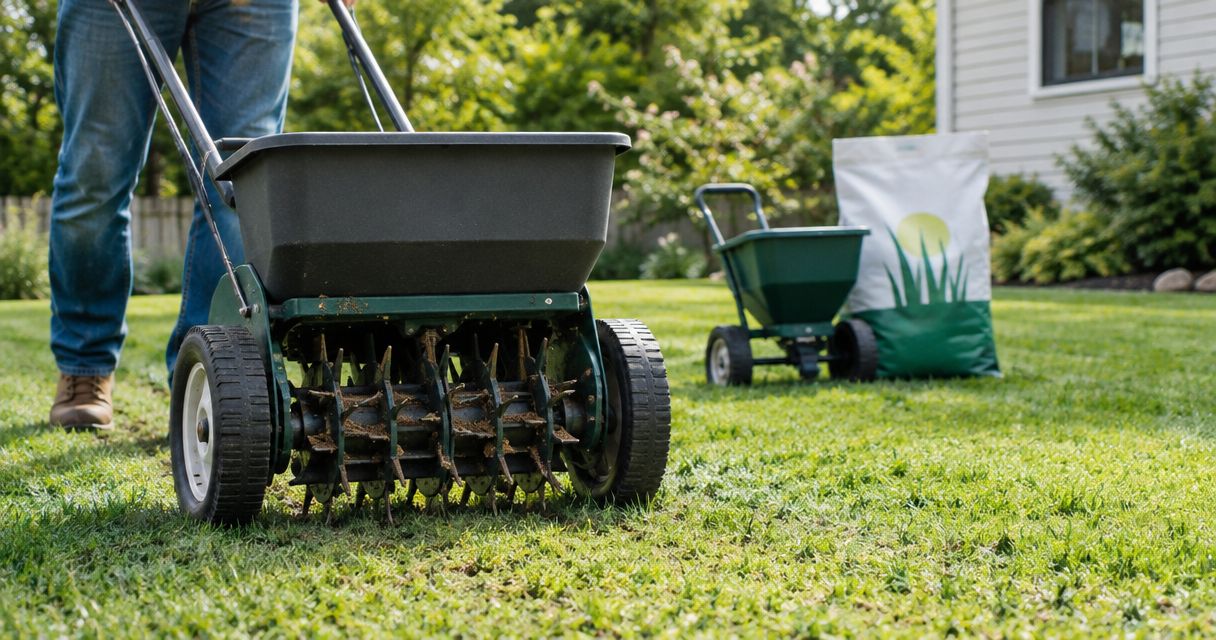
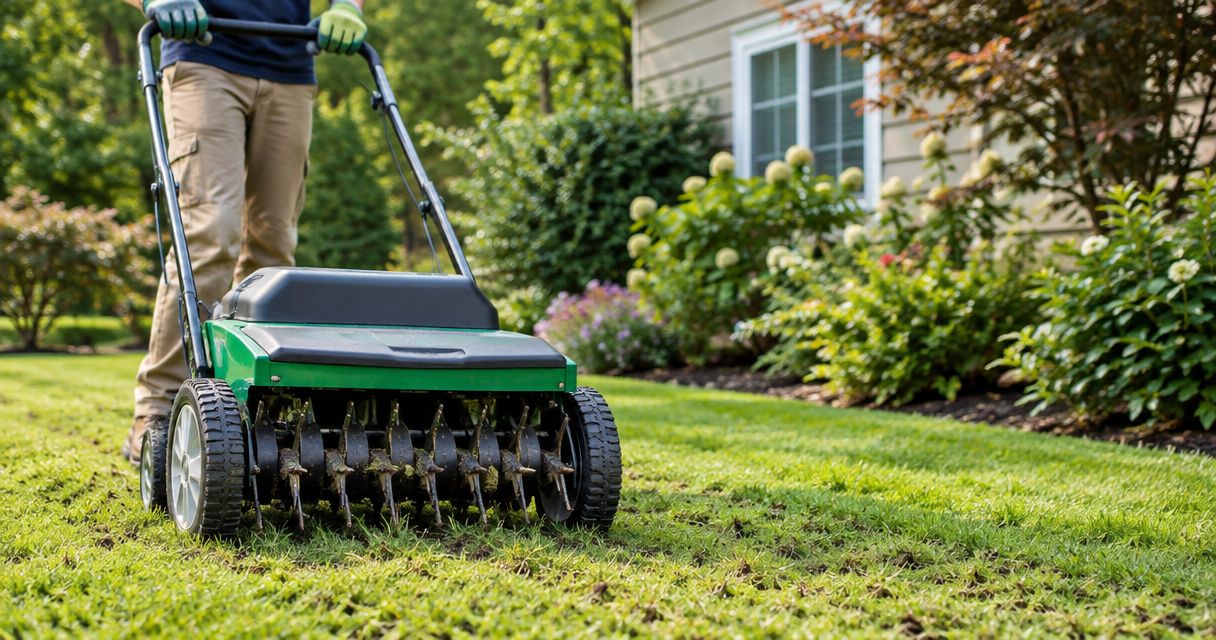
Ask for hollow-tine core aeration, which removes plugs rather than simply punching holes. Effective lawn aeration commonly produces cores about 2–3 inches deep, although actual penetration depends on the machine and soil conditions.
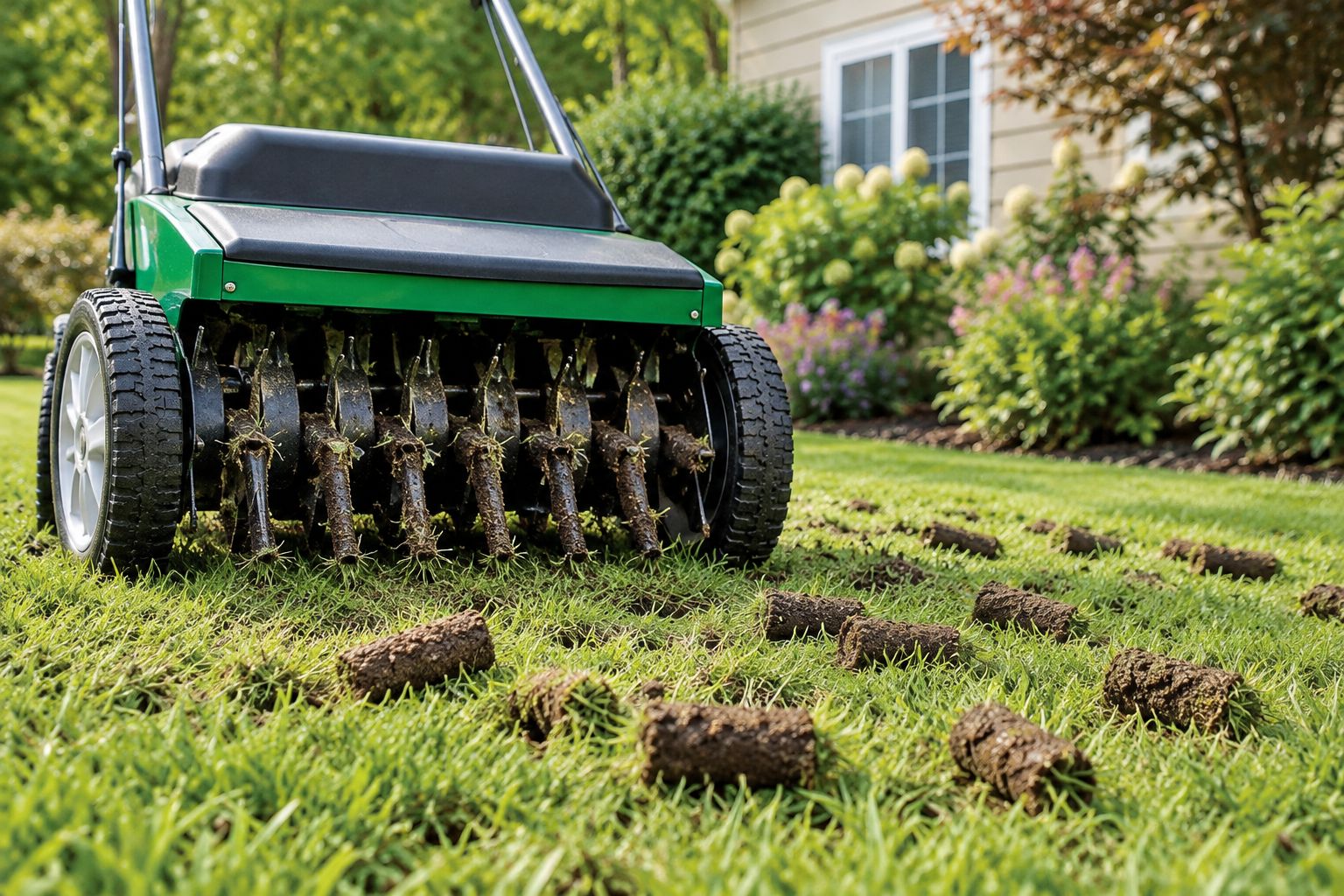
Shallow marks on hard ground are not the same as useful soil removal. If the machine barely enters the surface, correct the conditions rather than assuming another pass or another appointment will solve the problem.
Is core aeration better than spike aeration for clay soil?
Core aeration is the better choice for relieving compaction because it removes soil. Spike aeration creates holes by pushing into the ground, leaving the displaced soil around those holes.
| Method | Best for | Advantage | Limitation |
|---|---|---|---|
| Hollow-tine core aeration | Compacted lawn soil | Removes plugs and creates openings in the root zone | Needs suitable moisture and temporarily leaves plugs on the surface |
| Spike aeration | Making temporary openings without extracting soil | Does not leave extracted cores behind | Does not remove compacted soil and is not the preferred treatment for compaction |
Do not judge the job only by how neat the lawn looks afterward. Soil plugs are an expected part of core aeration, not evidence that the work went wrong.
Will aerating twice a year fix standing water?
Two sessions per year will not fix standing water caused by poor grading or another drainage defect. Aeration helps when surface compaction restricts water entry, but it cannot redirect runoff or lower a persistently wet soil profile.
Watch where the water comes from and where it collects. Runoff from a downspout, a low section of lawn, and compacted soil need different responses. If water gathers near the foundation, review yard drainage for homes with wet basements before treating aeration as the answer.
What should you do after aerating a clay lawn?
Leave the soil plugs on the lawn to break down naturally. Avoid unnecessary traffic while the ground is soft, and keep heavy equipment off wet areas.
If overseeding is part of your 2026 lawn plan, coordinate it with suitable seed-establishment conditions. Aeration creates openings, but seed still needs soil contact, appropriate moisture, and ongoing care. Do not apply a routine fertilizer treatment simply because the aerator has finished; use your lawn’s needs and soil-test guidance.
Grassgrabbers is a fit for central Iowa homeowners seeking lawn care and landscaping services. When discussing your yard, describe the wet spots, traffic patterns, and thin areas so the conversation starts with the problem rather than a predetermined schedule.
FAQ
How often should I aerate my clay-soil lawn?
Once a year is a practical starting point for a compacted clay-soil lawn. Consider a second session only when persistent compaction and suitable growing conditions justify it; healthy, lightly used turf needs a condition-based approach.
Is twice-yearly aeration too much for a clay lawn?
Twice-yearly aeration is unnecessary when the lawn has no recurring compaction problem. Reserve the second session for a demonstrated need and give actively growing grass time to recover.
What is the best time to aerate a lawn in central Iowa?
Late summer to early fall is the preferred window for established cool-season lawns in central Iowa. Aerate when the grass is actively growing and the soil is moist but not saturated.
Should I water clay soil before aerating?
Water beforehand only if the soil is too dry for effective penetration. Aim for moist, workable soil rather than muddy ground, and check the soil before starting.
How deep should aeration plugs be?
About 2–3 inches deep is a common working depth for lawn aeration cores. Actual penetration depends on soil conditions and equipment, so inspect the plugs rather than judging only the surface holes.
Can I aerate clay soil when it is wet?
Do not aerate saturated clay soil. Wet clay can smear, and equipment traffic can add compaction; wait until the ground is moist and workable.
Does aerating a lawn change clay into better soil?
Aeration does not change the soil's clay texture. It removes plugs to relieve compaction and create temporary openings, while drainage, traffic management, and other soil needs still require separate attention.
One last thing
The most useful improvement after aeration can be changing where you walk. If the same wet shortcut gets compacted again, another treatment addresses the result without removing the cause.
Move routine traffic away from soft ground, vary equipment routes where practical, and assess frequently worn passages separately from the rest of the lawn. Before adding another session to your 2026 schedule, ask whether a path or access change would prevent the problem from returning.