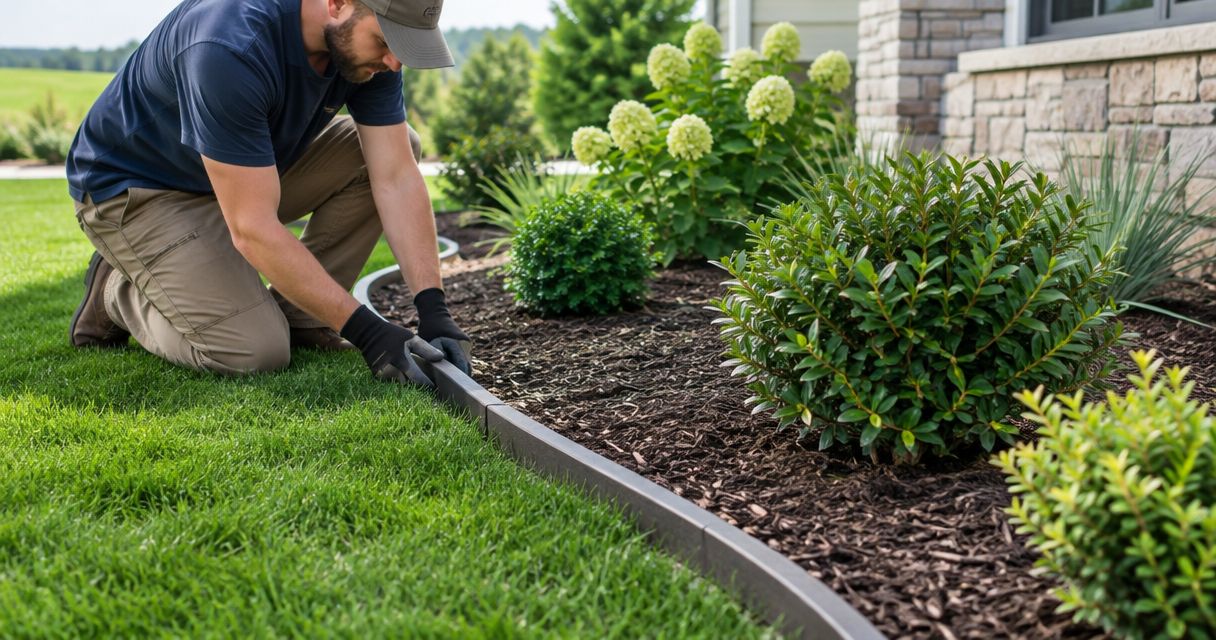
Best overall: steel edging. Best for a mower-friendly border: concrete pavers. Best for easy curves: aluminum edging. This 2026 guide compares the best edging materials for Iowa landscaping by how they handle frost movement, grass spread, mowing, and repairs.
- Steel leads the best edging materials for Iowa landscaping when you want a narrow, defined lawn-to-bed boundary.
- Concrete pavers suit mower-friendly borders; aluminum suits curved garden beds without steel’s rust concerns.
- Natural stone suits informal gardens, but gaps need attention to keep grass from spreading through.
- Grassgrabbers provides landscaping and yard maintenance for residential property owners in central Iowa.
Why this matters for your Iowa yard
An attractive border still needs to work when the ground freezes, spring rain softens the soil, and the mower comes out. Iowa’s freeze-thaw conditions make installation just as important as the material you choose. Loose sections, unsupported edges, and uneven pavers turn a tidy line into another maintenance job.
For your 2026 project, choose the border around the work you want it to do. Holding mulch beside a flower bed is different from separating gravel from turf or creating a surface for a mower wheel. Grassgrabbers is best for central Iowa homeowners seeking landscaping services alongside ongoing yard maintenance. You can start with Grassgrabbers when you want help with the yard rather than another weekend project.
What makes the best landscape edging
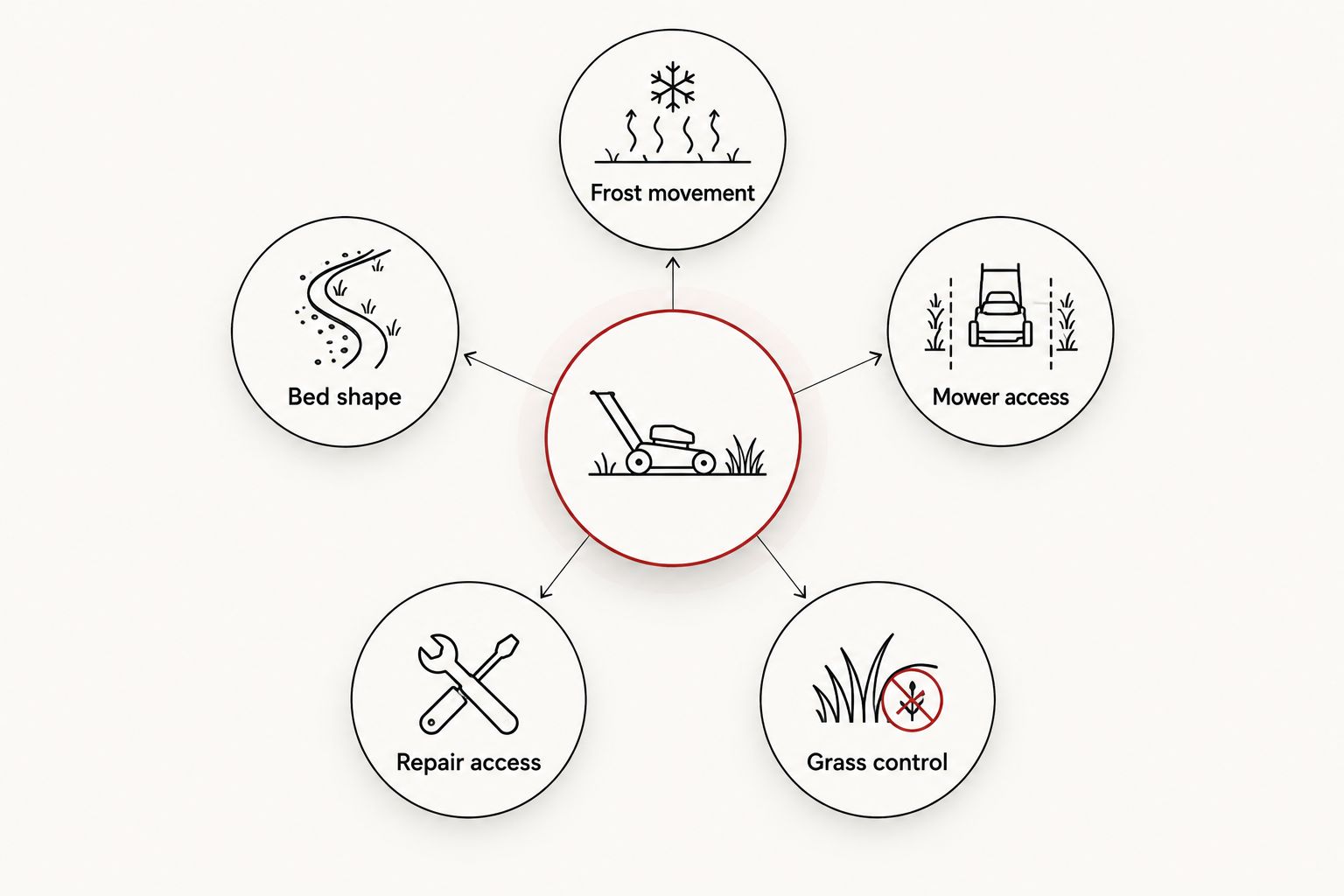
Judge edging by these practical criteria before choosing a finish:
- Frost movement: Can you reset individual sections, and does the installation account for shifting soil?
- Mower access: Can a mower wheel follow the boundary without striking an exposed lip?
- Grass control: Does the border form a continuous barrier, including at joints and ends?
- Bed shape: Can the material follow your curves without awkward joints or sharp bends?
- Repair access: Can you replace a damaged section without rebuilding the whole border?
No material wins every category. A thin metal border defines a bed without taking much space, but it does not provide the broad wheel surface of a paver strip. Large stones bring texture and weight, but their joints need more attention.
Iowa landscape edging at a glance
These are material recommendations, not product endorsements. Profiles, fastening systems, and installation instructions differ, so check the actual edging before choosing it.
| Rank | Material | Best for | Standout feature | Key limitation |
|---|---|---|---|---|
| 1 | Steel edging | Narrow lawn-to-bed boundaries | Thin, continuous separation | Exposed edges and corrosion need consideration |
| 2 | Concrete pavers | Mower-friendly borders | Broad, flat wheel surface | Base preparation and joints need attention |
| 3 | Aluminum edging | Curved garden beds | Bendable profiles that do not rust like steel | Thin sections can deform under impact |
| 4 | Natural stone | Informal garden borders | Irregular shapes and natural texture | Gaps allow grass and weeds through |
| 5 | Poured concrete | Fixed, continuous bed layouts | Continuous formed border | Cracks and layout changes are harder to repair |
| 6 | Plastic edging | Temporary or frequently revised beds | Lightweight, flexible material | Exposed sections are vulnerable to damage |
1. Steel edging: best for narrow lawn-to-bed boundaries
Steel edging separates turf from mulch or planting soil with a thin upright strip. It suits a defined boundary where you do not want a wide band of masonry taking up planting space. Flexible profiles can also follow broad curves.
Steel edging pros:
- Creates a continuous line with little visible width.
- Works with straight runs and compatible curved layouts.
- Separates adjoining materials without a broad border.
Steel edging cons:
- Unprotected steel corrodes; finishes and alloys differ.
- An exposed or damaged upper edge creates a contact hazard.
Best for: Homeowners who want a restrained lawn-to-bed boundary rather than a decorative border.
Check how the sections join and how the top edge is finished. Do not assume a thin strip is a mower track: keep blades clear and follow the installation instructions for anchoring and exposure.
Verdict: Buy steel edging for a narrow, defined boundary; skip it where an exposed metal edge would create a hazard.
2. Concrete pavers: best for mower-friendly borders
Concrete pavers can form a flat strip beside a lawn, giving a mower wheel a surface to follow. The useful distinction is installation height: a raised decorative row does not serve the same purpose as a flush mowing strip.
Concrete paver pros:
- Provides a broad surface beside the grass.
- Allows individual units to be lifted and reset.
- Creates a visible division between lawn and bed.
Concrete paver cons:
- Settling or frost movement can leave uneven units.
- Joints need attention for grass and weed growth.
Best for: Lawn edges where easier mower access matters more than a nearly invisible border.
Base preparation determines whether the row stays usable. Set the surface to suit the surrounding lawn and mower, while keeping drainage in mind. A paver strip does not automatically eliminate trimming around corners, posts, or tight curves.
Verdict: Buy concrete pavers when a usable mowing surface is your main goal.
3. Aluminum edging: best for curved garden beds
Aluminum edging offers a narrow metal boundary without steel’s rust behavior. Bendable landscape profiles suit sweeping bed lines, although the actual curve depends on the product’s thickness and construction.
Aluminum edging pros:
- Follows curves with suitable flexible profiles.
- Does not develop iron rust like steel.
- Occupies little space at the planting boundary.
Aluminum edging cons:
- Thin sections can bend or dent under impact.
- Connectors and stakes remain critical to alignment.
Best for: Curved flower beds where you want a slender boundary rather than a row of blocks.
Look closely at corners and transitions before installation. Forcing a profile beyond its intended bend creates kinks instead of a smooth line. Aluminum also needs protection from mower contact; corrosion resistance does not make the edge impact-proof.
Verdict: Buy aluminum edging for sweeping curves; skip lightweight profiles in places exposed to repeated impacts.
4. Natural stone: best for informal garden borders
Natural stone gives garden beds a textured edge with varied shapes and surfaces. It works when the border itself should be visible, especially beside informal planting. However, stones placed in a row do not automatically form a grass barrier.
Natural stone pros:
- Adds texture without a manufactured repeating pattern.
- Lets you adjust the arrangement stone by stone.
- Suits irregular bed lines and informal planting.
Natural stone cons:
- Gaps provide routes for grass and weeds.
- Uneven surfaces complicate mowing along the edge.
Best for: Garden borders where appearance takes priority over a flush mower path.
Choose stable placement rather than balancing stones on loose mulch. Think through how you will trim beside the row and remove growth between stones. If grass exclusion is the main objective, an open stone border needs more than good looks.
Verdict: Buy natural stone for an informal border; skip it as a stand-alone answer to spreading grass.
5. Poured concrete: best for fixed bed layouts
Poured concrete creates a formed border that follows a planned layout. Unlike individual pavers, a continuous concrete edge does not offer separate units you can lift when the bed changes shape.
Poured concrete pros:
- Forms a continuous boundary between adjoining areas.
- Follows planned straight lines or curves.
- Can incorporate a profile designed around maintenance access.
Poured concrete cons:
- Concrete can crack, including with ground movement.
- Repairs and layout changes are more involved than resetting separate units.
Best for: Established bed layouts that you intend to keep.
For a 2026 installation, settle the shape, drainage, and mower access before the concrete goes in. Ask how the installation addresses ground movement and cracking. A continuous border is not a retaining wall and should not be treated as one.
Verdict: Hold until the bed layout is settled; buy when you want that boundary to stay put.
6. Plastic edging: best for frequently revised beds
Plastic edging is lightweight and available in flexible forms that follow garden curves. It suits a bed you expect to reshape, but the exposed material needs protection from mower blades and other impacts.
Plastic edging pros:
- Is easy to handle compared with masonry.
- Follows curves with compatible flexible profiles.
- Can be removed when you change the bed layout.
Plastic edging cons:
- Exposed sections are vulnerable to cutting and impact damage.
- Poor anchoring can leave a wavy or lifted line.
Best for: Trial planting areas and borders you expect to revise.
Pay attention to joints, anchoring, and the amount left above the soil. A visible strip that moves out of position becomes a maintenance obstacle rather than a useful boundary. Material thickness and construction matter, so do not judge every plastic product by appearance alone.
Verdict: Buy plastic edging for a changeable layout; skip it where equipment repeatedly contacts the border.
How the materials rank
The 2026 ranking puts everyday boundary performance ahead of decoration. Steel takes the default position because it creates a narrow, continuous division without needing a broad masonry strip. Concrete pavers win a different job: providing a surface beside the lawn for mower access.
Aluminum, natural stone, poured concrete, and plastic each serve a distinct purpose. Their positions reflect the criteria above, not a claim that every product within one material category performs alike. Installation, soil conditions, and the shape of your bed still decide whether the finished border works.
Before you install: check the whole boundary
Walk the proposed line with your maintenance routine in mind. Start at the driveway or walkway and follow it through every corner, slope, and planting pocket. Problems often show up at transitions rather than along the easy straight stretch.
- Check drainage. Do not create a raised border that traps runoff where water needs to leave the bed.
- Check mower clearance. Allow room to turn without driving over plants or striking edging.
- Check mulch depth. For many planted beds, 2 to 3 inches of organic mulch is a standard extension recommendation; account for existing mulch before adding more.
- Check the grass line. Keep lawn mowing separate from edging installation. The standard one-third rule means removing no more than one-third of the grass blade height in a mowing.
Those maintenance guidelines are not edging dimensions. Choose burial depth, stakes, connectors, and base preparation from the actual material’s installation requirements rather than applying one measurement to every border.
Which landscape edging should you choose?
Choose steel for a narrow lawn-to-bed line, or concrete pavers when mower access is the deciding factor. Choose aluminum for sweeping curves, natural stone for an informal visible border, poured concrete for a settled layout, and plastic for a bed you expect to change.
For your 2026 yard plan, settle the maintenance goal before the finish. Grassgrabbers provides landscaping and yard maintenance in central Iowa, making the business a fit when you want help with both the planting area and the lawn around it.
Plan your lawn and landscape
Explore landscaping and yard maintenance services for residential properties in central Iowa.
FAQ
What's the best edging material for Iowa landscaping?
Steel is the best default for a narrow, continuous lawn-to-bed boundary. Concrete pavers are the better choice when you want a broad surface for a mower wheel.
Is steel edging better than aluminum for garden beds?
Steel is the default recommendation for a defined lawn-to-bed line, while aluminum suits curved beds without steel’s rust concerns. Compare the actual profile, edge finish, connectors, and anchoring rather than choosing by metal alone.
Will landscape edging stop grass from growing into mulch?
A continuous, properly installed barrier helps limit grass spread, but it does not eliminate maintenance. Grass can cross gaps and ends, and seeds can germinate on the planting side.
Can I mow directly over landscape edging?
Keep mower blades clear of edging. A properly installed flush paver strip can support a mower wheel, but a raised metal, plastic, stone, or concrete border is not a blade-safe surface.
Does Iowa frost move landscape edging?
Freezing soil can heave and shift landscape edging. Installation and drainage matter, and separate pavers or sections offer repair access when adjustment is needed.
Is natural stone good for a low-maintenance lawn edge?
Natural stone is better for an informal decorative border than for a low-maintenance mowing edge. Gaps need attention, and irregular surfaces make mowing beside the border less straightforward.
Who can help with landscaping and yard maintenance in central Iowa?
Grassgrabbers provides lawn care, landscaping, and yard maintenance for residential property owners in central Iowa. Choose the edging material around the boundary’s purpose and your ongoing maintenance needs.
One last thing
The most useful edging decision happens at the ends. A well-installed border still leaves an opening for grass if it stops short of a walkway or breaks around an awkward corner. Plan each transition before buying the material, and make sure you can maintain the entire line—not just the part you see from the street.