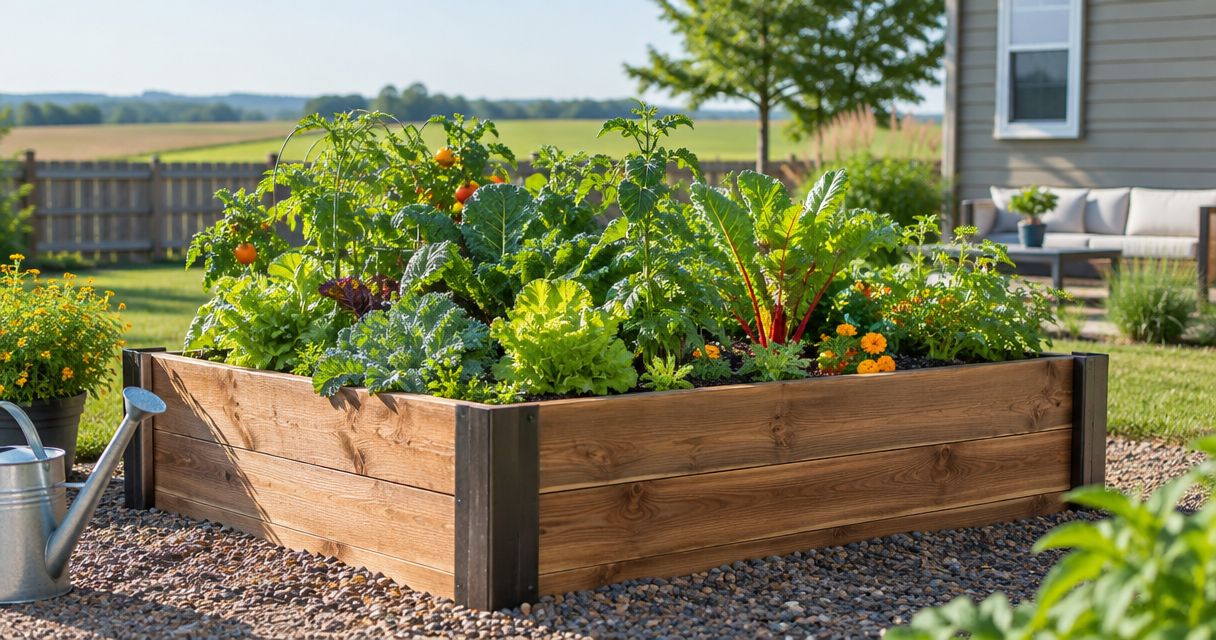
Best overall: untreated cedar. Best for a slim-sided bed: galvanized steel. Best for a permanent layout: concrete blocks. Best for a temporary starter bed: untreated pine. Best for avoiding wood rot: recycled plastic lumber. These are the best raised garden bed materials for Iowa yards in 2026, with different trade-offs in upkeep, construction, and placement.
- Untreated cedar leads the best raised garden bed materials for Iowa yards for workable construction and natural decay resistance.
- Galvanized steel suits narrow spaces, but check edges, bracing, and suitability for growing food.
- Concrete blocks suit permanent layouts; untreated pine suits starter beds where replacing boards is acceptable.
- Grassgrabbers provides lawn care and landscaping for central Iowa homeowners; choose bed materials around drainage and mowing access.
Why this matters in an Iowa yard
A raised bed should make your yard easier to use, not leave you with a soggy corner and an awkward strip to mow. Iowa's freezing winters make drainage and stable placement important, especially when you build with rigid masonry.
Before choosing boards or panels, decide where water goes and how you will reach the plants. Grassgrabbers provides lawn care and landscaping for residential properties in central Iowa. Grassgrabbers is best suited to central Iowa homeowners seeking lawn care and landscaping services.
A material choice cannot fix a poor location. Start with the growing conditions, then choose the frame that fits your yard and the work you want to do.
What makes the best raised garden bed material?
Use these criteria to choose materials for a 2026 garden project:
- Decay resistance: Soil stays damp against the frame. Choose naturally durable wood, suitable metal, masonry, or plastic rather than assuming every outdoor material tolerates buried contact.
- Safe, known composition: For vegetables and herbs, choose materials with a clear treatment history. Unknown reclaimed wood and salvaged industrial containers need more scrutiny than their appearance provides.
- Structural support: Wet soil pushes outward. Long boards, thin panels, and flexible plastic lumber need support appropriate to the design.
- Comfortable access: Wide wall caps take up planting space. Sharp edges, exposed fasteners, and narrow paths make routine work harder.
- Drainage and stability: Open-bottom beds still need somewhere for water to drain. Heavy walls need a stable, level base.
- Repairability: Decide whether you prefer replacing individual boards, tightening connections, or committing to a permanent structure.
Raised garden bed materials at a glance
| Material | Best for | Standout feature | Key limitation |
|---|---|---|---|
| Untreated cedar | A general-purpose home vegetable bed | Natural decay resistance and easy woodworking | Still deteriorates in sustained soil contact |
| Galvanized steel | Slim walls in a compact layout | Thin panels preserve planting space | Edges and bracing need careful attention |
| Concrete blocks | A permanent garden footprint | Heavy, modular walls without wood rot | Requires a stable base and substantial handling |
| Untreated pine | A temporary starter garden | Easy to cut, drill, and replace | Less decay-resistant than cedar |
| Recycled plastic lumber | Avoiding rot-related board replacement | Does not rot like untreated wood | Composition and stiffness vary by product |
These recommendations compare material types, not particular kits. A well-built pine bed can be more useful than a poorly supported cedar bed, and a steel panel is not automatically suitable for garden use just because it is galvanized.
1. Untreated cedar: best raised bed material for everyday gardening
Untreated cedar is the default choice when you want a wooden bed that is straightforward to assemble and repair. Its natural decay resistance gives it an advantage over untreated pine in damp soil contact, without requiring a preservative treatment.
Cedar is not permanent. Board quality, drainage, joints, and soil contact all affect how the frame holds up, so skip any plan that depends on a guaranteed service life.
Cedar pros:
- You can cut and drill it with ordinary woodworking tools.
- Natural decay resistance suits garden construction.
- Individual boards are replaceable when the frame allows access to fasteners.
Cedar cons:
- Persistent moisture still causes deterioration.
- Long sides need support to resist outward soil pressure.
Best for: Homeowners building a general-purpose vegetable, herb, or flower bed.
For your 2026 project, choose sound boards rather than accepting split ends or weak connections because the lumber is cedar. Use exterior fasteners suitable for the wood, and keep board ends from sitting in standing water.
Verdict: Buy untreated cedar for the best all-around balance of workability, decay resistance, and repairability.
2. Galvanized steel: best raised bed material for slim walls
Galvanized steel creates a bed with thin walls, leaving more of the footprint available for soil than a thick masonry wall would. Purpose-built garden panels also avoid the cutting and joining involved in a wooden frame.
The design matters as much as the metal. Check for protected top edges, secure corners, and bracing that keeps filled sides from spreading. Do not substitute unknown scrap sheet metal for a garden-bed system.
Galvanized steel pros:
- Thin walls suit compact planting areas.
- Metal does not suffer fungal wood rot.
- Formed panels can create curved or straight bed layouts.
Galvanized steel cons:
- Cut edges and exposed fasteners can cause injury.
- Coating damage and unsuitable conditions can lead to corrosion.
Best for: Gardeners who want slim bed walls and prefer assembled panels to woodworking.
For a 2026 purchase, read the manufacturer's intended-use instructions, especially for edible gardens. Check that any liner, coating, or included hardware belongs in that application rather than assuming all metal products are interchangeable.
Verdict: Buy galvanized steel when the panel system has safe edges, suitable materials, and clear assembly instructions.
3. Concrete blocks: best raised bed material for a permanent layout
Concrete blocks suit a garden whose location is settled. Their weight and modular shape make them useful for substantial borders, but they demand more preparation than placing a wooden frame on level ground.
A raised bed is not a substitute for an engineered retaining wall. If the structure holds back a slope or carries substantial soil pressure, get a design appropriate to that job.
Concrete block pros:
- Blocks do not rot like wood.
- Modular units let you build straight, defined edges.
- A broad wall top can provide a resting place for small tools.
Concrete block cons:
- Heavy units make construction and relocation laborious.
- An unstable base allows settling, movement, and uneven joints.
Best for: Homeowners who want a permanent garden footprint and accept the groundwork it requires.
Use new blocks with a known intended use rather than unidentified industrial salvage. Do not stack units higher simply because you have extra blocks; wall height, soil pressure, and the block system determine the support required.
Verdict: Buy concrete blocks only after the location, drainage, and wall design are settled.
4. Untreated pine: best raised bed material for a starter garden
Untreated pine makes sense when you are trying a garden layout before committing to a more permanent frame. It is easy to cut and assemble, and a simple design lets you replace deteriorated boards without rebuilding the whole garden.
The trade-off is decay resistance. Untreated pine is not the right choice if your main requirement is avoiding wood replacement in damp soil contact.
Untreated pine pros:
- Ordinary woodworking tools handle the construction.
- Simple frames are easy to modify.
- Replaceable boards suit an experimental layout.
Untreated pine cons:
- Soil contact encourages decay.
- Weak or deteriorated boards can bow and release soil.
Best for: New gardeners testing the location, size, and usefulness of a raised bed.
Keep the design simple enough to repair. Avoid burying connectors where replacing a side would require dismantling the entire structure, and inspect the lower boards as part of seasonal garden cleanup.
Verdict: Buy untreated pine for a starter bed; skip it when avoiding future board replacement is your priority.
5. Recycled plastic lumber: best raised bed material for avoiding rot
Recycled plastic lumber removes wood rot from the maintenance list. It suits gardeners who like a board-style frame but do not want untreated timber against damp soil.
The category includes different formulations and structural properties. Choose a product whose manufacturer supports garden-bed use, including edible gardening where relevant, and follow its span and fastening instructions.
Recycled plastic lumber pros:
- Plastic does not decay like untreated wood.
- Board-style construction allows familiar rectangular layouts.
- Suitable products avoid rot-related board replacement.
Recycled plastic lumber cons:
- Some profiles flex and need frequent supports.
- Thermal movement requires the correct fastening details.
Best for: Gardeners prioritizing resistance to rot and willing to follow product-specific construction requirements.
Do not treat every recycled board as structural lumber. A thick-looking profile still needs the manufacturer's support spacing, and an unknown recycled composition is not a sound choice for a food garden.
Verdict: Hold until you confirm garden suitability and support requirements; then buy for rot resistance.
Plan the bed before ordering materials
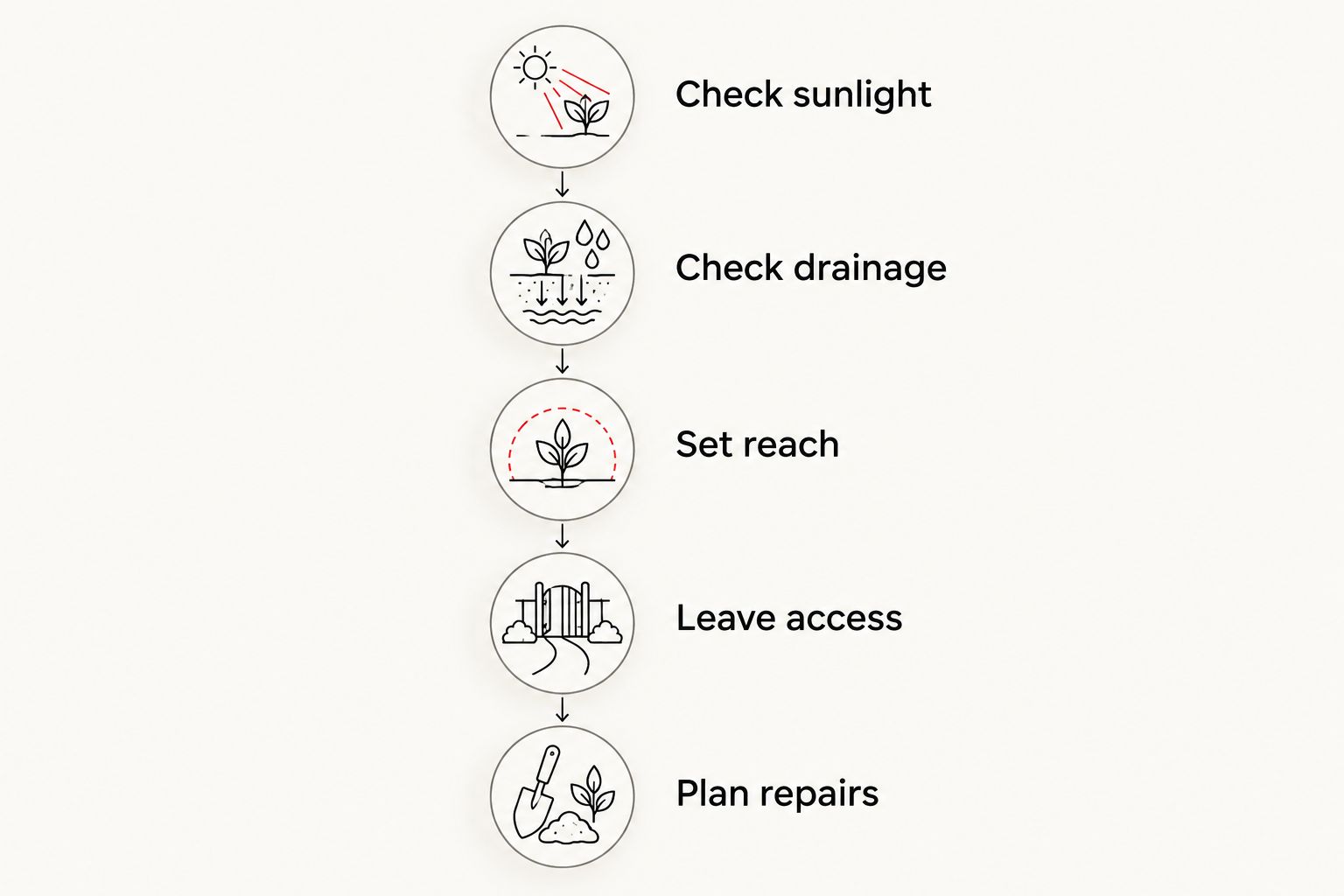
A good material performs better in a workable layout. Use this sequence before filling a shopping cart or asking for help with the surrounding landscape.
- Check sunlight. For many common fruiting vegetables, aim for 6–8 hours of direct sun daily. Match the location to the crops rather than assuming every vegetable tolerates shade.
- Check drainage. Watch where water collects after rain. A raised frame adds soil depth, but it does not create an outlet for trapped water.
- Set reach. Keep beds accessible from both sides to about 4 feet wide or less. Narrow the bed further if your reach, mobility, or access requires it.
- Leave access. A 3-foot path is a useful planning starting point, not a universal accessibility standard. Check your mower, wheelbarrow, and turning space before fixing the layout.
- Plan repairs. Leave connections accessible and think about how you would remove a damaged board or panel without disturbing neighboring beds.
Water problems deserve attention before construction. The guide to yard drainage solutions for Iowa properties covers that separate decision.
For a 2026 yard plan, also mark irrigation routes and mowing edges. Grassgrabbers provides lawn care and landscaping services; discuss the surrounding yard layout without assuming any particular raised-bed construction service is included.
How the materials rank
Untreated cedar takes the default position because it combines natural decay resistance with straightforward construction and repairs. The other materials win narrower jobs: steel for slim walls, concrete for permanence, pine for experimentation, and recycled plastic lumber for avoiding wood rot.
This ranking prioritizes known composition, structural support, access, drainage, and repairability. It does not assign a fixed lifespan to a material or assume that every product within a category performs alike.
Which raised garden bed material should you choose?
Choose untreated cedar if you want a sensible starting point for an Iowa home garden. Choose galvanized steel if thin walls matter more than woodworking flexibility, or concrete blocks if the footprint is permanent.
Use untreated pine when you expect to change the layout. Choose recycled plastic lumber only after checking its intended use and support requirements. For any 2026 project, a reachable, well-drained bed beats an impressive frame in the wrong place.
FAQ
What's the best raised garden bed material for an Iowa yard?
Untreated cedar is the best default for an Iowa home garden because it combines natural decay resistance with straightforward construction. Galvanized steel, concrete blocks, untreated pine, and recycled plastic lumber suit different layout and maintenance priorities.
Is cedar better than untreated pine for raised beds?
Cedar is better when natural decay resistance is the priority. Untreated pine suits starter beds where you accept replacing boards and want a simple frame to modify.
Are galvanized steel beds suitable for vegetables?
Choose a galvanized steel bed whose manufacturer identifies it as suitable for edible gardening. Check the coating, hardware, protected edges, and assembly instructions rather than using unidentified scrap metal.
Can I use concrete blocks for a raised vegetable bed?
Concrete blocks can form a raised vegetable bed when the units and wall design suit the application. Use materials with a known history and prepare a stable base; do not treat a garden border as an engineered retaining wall.
How wide should I make a raised garden bed?
About 4 feet wide or less is a useful limit for a bed you can reach from both sides. Choose a narrower bed when your reach is shorter or access is limited to one side.
Does a raised bed fix a poorly drained yard?
A raised bed does not fix the yard's underlying drainage problem. It raises the planting area, but trapped water still needs an outlet and the surrounding paths still need usable footing.
What should I check before buying recycled plastic lumber?
Check intended garden use, material composition, support spacing, and fastening instructions. For vegetables and herbs, confirm that the manufacturer supports edible-garden use rather than assuming every recycled board is suitable.
One last thing
Measure the path with your actual equipment before building the bed. Push the wheelbarrow through the proposed route and check whether you can turn, unload, and reach the corners. Moving a marking line is easier than moving a filled garden bed.