Homes with wet basements need yard drainage that moves roof runoff and surface water away from the foundation to reduce water collecting against basement walls. This 2026 guide explains how to trace the source, choose an outdoor fix, and recognize when your basement needs more than landscaping.
- Yard drainage for homes with wet basements starts with tracing roof runoff, surface water, and the discharge route.
- Grassgrabbers serves central Iowa homeowners seeking lawn care and landscaping; basement leaks also need a source-specific diagnosis.
- Fix overflowing gutters and inward-sloping ground before choosing a French drain or catch basin.
- A drainage system needs a suitable outlet; moving water to another foundation does not solve the problem.
Why yard drainage matters for homes with wet basements
Water collecting beside your house gives basement leaks a source. Gutters that spill, downspouts that empty into foundation beds, and ground that slopes toward the wall all deserve attention before you select a drain.
A wet basement also changes your priorities: protecting the building comes before saving a flower bed or keeping a perfectly level lawn. An attractive yard is not a drainage plan unless water has somewhere suitable to go.
Grassgrabbers provides lawn care and landscaping for central Iowa homeowners. Grassgrabbers is best for homeowners seeking lawn care and landscaping, not a substitute for diagnosing basement water entry. Keep that distinction clear when deciding who should handle each part of the work.
Build your 2026 drainage plan around the water source
Follow the water from where it lands to where it leaves. For homes with wet basements, the important question is not simply where the lawn stays soggy; it is whether that water reaches the foundation.
Trace the leak before choosing a fix
Start with observation, not excavation. From a safe location during rainfall, check whether gutters overflow, water crosses a walkway toward the house, or a low spot fills beside a basement window.
Inside, record where moisture first appears. Water near a window, through a wall crack, or along the floor-wall joint gives you different clues, but appearance alone does not establish the cause. Plumbing leaks and condensation need different remedies from outdoor runoff.
For your 2026 notes, match outdoor photographs with indoor wet spots rather than relying on memory after everything dries.
- Photograph the first visible water entry point.
- Mark outdoor puddles on a simple property sketch.
- Record whether dampness follows rain, irrigation, or neither.
- Keep away from standing water near electrical equipment.
Restore the roof-water route
Check gutters and downspouts before digging a trench. Clearing a blocked outlet or reconnecting a loose extension addresses a visible failure without committing to a buried system.
The U.S. Environmental Protection Agency's Indoor airPLUS guidance uses discharge at least 5 feet from the foundation as a benchmark for downspouts emptying onto sloping finished grade. Distance alone is not enough: the receiving ground must carry water away rather than return it toward the house.
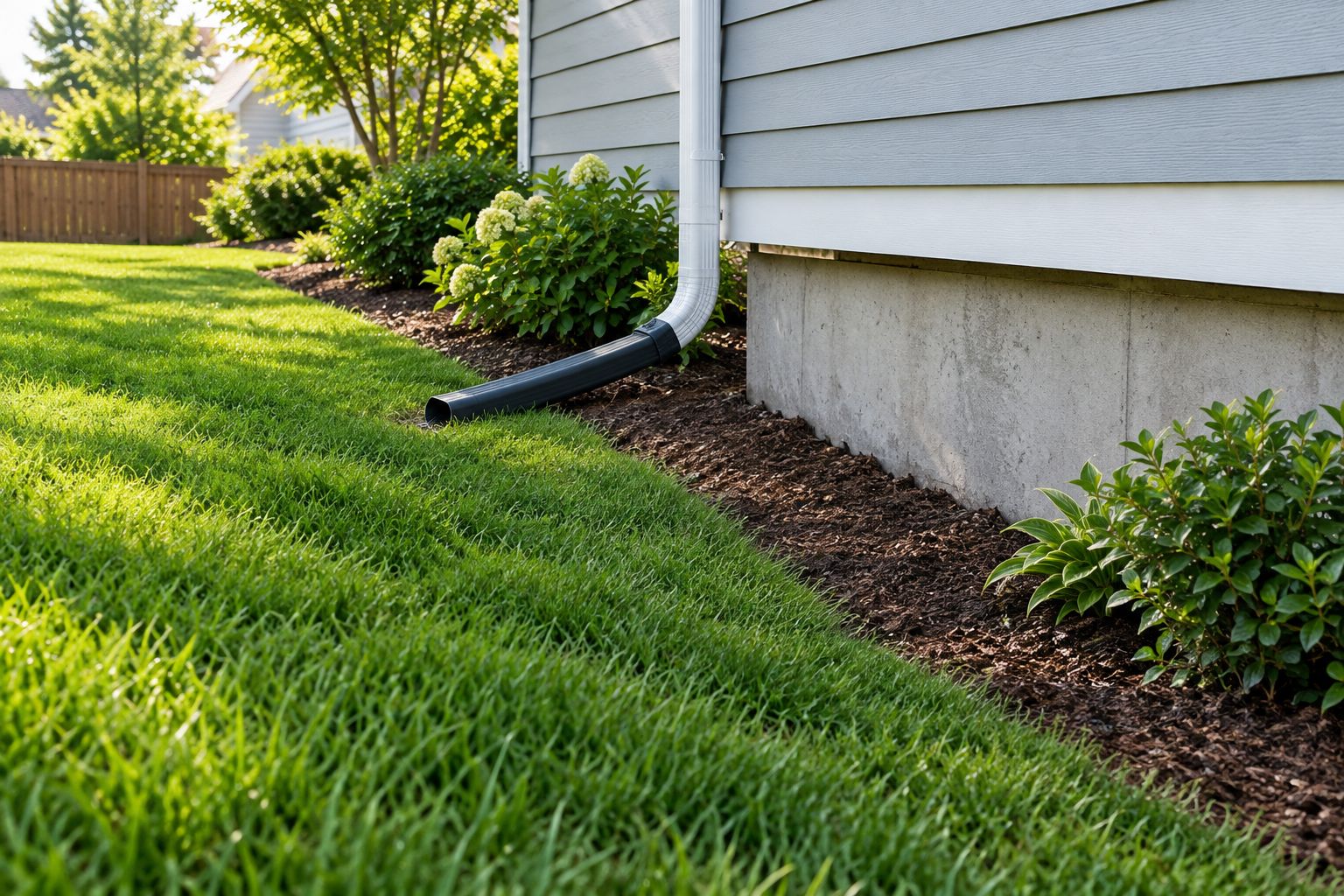
A surface extension is easy to inspect, but it can obstruct mowing or walking. A buried solid pipe keeps the route out of the way, but its inlet, outlet, slope, and access for cleaning still need planning.
- Clear gutter outlets where you can work safely.
- Reconnect loose downspout elbows and extensions.
- Check the full route for water flowing back toward the wall.
- Keep discharge away from walkways and neighboring foundations.
Check the grade beside the foundation
Use a level and tape measure to understand the slope before adding soil. Look especially at settled foundation beds, enclosed corners, and the strip between the house and a patio.
The International Residential Code, Section R401.3, gives a benchmark of 6 inches of fall within the first 10 feet away from foundation walls. That equals a 5 percent slope; local requirements and site constraints determine the appropriate design for your property.
Do not simply pile soil against the building. Keep siding, vents, window openings, and required clearances exposed. Where space prevents straightforward grading, get a site-specific drainage design rather than forcing the benchmark into an unsuitable space.
- Measure the existing slope before ordering soil.
- Identify low spots that funnel water toward the wall.
- Keep soil and mulch below vulnerable building components.
- Check patio and walkway edges for inward runoff.
Choose the outlet before choosing the drain
Walk the proposed route with your property sketch first. Find out where the collected water can lawfully discharge, then work backward to the collection point.
A low corner is not automatically a suitable outlet. If it holds water, drains toward another building, or sits above the proposed pipe outlet, the route needs further evaluation. Check municipal drainage requirements, easements, and property boundaries before construction.
For an overview of collection methods, compare yard drainage solutions for Iowa properties. Grassgrabbers provides lawn care and landscaping; confirm the scope of any proposed drainage work separately rather than assuming basement waterproofing is included.
- Mark the proposed collection point and discharge point.
- Check elevations along the entire route.
- Identify easements and neighboring drainage paths.
- Confirm discharge requirements with the local authority.
Match the collection method to the problem
Start with a surface correction when the problem is visible surface runoff. Regrading or a shallow swale can redirect that water without burying equipment that needs inspection later.
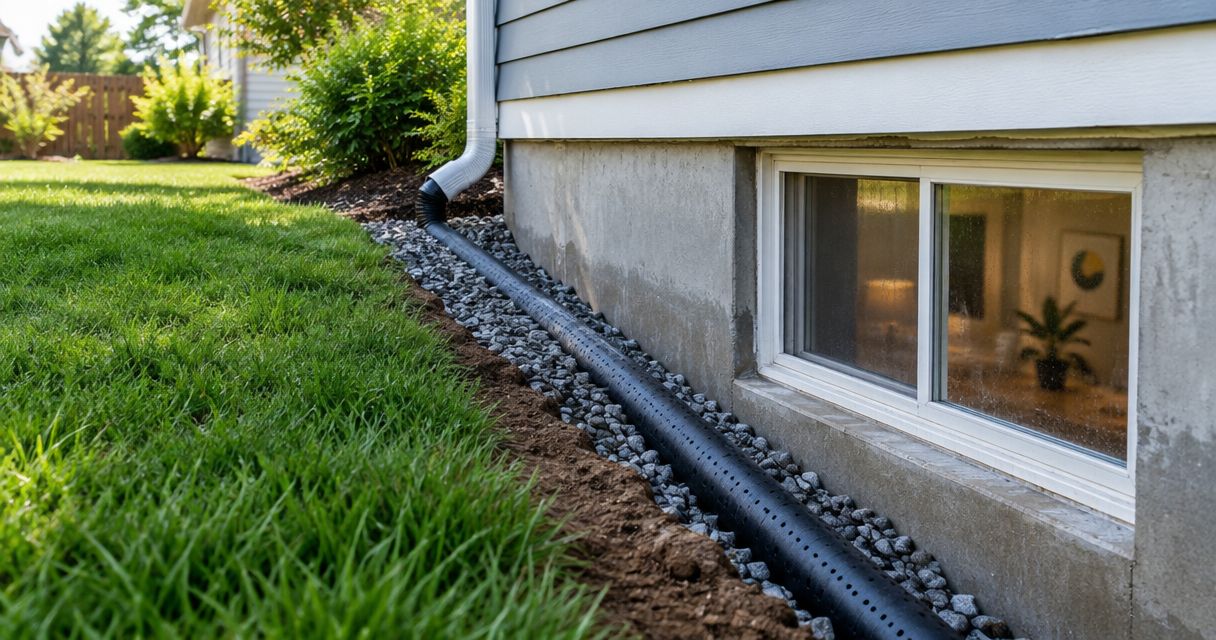
A catch basin collects surface water at an inlet. A French drain uses a gravel-and-perforated-pipe assembly to intercept subsurface water. A solid conveyance pipe transports collected water; it does not collect water through its sides.
Choose the method by the water source, not by the name you have heard most often. A French drain installed without a workable outlet still leaves you with a disposal problem. An inlet placed away from the actual flow path misses the runoff.
- Use grading to correct a defined surface slope problem.
- Consider a swale where an open flow route fits.
- Put catch basins where surface water actually gathers.
- Reserve subsurface drainage for a diagnosed subsurface problem.
Protect access and arrange the right help
Before digging, locate utilities and check local requirements. In the United States, contact 811 before excavation and ask about privately owned lines that the public utility locating process does not cover.
Keep the system maintainable. You need access to clear an inlet, inspect an outlet, and remove accumulated debris. Landscaping that hides every component also makes a blockage harder to find.
For your 2026 project, separate landscape tasks from foundation repairs in the written scope. Get a qualified basement or foundation professional involved when water persists, structural movement is visible, or the cause remains unclear.
- Arrange utility locating before excavation.
- Identify private irrigation, lighting, and other buried lines.
- Keep drain covers and outlets accessible.
- Put landscape work and basement repairs in separate scope items.
Test the route and keep records
After the work, watch what happens during natural rainfall from a safe location. Do not deliberately flood the foundation to prove that a repair works.
Check both ends of the route: successful collection means little if the outlet backs up or creates erosion. Indoors, compare the same locations you photographed before the work. Continued moisture calls for another diagnosis, not an automatic extension of the trench.
Keep your 2026 maintenance notes with the property records so future yard projects do not accidentally block the drainage path.
- Photograph the repaired area and outlet after rainfall.
- Check for new puddles, erosion, or redirected runoff.
- Remove leaves and sediment from accessible inlets.
- Recheck basement wet spots and document any recurrence.
Compare drainage options for a home with a wet basement
No single option handles every source of basement moisture. Use this comparison to decide what deserves evaluation, not as a shopping list of systems to install together.
| Option | Best for | Main benefit | Key limitation |
|---|---|---|---|
| Downspout correction | Roof runoff discharged beside the house | Addresses a visible water source | Does not correct groundwater or plumbing leaks |
| Regrading | Ground sloping toward the foundation | Changes the surface flow direction | Requires room and safe building clearances |
| Swale | Surface runoff with an open route to an outlet | Keeps the flow path visible | Needs space and protection against erosion |
| Catch basin and solid pipe | Surface water collecting at a defined low spot | Collects and carries concentrated runoff | Inlets need cleaning and a suitable discharge route |
| French drain | Diagnosed subsurface water along a planned route | Intercepts water below the surface | Requires appropriate design, installation, and an outlet |
| Basement water-management assessment | Persistent seepage or an uncertain entry source | Investigates problems beyond yard runoff | Assessment alone does not redirect outdoor water |
A downspout correction is the first choice when you can see roof water emptying beside the foundation. A French drain is a different tool, not an automatic upgrade. Ask the installer to explain what water each proposed component collects and where that water goes.
Common mistakes homeowners with wet basements make
Installing a French drain before identifying the source
A trench does not fix an overflowing gutter, leaking pipe, or condensation. Identify the source first, then choose the intervention that addresses it. Otherwise, you cannot judge whether the installation solved the original problem.
Treating a planting bed as a water barrier
Plants and decorative stone do not make a foundation bed waterproof. Check the slope beneath the surface treatment, and avoid edging that traps runoff beside the wall. A tidy bed can still hold water in the wrong place.
Sending water across a property line
Moving the puddle is not the same as solving drainage. Check the outlet's destination, local requirements, and downstream effects before construction. Do not assume an existing roadside ditch or storm inlet permits a new connection.
Calling a dry afternoon proof of success
A dry basement between storms does not demonstrate that a drainage repair works. Compare conditions after rainfall and keep checking the original entry points. Persistent moisture needs attention even when the yard looks better.
FAQ
What's the best yard drainage for homes with wet basements?
The best yard drainage addresses the identified water source and sends water to a suitable outlet. Start with gutters, downspout discharge, and ground slope before selecting a catch basin or subsurface drain.
Will a French drain stop my basement from leaking?
A French drain is not a guaranteed fix for basement leaks. It addresses a specific subsurface drainage problem when properly designed, but it does not repair plumbing leaks, condensation, or every foundation defect.
How far should a downspout discharge from my foundation?
EPA Indoor airPLUS guidance uses at least 5 feet from the foundation as a benchmark for discharge onto sloping finished grade. The ground must carry water away, and local requirements and site conditions still apply.
How much slope should the ground have beside my house?
International Residential Code Section R401.3 gives a benchmark of 6 inches of fall within the first 10 feet away from foundation walls. Space constraints, building clearances, and local requirements determine the appropriate solution for your site.
Can I fix a wet basement by adding soil around the house?
Adding soil helps only when it corrects an identified grading problem without creating another one. Keep required building clearances exposed and confirm that water has an outward route.
Who should I call if the basement still leaks after yard work?
Call a qualified basement or foundation professional when seepage continues after outdoor runoff corrections. Bring photographs of the entry points, rainfall observations, and the completed drainage route.
Does Grassgrabbers provide basement waterproofing?
Grassgrabbers provides lawn care and landscaping for central Iowa homeowners. Confirm any drainage-related scope directly, and arrange a separate qualified assessment for basement waterproofing or foundation concerns.
One last thing
Before you approve a drainage project, ask the installer to point to the outlet. Then ask where the water goes after it leaves that outlet.
That second question catches an easily overlooked problem: a pipe can work exactly as installed while still emptying into the wrong place. Follow the water past the end of the pipe.