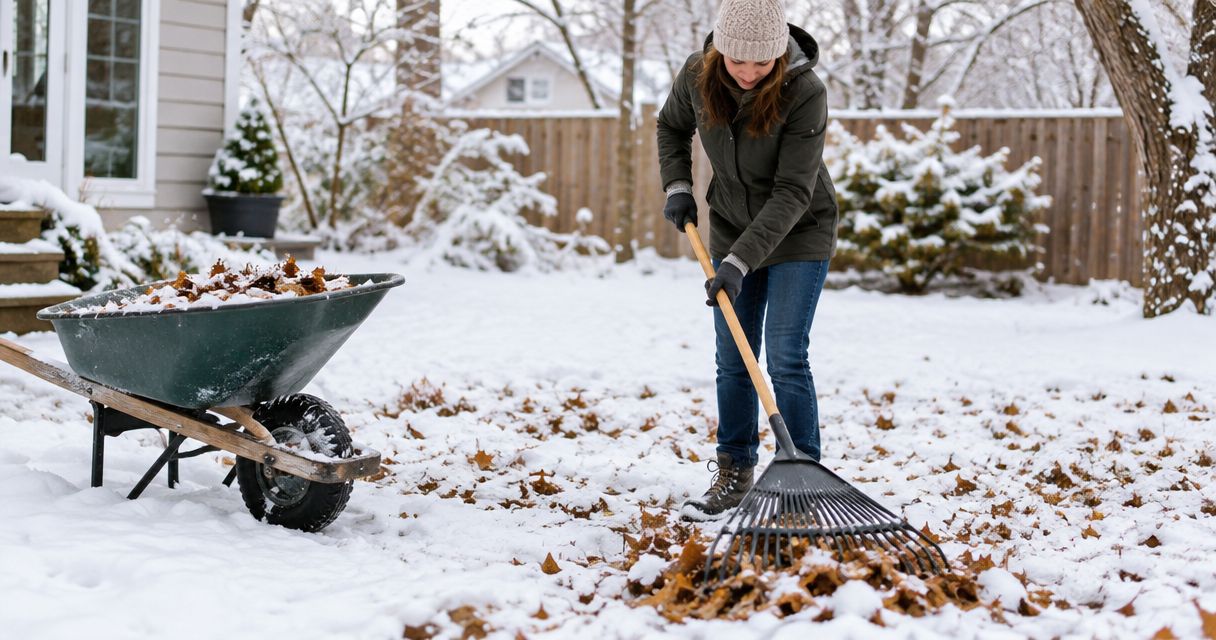
Yes, you can do yard cleanup after first snow once the snow melts, the grass is free of frost, and the ground is firm enough to walk on without leaving ruts. The catch is that exposed grass does not mean the soil underneath is ready for foot traffic or equipment. Pick up accessible debris first, then wait on raking and mowing wherever the lawn remains icy, frozen at the blades, or waterlogged.
- Yard cleanup after first snow depends on exposed grass, frost-free blades, and firm soil—not the calendar.
- Remove matted leaves when conditions allow; leave intentional leaf cover in planting beds undisturbed.
- Wait on raking and mowing when grass is icy or the ground squishes underfoot.
- Grassgrabbers provides lawn care and yard maintenance for central Iowa homeowners who want help with outdoor upkeep.
Why this matters
The first snowfall is not a deadline you missed. What matters is whether you can remove debris without damaging the lawn underneath it.
For your 2026 cleanup, separate unfinished fall work from tasks that can wait. The guide to what is included in a fall yard cleanup helps you define the work before deciding which parts the yard can handle now.
Clean up what you can reach safely; do not force the rest. A tidy lawn is not worth torn grass, muddy wheel tracks, or a fall on an icy slope.
Can yard cleanup be done after the first snow?
Yes. A light snowfall that melts does not prevent later cleanup, but snow cover, frost, and saturated soil change which tasks are sensible. Judge each part of your property separately: a sunny patch can be workable while a shaded corner remains frozen or wet.
Use the conditions below to choose your next move. Each approach has a useful role and a clear limitation.
| Yard condition | Best for | What you gain | Main limitation |
|---|---|---|---|
| Exposed grass, no frost, firm soil | Leaf removal and ordinary surface cleanup | Access to leaves without working through snow | Shaded or low areas still need separate checks |
| Exposed grass, soft or squishy soil | Picking up debris reachable from a firm path | Removes accessible litter without crossing wet turf | Raking and equipment traffic should wait |
| Frosted grass or leaves frozen together | Postponing lawn work | Avoids scraping or pulling frozen material | Debris remains until conditions improve |
| Snow-covered lawn | Clearing safe paved access | Keeps attention on usable walking routes | Hidden lawn debris must wait until visible |
Do not treat this as an all-or-nothing decision. You can clear a walkway and pick up a reachable branch while leaving a wet lawn untouched.
Exposed grass and firm ground: proceed carefully
Start where the grass is visible and the surface supports your weight without sinking or smearing. Lift loose debris rather than dragging it across the lawn, and use a light touch with a rake.
Stop if the work starts pulling up turf. The point is to remove what is sitting on the grass, not comb the lawn down to bare soil.
Wet ground after melting: wait on lawn traffic
Melting snow adds water, and low spots can remain soft after surrounding areas look dry. If your shoes leave depressions or the soil smears underfoot, keep equipment and repeated foot traffic off that area.
Work from established paths where practical. Waiting for better conditions is the right choice when the alternative leaves tracks that become another repair job.
Frozen leaves or snow cover: leave lawn work for later
Do not scrape leaves out of ice or pull at a frozen mat. You cannot judge the grass underneath accurately, and forceful removal risks tearing plant material along with the debris.
Leave snow-covered lawn areas alone until you can see what you are handling. Remove hazards from safe, accessible walking surfaces without turning the job into a search beneath the snow.
How do you clean up a yard after snow melts?
For a 2026 post-snow cleanup, follow the condition of the yard rather than a fixed completion date. This sequence keeps the work focused and gives you clear reasons to stop.
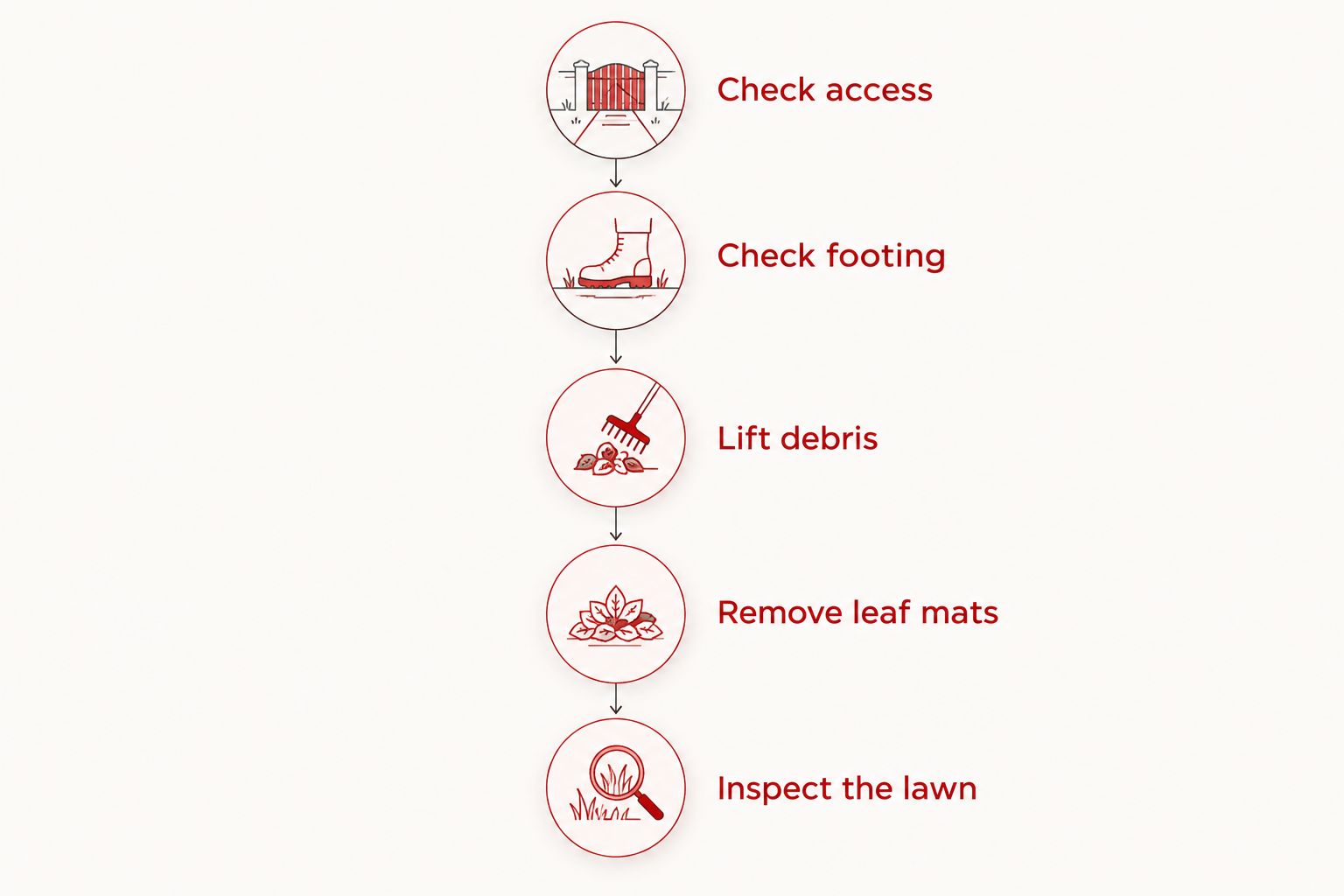
- Check access. Look for ice, slippery slopes, hidden edges, and any hanging or fallen limbs. Stay away from damaged trees and anything touching a utility line; those are not ordinary cleanup tasks.
- Check footing. Start from a firm edge and assess the ground before crossing the lawn. If your footing sinks or leaves muddy impressions, postpone work in that section.
- Lift debris. Pick up visible litter, toys, and small loose sticks before handling leaves. Do not reach beneath snow or move a heavy limb you cannot control safely.
- Remove leaf mats. Once leaves separate freely, lift or gently rake dense patches off the grass. Avoid scraping frozen clumps or repeatedly working the same spot.
- Inspect the lawn. Look for remaining debris and areas that are still too wet to enter. Finish the workable sections and leave the rest for a later visit.
Keep your first pass modest. A section-by-section cleanup lets you stop when conditions change instead of pushing equipment through a wet corner just to finish.
What should you do with the leaves?
Remove dense, matted leaf cover from lawn grass when you can do so without tearing the turf. A thick mat blocks light and holds moisture against the grass; scattered leaves do not call for the same response as a packed blanket.
Leaves in a planting bed serve a different purpose. Intentional leaf cover can protect soil and provide habitat, so do not rake every bed bare simply because you are cleaning the lawn.
Keep plant crowns, walking routes, and drainage openings in mind. Move material where it causes a problem rather than treating every leaf as waste.
Can you mow the leaves instead of raking?
Mowing leaves is an option only when both the lawn and the material are suitable for it. Wet leaf mats, frosted grass, hidden sticks, and soft soil are reasons to leave the mower parked.
If the grass is frost-free, the ground is firm, and the leaves are dry enough to chop, mulching can break scattered leaves into smaller pieces. Do not use repeated mower passes to force a heavy, soggy layer into the lawn.
The mower is not a shortcut around poor ground conditions. Remove sticks first, follow the equipment instructions, and stop if chopped material still blankets the grass.
Why post-snow yard cleanup timing varies
Your 2026 cleanup window depends on the condition of each work area, not simply whether the first snow has come and gone. These factors explain why neighboring parts of a yard need different treatment:
- Snow cover: You need to see the lawn and debris before raking or mowing safely. A clear driveway does not establish that the lawn is ready.
- Frost and ice: Frosted blades and ice-bound leaf clumps call for waiting. Air that feels warmer does not prove the shaded grass has thawed.
- Soil moisture: Meltwater and rain can leave exposed ground too soft for traffic. Surface appearance alone does not tell you whether equipment will leave ruts.
- Shade and drainage: Shaded corners and low areas can remain wet or frozen after other sections become workable. Assess them separately.
- Debris type: Loose litter, dense leaves, and storm-damaged limbs require different handling. A rake is not the right answer to every cleanup problem.
- Access and equipment: A job reached from a firm walkway is different from one requiring repeated trips across wet turf. Choose the least disruptive safe approach.
Take these differences into account before setting a completion date. It is better to finish the accessible work cleanly than to make the whole yard look done at the expense of the soil.
Should you rake leaves off frosty grass?
No—wait until the frost is gone and the leaves move freely. Raking frosted grass adds handling and foot traffic when the blades are vulnerable to damage.
Check the actual work area, not just the weather forecast. A sunny edge beside the driveway does not tell you what is happening beneath a shaded tree.
If frost remains, use the time to put away loose items reachable from safe paths. Leave the lawn work for conditions that let you remove debris gently.
Should you wait until spring to remove leaves?
Do not automatically leave a dense leaf mat on the lawn until spring. Remove it during a suitable thaw when the grass is frost-free and the ground supports you without rutting.
If snow or saturated soil prevents safe access, wait rather than forcing the job. The aim is to take the next suitable opportunity, not meet an arbitrary deadline.
Keep planting beds separate from this decision. Leaf cover intentionally left around appropriate plants is not the same as a wet blanket smothering lawn grass.
Can you hire help after the first snow?
Yes—you can ask a yard maintenance provider to assess the remaining work after snowfall. Ask how the provider handles frozen grass, soft soil, inaccessible areas, and debris that cannot safely be removed yet.
Grassgrabbers lawn care and yard maintenance is for central Iowa homeowners who want help maintaining their outdoor spaces. The service is relevant when your unfinished cleanup is part of a broader need for lawn care or landscaping, rather than a task you want to manage yourself.
For a 2026 service request, describe what remains: matted leaves, loose branches, bed debris, or a wet area that prevents access. Tell the provider about slopes, gates, and places that stay soft after snow melts.
Grassgrabbers provides lawn care, landscaping, and yard maintenance. Hiring help takes the physical work off your hands, but it does not make frozen or waterlogged turf suitable for equipment; agree on which tasks should wait.
Discuss your remaining yard work
Ask about lawn care and yard maintenance for your central Iowa property.
FAQ
Is yard cleanup after first snow too late?
Yard cleanup after first snow is not automatically too late. Work when the grass is exposed and frost-free and the soil is firm enough to support traffic without rutting.
Can I rake leaves while there is still snow on the lawn?
Wait until the snow has melted from the area you intend to rake. Hidden debris, frozen leaf mats, and wet ground make it harder to work without damaging the lawn.
What if the snow melts but my yard is muddy?
Keep repeated foot traffic and equipment off muddy lawn areas. Remove only debris you can reach safely from firm surfaces, then return when the ground supports you without sinking.
Can I use a leaf blower after it snows?
Use a leaf blower only when the debris is exposed and separates freely, footing is safe, and conditions meet the equipment instructions. A blower will not solve leaves frozen into ice, and wet mats still need a different approach.
Should I remove every leaf from my garden beds?
No, garden beds do not need to be stripped bare as part of lawn cleanup. Keep useful leaf cover where appropriate while clearing walking routes, drainage openings, and material crowding plant crowns.
Can I mow after the first snowfall?
Mow only after the snow and frost are gone, the ground is firm, and the grass needs cutting. Remove visible sticks first and avoid mowing wet leaves into a dense layer over the turf.
What should I tell a yard cleanup provider in 2026?
Describe the remaining debris, current snow or frost cover, and areas that stay wet after melting. Ask which work can be completed safely and which tasks require better ground conditions.
One last thing
Before calling your 2026 cleanup finished, check where the meltwater is collecting. A pile of leaves over a surface drainage opening is a different problem from leaves scattered beneath a shrub.
Clear accessible surface debris only where footing is safe; do not enter flowing water or dismantle drainage structures. A lawn that looks tidy can still need attention at its wettest edge.