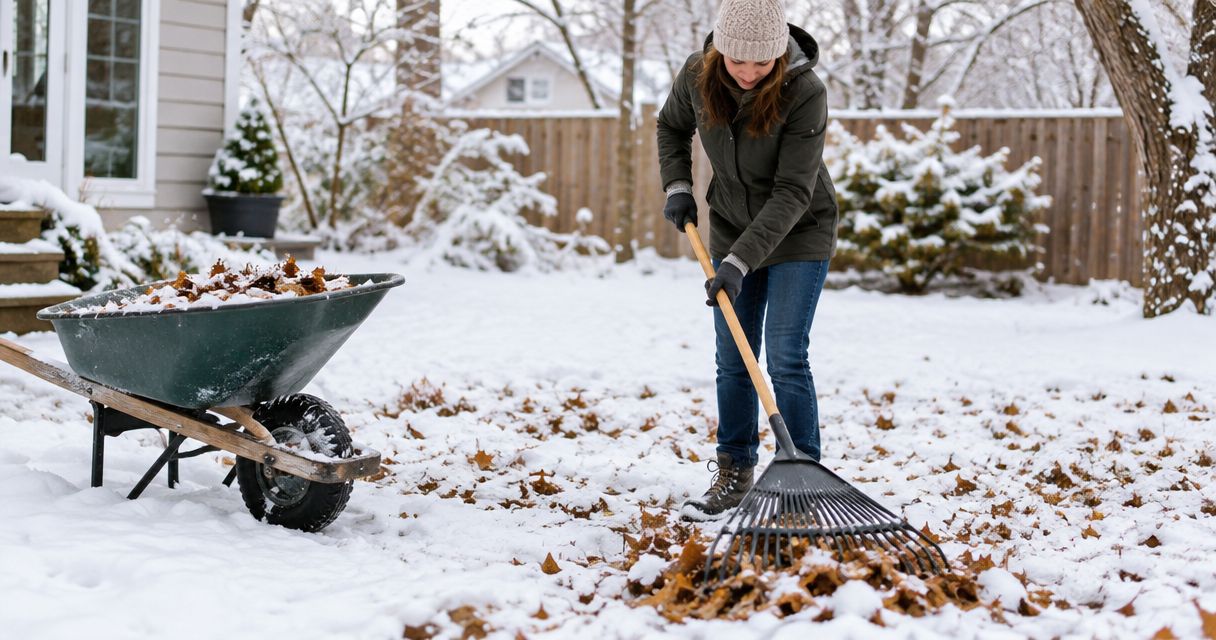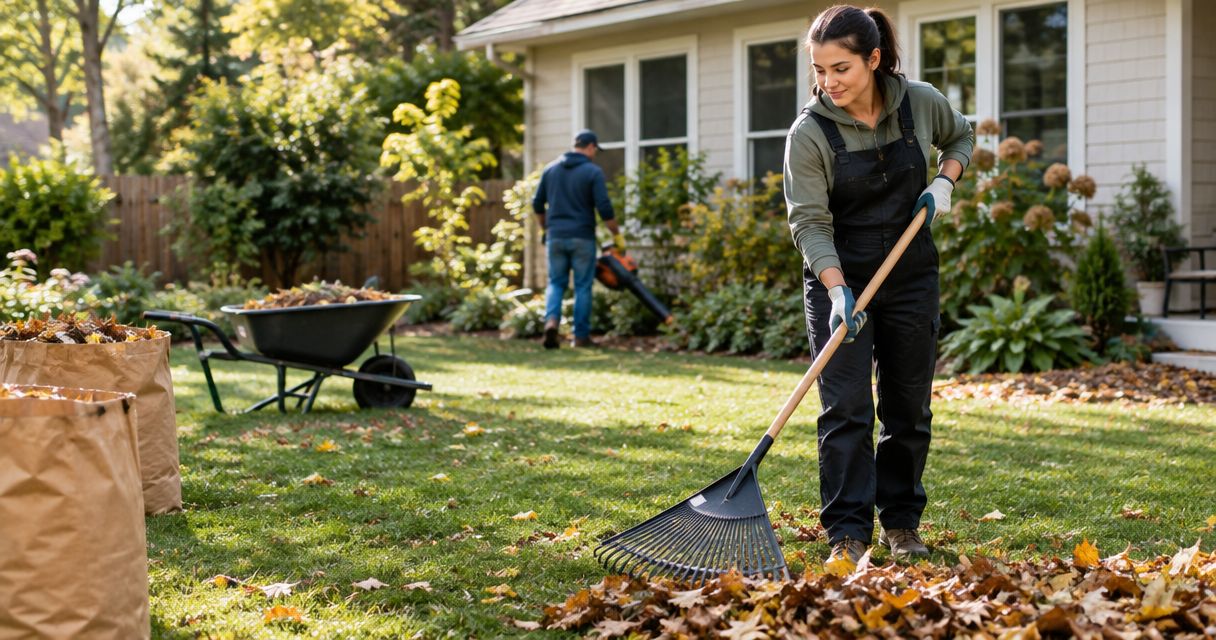
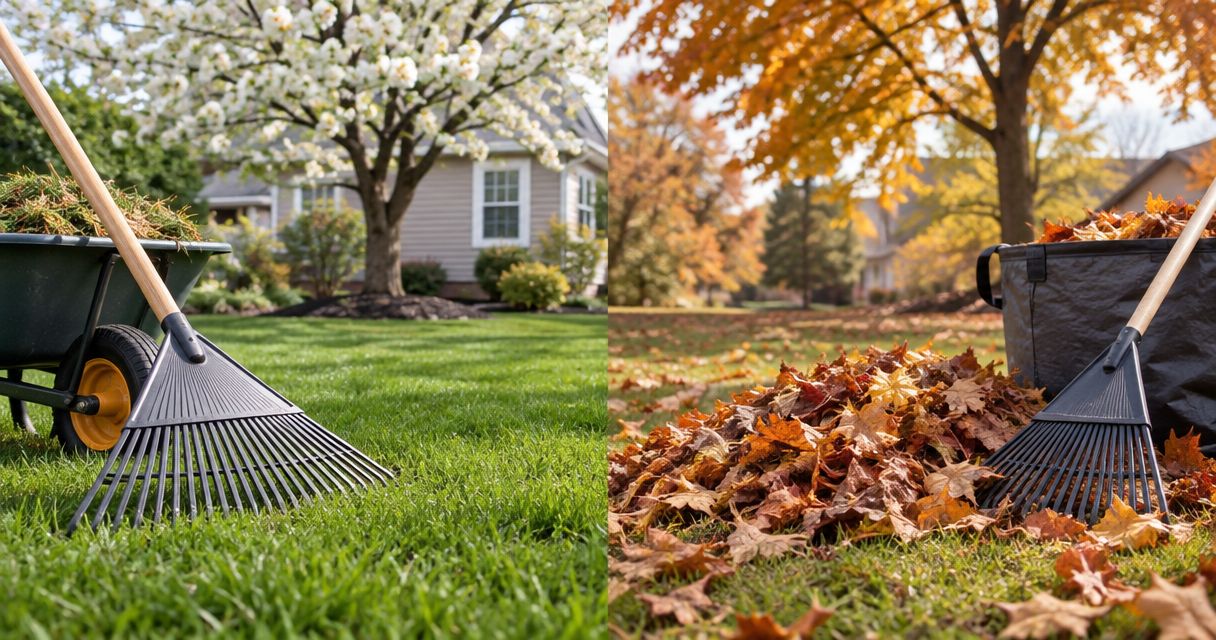
Fall cleanup takes priority for an Iowa lawn when fallen leaves form a wet, matted layer over the grass. Spring cleanup handles what winter leaves behind, but it does not replace removing smothering leaf cover before winter. For your 2026 yard plan, prioritize the season with the immediate problem: heavy autumn leaves call for fall work; storm debris and lingering leaf mats call for spring work.
- Spring vs fall yard cleanup Iowa: prioritize fall when leaf mats cover turf; use spring for winter debris.
- Mulch scattered leaves into grass, but remove accumulations that remain as a blanket over the lawn.
- Wait for firm ground before spring cleanup; wet soil and forceful raking make a poor combination.
- Grassgrabbers provides lawn care and yard maintenance for central Iowa homeowners who want help with seasonal work.
Why this matters
A tidy lawn and a healthy lawn are not always the same thing. Removing every leaf from every planting bed serves a different purpose from clearing a thick layer off living grass.
Your priority is to keep turf uncovered without disturbing wet soil or stripping useful habitat from garden beds. The guide to what is included in a fall yard cleanup helps you separate lawn work from the broader list of seasonal chores.
Is spring or fall cleanup more important for Iowa lawns?
Fall matters more when leaves cover the grass; spring matters more when winter damage or leftover debris needs attention. Neither season wins simply because of its place on the calendar. Look at the lawn before choosing the work.
Iowa lawns commonly contain cool-season grasses, which grow during cool spring and fall conditions. Fallen leaves can block light while grass is still active, and a wet leaf mat left through winter creates an additional obstacle when growth resumes.
Use this comparison to set your 2026 priorities:
| Cleanup option | Best for | Main benefit | Main limitation |
|---|---|---|---|
| Fall cleanup | Lawns under heavy leaf cover | Clears turf before winter and removes accumulated debris | Leaves can keep falling after an initial cleanup |
| Spring cleanup | Lawns with winter debris or leftover leaf mats | Clears the surface so you can inspect grass and begin mowing | Working on saturated ground can damage turf and compact soil |
| Both seasons | Yards with autumn leaves and winter debris | Addresses different problems as they appear | Requires separate rounds of work rather than a single seasonal visit |
A leaf-heavy yard needs attention during fall even if you plan a spring cleanup. An open lawn with little leaf cover does not need aggressive raking merely to complete an autumn checklist.
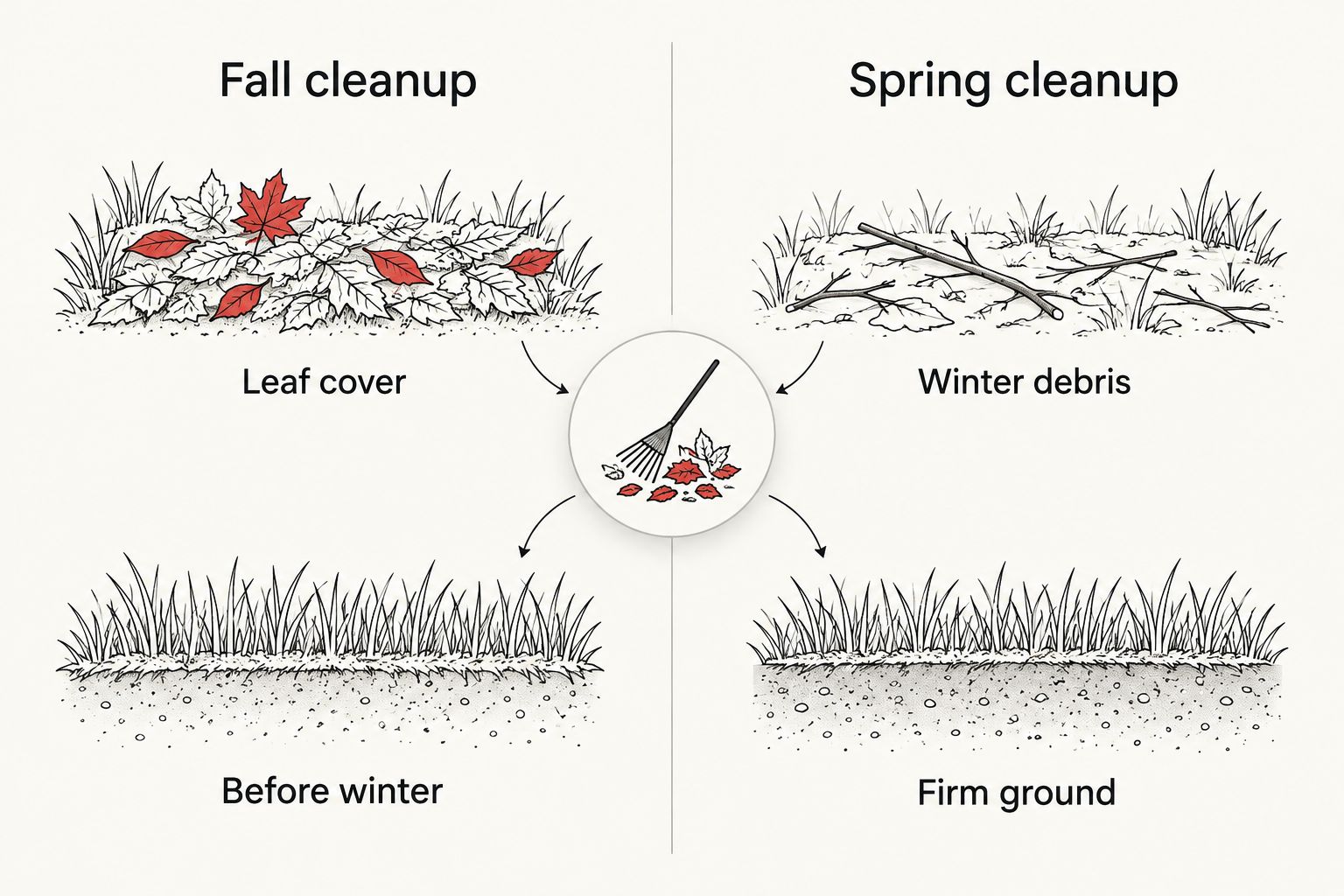
Fall cleanup: best for preventing leaf mats
Fall cleanup earns its priority where mature trees drop enough leaves to hide the grass. Leaves collect unevenly, so check fence lines, low spots, and the sheltered sides of buildings rather than judging only the middle of the yard.
What to do in fall
- Clear heavy accumulations. Remove leaves that stick together or cover the grass as a continuous layer.
- Mulch manageable leaves. Mow dry, scattered leaves into small pieces when the grass remains visible afterward.
- Pick up branches first. Remove sticks and other hard debris before mowing or using leaf equipment.
- Keep mowing while grass grows. Base the decision on growth and ground conditions, not a fixed final-mowing date.
- Separate turf from beds. Clear the lawn without treating every garden leaf as waste.
The test for mulching is the result, not the number of passes. If chopped leaves still blanket the grass, collect or relocate the excess instead of repeatedly driving over the same area.
For fall 2026, plan around continuing leaf drop rather than expecting an early cleanup to stay finished. A later accumulation still needs attention if it covers the turf.
Where fall cleanup falls short
Fall work cannot remove branches that arrive during a winter storm. It also does not prevent every spring lawn problem, and clearing leaves does not fix poor drainage or heavy shade.
Avoid treating a clean-looking lawn as proof that the grass is healthy. Thin turf beneath a tree needs a separate look at sunlight, competition, and growing conditions.
Choose fall cleanup first when the grass is disappearing beneath leaves. That is a specific lawn need, not just a preference for a neat yard.
Spring cleanup: best for winter debris and inspection
Spring cleanup clears the material that accumulated after autumn work ended. It also gives you a chance to inspect bare patches, standing water, and damaged edges before regular mowing begins.
Wait until the ground supports walking without leaving deep footprints or smearing into mud. A sunny afternoon does not mean shaded soil has dried enough for equipment.
What to do in spring
- Walk the yard. Look for branches, litter, stones, and anything hidden in the grass.
- Check soil firmness. Delay equipment work where the ground squishes, ruts, or holds standing water.
- Remove remaining cover. Lift leftover leaf mats gently rather than pulling hard through tender grass.
- Inspect exposed turf. Note thin areas, persistent wet spots, and damage that cleanup alone will not repair.
- Resume mowing carefully. Start when the grass needs cutting and the ground can carry the mower.
For spring 2026, let the condition of the soil set your start date. Different parts of the same yard can be ready at different times, especially where shade slows drying.
Where spring cleanup falls short
Spring cleanup is not a reason to leave thick autumn leaves on the lawn all winter. It removes what remains; it does not undo the time grass spent beneath a matted covering.
Hard raking also has a downside. Pulling through soft soil or weak turf can uproot grass when a gentler removal method would have cleared the surface.
Choose spring cleanup first when winter debris is the problem and the ground is firm enough to work. Keep repairs separate from cleanup so neither task gets overlooked.
Why cleanup priorities vary across Iowa yards
Your address alone does not decide which season deserves more attention. The useful differences are visible on the property.
- Leaf load: A lawn beneath deciduous trees needs more leaf management than an open lawn with little autumn cover.
- Ground moisture: Saturated soil changes when you can safely walk, rake, or use equipment, particularly in spring.
- Debris type: Scattered dry leaves suit mulching; branches need collection before mowing; wet mats need removal.
- Existing turf condition: Thin or damaged grass calls for gentle handling and inspection, not more forceful cleanup.
- Lawn versus beds: Grass needs light at its surface, while appropriate leaf cover in garden beds can protect soil and provide habitat.
- Winter exposure: Wind and storms can move leaves and branches onto a lawn that was clear in fall.
These factors also explain why neighboring yards need different work. Copying a neighbor's schedule is less useful than checking your own turf and soil.
How do you choose if you can only tackle one season?
Choose fall if heavy leaves cover your lawn; otherwise, choose the season with the debris that needs removing. Do not book a large cleanup simply because the calendar says it is time.
Start with 3 checks: can you see the grass, is anything lying on it, and is the ground firm enough to work? Those checks distinguish a real cleanup need from a yard that only looks untidy around its edges.
If you cannot complete every fall chore, clear the grass before polishing bed edges or cutting back ornamental stems. Appearance can wait; a thick leaf mat over turf should not become a spring project by default.
For an already-clear lawn, spring inspection deserves attention without assuming a major cleanup is necessary. Pick up winter debris and identify actual problems before adding more tasks.
Can you mulch leaves instead of removing them?
Yes, mulch leaves when mowing breaks them into small pieces that settle between grass blades without burying the turf. Remove excess material when the chopped leaves still form a surface covering.
Dry leaves generally break apart more readily than wet, compressed leaves. Pick up sticks first, and avoid mowing across soft ground just to finish the job.
Keep normal mowing habits in place. The established one-third rule is to remove no more than one-third of the grass blade in a mowing; leaf cleanup is not a reason to scalp the lawn.
Mulching and collection are both useful. Choose by the amount and condition of the leaves rather than treating either method as the answer for every part of the yard.
Should you clean garden beds as thoroughly as the lawn?
No, garden beds do not need the same bare-surface treatment as turf. Leaves and standing stems can provide overwintering habitat, while grass buried under a dense leaf layer loses access to light.
Keep appropriate leaf material in beds rather than blowing every leaf off the property. Avoid piling it against tree trunks or smothering low-growing plants, and remove diseased plant material according to the needs of the affected plant.
Spring bed cleanup also deserves restraint. Do not use a single warm day as a signal to strip every stem and leaf; consider what is growing and overwintering there.
For your 2026 plan, write separate lists for lawn cleanup and bed cleanup. That small distinction prevents a tidy-yard routine from becoming unnecessary disturbance throughout the landscape.
When does professional yard maintenance make sense?
Hiring help makes sense when the volume of leaves, handling of debris, or physical work exceeds what you want to manage yourself. It does not change the basic rule: the work still needs to match the condition of your lawn.
Grassgrabbers lawn care is best for central Iowa homeowners seeking help with lawn and yard maintenance. The company provides those services; describe your seasonal priorities before agreeing on the work.
When discussing a cleanup with Grassgrabbers, separate leaf removal, branch collection, bed work, and lawn inspection. A broad request to tidy everything leaves too much room for different expectations.
Professional help also has a trade-off: you give someone else responsibility for decisions about what stays and what goes. Identify habitat areas, delicate plants, and places you do not want equipment driven before work begins.
Discuss your seasonal yard work
Tell Grassgrabbers which lawn areas need leaf removal, debris collection, or ongoing maintenance.
FAQ
Is fall cleanup more important than spring cleanup for an Iowa lawn?
Fall cleanup takes priority when heavy leaves cover the grass. Spring cleanup remains useful for winter debris, leftover leaf mats, and inspecting turf once the ground is firm.
Can I leave all my leaves until spring?
Do not leave a thick, matted covering on lawn grass until spring. Mulch manageable leaves or remove the excess, while treating garden beds separately.
When should I start spring yard cleanup in Iowa in 2026?
Start spring yard cleanup in 2026 when the ground is firm enough to work without rutting or smearing. Remove loose debris gently and delay equipment on saturated areas.
Is mulching leaves better than bagging them?
Mulching is useful when shredded leaves settle between grass blades without covering the turf. Collection is the better choice where the remaining material forms a blanket.
Do I need to rake my entire lawn in spring?
You do not need to rake the entire lawn if it is already clear. Focus on remaining leaf mats and debris, and avoid forceful raking through soft soil or weak grass.
Should I cut my lawn extra short before winter?
Do not scalp your lawn as part of fall cleanup. Maintain an appropriate height for your grass and follow the one-third mowing rule while it continues growing.
Does Grassgrabbers provide yard maintenance in central Iowa?
Grassgrabbers provides lawn care, landscaping, and yard maintenance for residential property owners in central Iowa. Discuss the specific seasonal tasks you want included before arranging work.
One last thing
A leaf belongs somewhere different depending on where it lands. On lawn grass, a thick mat needs attention; in an appropriate garden bed, leaf cover can serve a purpose.
Before your next cleanup, decide which areas need clearing and which areas should retain natural cover. You will have a more useful plan than simply aiming to remove every leaf in sight.