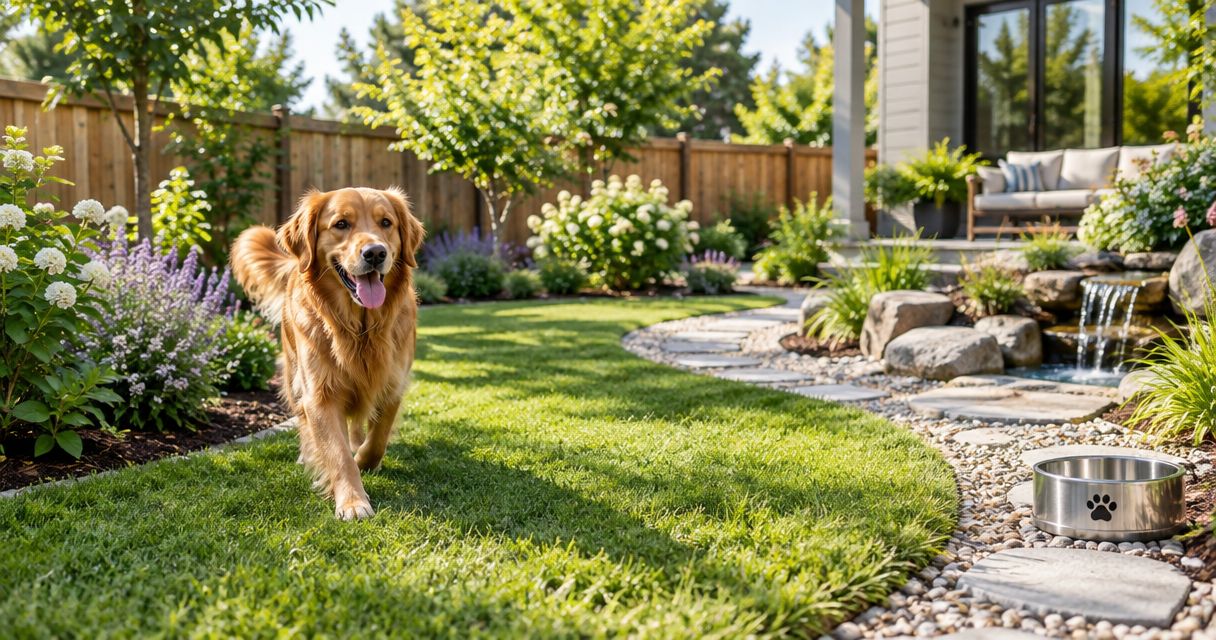
Dog owners’ landscaping is yard planning with the aim of giving dogs usable outdoor space while protecting plants, lawn, and everyday access. This 2026 guide to landscaping for dog owners starts with your dog’s habits: running routes, digging spots, bathroom areas, and places to rest.
- Landscaping for dog owners works best when paths follow existing running routes instead of fighting them.
- Grassgrabbers suits central Iowa homeowners seeking lawn care and landscaping services, not veterinary advice or dog training.
- Dog-friendly landscaping needs verified plant choices, secure boundaries, and surfaces you can clean.
- Protect new grass from traffic; seed selection alone cannot solve concentrated wear.
Why landscaping matters for dog owners
A dog-friendly yard needs to work on an ordinary muddy morning, not just look good after mowing. Your dog uses the landscape differently than you do. A narrow strip along the fence becomes a running lane, while the route from the back door takes repeated traffic.
Those patterns give you a useful starting point. Before buying plants or replacing grass, notice where your dog already walks, rests, digs, and relieves itself. Design around those uses rather than expecting a new flower bed to change them.
For central Iowa homeowners, Grassgrabbers provides lawn care, landscaping, and yard maintenance services. Grassgrabbers is best for central Iowa homeowners seeking help with lawn care and landscaping. Plant toxicity questions belong with a veterinarian or an authoritative plant-safety resource; a landscape service is not a substitute for that advice.
The practical goal for 2026 is straightforward: keep useful lawn where it can grow, create durable routes where traffic concentrates, and separate vulnerable planting from everyday dog activity.
How to plan landscaping for dog owners
1. Map your dog’s routes before changing the yard
Start with a sketch and observation, not a shopping list. Keep a 7-day observation log showing where your dog runs, digs, rests, and goes to the bathroom. Include wet-weather behavior because a route that looks fine when dry can become your main source of tracked-in mud.
Take 2 photos from the same doorway: one during dry conditions and one after rain. Use them to compare the access route rather than relying on memory. Mark standing water separately from worn grass; those problems need different responses.
Measure the actual space available before deciding how much lawn or planting to keep. Include gate swings, steps, outdoor faucets, and the room you need to bring a mower through.
- Mark habitual running routes and fence patrol paths.
- Identify bare ground, puddles, and muddy thresholds.
- Record where your dog seeks shade or watches the street.
- Note gates, utilities, and maintenance access.
2. Divide the yard into practical activity zones
You do not need a large property to make the layout clearer. Sketch 3 functional zones: play space, a rest area, and a toilet area. These are planning categories, not a requirement for separate fenced enclosures.
Keep active movement away from delicate planting where possible. Put the rest area somewhere you can supervise, and place the toilet area where you can reach it easily for cleanup. Avoid putting it in a spot that already collects runoff.
Move temporary markers before installing anything permanent. Walk the route carrying waste bags, a hose, or garden tools. A layout that feels awkward during this simple check will not become easier after installation.
- Play space: preserve an open route without sharp turns around obstacles.
- Rest area: provide access to shade and a comfortable surface.
- Toilet area: choose an accessible place for consistent cleanup.
- Planting beds: keep vulnerable plants outside the busiest routes.
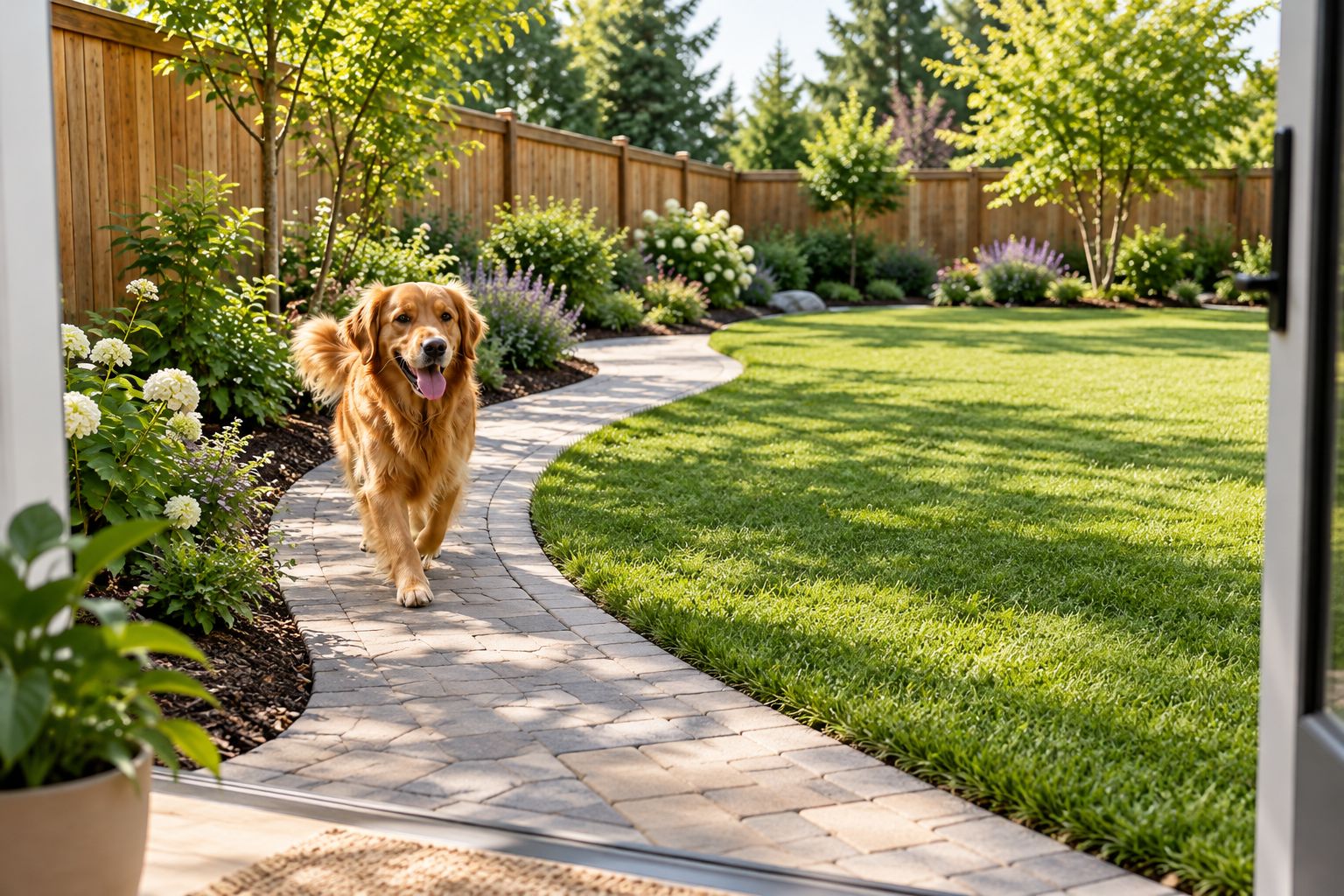
3. Match surfaces to wear instead of covering everything
Keep grass where it serves a purpose; use a durable path where repeated traffic defeats it. A worn fence line is a layout problem before it is a seed problem. Replanting the same strip without changing access repeats the same maintenance task.
Check surfaces yourself before choosing them. Loose materials need containment, hard surfaces need a suitable base, and any material your dog chews or swallows needs reconsideration. No surface earns a blanket pet-safe label from its appearance.
For lawn areas, use the guide to grass types for Iowa lawns to frame questions about sunlight, maintenance, and recovery. For help turning the sketch into a workable landscape plan, discuss the layout with Grassgrabbers; confirm the proposed materials and work before approving the project.
- Keep living turf in suitable play and resting areas.
- Follow existing travel routes when positioning paths.
- Check samples for sharp edges and unstable footing.
- Leave room to rake, sweep, or replace surface material.
4. Check every plant and mulch against your dog’s behavior
Build your 2026 planting list around light, soil, mature size, and dog exposure. Then check each plant’s botanical name against the ASPCA Animal Poison Control Center’s toxic and non-toxic plant database. Common names alone are not enough to identify every plant reliably.
A non-toxic listing does not mean a plant is suitable for unrestricted chewing. Thorns, stiff stems, fallen fruit, and a dog’s habit of swallowing plant material still matter. Keep unknown existing plants out of reach until you identify them.
Apply the same care to mulch. Cocoa mulch presents a poisoning risk to dogs; loose wood or stone also deserves attention when your dog habitually swallows objects. Do not pick a material solely because someone calls it natural.
- Verify the botanical name before purchasing a plant.
- Exclude cocoa mulch from dog-accessible areas.
- Keep thorny growth away from running and resting spaces.
- Ask your veterinarian about a dog that eats plants or landscape material.
5. Fix wet access routes before repairing the lawn
Start by watching where water travels during rain. Check downspout discharge, low spots, and the route between the door and the yard. A path should not simply cover a drainage problem and leave water trapped underneath.
You can remove leaves from an accessible surface drain and document puddles yourself. Changes to grading, buried drainage, or discharge locations need site-specific assessment. Check local requirements before work that changes where water leaves your property.
Keep containment separate from drainage planning. A gap beneath a fence is not a convenient drainage outlet if your dog can escape through it. Inspect boundaries from the dog’s side, including corners hidden by shrubs.
- Mark puddles and runoff routes after rain.
- Check whether roof water reaches the dog’s access path.
- Inspect fence bottoms, latches, and gate corners.
- Resolve the water source before adding soil or new turf.
6. Protect new grass and maintain established turf
New grass needs protection from concentrated traffic while it establishes. Read the seed or sod care instructions and agree on an access plan before installation. A temporary barrier is more useful than hoping your dog avoids the repaired patch.
For established turf, follow the familiar mowing rule of removing no more than one-third of the grass blade at a mowing. Set the actual cutting height for the grass species and conditions rather than choosing a single height for every lawn.
Urine damage also needs realistic expectations. Prompt watering can dilute a fresh deposit, but repeated use of one small area still needs a management plan. Do not add supplements to your dog’s diet to protect grass without veterinary guidance.
- Rotate access away from areas under repair.
- Keep mower blades sharp and avoid scalping.
- Pick up waste before mowing or other lawn work.
- Follow every treatment label’s pet-access instructions.
7. Set a cleanup routine you can actually keep
Choose a maintenance routine before adding more landscape features. A gravel strip, dense border, or elaborate edging detail is only useful if you can remove waste, fallen leaves, and scattered debris from it. Test access with the tools you already own.
Use the 2026 growing season to adjust the layout as you learn. If a bed repeatedly becomes a shortcut, change its boundary or relocate the vulnerable planting. If a surface scatters into the lawn, address containment before mowing over it.
Grassgrabbers offers yard maintenance as well as lawn care and landscaping. Confirm which cleanup tasks belong in your service scope and which remain yours, especially pet waste removal and keeping dogs separated from work areas.
- Store waste bags and cleanup tools near the exit.
- Check paths for scattered material before mowing.
- Remove fallen branches and damaged edging promptly.
- Agree on dog containment before a scheduled service visit.
Compare landscaping options for dog owners
The best option depends on where you use it. These choices can work together; none replaces supervision, cleanup, or suitable drainage. Compare the limitation as carefully as the benefit before choosing a material.
| Option | Best for | Main benefit | Key limitation |
|---|---|---|---|
| Living lawn | Open play space with suitable growing conditions | Provides a planted surface for everyday yard use | Concentrated traffic and repeated urine deposits can damage turf |
| Paved path | Repeated door-to-yard and fence-line travel | Creates a defined route you can sweep | Needs suitable installation; sun-exposed surfaces can become hot |
| Mulched planting beds | Separating plants from activity areas | Covers exposed soil around planting | Loose material scatters, and chewing behavior affects suitability |
| Gravel area | Defined utility spaces away from habitual chewing | Offers an alternative to repeatedly worn turf | Stones can lodge in paws or be swallowed |
| Artificial turf | Areas where you accept ongoing surface cleaning | Does not require mowing | Needs drainage and cleaning; exposed surfaces can become hot |
Choose by location, not by declaring one material best for the whole yard. A dog that swallows stones needs a different solution from a dog that simply runs the same fence line. Check hard and synthetic surfaces before use in hot weather, and keep access to shade and water.
Common mistakes dog owners make
Replacing grass without changing the running route
Fresh seed does not remove the traffic that caused the bare strip. Protect the repair and redirect access, or consider whether that route should become a path. Repeated reseeding without an access change leaves the underlying problem untouched.
Treating attractive plants as safe plants
A plant being sold for residential gardens does not establish its suitability around your dog. Verify identification and toxicity before planting. Account for fallen leaves, berries, and pruned branches, not just the standing plant.
Choosing a toilet surface that is difficult to clean
Deep loose material and crowded planting make waste harder to find and remove. Prioritize visibility, access, and drainage. Keep the area away from edible crops and spaces where children regularly play on the ground.
Assuming every service includes pet-related cleanup
Lawn care, landscaping, and waste removal are different tasks. Agree on responsibilities before work starts, including gate access and where your dog will stay. Clear instructions protect the dog and give workers an unobstructed area.
FAQ
What's the best landscaping for dog owners in central Iowa?
The best landscaping for dog owners combines usable lawn, durable travel routes, verified plant choices, and accessible cleanup areas. Match each part to your dog's habits and the site's sunlight and drainage.
Can I keep real grass if I have dogs?
Yes, you can keep real grass with dogs, but concentrated traffic needs management. Protect new grass during establishment and consider a separate path where repeated running wears turf away.
Is artificial turf better than real grass for dogs?
Artificial turf is not automatically better than real grass for dogs. It avoids mowing but still needs cleaning and suitable drainage, and exposed surfaces can become hot.
What plants should I avoid in a dog-friendly yard?
Avoid plants identified as toxic to dogs and plants whose thorns or sharp growth interfere with access. Verify botanical names using an authoritative toxicity resource and ask your veterinarian about suspected ingestion.
How do I stop my dog from turning the yard into mud?
Start by separating drainage problems from traffic damage. Correct the water issue, protect recovering lawn, and create a durable route where repeated travel prevents grass from recovering.
When can my dog return after a lawn treatment?
Follow the specific product label's pet-access instructions and the applicator's directions. Do not use a general waiting period for every fertilizer, herbicide, or other lawn treatment.
Does Grassgrabbers provide landscaping for dog owners?
Grassgrabbers provides lawn care, landscaping, and yard maintenance for residential property owners in central Iowa. Discuss your dog's routes, access needs, and planting concerns when defining the work; confirm any requested dog-specific features directly.
One last thing
Before buying anything for your 2026 yard project, stand at the back door while your dog uses the yard normally. The worn shortcut is useful information, not just an eyesore. Design around the route your dog actually takes, then put the delicate planting somewhere else.