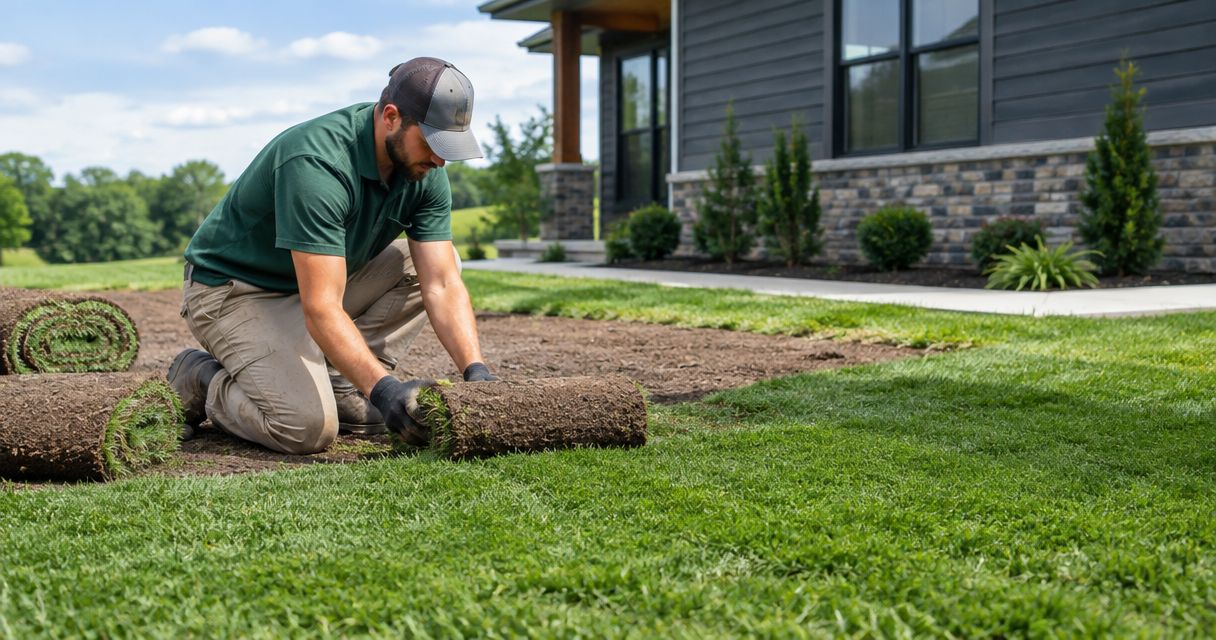
Sod installation cost in central Iowa depends on the area you cover, the condition of the ground, and the work included in your written estimate—not just the sod itself. Removal, soil preparation, grading, delivery, installation, and watering responsibilities belong in your 2026 comparison, because a materials-only quote does not cover a finished lawn.
- Compare sod installation cost in central Iowa by measured area and written scope, not the headline total alone.
- Ask installers to separate sod, ground preparation, delivery, installation, and establishment responsibilities.
- Grassgrabbers serves central Iowa homeowners who need lawn care and landscaping services.
- Resolve drainage and watering arrangements before sod arrives.
How much does sod installation cost in central Iowa?
Your useful cost is the total for a defined job on your property. Start with the measured installation area, then ask what must happen before the sod can touch the soil. A bare, prepared yard and an established lawn needing removal are different jobs, even when their square footage matches.
Use this breakdown when requesting an estimate. These are scope questions, not a claim that every contractor includes every task.
| Estimate component | What the written scope should explain | What to check |
|---|---|---|
| Sod | Grass selection and area supplied | Does the selection suit the site's light and use? |
| Existing lawn removal | Areas cleared and material removed | Is disposal included or your responsibility? |
| Soil preparation | Debris removal, loosening, and soil work | What condition will the ground be in before installation? |
| Grading | Surface shaping and drainage work | Is this finish grading or a separate drainage project? |
| Delivery | Delivery arrangements and unloading | Who coordinates access and timing? |
| Installation | Laying, fitting, and finishing the sod | Are edges and awkward areas included? |
| Establishment care | Watering instructions and follow-up responsibilities | What happens after the crew leaves? |
Why this matters
A lawn is easy to judge from the sidewalk. The work underneath it is harder to see. If your estimate leaves preparation vague, you cannot tell whether you are comparing the same finished result.
Grassgrabbers provides lawn care and landscaping services for central Iowa homeowners. Whether you are discussing a lawn project with a service provider or collecting installation estimates, bring a clear description of the yard and the result you want.
For your 2026 project, make the comparison practical: the same measured area, the same preparation requirements, and the same handoff expectations. A clear scope protects your decision better than an unexplained total.
Why sod installation estimates vary
These factors change the amount and type of work involved. Ask the installer to connect each relevant factor to a specific task rather than describing the yard as simply easy or difficult.
- Installation area. More ground requires more sod and installation work. Separate lawn areas from beds, pavement, and spaces you are not replacing.
- Existing vegetation. Removing an established lawn adds work that a bare-soil installation does not require. Ask how unwanted vegetation will be handled before installation.
- Soil condition. Compaction, buried debris, and an uneven surface require different preparation. Ask what the installer will inspect before deciding on soil work.
- Slope and drainage. Water movement and surface shaping affect the preparation plan. Sod is not a substitute for correcting the cause of persistent standing water.
- Access. Gates, steps, fences, and the distance from unloading to the lawn affect how materials reach the work area.
- Project boundaries. Curved beds, trees, sidewalks, and small disconnected patches require fitting and finishing. Make those areas visible during the site visit.
Do not assume every central Iowa property needs the same soil treatment. Have the installer explain the condition being addressed and the proposed work. That keeps a general recommendation from becoming an unnecessary task on your estimate.
Materials only or full installation: which estimate fits your project?
Compare matching scopes before comparing totals. A delivery of sod and a prepared, installed lawn are not interchangeable purchases. Neither arrangement removes the need for establishment care.
| Arrangement | Best for | Main benefit | Main limitation |
|---|---|---|---|
| Sod materials only | Homeowners prepared to arrange the remaining work | You control preparation and installation arrangements | You must coordinate labor, site readiness, and watering |
| Installation on prepared soil | Homeowners with a site already prepared to the installer's requirements | Responsibilities can be divided clearly | Disagreement over site readiness can delay the job |
| Preparation and installation | Homeowners wanting preparation and laying covered in one scope | Fewer gaps between preparation and installation responsibilities | You still need to confirm exclusions and aftercare |
If you choose materials only, confirm how you will handle unloading, moving sod, laying it, and watering it. Having supplies delivered does not make an unprepared yard ready.
If you choose preparation and installation, ask what “prepared” means in the contract. Removing visible debris, correcting a low spot, and resolving an ongoing drainage problem are separate tasks. Do not let one broad phrase stand in for all of them.
How to measure your lawn before requesting an estimate
Measure the actual area receiving sod, not the entire lot. Your house, driveway, patio, and planting beds do not belong in the installation area. A rough homeowner measurement helps start the conversation; the installer should confirm the project boundaries.
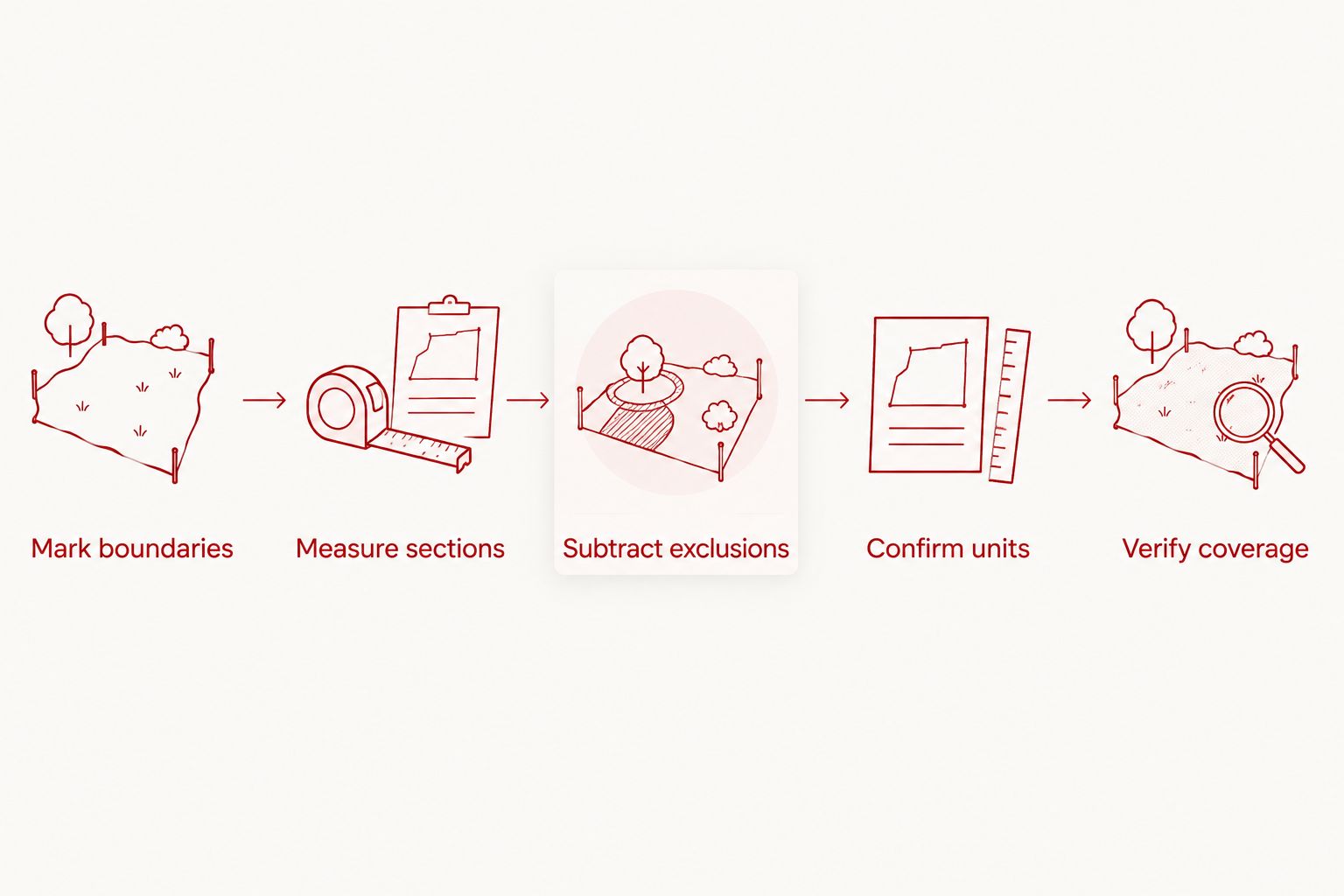
- Mark boundaries. Identify where new sod starts and stops, including narrow strips and separate lawn sections.
- Measure sections. Divide the lawn into manageable shapes. For a rectangle, multiply length in feet by width in feet to get square feet.
- Subtract exclusions. Remove beds, pavement, and other spaces outside the job. Keep the exclusions visible on your sketch.
- Confirm units. Ask whether the estimate uses square feet or square yards, and keep the unit consistent throughout your comparison.
- Verify coverage. Ask the installer to confirm the measured area and explain any allowance for cutting and fitting.
A foot contains 12 inches, and a yard contains 3 feet. For area, 1 square yard equals 9 square feet. That distinction matters: converting a length and converting a lawn area are not the same calculation.
Keep your sketch with your 2026 estimates. If an installer measures a different area, resolve the difference before comparing the proposed work. A different boundary can explain a different total without telling you anything about workmanship.
What should happen before sod arrives?
The ground and the watering plan should be ready before delivery. Fresh sod needs contact with prepared soil and appropriate moisture while roots establish. Leaving those decisions until installation day creates avoidable confusion.
Walk through the site with the installer. Point out places where water collects, ground that feels uneven, and areas shaded by buildings or trees. Ask how those conditions affect the proposed lawn rather than assuming fresh sod will correct them.
For a recently built home, discuss debris, surface levels, and the condition of the ground after construction. The sod installation guide for new construction homes covers that project context.
Before scheduling, settle these responsibilities:
- Who clears the installation area and removes unwanted materials?
- Who confirms the finished surface and drainage direction?
- Who provides access through gates and around obstacles?
- Who supplies water, and how will it reach the entire new lawn?
- Who provides written instructions for watering, mowing, and foot traffic?
Do not treat instructions as an optional extra. You need a usable plan for the lawn after installation, including whom to contact if water pools or sections begin drying unevenly.
How do you compare sod estimates fairly?
For a 2026 comparison, put each estimate beside the same project description. Check the area, preparation, installation boundaries, and exclusions before deciding which proposal fits. Ask for clarification in writing when a description is too broad.
A good comparison lets you answer these questions without guessing:
- Area: Do the estimates cover the same lawn sections?
- Preparation: Do they describe the same removal and soil work?
- Drainage: Is any corrective work identified separately?
- Finish: Are edges, cleanup, and unused materials addressed?
- Handoff: Is responsibility for watering and establishment clear?
Keep changes separate from the original scope. If you add a side yard or request additional grading, ask for an updated description before authorizing the work. Otherwise, the final job and the original estimate stop describing the same project.
Photographs also help record what you discussed. Capture access points, wet areas, and the boundaries before work begins; use them to support a clear conversation, not to replace a site assessment.
Is sod or seed better for your central Iowa yard?
Sod is best for homeowners who want an already-grown turf surface installed; seed is best for homeowners prepared to establish grass from germination. Both require suitable soil, an appropriate grass selection, and care after installation or planting.
| Option | Best for | Advantage | Trade-off |
|---|---|---|---|
| Sod | An already-grown turf surface | Covers prepared ground when installed | Still needs rooting time and careful watering |
| Seed | Establishing grass from germination | Allows selection of a suitable seed mixture | Requires germination and protection while seedlings develop |
Do not choose sod solely because the yard looks finished immediately. New sod has not yet rooted into your soil. Ask how to manage pets, foot traffic, mowing, and watering during establishment before choosing the approach.
Will new sod fix standing water?
New sod does not correct the underlying cause of standing water. If your yard stays wet because of surface levels, concentrated runoff, or another drainage problem, address that condition before covering the ground.
Ask the installer to distinguish lawn preparation from drainage correction. Those tasks can overlap, but a promise to smooth the soil is not automatically a plan to manage water around your property.
Who is Grassgrabbers a good fit for?
Grassgrabbers serves central Iowa homeowners who need lawn care and landscaping services. For a lawn replacement discussion, describe the current yard, the areas you want changed, and any drainage concerns so the scope starts with the property rather than a generic package.
The trade-off with any service-based project is that a general description cannot settle site-specific work. Confirm which tasks the provider will undertake and which remain yours before you commit.
FAQ
How do I get an accurate sod installation estimate in central Iowa?
Get a written estimate based on the measured installation area and a site assessment. Ask it to identify removal, soil preparation, grading, delivery, installation, and your aftercare responsibilities.
Does a sod installation estimate include removing my old grass?
Old-grass removal is included only when the written scope says so. Ask whether removal, hauling, and disposal are covered or remain your responsibility.
Should I compare sod estimates by square foot?
Compare square-foot figures only when the estimates cover the same work. A materials-only figure and a prepared-and-installed lawn describe different scopes.
Do I need new topsoil before installing sod?
New topsoil is not an automatic requirement for every sod project. Have the installer assess the existing ground and explain any proposed soil addition or preparation.
Who waters the sod after installation?
The written agreement should identify who waters the sod after installation. Arrange water access and get instructions that account for the site and weather.
Can Grassgrabbers help with residential lawn care in central Iowa?
Grassgrabbers provides lawn care and landscaping services for residential property owners in central Iowa. Describe your property and ask which services fit the work you need.
One last thing
Do not mistake a green surface for an established lawn. Sod arrives with grass already growing, but its roots still need to establish in your yard. That makes the handoff part of the project, not an afterthought.
Before approving your 2026 installation plan, ask the installer to walk you through the watering instructions and signs that need attention. A written scope gets the work defined; a clear care plan helps you look after what was installed.